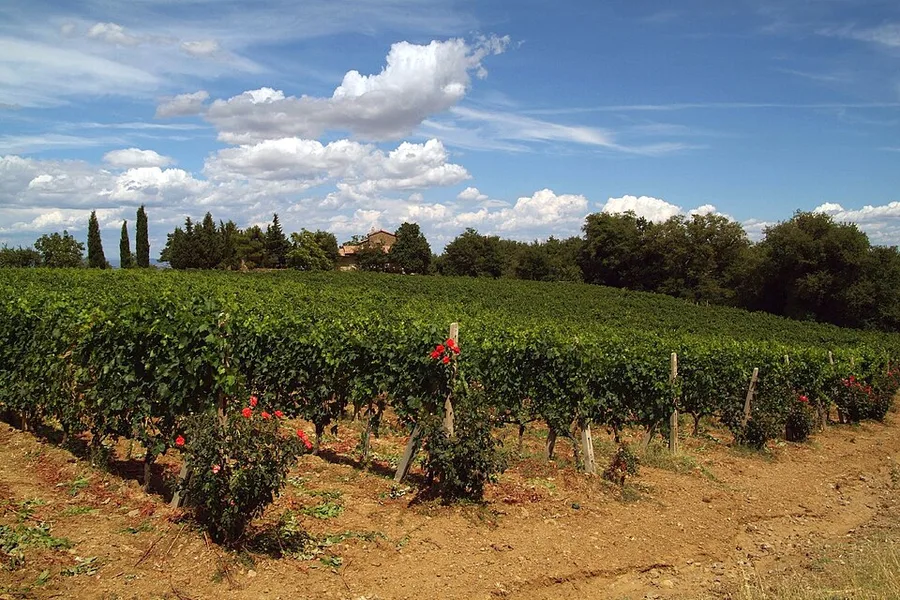
What is Brunello di Montalcino?
Brunello di Montalcino is a Tuscan DOCG made from 100 per cent Sangiovese. No other grape is permitted, not even the small percentage most Italian denominations allow.
The grape is Sangiovese Grosso, a large-berried, thicker-skinned biotype selected locally in the nineteenth century and known in the village as brunello, after the dark colour of the skin. The wine is named for the grape, not the place.
Minimum ageing is five years from harvest: a bottle cannot be sold before 1 January of the fifth year after the vintage, so a 2020 is released in January 2025. At least two of those years must be in oak and four months in bottle. Riserva requires six years and six months in bottle.
Alongside it sits Rosso di Montalcino DOC, created in 1983: same grape, same commune, one year of ageing, no oak requirement. It is not a lesser wine so much as a different one, and at most estates it is the cheapest honest read on the house style.
The zone became a DOC in 1966 and a DOCG in 1980, in the first group of Italian wines to receive the seal. Output runs to nine or ten million bottles of Brunello a year and four to five million of Rosso.
In 2008 the denomination went through the affair the Italian press called Brunellopoli: prosecutors in Siena investigated whether some producers had used unauthorised grapes, lots from several cellars were impounded, and for a period the US authorities required laboratory certification on Italian shipments. The proceedings ended without significant convictions, and in 2009 the Consorzio's members voted overwhelmingly against opening the rules to other varieties.
What does it taste like?
Sour cherry and dark plum first, then dried violet, leather, wet earth and forest floor. With ten years or more it moves to dried orange peel, tobacco and tar. It is a savoury wine, not a fruity one.
Structurally: full-bodied but not heavy, with high acidity running all the way through, dense drying tannin and a long bitter-edged finish. Alcohol is almost always 14 to 15 per cent, which surprises people expecting a lighter Tuscan red. The colour is ruby turning garnet at the rim within five or six years and never opaque: thin skins and unstable pigments mean colour tells you nothing about quality here.
North-facing sites around Torrenieri and Montosoli give leaner, higher-toned wines that need time; the warmer south, around Sant'Angelo in Colle and Castelnuovo dell'Abate, gives fuller, darker, earlier-drinking bottles. An inky, sweetly fruited, vanilla-scented Brunello is a choice made with new French barriques rather than a fault, but it tastes of the cellar rather than of Montalcino.
How to use it
Serve at 16-18°C in a large bowl glass. Above 20°C the alcohol dominates; below 15°C the tannin clamps shut. Forty minutes in the fridge is the fix in a warm room. Decant a bottle of five to eight years for an hour or two; do not decant one over fifteen years old.
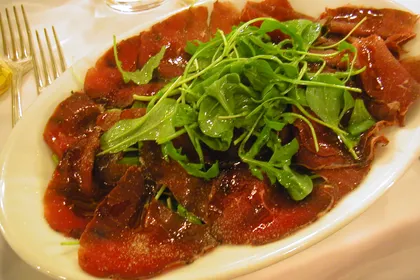
At the table it wants fat and salt. Rare Chianina steak, roast lamb, pigeon, guinea fowl, and above all game: wild boar stewed with olives, hare, venison. A ten-year-old bottle with boar is the local benchmark. Porcini and truffle work with the earthy notes older Brunello develops, and aged pecorino from Pienza is the cheese to reach for. In Montalcino the everyday pasta is pinci, the local spelling of pici, with meat ragù, which works; pinci with garlic and tomato does not, so pour Rosso. Do not cook with it, and avoid fish, sweet-and-sour dishes and dessert.
How long it keeps
Unopened, Brunello is built to be kept. Lay the bottle down so the cork stays wet, at a steady 12 to 15°C (54 to 59°F), in the dark, at humidity around 70 percent. Swings in temperature do more than a cellar that runs a degree or two warm. Standing bottles upright in a warm kitchen dries the cork, air works its way in, and the wine moves towards oxidation: the rim goes brick, the fruit recedes, dried and nutty notes come forward. As a rough map, an average vintage is drunk between eight and fifteen years from harvest, a strong one between ten and twenty-five, a fine Riserva past thirty.
Once opened, a young Brunello often opens up over the first hours and holds two or three days recorked in the fridge, shedding a little aromatic lift each day. An old bottle moves much faster: at twenty years the wine can flatten within an hour of meeting air, so pour it slowly, off the sediment, and serve at 16 to 18°C (61 to 64°F).
Spot the real thing
Every DOCG bottle carries a numbered state seal across the neck or capsule. The label has to state Brunello di Montalcino, the vintage and the bottler. Riserva means one extra year of ageing before release, not automatically a better wine.
Watch the names that sit near it on the shelf. Rosso di Montalcino is a separate and perfectly legitimate denomination, from the same estates and the same grape, released younger and priced lower. Sant'Antimo DOC and Toscana IGT are the labels those producers use for wines outside the Brunello rules, often with international varieties. A generic Tuscan Brunello does not exist: the name belongs to the single commune of Montalcino.
In the glass the colour is ruby shifting to garnet within five or six years, never opaque. Alcohol usually sits between 14 and 15 percent, the acidity stays high to the end, the tannin is dense and drying. A Brunello that is inky, sweet with fruit and loud with vanilla is not a fake: it reflects new barrique more than it reflects Montalcino. Entry-level bottles rarely land below about 45 dollars or 40 pounds at retail.
How to pronounce Brunello di Montalcino
broo-NEL-loh dee mon-tahl-CHEE-noh
The trap is Montalcino. In Italian a c before i or e is pronounced ch as in cheese, so it is mon-tahl-CHEE-noh, never mon-tal-SEE-noh and never mon-tal-KEE-noh. Sangiovese is san-joh-VEH-zeh, with a soft g and a z like the s in rose.
Brunello di Montalcino compared
vsRosso di Montalcino
The comparison that saves the most money. Same grape, same commune, frequently the same vineyards and the same winemaker: the difference is ageing and selection. Producers send young vines, lighter lots and difficult vintages to Rosso, then age it one year instead of five. For a weeknight dinner, a serious grower's Rosso beats a commercial Brunello at the same price.
| This | Rosso di Montalcino | |
|---|---|---|
| Grape | 100% Sangiovese | 100% Sangiovese |
| Minimum ageing | 5 years, 2 in oak | 1 year, oak optional |
| Release | Fifth year after harvest | Year after harvest |
| Fruit | Older vines, best parcels | Younger vines, lighter lots |
| Drink at | 8-25 years | 2-6 years |
| US price | USD 55-90 | USD 22-35 |
vsChianti Classico
Both are Sangiovese-based Tuscan reds, from different climates and different rulebooks. Chianti Classico is cooler, wetter and higher-acid, needs a minimum of 80 per cent Sangiovese and can be drunk at two years. Brunello is warmer, riper, purer and slower, and is not really ready when it is released.
| This | Chianti Classico | |
|---|---|---|
| Zone | One commune, ~2,100 ha | Nine communes, ~7,000 ha |
| Sangiovese | 100%, no exceptions | Minimum 80% |
| Climate | Warmer, drier, Amiata rain shadow | Cooler, wetter, more wooded |
| Minimum ageing | 5 years | 12 months (Annata) |
| Alcohol | Usually 14-15% | Usually 13-14% |
| US entry price | USD 55-90 | USD 18-28 |
vsVino Nobile di Montepulciano
The other big Sangiovese DOCG of southern Tuscany, forty kilometres east. Vino Nobile calls the grape Prugnolo Gentile, requires only 70 per cent of it, and asks two years of ageing instead of five. The closest thing to Brunello at roughly a third of the money.
| This | Vino Nobile di Montepulciano | |
|---|---|---|
| Grape rule | 100% Sangiovese | Min 70% (Prugnolo Gentile) |
| Minimum ageing | 5 years (Riserva 6) | 2 years (Riserva 3) |
| Profile | Denser, more tannic, longer-lived | Softer, earlier, more floral |
| US price | USD 55-90 | USD 22-40 |
Brunello di Montalcino substitutes
- Rosso di Montalcino
The same grape from the same commune, aged one year. Not a copy but a younger sibling, and the only substitute that comes from the identical vineyards. USD 22-35, GBP 18-28.
- Vino Nobile di Montepulciano Riserva
Sangiovese from the neighbouring DOCG, three years of ageing, similar savoury profile with softer tannin. Closest match by structure at a third of the price. USD 28-45, GBP 22-38.
- Chianti Classico Gran Selezione
Estate-grown Sangiovese, minimum 90 per cent since 2023, aged 30 months. Higher acidity, less weight, same seriousness. USD 50-100, GBP 40-80.
- Taurasi or Aglianico del Vulture
Southern Italian Aglianico: high acid, hard tannin, ten years to open, savoury rather than fruity. The southern answer to Brunello at half the price. USD 30-55, GBP 25-45.
Where to buy it
Brunello is widely distributed in the US and the UK, but supermarket ranges are thin and skewed to large commercial houses. Italian specialists and independent merchants are where the two hundred-odd small estates appear.
In the US, expect USD 55-90 for a producer's standard bottling and USD 90-180 for Riserva. In the UK, GBP 38-70 and GBP 70-140. Collectible names such as Biondi Santi Riserva, Case Basse di Soldera and Poggio di Sotto run from USD 200 into four figures. Below USD 45 Brunello barely exists: a bottle at USD 30 is not a bargain but the bottom of the market.
What to check: the numbered state seal on the neck, the vintage, and the bottler's name. If the label names a hamlet (Sant'Angelo in Colle, Castelnuovo dell'Abate, Torrenieri, Montosoli) it tells you about style: south is fuller and readier, north leaner and slower.
Vintages worth buying: 2010, 2015, 2016, 2019 and 2020 are the recent five-star years. 2017 was very hot and should be drunk now, and 2014 was so wet that many producers made no Brunello at all. If the budget is under USD 40, buy Rosso di Montalcino from a good grower rather than Brunello from a weak one.
Where to eat it in Italy
Montalcino is a hill town of five thousand people at 560 metres, forty kilometres south of Siena, and you can walk it in an hour. The 1361 Fortezza at the top has walkable ramparts and, inside, the Enoteca La Fortezza, which pours dozens of local labels by the glass, the most efficient way to learn the difference between north and south in one evening. Piazza del Popolo holds the fourteenth-century town hall and the Caffè Fiaschetteria Italiana, open since 1888.
Ten kilometres south, Sant'Angelo in Colle is a walled hamlet of a few dozen houses on a 440-metre spur, with two or three osterie and a view over the whole Orcia valley: the heart of the warm side. To the south-east, Castelnuovo dell'Abate looks down on the Abbazia di Sant'Antimo, a twelfth-century Romanesque church in travertine and alabaster standing alone in an olive grove and worth the early start. North, Torrenieri sits on the pilgrim road of the Via Francigena and marks the cool edge of the zone. Cellar visits need booking a few days ahead, and most estates charge for tastings.
Two dates: Benvenuto Brunello in November, when the Consorzio presents the incoming vintage in the cloister of Sant'Agostino and an artist signs the ceramic tile recording its star rating; and the Sagra del Tordo on the second Sunday of October. Within twenty kilometres lie Pienza, Bagno Vignoni and the UNESCO-listed Val d'Orcia.
Further reading
Frequently asked questions
What is the difference between Brunello and Rosso di Montalcino?
Same grape, same commune, different ageing and different selection. Brunello ages five years, at least two in oak, and is released in January of the fifth year after harvest. Rosso ages one year with no oak requirement. Estates send younger vines, lighter parcels and weaker vintages to Rosso. It costs roughly half, and for most meals it is the better buy.
Is Brunello really 100 per cent Sangiovese?
Yes, the rules allow nothing else. In 2008 prosecutors in Siena investigated whether some producers had blended unauthorised grapes; lots were impounded, some wines were declassified to IGT, and the US authorities temporarily required laboratory certification on imports. The cases closed without significant convictions, and in 2009 the growers voted overwhelmingly to keep the grape pure.
How long should I age it?
An average vintage drinks best between eight and fifteen years from harvest, a strong one between ten and twenty-five, and Riserva from an excellent year can pass thirty. Hot vintages such as 2017 should be drunk earlier: high alcohol and low acidity do not reward waiting.
Should I decant Brunello?
Under ten years old, yes, for an hour or two. Over fifteen, no: stand the bottle up the day before, open it and pour gently off the sediment. An old Brunello exposed to too much oxygen can lose its perfume within half an hour.
Sources
Where to check what you just read.
- 1
I disciplinari dei vini raccolti per lettera iniziale: qui si verificano vitigno unico, resa per ettaro e anni minimi di invecchiamento del Brunello.
- 2Consortium · interested partyConsorzio del Vino Brunello di Montalcino
Il consorzio di Montalcino: valutazione ufficiale delle annate, tracciabilità delle bottiglie e rapporto fra Brunello, Rosso di Montalcino e Sant'Antimo.
Related foods
 WineChianti ClassicoChianti Classico is the Black Rooster wine: at least 80 per cent Sangiovese from nine communes between…
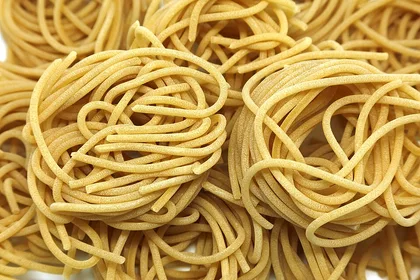 Pasta and breadPiciPici are fat, hand-rolled spaghetti from southern Tuscany, made from nothing but flour and water.
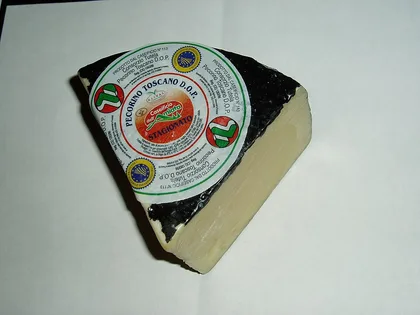 CheesePecorino ToscanoPecorino Toscano DOP is the mild one. Whole sheep's milk, calf rennet, a brief salting: soft-paste wheels…WineVino Nobile di MontepulcianoVino Nobile di Montepulciano is a Tuscan red made from at least 70 per cent Sangiovese, known locally as…
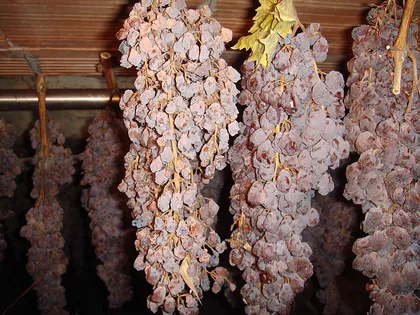 WineVin SantoVin Santo is Tuscany's dried-grape wine: Trebbiano and Malvasia laid on reed mats or hung from the rafters…
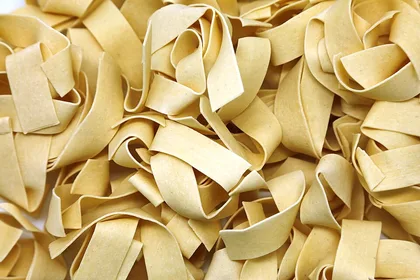 Pasta and breadPappardelleRibbons of egg pasta two to three centimetres wide, the widest pasta you still eat twirled on a fork.
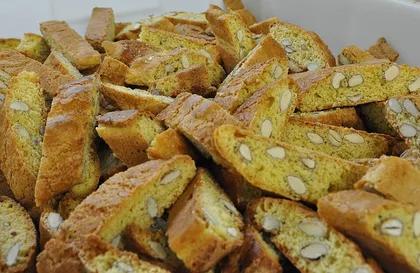 SweetsCantucciCantucci are hard, twice-baked Tuscan almond biscuits. A log of dough is baked, sliced on the diagonal while…Vegetables and fruitChestnutsFor a thousand years the Apennines made bread from them rather than dessert: Castanea sativa was the tree…