What is Vin Santo?
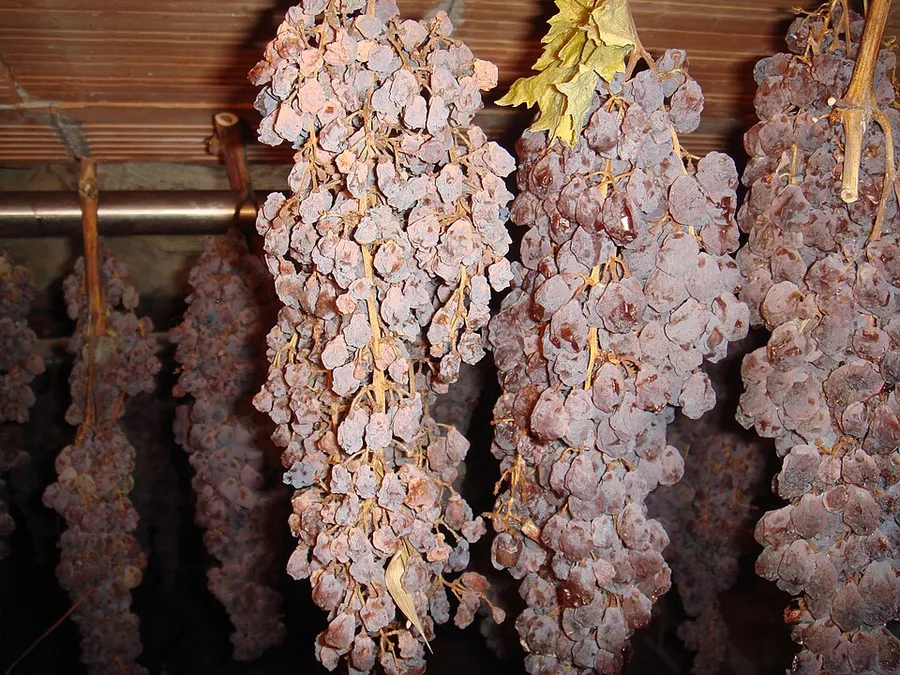
Vin Santo is a Tuscan wine made from air-dried grapes, with four denominations of its own: Vin Santo del Chianti Classico, Vin Santo del Chianti, Vin Santo di Montepulciano and Vin Santo di Carmignano. It is not a liqueur and it is not fortified: the 15 to 17 per cent alcohol comes entirely from the sugar of the dried fruit.
The grapes are white: Trebbiano Toscano and Malvasia Bianca Lunga, which must make up at least 60 per cent of the blend in Chianti Classico. The Occhio di Pernice version uses Sangiovese instead (at least 80 per cent in Chianti Classico, at least 50 per cent in Montepulciano) and takes its name, partridge's eye, from the coppery pink-amber colour.
Sweetness is stated on the label and it matters: secco is nearly bone dry and tastes like an oxidative white, then abboccato and amabile, then dolce, which can pass 100 grams of residual sugar per litre. Most disappointment with this wine comes from opening a style you were not expecting. The word is printed on the bottle.
Minimum ageing in the small barrels is three years for Vin Santo del Chianti Classico and four for Riserva and Occhio di Pernice. Yields are brutal: 100 kilos of fresh grapes give roughly 25 litres of wine, against about 70 for a normal white.
Three stories compete over the name: sacramental use, pressing during Holy Week, and a Greek cardinal at the 1439 Council of Florence supposedly saying the wine came from Xantos. None is documented.
What does it taste like?
Dried apricot, fig and walnut first, then chestnut honey, candied orange peel, caramel and toffee; older bottles add the rancio note familiar from oxidative wines and old sherry. Occhio di Pernice adds dried cherry, orange rind and a faint tannic grip.
The structure is the surprise. Whatever the sugar level, the wine is held up by sharp acidity and finishes on bitter almond, so it does not coat the mouth the way most dessert wines do. Alcohol sits at 15 to 17 per cent, the texture is dense and slightly viscous, and the finish is very long.
Colour runs from deep gold through amber to dark topaz with coppery glints; Occhio di Pernice is pinkish copper. A dry Vin Santo drinks closer to an aged oloroso or a dry Madeira than to Sauternes, nutty and salty at the edges, while a dolce is closer to a Rutherglen muscat.
How to use it
Serve sweet styles at 12-14°C and dry ones at 14-16°C, in a small tulip glass filled a third of the way. Too cold and the aromatics disappear; at summer room temperature it turns cloying. No decanting is needed, though very old bottles may need a slow pour.
The famous move is dunking cantucci, the almond biscuits from Prato, into the glass. It is a genuine ritual and worth doing once, but it works against you with a fine bottle: the biscuit is sweet, dry and nutty, so with a sweet Vin Santo it stacks sugar on sugar and flattens the wine. Use a simple amabile for dunking and keep a dry version or an Occhio di Pernice for the glass alone.
The better pairings are savoury. Aged pecorino, pit-cured cheese and above all blue cheese: sweet Vin Santo with sharp gorgonzola beats any biscuit. Foie gras and liver pâté work for the same reason. Among desserts, go for almond cake, nut tarts, panforte and ricciarelli from Siena, chestnut cake, or just walnuts, figs and dates.
A dry Vin Santo is an aperitivo wine in Tuscany, drunk before lunch with salted almonds, olives and parmesan. In the kitchen it deglazes chicken livers for crostini neri and finishes veal scaloppine, and a cheap bottle does for that. Once opened it keeps for weeks, often months, in the fridge: high sugar, high alcohol and deliberate oxidation make it nearly indestructible.
How long it keeps
Sealed, Vin Santo is one of the longest-lived wines in Italy. A ten-year-old bottle is still young, twenty is often the middle of its life, and strong vintages from serious producers run to forty. Keep it at 12 to 16 degrees in the dark; because the wine spent years in small barrels with air already reaching it, whether the bottle lies down or stands up matters far less than it would for a table red. Very old bottles throw a fine veil of sediment, which is a reason to pour slowly rather than to decant.
The opened bottle is where it differs from almost everything else on the table. High alcohol, a lot of residual sugar and an oxidative character already built in mean that a re-corked half, kept in the refrigerator, changes very little over weeks and frequently over months: a 375 ml bottle can reasonably last ten separate evenings. Serve sweet styles at 12 to 14 degrees and dry ones at 14 to 16, in a small tulip filled a third of the way. Straight from the fridge the aromas stay shut; at summer room temperature sugar dominates.
Spot the real thing
The bottle tells you a lot before the label does: the real thing comes in a 375 ml half, tall and narrow. On the label look for a proper denomination, Vin Santo del Chianti Classico, di Montepulciano, di Carmignano or del Chianti, plus the vintage, the sweetness level and, where it applies, Riserva or Occhio di Pernice. Alongside it sits a legal, widespread industrial version in 500 or 750 ml bottles: grapes dried briefly or concentrated must, fermented in steel or large casks, little time, often sweetened. It carries the name and not the method.
Price is the honest signal here. Yields are around a third of normal winemaking, the money sits in small caratelli for three or four years and evaporation takes its cut, so a barrel-aged half bottle much under 30 dollars is arithmetically hard. In the glass expect deep gold through amber to dark topaz, and rosy copper for Occhio di Pernice; on the nose dried apricot, fig, walnut, chestnut honey and candied orange. Greek Vinsanto from Santorini is a separate wine with a similar name.
How to pronounce Vin Santo
veen SAHN-toh
Two words, stress on SAHN. Not vin santo run together as veen-SAN-toe, and nothing to do with the French vin. Occhio di Pernice is OK-kyoh dee per-NEE-cheh: the cch is a hard k, the ce is che as in cherry. The little barrel is a caratello, kah-rah-TEL-loh, and the drying loft is the vinsantaia, veen-sahn-TAH-yah.
Vin Santo compared
vsPassito di Pantelleria
Italy's other great dried-grape wine, and the one to reach for when Vin Santo is too expensive. Pantelleria dries Zibibbo, Muscat of Alexandria, in the open Sicilian sun rather than in a loft, and ages it briefly in steel or neutral wood. The result is fresher, grapier and far more aromatic; Vin Santo is oxidative, nutty and structurally more complex.
| This | Passito di Pantelleria | |
|---|---|---|
| Grape | Trebbiano and Malvasia | Zibibbo / Muscat of Alexandria |
| Drying | Indoors on mats or hung, 3-5 months | Outdoors in the sun, 2-3 weeks |
| Ageing | 3-4 years, sealed barrels | Often under a year |
| Style | Oxidative: nut, caramel, fig | Aromatic: apricot, orange blossom |
| US price (375 ml) | USD 35-90 | USD 20-35 |
vsSauternes
Both are sweet, golden and expensive, and they get there by opposite routes. Sauternes concentrates sugar through botrytis, noble rot on grapes still on the vine; Vin Santo concentrates it by drying picked grapes for months indoors. Sauternes is fresher, more floral and citrus-driven; Vin Santo is darker, nuttier and deliberately oxidised.
| This | Sauternes | |
|---|---|---|
| Concentration | Air-drying after harvest | Botrytis on the vine |
| Grapes | Trebbiano, Malvasia, Sangiovese | Sémillon, Sauvignon Blanc |
| Vessel | Sealed 50-200 litre caratelli | New and used barriques |
| Profile | Fig, walnut, caramel, bitter almond | Honey, apricot, saffron, citrus |
vsSupermarket vin santo
The comparison that decides whether you enjoy the wine or not. A six-euro bottle cannot be barrel-aged Vin Santo: the arithmetic forbids it. Cheap versions use briefly dried grapes or concentrated must, ferment in steel or large casks, are released quickly and are often sweetened. Perfectly legal, useful for cooking, but a different drink wearing the same name.
| This | Supermarket vin santo | |
|---|---|---|
| Drying | 3-5 months on mats or hung | Short, or concentrated must |
| Vessel | Sealed caratelli with the mother | Steel or large casks |
| Ageing | 3-4 years minimum | Months |
| Price | EUR 25-60 per 375 ml | EUR 6-12 per 500-750 ml |
Vin Santo substitutes
- Passito di Pantelleria
Sun-dried Zibibbo from a Sicilian island: fresher, grapier, more aromatic, and the best value alternative in Italian sweet wine. USD 20-35, GBP 16-28.
- Madeira Bual or Malmsey
The closest match in style rather than method: heated, oxidised, nutty and caramelised with cutting acidity. Fortified, so higher in alcohol, and effectively immortal once opened. USD 25-45, GBP 20-35.
- Rutherglen Muscat (Australia)
Concentrated, raisiny, barrel-aged and deliberately oxidative. The sweetest of the substitutes and closer to a dolce Vin Santo than anything European. USD 25-45, GBP 20-35.
- Tokaji Aszú 5 puttonyos
Botrytised Hungarian wine with searing acidity under the sugar. More citrus and less nut than Vin Santo, but the same balance between sweetness and cut. USD 30-50, GBP 25-40.
Where to buy it
Vin Santo is easier to find in Italian specialist shops than in supermarkets abroad, and the good stuff is almost always sold by importers who also carry the producer's red wines. If your merchant stocks Chianti Classico from a serious estate, ask whether the Vin Santo comes too.
Expect USD 35-90 for a 375 ml bottle of genuine barrel-aged wine in the US, and GBP 28-70 in the UK, with the rarest Occhio di Pernice bottlings well over USD 150. In Italy the same wine is EUR 25-60. Industrial versions sell at USD 10-18 in 500 or 750 ml bottles.
The format itself is a signal: real Vin Santo is nearly always in a 375 ml bottle, because that is what the yields allow. A 750 ml bottle at a low price is usually the industrial style.
What to read on the label: the denomination, the vintage, the sweetness term, and Riserva or Occhio di Pernice if present. Vintages matter less than with dry wine, since the barrel ageing evens years out, so buy on producer rather than year. Names worth looking for include Isole e Olena, Selvapiana, Castell'in Villa, Rocca di Montegrossi and, for Occhio di Pernice, Avignonesi in Montepulciano.
Where to eat it in Italy
The vinsantaia is not a show cellar. It is an uninsulated attic reached by a narrow staircase, freezing in January and over 40°C in August, and that swing is what drives the slow fermentation. Estates that show it do so by appointment and in small groups; ask, because seeing sealed barrels with the vintage written in the cement explains the price better than any tasting note.
In Chianti Classico the historic villages are Panzano, Radda in Chianti, Gaiole and Castellina, where most estates make a few hundred bottles of Vin Santo alongside the red; Greve in Chianti, with its arcaded triangular square, is the easiest place to find it by the glass.
In Montepulciano the barrels rest in the tufo cellars beneath the Renaissance palaces of the main street, and the local Occhio di Pernice is among the most sought-after in Italy. Carmignano, twenty kilometres west of Florence, is the smallest of the four denominations.
One practical warning: the glass of vin santo offered free at the end of a meal in a Tuscan trattoria is nearly always the industrial kind. If the restaurant lists an estate bottling, order it by the glass for five to eight euros: it is a different wine, and it is the one worth remembering.
Further reading
Frequently asked questions
Why does supermarket vin santo cost six euros and the good stuff sixty?
They are two products sharing a name. Real Vin Santo comes from grapes dried for months, yields about 25 litres per 100 kilos of fruit, spends three or four years in sealed 50-litre barrels in an attic, and loses volume to evaporation every summer. The cheap version uses briefly dried grapes or concentrated must, ferments in steel, is released within months and is often sweetened. The second is legal and fine for cooking, but it is not the same drink.
What is Occhio di Pernice?
The version made from Sangiovese instead of white grapes, at least 80 per cent in Chianti Classico, at least 50 per cent in Montepulciano. The name, partridge's eye, describes the coppery pink-amber colour. It needs at least four years in barrel, has more structure and a hint of tannin, and costs considerably more.
Is Vin Santo always sweet?
No. The rules allow secco, abboccato, amabile and dolce, and the term must appear on the label. A secco has only a few grams of residual sugar and drinks like an oxidative white. Tuscans serve it before lunch with salted almonds. Reading that one word before buying prevents most of the disappointment around this wine.
What is the mother in the barrel?
The bed of yeast and lees left in the caratello by the previous batch, used to start fermenting the new one, exactly like a sourdough starter. It is passed down for decades, cannot be bought, and is a large part of why each estate's Vin Santo tastes recognisably its own.
Sources
Where to check what you just read.
- 1
Il testo consolidato approvato con decreto del 22 marzo 2022, in PDF: qui si controllano uve ammesse, appassimento, tempi minimi in caratello e i requisiti dell'Occhio di Pernice.
- 2Consortium · interested partyConsorzio Vino Chianti — disciplinari
Le versioni successive del disciplinare del Vin Santo del Chianti DOC: utili per vedere come sono cambiati nel tempo invecchiamento minimo e tipologie ammesse.
Related foods
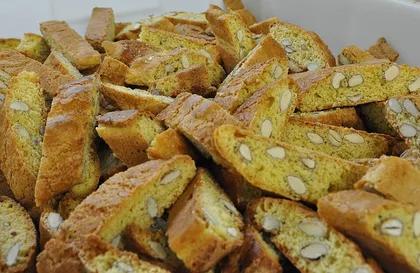 SweetsCantucciCantucci are hard, twice-baked Tuscan almond biscuits. A log of dough is baked, sliced on the diagonal while…
 WineChianti ClassicoChianti Classico is the Black Rooster wine: at least 80 per cent Sangiovese from nine communes between…WineVino Nobile di MontepulcianoVino Nobile di Montepulciano is a Tuscan red made from at least 70 per cent Sangiovese, known locally as…
 WineBrunello di MontalcinoBrunello di Montalcino is pure Sangiovese aged five years, at least two of them in oak, made only in the…
 Pasta and breadPappardelleRibbons of egg pasta two to three centimetres wide, the widest pasta you still eat twirled on a fork.Vegetables and fruitChestnutsFor a thousand years the Apennines made bread from them rather than dessert: Castanea sativa was the tree…
 Cured meatsFinocchionaFinocchiona is Tuscany's fennel salami: coarsely ground pork seasoned with wild fennel seeds and flowers…
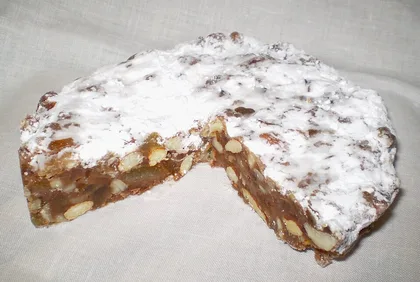 SweetsPanfortePanforte is a dense, chewy Sienese disc of candied fruit, almonds, honey and spices, only 2-3 cm thick and…