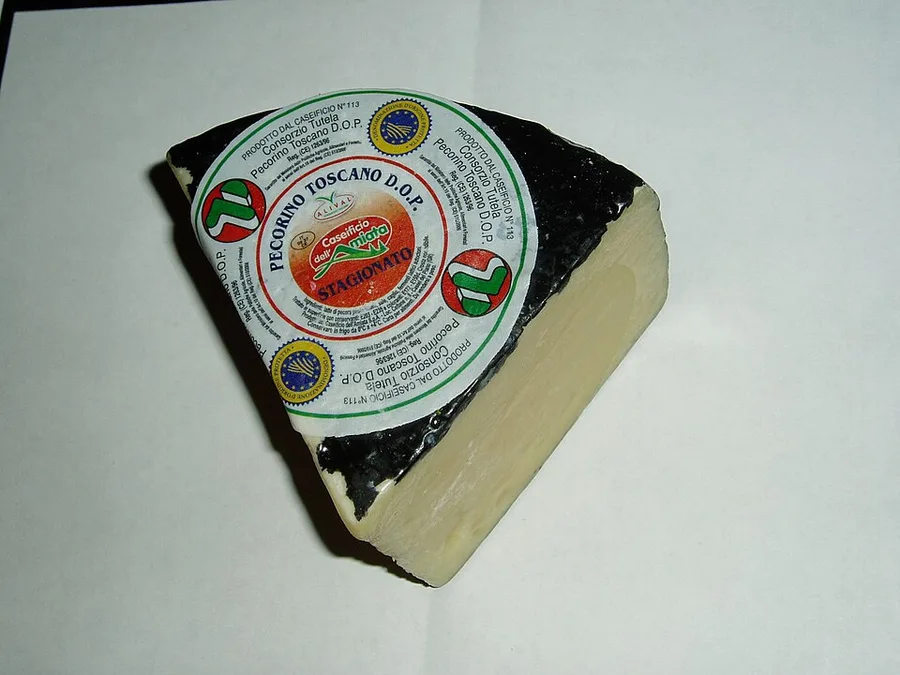
What is Pecorino Toscano?
Pecorino Toscano is a sheep's milk cheese made in Tuscany, plus a few neighbouring towns in Umbria and northern Lazio, in cylindrical wheels of 750 g to 3.5 kg. The DOP recognises two types: soft paste (pasta tenera), aged a minimum of 20 days, and semi-hard paste (pasta semidura), aged a minimum of four months and often six to eight.
The milk is coagulated with calf rennet at 33-38C. That is the technical decision that defines the cheese. Pecorino Romano and Fiore Sardo use lamb rennet paste, which carries lipase enzymes that split milk fats and generate a sharp, peppery bite; calf rennet does not, so Pecorino Toscano stays sweet-tempered even when it is old.
Salting is short (hours or a day or two, in brine or dry) where Pecorino Romano is rubbed with coarse salt for eighty to a hundred days. The finished cheese carries a fraction of the salt.
The rind may be treated during ageing with olive oil, wood ash or tomato concentrate. The red-rinded wheels in Tuscan shop windows are not flavoured: that is a centuries-old surface protection, and the paste underneath tastes of nothing but sheep's milk.
What does it taste like?
The soft type tastes of warm milk and fresh grass, with a gentle lactic tang, a supple, almost springy texture and a clean sweet finish. There is nothing sharp in it at all. If your reference point is a young Manchego, imagine that with less oil and more freshness.
The semi-hard type at six to eight months is nutty and savoury, with hazelnut and toasted-bread notes, a whisper of lanolin that reads as sheep rather than farmyard, and a mild warmth on the finish that stops well short of pepper. It flakes rather than bends.
Either way, the salt sits in the background. Tuscan bread is famously made without salt, and the local pecorino was built to sit on it: a cheese that seasons the bread instead of fighting it.
How to use it
Slice the soft type thickly and put it on bread with olive oil, honey or fresh broad beans. It melts well and without stringing, so it belongs on hot schiacciata, in baked crostini, over roast vegetables and inside a frittata.
Grate the semi-hard type. In Siena, pici cacio e pepe is made with aged Pecorino Toscano rather than Romano, which is why the Tuscan version is creamier and much less salty: the technique is the same, off the heat, with warm pasta water worked into the cheese first. It also goes over ricotta-and-spinach tortelli, into meatballs, into savoury custards.
The single best thing to do with either type takes two minutes: cut a slice a centimetre thick, sear it thirty seconds a side on a very hot dry pan, and serve it with chestnut honey and cracked pepper.
Whichever type, take it out of the fridge half an hour before serving. Cold sheep's cheese has almost no aroma, and this one trades on aroma rather than on salt.
How long it keeps
A vacuum-sealed wedge keeps at 4 to 8 C to the date on the pack, which is the dairy's reference. After that the two types part ways. The fresh one holds a lot of water and begins to sweat: wrap it in greaseproof paper, never cling film laid against the surface, and reckon on about two weeks once it is open. The semi-hard goes two to three months wrapped in a barely damp cloth and then paper, kept in the vegetable drawer, which is the least cold part of a domestic fridge.
What happens over those months is steady drying. The cut face hardens and turns glassy, and a millimetre taken off with a knife gets you back to the paste underneath; as water leaves, the salt concentrates, the flavour sharpens and the texture moves from sliceable towards gratable. Dry white or green bloom on the rind lifts with a cloth dipped in vinegar or white wine, and anything else on the surface is a question for the shop and the label. Freezing suits only semi-hard pieces headed for the grater, 200 g at a time, up to six months.
Spot the real thing
The label has to say Pecorino Toscano DOP and carry the Consortium mark, an oval with the name and a stylised sheep. Whole wheels also show a numbered casein plaque and an inked stamp applied after the conformity check. In the soft type the paste is white and gives under a finger, with sparse regular eyes; chalky or spongy means the acidification went astray. In the semi-hard the paste is straw coloured, cuts into slices that stand up without folding, and shows a few small eyes.
Three labels at the counter are not the DOP: pecorino toscano in lower case, which states origin and nothing else; pecorino di Pienza, a prestigious local usage that is not protected and is often, not always, made inside the Tuscan rules; and Pecorino delle Balze Volterrane DOP, which is a separate denomination with its own. Outside Italy the bigger trap is the word pecorino on its own, which in most delis means Pecorino Romano: far saltier, much harder, built for grating, and usually the cheapest sheep cheese on the counter. The Tuscan one is a table cheese and behaves nothing like it.
How to pronounce Pecorino Toscano
peh-koh-REE-noh tos-KAH-noh
Hard 'c' in both words, as in 'corn', never 'pech-' or 'tosh-'. Stress falls on the third syllable of pecorino and the second of Toscano. Both final 'o' sounds are full and round, not swallowed. Pecora means ewe; Toscano means Tuscan.
Pecorino Toscano compared
vsPecorino Romano
Same species, opposite purposes. Pecorino Romano is dry-salted by hand for months, coagulated with lamb rennet paste and aged at least five months: it lands at about 5% salt with a sharp lipase bite, and it exists to be grated into pasta. Pecorino Toscano is brine-salted in hours, coagulated with calf rennet and eaten in slices. Substituting one for the other without adjusting the salt is how a Tuscan cheese plate turns inedible, or a cacio e pepe turns bland.
| This | Pecorino Romano | |
|---|---|---|
| Rennet | Calf rennet, liquid | Lamb rennet paste, lipase-rich |
| Salting | Brine or dry, hours to two days | Coarse dry salt by hand, 80-100 days |
| Salt content | Roughly 1.5-2% | Roughly 5% |
| Minimum ageing | 20 days (soft), 4 months (semi-hard) | 5 months, 8 for grating grade |
| Wheel size | 0.75-3.5 kg | 20-35 kg |
| Flavour | Milky, grassy, nutty, mild | Salty first, then sharp and piquant |
| Designed to be | Eaten in slices | Grated as seasoning |
| Price | $12-20 per lb | $12-20 per lb |
vsPecorino Toscano semi-hard (versus soft)
One denomination, two genuinely different cheeses. The soft type is a fresh table cheese with a three-week life; the semi-hard is a keeper that grates. Recipes and cheesemongers rarely specify, so ask: at 20 days it melts, at eight months it does not.
| This | Pecorino Toscano semi-hard (versus soft) | |
|---|---|---|
| Minimum ageing | 20 days | 4 months, commonly 6-8 |
| Rind | Thin, pale, untreated | Thick, amber, often oiled, ashed or tomato-rubbed |
| Paste | White, soft, springy | Straw, firm, flaking |
| Flavour | Milky, sweet, faintly tangy | Nutty, savoury, gently warm on the finish |
| Melts | Yes, cleanly | No, it separates |
| Keeps | Two weeks refrigerated | Two to three months refrigerated |
| Best use | Sliced with bread, honey, broad beans | Grated on pici, shaved on a board |
vsPecorino Sardo
The other great table pecorino, and the closest relative. Both use calf rennet and split into a young and an aged type. Sardo tends to be a shade tangier and firmer; Toscano a shade sweeter and grassier. Historically they are also linked by people: much Tuscan pecorino is made by families who came over from Sardinia after the 1950s.
| This | Pecorino Sardo | |
|---|---|---|
| Where made | Tuscany, plus border towns in Umbria and Lazio | Sardinia only |
| Young type | Pasta tenera, 20 days minimum | Dolce, 20-60 days |
| Aged type | Pasta semidura, 4 months minimum | Maturo, 2 months to a year |
| Rind treatments | Oil, ash, tomato concentrate permitted | Usually plain or oiled |
| Flavour accent | Grassy, sweet, hazelnut | Lactic, clean, almond |
| Availability abroad | Good: widely exported | Patchier, mostly specialist delis |
Pecorino Toscano substitutes
- Pecorino Sardo (Dolce or Maturo)
The most faithful swap: same rennet philosophy, same young-or-aged split. Dolce for the soft type, Maturo for the semi-hard. Slightly tangier, so no adjustment is needed beyond tasting before you salt.
1:1 - Manchego (semicurado or curado)
The easiest sheep's milk cheese to find in the US and UK. Semicurado stands in for the soft type, curado for the semi-hard. Oilier and grassier: if you are melting it, expect a little more fat to weep out.
1:1 - Ossau-Iraty
French Basque sheep's milk cheese: mild, buttery and supple, an excellent replacement for the soft type on a board or in a sandwich. Less acidity, so it will not cut through fat as sharply.
1:1 - Pecorino Romano, only with adjustment
The default substitution in English-language recipes and usually the wrong one. It carries two to three times the salt and a sharp lipase bite. If it is all you have, halve the quantity and remove salt from everywhere else in the dish.
0.5:1, and cut the salt in the recipe - Vegetarian: Pecorino delle Balze Volterrane DOP
Pecorino Toscano DOP itself is never vegetarian, since the specification requires calf rennet. But a second Tuscan DOP, made around Volterra since 2015, uses raw milk and vegetable rennet from wild cardoon flowers: genuinely vegetarian, and a real Tuscan pecorino rather than a compromise. Slightly more herbal and bitter on the finish.
1:1 - Vegetarian, easier to find: Berkswell or Spenwood
Two English sheep's milk cheeses from Berkshire made with microbial rennet. Berkswell is firm and nutty and works where the semi-hard type would; Spenwood is a little gentler. Both grate cleanly.
1:1
Where to buy it
Pecorino Toscano is one of the better-distributed Italian DOP cheeses abroad. In the US, Whole Foods, Eataly, Murray's Cheese and Italian delis carry it at roughly $12 to $20 per pound; large Tuscan cooperatives such as Il Forteto and Busti export consistently, and their semi-hard wheels travel well.
In the UK, expect £20 to £30 per kilo from Italian delicatessens, La Fromagerie, Ocado and online importers. Supermarket labels sometimes read simply 'Pecorino': check for Pecorino Toscano DOP, because Romano, Sardo and Toscano behave completely differently.
Ask which of the two types you are being sold: American and British counters frequently sell both under one name, and the difference between a 20-day and an 8-month wheel matters more than the price. On whole wheels look for the Consorzio's oval mark and the numbered casein plate set into the rind.
Where to eat it in Italy
Pienza, in the Val d'Orcia, is the pilgrimage. Its Fiera del Cacio takes place on the first Sunday of September and includes the cacio al fuso, in which wheels are rolled around a spindle planted in the piazza. Dairies in the surrounding Val d'Orcia and Crete Senesi sell directly and often let you watch the morning make.
The Maremma around Grosseto is where most of the milk is: Manciano, Sorano, Pitigliano, Roccalbegna. Many of these dairies were founded by Sardinian shepherding families who moved to Tuscany from the 1950s onwards, and several run tastings.
Volterra is worth the detour for a different cheese entirely: the Balze Volterrane DOP, made with raw milk and cardoon rennet. In the Mugello and the Casentino, north of Florence, long-established cooperatives keep shops open year-round.
Further reading
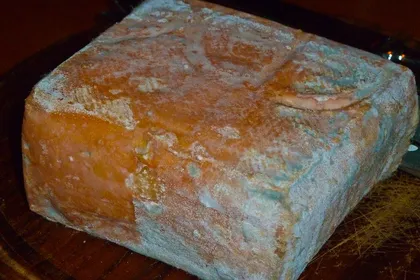 GuideCan you eat cheese rind?On some wheels the rind is the same paste, dried out. On others it is paraffin.
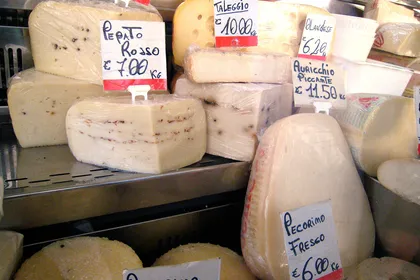 GuideHow long food keeps once openedThe date on the label describes the sealed package. After that, four things govern everything: water, salt…
 ExplainerWhich Italian cheeses contain no lactoseItaly sets a legal threshold, and long-aged cheeses clear it on their own, with no treatment involved.
Frequently asked questions
Is Pecorino Toscano the same as Pecorino Romano?
No, and the difference is dramatic. Romano is dry-salted for months, made with lamb rennet paste and aged at least five months: it is a hard, very salty grating cheese. Toscano is brine-salted in hours, made with calf rennet and eaten in slices. Toscano carries roughly a third of the salt.
Can I substitute Pecorino Toscano for Parmesan?
The semi-hard type, yes, roughly one for one. You lose Parmigiano's crystalline sweetness and gain a sheep's-milk note and a little more salt. The soft type is not a substitute at all: it melts rather than seasons.
Is Pecorino Toscano vegetarian?
No. The DOP requires calf rennet. The vegetarian exception in Tuscany is a different denomination: Pecorino delle Balze Volterrane DOP, made near Volterra with raw milk and cardoon-flower vegetable rennet.
Why do some wheels have a red or black rind?
Because the rind was rubbed during ageing with tomato concentrate, or with wood ash, or with olive oil. It is a traditional surface protection permitted by the DOP and does not flavour the paste.
How do you pronounce Pecorino Toscano?
peh-koh-REE-noh tos-KAH-noh: hard 'c' in both words, stress on the third syllable of the first word and the second of the second.
Sources
Where to check what you just read.
- 1
Il regolamento del 1º luglio 1996 che iscrive «Pecorino Toscano» fra le DOP: il nome tutelato è questo, non il «pecorino» venduto come denominazione.
- 2
Il disciplinare in PDF: giorni minimi di stagionatura per il fresco e per lo stagionato, peso delle forme e zona che esce dai confini della Toscana.
- 3Consortium · interested partyConsorzio tutela Pecorino Toscano DOP
Il consorzio di Grosseto: la sezione «Disciplinare», l'elenco dei caseifici aderenti e la distinzione ufficiale fra tipologia fresca e stagionata.
Related foods
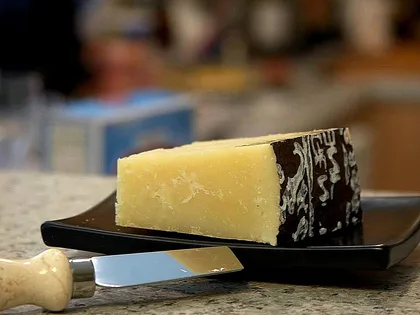 CheesePecorino RomanoPecorino Romano DOP is a hard, dry-salted sheep's milk cheese aged at least five months, made in Sardinia…
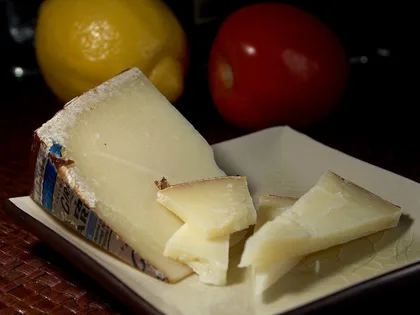 CheesePecorino SardoPecorino Sardo DOP is Sardinia's table cheese: whole sheep's milk, calf rennet, two official types.
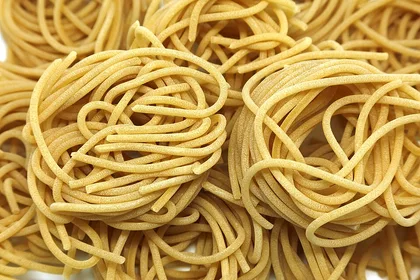 Pasta and breadPiciPici are fat, hand-rolled spaghetti from southern Tuscany, made from nothing but flour and water.
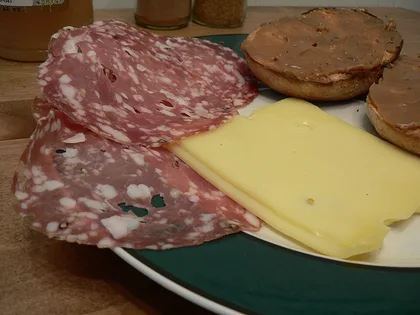 Cured meatsFinocchionaFinocchiona is Tuscany's fennel salami: coarsely ground pork seasoned with wild fennel seeds and flowers…CheeseMarzolinoMarzolino is the fresh Tuscan sheep's cheese made from the first spring milk: marzo is March, and that is…
 WineChianti ClassicoChianti Classico is the Black Rooster wine: at least 80 per cent Sangiovese from nine communes between…
 WineBrunello di MontalcinoBrunello di Montalcino is pure Sangiovese aged five years, at least two of them in oak, made only in the…
 Pasta and breadPappardelleRibbons of egg pasta two to three centimetres wide, the widest pasta you still eat twirled on a fork.