What is Schiacciata?
Schiacciata is a flatbread of soft wheat flour, water, yeast, salt and olive oil, pressed into a tray to a thickness of one or two centimetres and dimpled all over with the fingertips before baking. The dimples hold oil and coarse salt and become the darkest, crispest parts of the finished bread.
The name comes from schiacciare, to flatten or crush. In Florentine speech it is stiacciata, and the two words mean the same thing.
Against Ligurian focaccia the difference is one of oil and structure. Genoese focaccia carries a lot of oil in the dough and is brushed with a brine of water, oil and salt before baking, so it stays tall, damp and soft. Schiacciata carries less oil in the dough, takes most of its oil on top, and comes out thinner, drier and crisper. It is bread you tear rather than bread you fold.
Two entirely different sweet things also carry the name in Tuscany: schiacciata con l'uva, a September grape flatbread, and schiacciata alla fiorentina, a Carnival orange sponge. Neither is what a Florentine sandwich is made from, and both are covered further down because the overlap causes constant confusion.
What does it taste like?
Mostly of wheat and good olive oil, which is the whole intention. The crumb is thin and open, faintly sweet from a long rise, and it is not salted inside, because Tuscan bread is traditionally saltless, so the coarse salt on the surface arrives in bursts rather than as a background.
The texture does most of the work: brittle on the base, crisp at the edges, chewier in the dimpled centre where the oil pooled. It shatters slightly when you bite it, which is what distinguishes it from focaccia's soft yielding.
Filled with finocchiona or Tuscan prosciutto, the effect makes immediate sense. The unsalted crumb is a deliberate counterweight to salumi that are among the saltiest in Italy, and the crisp surface stops the sandwich from turning soggy under oil-packed vegetables.
How to use it
Buy it by weight at a bakery, warm, and eat some of it immediately with nothing on it. That is what it is for at eleven in the morning.
The rest becomes sandwiches. Cut it into squares, split each square horizontally, and fill it: finocchiona and pecorino, Tuscan prosciutto with oil-packed artichokes, sbriciolona with truffle cream, or lampredotto if you are committing fully to Florence. Do not add butter or mayonnaise: the oil in the bread is the fat in the sandwich.
Do not over-fill. The bread is thin and the point is the ratio, not the height.
At the table it stands in for bread with a board of salumi or a bowl of ribollita. With cheese it suits fresh or semi-aged pecorino toscano better than long-aged ones.
Day-old schiacciata comes back to life with two minutes in a 200 C oven, with a few drops of water flicked on the surface first. Never the microwave, which turns it to rubber in thirty seconds. Genuinely stale pieces get cubed, oiled and toasted into croutons for soup.
How long it keeps
This is a bread with a working life measured in hours rather than days, and Tuscan bakeries bake it in batches through the morning for that reason. Keep it in the paper it came in, at room temperature, never in a sealed plastic bag, because trapped steam softens the base within an hour. It carries less oil than focaccia, so it dries faster: by the evening the crisp underside has gone leathery, and by the following day the crumb has tightened as the starch retrogrades and the top has lost its shine.
The fridge is the wrong place, since bread stales fastest at around 4 C. Three or four minutes in a hot oven at 200 C drives moisture back out and returns some of the crackle, and it can be done more than once. For longer, cut it into portions, wrap them and freeze at minus 18 C for up to three months, then reheat straight from frozen. Anything sold sealed in a supermarket carries a date printed by the producer, which is the reference for those packs.
Spot the real thing
Height tells you most of it. Tuscan schiacciata is flat, roughly one to two centimetres, with a blistered irregular top brushed with oil and scattered with coarse salt, a crisp thin base, and an open crumb that is chewy rather than fluffy. It is sold from the tray by weight in a forno, cut with scissors and folded into paper, and it should crackle slightly when it is folded. The name means squashed, and the dents across the surface come from fingers pressing the dough into the tray.
Ligurian focaccia is the thing it is confused with: that is taller, softer, far oilier and dimpled with pools of brine, while schiacciata is drier and crisper. Roman pizza bianca is thinner and more elastic. Two Tuscan sweets carry the same word and are unrelated to this one, schiacciata all uva made with wine grapes in September and schiacciata alla fiorentina at carnival. Buy from a counter that sells by weight rather than a wrapped supermarket pack, and expect to pay more for it.
How to pronounce Schiacciata
skyah-CHAH-tah
Three syllables, stress on the second. 'Sch' before I is a hard SK, so 'skyah', never 'shya' or 'shee-a'. The 'cci' is a soft CH as in 'chair'. The Florentine variant is stiacciata, styah-CHAH-tah. Common errors: 'shy-a-CHA-ta' and 'ski-a-see-AH-ta'.
Schiacciata compared
vsFocaccia genovese
The comparison everyone reaches for, and the two really are different breads. Focaccia is oilier, taller, wetter and softer, brushed with brine before baking; schiacciata is thinner, drier and crisper, with the oil mainly on top. Focaccia is eaten on its own, schiacciata is most often split and filled.
| This | Focaccia genovese | |
|---|---|---|
| Region | Tuscany | Liguria |
| Thickness | 1 to 2 cm | 2 to 3 cm |
| Oil in the dough | Modest, 2 or 3 spoons per kilo | Generous |
| Before baking | Oil and coarse salt on top | Brushed with water, oil and salt brine |
| Texture | Crisp, dry, snaps | Soft, damp, bends |
| Salt in the crumb | Little to none | Salted throughout |
| Main use | Split and filled with salumi | Eaten plain, or dipped in cappuccino in Genoa |
vsPizza bianca romana
Rome's version of the same idea and structurally the closest relative. Both are long-risen bread dough baked flat with oil and salt, and both exist to be split and filled. Pizza bianca is longer, thinner still, and more blistered; schiacciata has a tighter, more even crumb.
| This | Pizza bianca romana | |
|---|---|---|
| Shape | Rectangular tray, cut in squares | Long oval strip, cut to order |
| Crumb | Even, thin, tight | Very open, large irregular holes |
| Blistering | Moderate | Pronounced, with dark bubbles on top |
| Salt in dough | Little or none | Salted |
| Classic filling | Finocchiona, pecorino, artichokes | Mortadella, or figs and prosciutto |
vsSchiacciata alla fiorentina
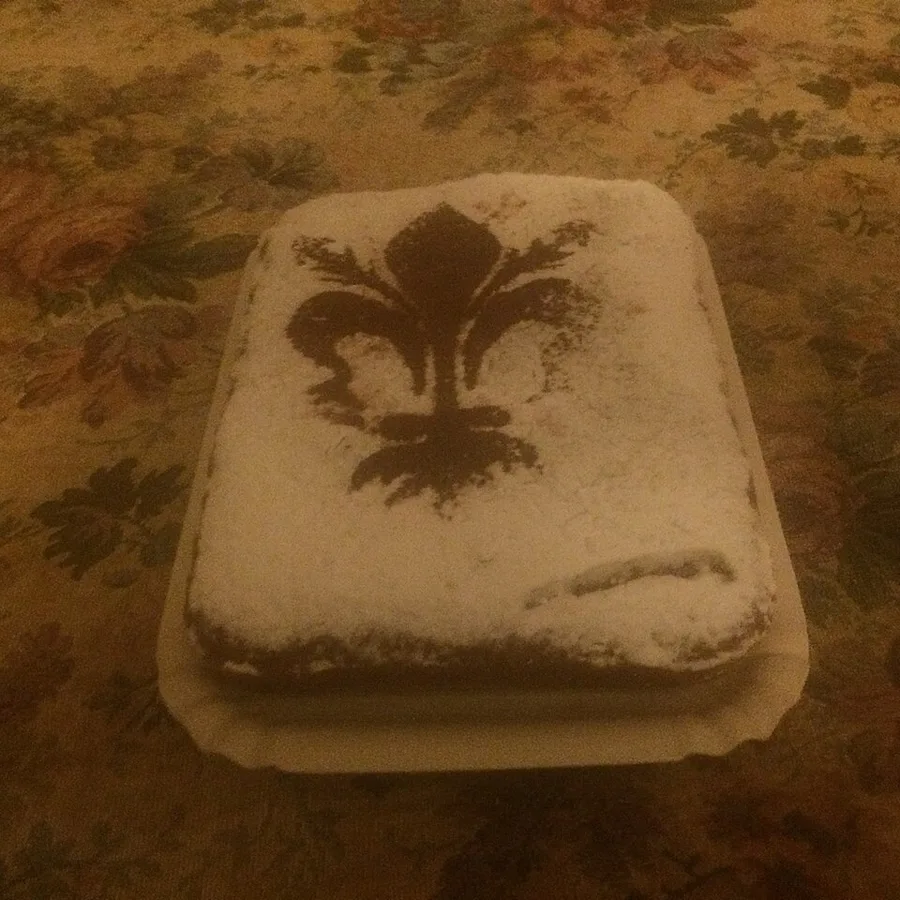
The same word, a completely different food, and the reason many visitors order the wrong thing. This is a Carnival cake: a light orange sponge a few centimetres deep, dusted with icing sugar and stencilled with the Florentine lily in cocoa. It shares only the name and the flat shape.
| This | Schiacciata alla fiorentina | |
|---|---|---|
| What it is | Yeasted flatbread | Egg and sugar sponge cake |
| Season | All year | Carnival, February and March |
| Flavour | Wheat, olive oil, salt | Orange juice and zest, sugar |
| Fat | Olive oil | Lard or butter |
| Finish | Coarse salt | Icing sugar with a cocoa lily |
| Filled with | Salumi and cheese | Sometimes chantilly cream |
Schiacciata substitutes
- Focaccia, baked drier
The nearest thing on most shelves. To move it toward schiacciata, skip the brine, press the dough thinner, and bake it hotter and a few minutes longer so the base crisps.
1:1 - Pizza bianca
Structurally the closest substitute if you can find a Roman bakery. Splits and fills exactly the same way, with a more open crumb and a saltier dough.
1:1 - Ciabatta, split and toasted
For sandwiches only. Split it, brush the cut faces with good olive oil, and toast until the surface crisps. It gives the right dry, crunchy platform for salumi even if the shape is wrong.
One large ciabatta per two portions - Home-baked, which is genuinely easy
500 g strong white flour, 350 ml water, 5 g fresh yeast, 10 g salt, 3 tablespoons olive oil. Rise two hours or overnight in the fridge, press into an oiled tray, dimple, oil, salt, bake at 240 C for twenty minutes.
500 g flour fills a standard oven tray - Turkish pide or Greek lagana
Both are dimpled, oiled flatbreads from the same eastern Mediterranean family. Less olive-oil-forward, but the right thickness and the right crust.
1:1
Where to buy it
Outside Italy, Italian bakeries increasingly sell schiacciata alongside focaccia, at roughly 6 to 9 dollars a pound in the US and 12 to 18 pounds a kilo in the UK. Read the description: much of what is labelled schiacciata abroad is focaccia by another name, taller and softer.
What travels far better than the bread is the filling. Finocchiona IGP, prosciutto toscano, and Tuscan pecorino are all widely exported and available from Italian delicatessens and online specialists in both countries.
In Tuscany, buy it by weight from a bakery rather than a bar: 8 to 14 euros a kilo, rising to 14 to 18 in central Florence, and a portion for one person costs a euro or two. A filled schiacciata sandwich runs 6 to 8 euros in a neighbourhood shop and 8 to 12 at the famous ones on via dei Neri.
Honestly, though, this is one of the easiest Italian breads to make at home, and the ingredients cost under two euros for a full tray. Flour, water, yeast, salt, olive oil, and fingers.
Where to eat it in Italy
Florence, and preferably at a neighbourhood bakery mid-morning when the tray comes out, rather than at whichever place currently has the longest queue. San Frediano, Sant'Ambrogio and the streets around the Mercato Centrale all have forni that have been doing this for decades.
That said, the two famous sandwich shops earn their reputations. All'Antico Vinaio on via dei Neri and I' Fratellini on via dei Cimatori both work with proper schiacciata; the queues are what they are.
Prato and Pistoia make a version enriched with lard, shorter and more crumbly. Around Lucca and along the Versilia coast, schiacciata blends into a local focaccia with more oil and more height.
In September, bakeries across the Chianti and the countryside around Florence and Siena turn out schiacciata con l'uva for the few weeks of the grape harvest. Greve in Chianti, Impruneta and the surrounding villages are the places to look, and in many bakeries it exists for three or four weeks a year and then vanishes.
At Carnival, in February and March, every Florentine pastry shop has schiacciata alla fiorentina in the window, a flat orange sponge under icing sugar with the city's lily stencilled in cocoa. Different food, same word.
Frequently asked questions
What is the difference between schiacciata and focaccia?
Oil and thickness. Genoese focaccia carries a lot of oil in the dough and is brushed with a salt brine before baking, so it stays tall, moist and soft. Tuscan schiacciata has less oil in the dough, takes it mostly on the surface, and bakes thinner, drier and crisper. Focaccia is eaten on its own; schiacciata is usually split and filled.
Why is Tuscan bread unsalted?
Pane sciocco, saltless bread, is a long-standing Tuscan tradition explained variously by salt taxes and by medieval rivalries between cities. It survives because it works: unsalted crumb is a counterweight to the very salty salumi and pecorini of the region. Schiacciata still gets salt, but on the surface rather than in the dough.
What is schiacciata con l'uva?
A harvest sweet from central Tuscany, made in September and October by layering bread dough with whole black canaiola wine grapes, sugar and sometimes rosemary. The seeds are left in: that is the recipe, not an oversight. It is listed among Tuscany's traditional food products and is available only for a few weeks a year.
Is schiacciata alla fiorentina the same bread?
No. It is a Carnival cake: a light orange sponge a few centimetres deep, covered in icing sugar and stencilled with the Florentine lily in cocoa, sometimes split and filled with cream. It shares the name and the flat shape and nothing else.
How do you pronounce schiacciata?
skyah-CHAH-tah, three syllables with the stress on the second. The 'sch' is a hard SK and the 'cci' is a soft CH. The Florentine form, stiacciata, is styah-CHAH-tah and refers to the same bread.
Related foods
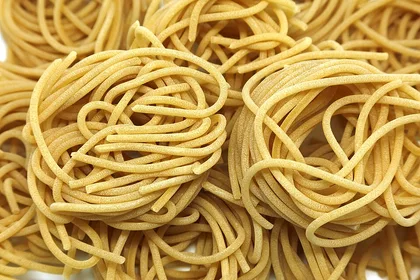 Pasta and breadPiciPici are fat, hand-rolled spaghetti from southern Tuscany, made from nothing but flour and water.
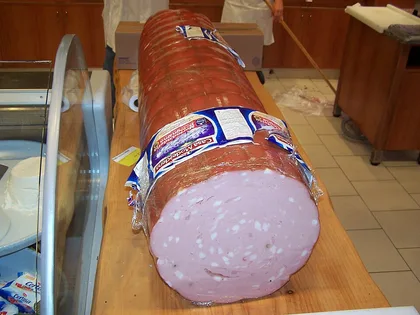 Cured meatsMortadellaThe white cubes are not just any fat: they are jowl, the firmest part of the pig, and they stay whole…
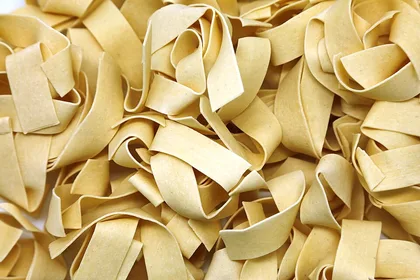 Pasta and breadPappardelleRibbons of egg pasta two to three centimetres wide, the widest pasta you still eat twirled on a fork.
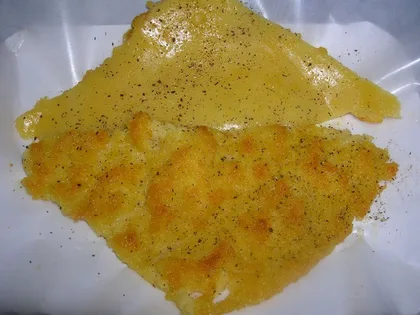 Pasta and breadTorta di Ceci (Cecina)Chickpea flour, water, olive oil and salt, baked in a wide copper pan in a fierce wood oven.
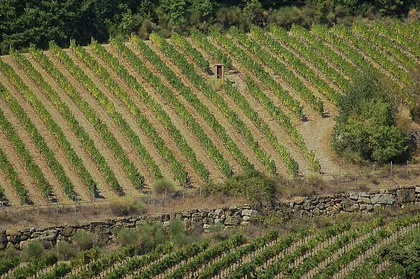 WineChianti ClassicoChianti Classico is the Black Rooster wine: at least 80 per cent Sangiovese from nine communes between…
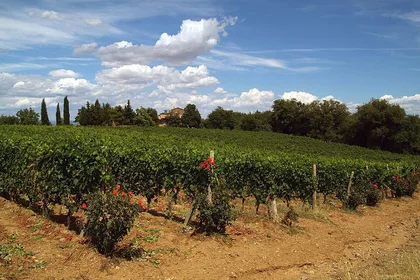 WineBrunello di MontalcinoBrunello di Montalcino is pure Sangiovese aged five years, at least two of them in oak, made only in the…
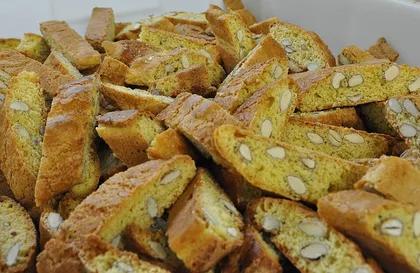 SweetsCantucciCantucci are hard, twice-baked Tuscan almond biscuits. A log of dough is baked, sliced on the diagonal while…Vegetables and fruitChestnutsFor a thousand years the Apennines made bread from them rather than dessert: Castanea sativa was the tree…