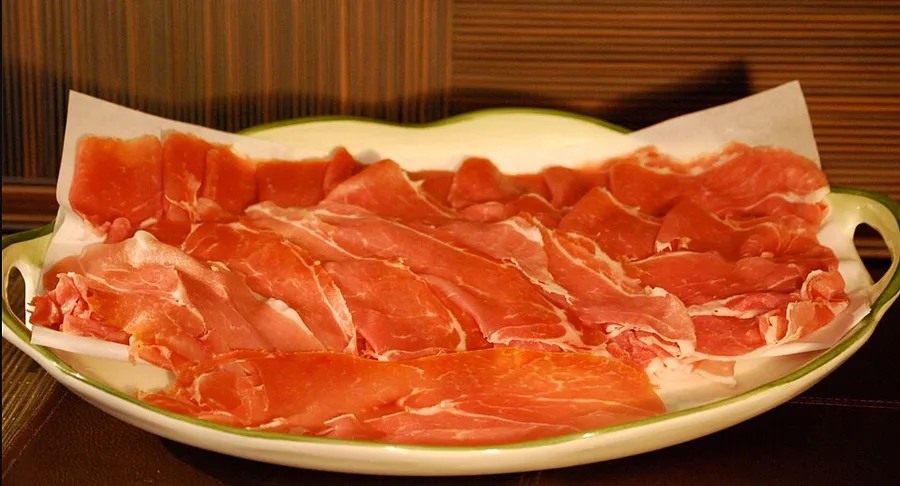
What is Prosciutto Toscano?
Prosciutto Toscano is a whole pork leg from Italian heavy pigs, dry-salted, rubbed with pepper and aromatics, and aged for at least ten to twelve months depending on size. It has carried DOP protection since 1996, and the production zone is the entire region of Tuscany.
Among the great Italian dry-cured hams it is the most assertive, for two technical reasons. First, salt: the salting phase runs longer and harder than in Parma, and the finished ham carries a noticeably higher salt content. Second, the concia: a rub of ground black pepper, garlic and natural aromatics such as juniper, bay and rosemary, worked into the surface during salting. No other Italian DOP ham is seasoned this way.
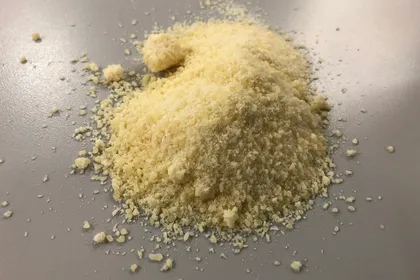
You can identify it before tasting, by the trim. Fat and rind are cut away in a high arc that exposes far more lean muscle than the Parma or San Daniele trim does. The resulting shape is narrower and sharper, and the exposed muscle is later sealed with sugna, a paste of lard, flour, salt and, in Tuscany, pepper.
Finished weight runs eight to ten kilos. One clarification worth having: prosciutto made from Cinta Senese pigs is not Prosciutto Toscano DOP. Cinta Senese is a separate native breed with its own protection, its own flavour and a much higher price.
What does it taste like?
Salty and savoury in a way Parma is not, with a herbal, peppery lift on the finish. The meat itself is dense and slightly chewy rather than silky, and the flavour is more mineral, more animal, closer to a Spanish serrano than to the sweet, buttery register English speakers usually associate with the word prosciutto.
The concia is what people remember. Pepper is the loudest note, with garlic sitting behind it and herbs (juniper, bay, rosemary) appearing more as a green undertone than as identifiable flavours. Along the rim of a slice you will often see pepper grains embedded in the fat.
On its own, it can read as aggressive. Eaten as intended, on Tuscan saltless bread or with melon or figs, it snaps into balance, and the fruit or bread stops the salt in exactly the way plain crackers do not. Long-aged pieces, sixteen months and up, taste nuttier and drier, and often show white tyrosine crystals that crunch faintly.
How to use it
Cut it by knife, two to three millimetres thick, and let the slices be slightly uneven. This is Tuscan practice and it is also sound: a ham this savoury turns into pure salt when shaved paper-thin, while a slice with body keeps the sweetness of the meat underneath.
The bread should be unsalted. Tuscan pane sciocco or plain schiacciata is the accompaniment the product was designed around; on salted bread or crackers it reads as too much, which is a mismatch rather than a fault. If you cannot find unsalted bread, a good sourdough with a light hand on the salt is the nearest thing.
It beats Parma with melon and figs, because the salt holds up against sweet fruit instead of disappearing into it. In the kitchen, dice it into a meat ragù or a bean soup, and keep the knuckle end, the gambuccio, to flavour ribollita and any pot of Tuscan beans.
Do not trim the fat off. That is where the pepper, garlic and herbs live, and a defatted slice loses the thing that makes the ham Tuscan.
How long it keeps
A whole bone-in ham, once started, keeps in a cool room at 10 to 15°C (50 to 59°F), the cut face covered with its own fat or with greaseproof paper, out of direct light, and is normally worked through over a couple of months. Between sessions that face dries and darkens, so a thin dry veil gets shaved off each time you come back to it.
Boned and vacuum packed, it carries a printed date and usually runs around six months refrigerated. Once opened, wrap it in a cloth and expect to work through it in three or four weeks, with the exposed surface hardening as you go.
Sliced is the fragile form: it oxidises within hours and loses much of its aroma inside a day. Buy small amounts and let them sit out twenty minutes, because cold keeps the fat waxy and mutes the pepper. Freezing breaks the fat structure and the meat thaws grainy. White specks on a slice are tyrosine crystals, formed as proteins break down over a long cure.
Spot the real thing
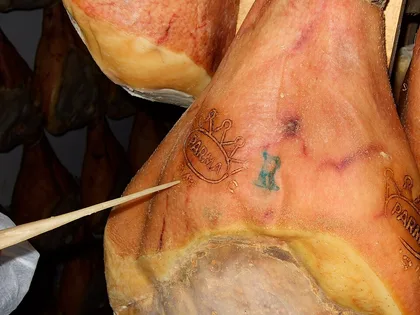
The mark branded into the rind is the only real guarantee: it carries the consortium stamp identifying Prosciutto Toscano DOP. Without it, a ham described as Tuscan is simply one made or packed in Tuscany, and could be anything.
The shape is sharper than Parma, trimmed high in an arc, with little covering fat visible on the muscle side. What fat there is should be white and firm, with no yellowing. Sliced, the colour runs from bright pink to red, darker than Parma because of the salt and the length of the cure, and grains of pepper from the rub are often visible along the edge. The texture is firm without being hard: a slice should fold rather than snap. The nose is cured meat first, then pepper, then a green note of garlic and herbs underneath.
At a counter abroad the neighbours are Parma and San Daniele, both sweeter, paler and softer, and Spanish serrano, drier and leaner. Toscano is the salty, peppery, herb-rubbed one, and it usually sits a step below Parma in price.
How to pronounce Prosciutto Toscano
pro-SHOO-toh tos-KAH-noh
Prosciutto is three syllables: pro-SHOO-toh. The 'sci' is a single 'sh' sound and the double t is held slightly, like the 'tt' in 'hot tea'. Toscano is tos-KAH-noh, stress in the middle. Not 'pruh-SHOOT' and not 'pro-SKY-oo-toh'.
Prosciutto Toscano compared
vsProsciutto di Parma
The single comparison that matters, and the one that decides whether you will like Tuscan ham. Parma is cured with sea salt and nothing else (no pepper, no garlic, no herbs) and is deliberately sweet and delicate. Toscano is salted harder and rubbed with a pepper-and-garlic concia, so it is louder in every direction. Parma is trimmed round and keeps more fat covering; Toscano is trimmed in a high arc that exposes the muscle. Parma is the one to buy for silky, melt-on-the-tongue slices; Toscano is the one to buy for a sandwich that has to fight back.
| This | Prosciutto di Parma | |
|---|---|---|
| Seasoning | Salt, pepper, garlic, herbs | Sea salt only, by law |
| Salt level | Noticeably higher | Deliberately low |
| Flavour | Savoury, peppery, herbal | Sweet, delicate, buttery |
| Trim | High arc, more exposed muscle | Rounded, more fat cover |
| Minimum ageing | 10–12 months by size | 12 months |
| Slice | 2–3 mm, by knife | Paper-thin |
| Eats best with | Unsalted bread, melon, figs | On its own, or with grissini |
vsProsciutto di San Daniele
San Daniele, from Friuli in the north-east, sits at the opposite end of the scale from Toscano. It keeps the trotter attached, is pressed flat during curing into its distinctive guitar shape, ages at least thirteen months and is the sweetest and most delicate of the three big Italian hams. Toscano keeps no trotter, is never pressed, is aggressively seasoned and is built for bread. If Parma is the middle of the range, San Daniele and Toscano are its two ends.
| This | Prosciutto di San Daniele | |
|---|---|---|
| Region | Tuscany | Friuli Venezia Giulia |
| Trotter | Removed | Left on: the visual signature |
| Pressing | None | Pressed flat during curing |
| Seasoning | Salt, pepper, garlic, herbs | Sea salt only |
| Minimum ageing | 10–12 months | 13 months |
| Register | Savoury and assertive | Sweet and delicate |
vsJamón serrano
For anyone shopping in the US or UK, serrano is the useful reference point: it is the mainstream dry-cured ham most people have already tasted, and Toscano is closer to it than Parma is. Both are firm, salty and chewy rather than silky. The differences are the pepper-and-garlic rub, which serrano does not have, and the pig: Italian heavy pigs raised on a controlled circuit, versus a much wider range of Spanish white-pig production. Serrano is also usually cheaper and far easier to find.
| This | Jamón serrano | |
|---|---|---|
| Country | Italy, Tuscany only | Spain, widely |
| Seasoning | Salt plus pepper, garlic, herbs | Salt only |
| Texture | Firm, dense | Firm, often drier |
| Typical ageing | 12–18 months | 7–18 months by grade |
| Price | Higher | Lower, widely stocked |
Prosciutto Toscano substitutes
- Jamón serrano
The closest easy substitute in salt level and texture, and available in every large supermarket. It lacks the pepper-and-garlic aroma, so grind a little black pepper over the slices and you are most of the way there.
1:1 - Prosciutto di Parma
Widely available but sweeter and softer. Fine as a stand-in when the ham is one element among many; less convincing on unsalted bread, where the salt is doing structural work.
1:1, with a pinch of salt if the dish depends on it - American country ham (Smithfield, Benton's, Edwards)
Uncooked country ham is saltier than Toscano and often smoked, but in the raw, thin-sliced style it is structurally the nearest American product. Choose an unsmoked one where you can, and use less of it.
0.7:1, it is stronger - Speck Alto Adige
Only if smoke does not bother you. It brings the herbal, juniper-and-pepper side of Toscano and adds smoke, which Tuscan ham never has. Good in cooking, less good on a board where the comparison is direct.
1:1 - Bresaola (pork-free)
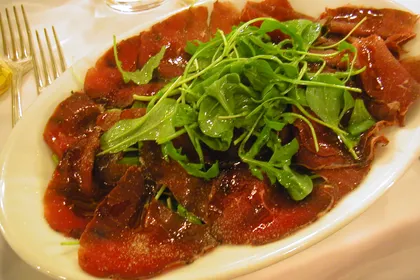
Air-dried beef, salted and aromatic, very lean. Nothing reproduces the fat, so dress it with olive oil and pepper. It works well in the melon-and-fig role and on unsalted bread.
1:1 - Halal cured beef or turkey ham
Certified beef bresaola-style products and cured turkey exist in most halal butchers. They are far leaner and milder, so season the plate with good olive oil, cracked pepper and a slice of pecorino to fill the gap.
Where to buy it
In the US, Italian delis and online specialists carry it sliced and vacuum-packed at roughly 24 to 38 dollars per pound; some Whole Foods and Wegmans counters stock it. In the UK, Italian delicatessens and a few of the larger supermarkets carry it at 32 to 48 pounds per kilo.
Check the label for Prosciutto Toscano DOP and, on a whole leg, for the fire-branded consortium mark on the rind. A ham described only as 'Tuscan-style' or 'produced in Tuscany' carries no rules about salting, seasoning or ageing.
Buy small quantities and eat them fast: sliced prosciutto oxidises within hours and loses most of its aroma within a day. If you are buying a boneless vacuum-packed piece, it will keep six months unopened and a month or so after that, which is usually the better value.
Where to eat it in Italy
The Chianti hills between Greve and Panzano, half an hour south of Florence, where the historic butchers double as counters and kitchens. It is the easiest place in Tuscany to taste ham, finocchiona and pecorino side by side.
The Casentino and the Mugello, the two valleys north of Arezzo and Florence, are quieter and closer to the source, as is the Garfagnana above Lucca: all three have deep pork-butchery traditions and a fraction of the visitors. San Miniato, between Florence and Pisa, combines cured meats with its white truffle market in November.
On Monte Amiata and in the Val d'Orcia the ham arrives on the board next to Pienza pecorino. Wherever you eat in the region, the bread on the table will be unsalted, and that is the whole point, and it is worth ordering the ham specifically to eat with it.
Further reading
Frequently asked questions
Why is Prosciutto Toscano saltier than Parma?
Because it was designed to be eaten with pane sciocco, the unsalted Tuscan bread, which needs a savoury partner to work. Technically, the salting phase is longer and harder, and the pepper-and-garlic concia rubbed into the surface reinforces the effect.
What is the concia?
The rub of ground black pepper, garlic and natural aromatics (juniper, bay, rosemary, depending on the producer) applied to the leg during salting. It is the step that separates Tuscan ham from every other Italian DOP prosciutto.
Can I use Prosciutto Toscano instead of Parma?
In cooking, yes, and often with better results because it holds its flavour. On a plate, treat them as different products: Toscano wants bread, melon or figs alongside it, while Parma is at its best eaten alone.
Is prosciutto made from Cinta Senese pigs the same thing?
No. Cinta Senese is a native Tuscan breed raised semi-wild, with its own protected status. Its ham is fatter, more aromatic and considerably more expensive, and it is not sold as Prosciutto Toscano DOP.
How do you pronounce Prosciutto Toscano?
pro-SHOO-toh tos-KAH-noh. The 'sci' is a single 'sh' sound, and both words carry the stress on the second-to-last syllable.
Sources
Where to check what you just read.
- 1
L'atto europeo che iscrive «Prosciutto Toscano» fra le DOP dei prodotti a base di carne, nello stesso allegato di Culatello di Zibello e Pancetta Piacentina.
- 2
Il PDF del disciplinare vigente, dove si verificano peso minimo della coscia, tempi di salagione, aromi ammessi e stagionatura minima.
- 3Consortium · interested partyConsorzio del Prosciutto Toscano DOP
Il disciplinare scaricabile, i produttori autorizzati e la spiegazione della salagione aromatica con pepe ed erbe che distingue il toscano dal parmense.
Related foods
 Cured meatsProsciutto di ParmaProsciutto di Parma DOP is Italian ham made from three things only: pork, sea salt and at least 400 days.
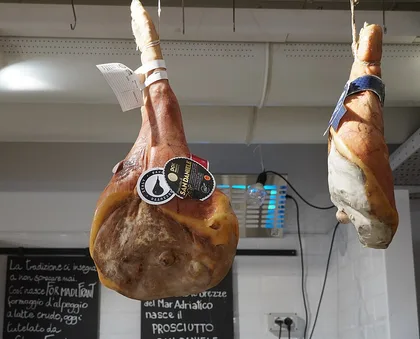 Cured meatsProsciutto di San DanieleProsciutto di San Daniele DOP is made in one town in Friuli from two ingredients: pork leg and sea salt.
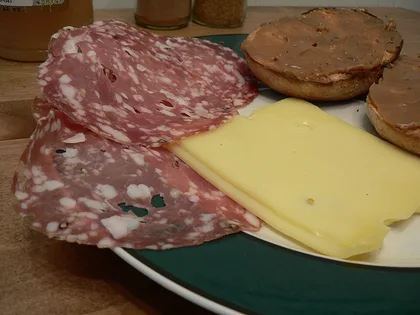 Cured meatsFinocchionaFinocchiona is Tuscany's fennel salami: coarsely ground pork seasoned with wild fennel seeds and flowers…
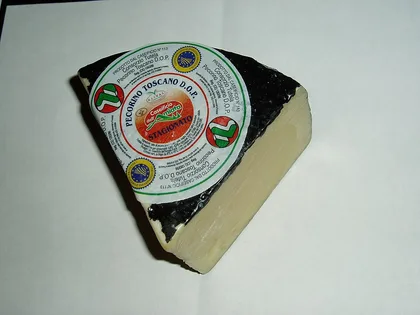 CheesePecorino ToscanoPecorino Toscano DOP is the mild one. Whole sheep's milk, calf rennet, a brief salting: soft-paste wheels…
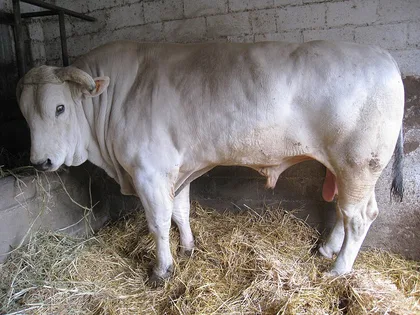 Cured meatsChianina BeefChianina is the largest cattle breed in the world: porcelain-white, bulls over 1,700 kg, from the Chiana…
 Cured meatsLardo di ColonnataLardo di Colonnata IGP is cured pork back fat, aged at least six months inside vats carved from Carrara…
 Cured meatsCinta Senese PorkCinta Senese is the black pig with a white belt across its shoulders, raised semi-wild in the oak woods south…
 WineChianti ClassicoChianti Classico is the Black Rooster wine: at least 80 per cent Sangiovese from nine communes between…