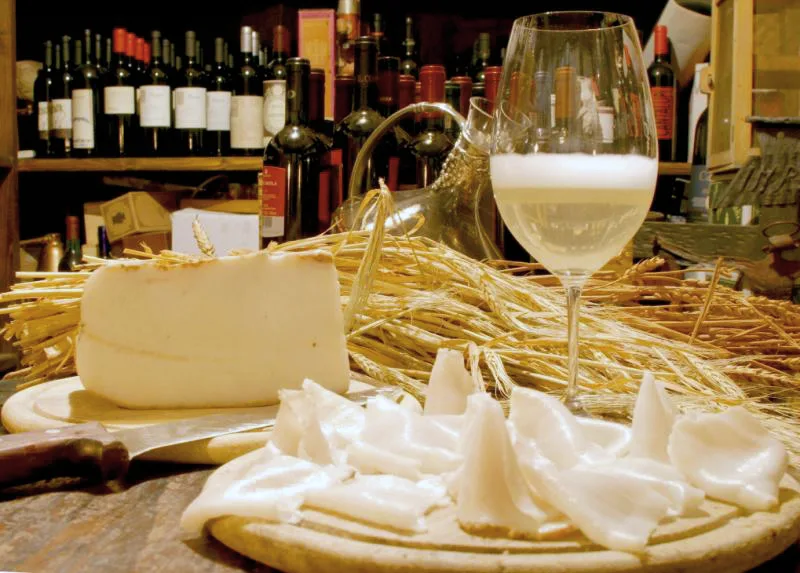
What is Lardo di Colonnata?
Lardo is the fat from a pig's back, at least three centimetres thick, cured whole. What makes the Colonnata version specific is the container: a conca, a basin cut from a single block of Canaloni marble quarried in the basin above the village, which is low in porosity and slow to change temperature.
The conca is rubbed with garlic, then filled with alternating layers of fat and a seasoning mix of sea salt, coarse black pepper, rosemary, fresh garlic and spices (cinnamon, cloves, star anise, coriander, nutmeg, sage) that varies from family to family. There is no fixed recipe, and the IGP protects the method rather than the spice blend.
Over at least six months the fat releases its own brine, which stays in the vat and submerges it. No water is added, no preservatives are used, and no refrigeration is involved: the larderie are natural cellars and the Apuan Alps supply the climate.
Colonnata is a hamlet of Carrara at 530 metres, surrounded by marble quarries. Its lardo has held IGP status since 2004.
What does it taste like?
Not what people expect. Sliced paper-thin and laid on hot bread, it melts to almost nothing and tastes clean, herbal and faintly sweet: rosemary, garlic and warm spice arrive before the pork. There is no greasiness on the palate if the slice is thin enough; it dissolves rather than chews.
The salt is assertive, which is why Tuscan bread, famously made without salt, is its traditional partner. Cold and sliced thicker it eats richer and firmer, more like a very soft cured meat than like fat.
Older pieces, nine or ten months in the conca, go deeper and more aromatic, with the spices pushing towards something almost like a mulled note. Different larderie taste distinctly different, and tasting two side by side is the point of visiting.
How to use it
Slice it as thinly as you physically can, almost transparent, and lay it on hot toasted bread. The heat turns it translucent and it begins to melt as you lift it. Grind black pepper over the top and add nothing else. That is the original quarrymen's version and it has not been improved on.
It is also a finishing fat. Two slices over a resting steak, over roast potatoes straight from the oven, melted into a chickpea soup, or wrapped around a scallop or prawn just before searing.
Do not cook it hard. Fried or rendered, it collapses into ordinary fat and the spices scorch. It belongs at the end of a dish, not the start.
Slice it cold and serve it at room temperature: ten minutes out of the fridge, no longer, or the slices become impossible to handle. Pair it with things that cut fat: fresh figs, chestnut honey, pears, roast chestnuts, or the unsalted Tuscan bread it grew up with.
How long it keeps
A slab keeps in the fridge for two to three months, wrapped in greaseproof paper or a cloth, never with cling film pressed against it. The cure on the surface is doing a job: leave it in place until you cut, and take it off only from the face you are working on. Vacuum packs go longer, up to about six months to the date on the pack, but the vacuum compresses the fat and makes it sweat, so open one half an hour before slicing and let it come back to itself.
Slice it cold and serve it at room temperature: out of the fridge ten minutes ahead, no more, because past that the slices become almost impossible to handle. What changes with time is the fat itself, which slowly loses its brightness and turns from white towards cream and then towards yellow at the edges as it oxidises, while the aroma of garlic and rosemary fades. Freezing is possible and mostly pointless given how long it keeps unfrozen; if it has to happen, freeze slabs rather than slices, for no more than four months.
Spot the real thing
The first thing to clear up in English is the word itself. Lard, in a British or American shop, means rendered pork fat in a tub; lardo is cured back fat, sliced and eaten as it is. Lardo di Colonnata IGP is white with a few pink veins and never yellow, since yellow is oxidation. The surface still carries the pepper, salt and rosemary it was cured with, and that crust stays on: it gets scraped, not washed. To the touch it is soft but not slack, easy to cut with a smooth blade at room temperature and firm again from the fridge.
The pack should show the European IGP logo alongside the wording Lardo di Colonnata IGP and the producer identifier. The larderie in the village are few and known by name, so anything sold in supermarket volume as Colonnata style lardo is a different product, as is the domestic lardo cured by American charcuterie makers. One practical tell: the IGP version comes in irregular slabs and never in geometrically perfect blocks, because a marble basin does not mould shapes. Expect roughly $25 to $40 a pound or £6 to £9 for 100 g.
How to pronounce Lardo di Colonnata
LAR-doh dee koh-lohn-NAH-tah
Stress on the first syllable of lardo and the third of Colonnata, with the double n held slightly: koh-lohn-NAH-tah. The crucial thing is not the sound but the meaning: Italian lardo is cured back fat you slice and eat, while English 'lard' is rendered fat for cooking, which in Italian is strutto or sugna. They are not the same product.
Lardo di Colonnata compared
vsFatback / salt pork
Same cut of the animal, entirely different product. American fatback is fresh or lightly salted pork back fat sold as a cooking ingredient: for rendering, for larding lean roasts, for cooking greens. Lardo di Colonnata is that fat cured for six months or more with salt, garlic, rosemary and spices in marble, until it becomes something you slice thin and eat raw. Fatback is raw material; lardo is a finished cured meat. Substituting one for the other in either direction does not work: cured lardo burns and loses its spices if you render it, and fresh fatback is inedible sliced.
| This | Fatback / salt pork | |
|---|---|---|
| Cut | Pork back fat, min 3 cm | Pork back fat, any thickness |
| Cured | 6+ months in marble with salt and spices | Fresh, or brief salt cure |
| Eaten raw | Yes, this is the whole point | No |
| Flavour | Herbal, spiced, sweet-salty | Neutral pork fat |
| Typical use | Sliced on warm bread | Rendered, larding, cooking greens |
| Price | High: IGP, months of ageing | Very low |
vsLardo d'Arnad DOP
Italy's other protected lardo, from the Aosta Valley in the Alps, and DOP since 1996. Arnad cures its fat in wooden containers called doils rather than marble, in a brine with mountain herbs, juniper and often bay, a distinctly alpine profile against Colonnata's Mediterranean rosemary and garlic. Arnad is usually softer and more aromatic, Colonnata firmer and saltier.
| This | Lardo d'Arnad DOP | |
|---|---|---|
| Region | Tuscany, Apuan Alps | Aosta Valley, Alps |
| Vessel | Marble conche | Wooden doils (chestnut or oak) |
| Seasoning | Rosemary, garlic, pepper, warm spices | Juniper, mountain herbs, bay, sage |
| Status | IGP since 2004 | DOP since 1996 |
| Texture | Firm, dissolves on heat | Softer, more spreadable |
vsSalo (Ukrainian and Eastern European)
The closest relative outside Italy, and a useful reference point for anyone who has eaten it. Salo is cured pork fat, usually salted and often garlicked, sometimes smoked, eaten sliced on dark rye bread: the same idea, arrived at independently. Salo is generally saltier and simpler, without the spice blend and the long marble ageing, and smoked versions taste nothing like lardo.
| This | Salo (Ukrainian and Eastern European) | |
|---|---|---|
| Cure | Salt, garlic, rosemary, spices, 6+ months | Salt and garlic, weeks to months |
| Smoke | Never | Sometimes |
| Vessel | Marble conca | Cloth, crates, jars |
| Served | Thin on warm bread | Thicker on dark rye, often with vodka |
| Availability | Specialist Italian shops | Eastern European grocers, cheap |
Lardo di Colonnata substitutes
- Lardo d'Arnad DOP
The only true like-for-like: another Italian cured lardo, protected, sliced and eaten the same way. More herbal and alpine in character, slightly softer. Swap without changing anything else.
1:1 - Generic Tuscan or Italian lardo
Plenty of Italian producers cure lardo without a marble conca and without the IGP. It is a good product at half the price, usually less complex in spicing. Fine for cooking uses; the difference shows most on plain bread.
1:1 - Salo (Eastern European cured fat)
Widely sold and inexpensive in Eastern European grocers. Saltier and plainer: buy the unsmoked kind, slice thinner than you would lardo, and add a little rosemary and black pepper on the plate to bridge the gap.
1:1, sliced thinner - Guanciale or prosciutto fat
The trimmed fat from a guanciale or a prosciutto end does much of the same work draped on hot food or melted over potatoes. Less aromatic, but almost free if you already buy either.
1:1 for cooking uses, not for serving raw - Home-cured lardo
Feasible without a marble vat. Pack a 3 cm slab of skinless back fat in a glass or ceramic dish with sea salt, crushed garlic, coarse pepper, rosemary, a little cinnamon and clove, weight it, refrigerate three months and turn it monthly. Not Colonnata, since the marble and the mountain air are not reproducible, but genuinely good.
Roughly 40 g salt mix per kg of fat - Vegetarian: whipped white bean and rosemary spread
No honest substitute exists for cured fat, but the role it plays on warm bread (rich, salty, herbal, melting) can be filled by cannellini beans whipped with good olive oil, garlic confit, rosemary and plenty of black pepper, spread on hot toast.
Where to buy it
This is a hard one to buy outside Italy. In the US, cured pork imports are restricted and availability is patchy. Italian specialist importers and high-end delis in New York, San Francisco and Chicago sometimes stock it at 30 to 50 dollars per pound, and several excellent US charcuterie makers produce their own lardo, which is worth buying on its own merits.
In the UK, Italian delicatessens and online specialists carry it at roughly 35 to 55 pounds per kilo, usually in 200-500 g pieces. Ask specifically for Colonnata: plain 'lardo' on a UK counter is often generic Italian or house-cured.
In Italy, 28 to 40 euros per kilo at the larderie in Colonnata itself, more like 40 to 55 in delis elsewhere in the country.
Buy a piece, not slices. Pre-sliced lardo oxidises fast and loses the spice crust, and it is the crust that carries the aroma. Check the fat is white or faintly pink: yellow means it has gone.
Where to eat it in Italy
Colonnata itself, which takes five minutes to walk across and sits at 530 metres among working marble quarries above Carrara. The larderie sell and slice at the counter (Fausto Guadagni's is the best known beyond the valley) and Ristorante Venanzio in Piazza Palestro is the restaurant that carried lardo from the quarrymen's lunch pails into the guidebooks.
The Sagra del Lardo di Colonnata takes over the village in late August. It is the one occasion to taste several families' spice blends side by side, which is when you understand how much the seasoning varies.
Combine the trip with the quarries. The Fantiscritti and Colonnata basins run jeep and walking tours, and the road up from Carrara passes through the landscape that explains the product better than any label does.
Further reading
Frequently asked questions
Is lardo the same as lard?
No, and the false friend causes real confusion. Italian lardo is cured pork back fat, aged for months with salt and herbs, sliced thin and eaten raw. English lard is rendered pork fat used for cooking: in Italian that is strutto or sugna. Different products, different uses.
Why is it cured in marble?
Canaloni marble is low in porosity, holds a stable temperature and high humidity, and adds no flavour of its own. The conca creates a constant microclimate in which the fat releases its own brine and cures without refrigeration, a stone fridge that has worked for centuries.
How do you eat lardo di Colonnata?
Sliced almost transparently thin on hot toasted bread, with black pepper. The heat makes it melt. Two or three slices is a portion. It also works draped over resting steak, roast potatoes or hot soup, always added at the end.
How do you pronounce Colonnata?
koh-lohn-NAH-tah, stress on the third syllable, with the double n held for a beat. Lardo is LAR-doh.
Can you cook with lardo di Colonnata?
Only briefly, and only at the end. Rendering it destroys the spice cure you paid for and leaves ordinary fat. Melt it over hot food rather than heating it in a pan; use guanciale or plain fatback when a recipe needs fat to cook in.
Sources
Where to check what you just read.
- 1
L'atto del 26 ottobre 2004 che ha iscritto «Lardo di Colonnata» fra le IGP europee: fissa la data da cui il nome è protetto.
- 2
Il testo del disciplinare: stagionatura non inferiore a sei mesi, conche ricavate dal marmo dell'agro marmifero dei Canaloni, locali poco areati e senza condizionamento, lavorazione da settembre a maggio.
- 3
Il PDF del disciplinare vigente aggiornato, dove si controllano le dieci regioni da cui può arrivare il lardo crudo e le regole della salatura.
Related foods
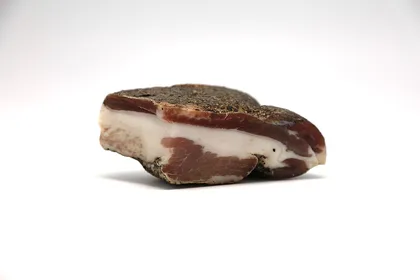 Cured meatsGuancialeGuanciale is cured pork jowl: unsmoked, rubbed with salt and pepper, aged for one to three months.
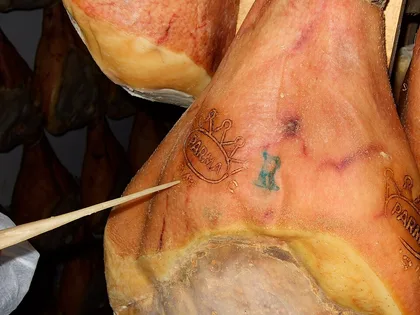 Cured meatsProsciutto di ParmaProsciutto di Parma DOP is Italian ham made from three things only: pork, sea salt and at least 400 days.
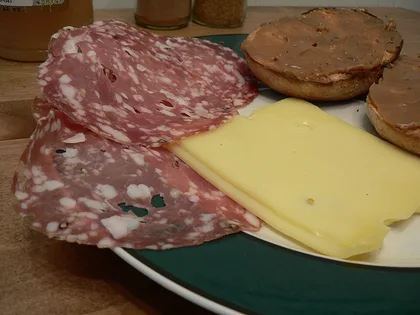 Cured meatsFinocchionaFinocchiona is Tuscany's fennel salami: coarsely ground pork seasoned with wild fennel seeds and flowers…
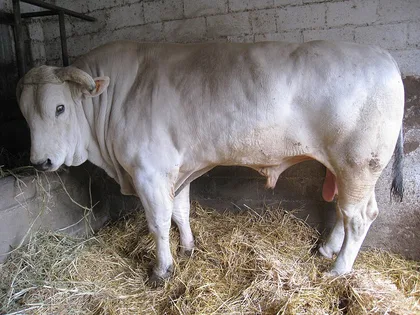 Cured meatsChianina BeefChianina is the largest cattle breed in the world: porcelain-white, bulls over 1,700 kg, from the Chiana…
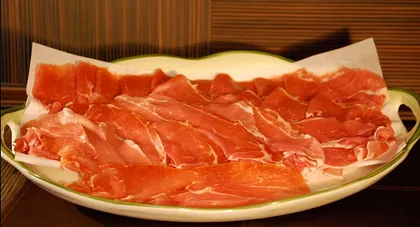 Cured meatsProsciutto ToscanoProsciutto Toscano DOP is the savoury one. It is salted harder than Parma ham and rubbed with pepper, garlic…
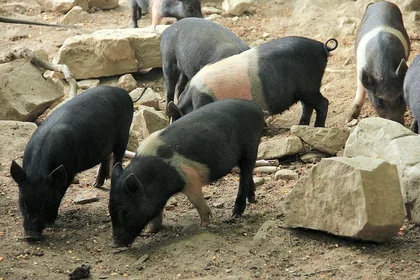 Cured meatsCinta Senese PorkCinta Senese is the black pig with a white belt across its shoulders, raised semi-wild in the oak woods south…
 WineChianti ClassicoChianti Classico is the Black Rooster wine: at least 80 per cent Sangiovese from nine communes between…
 WineBrunello di MontalcinoBrunello di Montalcino is pure Sangiovese aged five years, at least two of them in oak, made only in the…