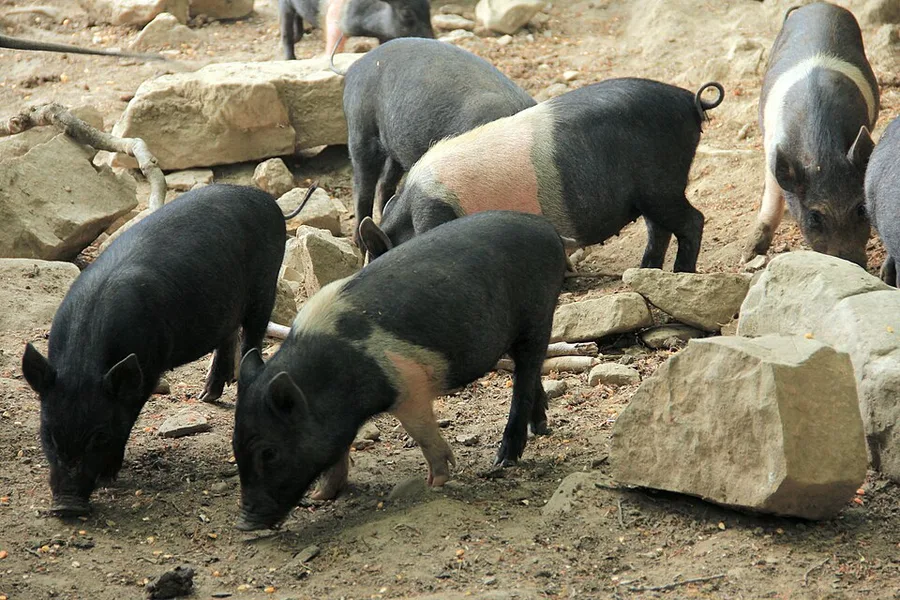
What is Cinta Senese Pork?
Cinta Senese is a native Tuscan pig breed, unmistakable on sight: a slate-black coat crossed by a continuous white band, the cinta or belt, running around the body at the shoulders and taking in the front legs. Forward-hanging ears, a long snout, a solid frame. It is an animal built for walking through woodland, not for standing in a pen.
The DOP, granted in 2012, protects the fresh meat of purebred animals born, raised and slaughtered in Tuscany. That distinction matters more than it sounds. Cinta Senese salumi (prosciutto, capocollo, salame, pancetta, lardo) are not themselves a protected denomination; they are products made from DOP-certified meat, and a producer can only say so if the raw material carries the certification.
Technically it is a fat pig, in the literal sense. It lays down thick back fat and, more importantly, fat inside the muscle, which the white breeds selected for lean yield have largely bred out. Raw, the meat is deep red, closer to young beef than to supermarket pork, with white veining you can see. Cooked, it stays juicy where a commercial pig dries out.
What does it taste like?
Nothing like the pork most people know. The lean is dense and mineral, with a savoury depth closer to veal or wild boar than to pink supermarket loin, and it does not have the faint sweetness of intensively raised pork.
The fat is where the breed argues its case. It is soft, almost translucent, and tastes of hazelnut and acorn, a direct consequence of what the animals forage in autumn. It coats the mouth and then clears, without the waxy finish of white pig fat.
In the cured products this becomes obvious. A Cinta Senese prosciutto is darker, chewier and more concentrated than Parma, with a nutty, faintly gamey depth and a wide band of fat that first-time eaters often think is too much until they eat it. The capocollo is rounder and sweeter, the salame drier and more peppery in the Tuscan style.
The fresh meat cooked pink tastes of the woods without being aggressive. Overcook it, as you would ordinary pork, and you lose the entire point.
How to use it
The single most useful instruction: stop cooking it like lean pork. Chops and loin want a hot pan or embers and a pink centre: the intramuscular fat keeps them tender, and cooking them through undoes the entire reason for buying them. Shoulder and leg go the other way: slow roasting or a long braise with red wine, bay and wild fennel.
Arista, the Tuscan garlic-and-rosemary loin roast, is the standard household dish and should be carved thick. Fresh Cinta sausage over embers is the most direct introduction to the breed. Ribs with cannellini beans is the Sunday version.
Use the fat as an ingredient rather than trimming it away. A spoonful of chopped Cinta lardo in place of oil at the base of a bean soup or a ragù does something olive oil cannot, and on hot toast it simply melts.
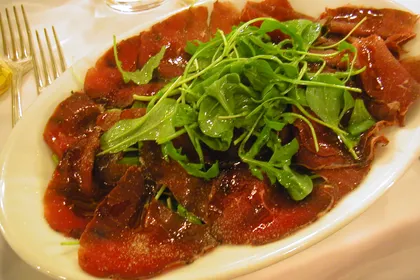
The salumi are eaten raw, hand-cut and not too thin, because a Cinta prosciutto needs a little thickness or it dries on the tongue, with unsalted Tuscan bread and nothing else. Warm the capocollo for a few seconds in a dry pan if you want the fat to soften.
How long it keeps
Fresh cuts behave like any pork: two or three days in the coldest part of the fridge, covered but without film against the meat, or eight to ten days vacuum packed to the date on the bag. It freezes better than lean pork, because the intramuscular fat shields the fibres from ice damage. A whole prosciutto lives in a cool ventilated room rather than a fridge, and once it has been started the cut face gets covered with its own trimmed fat or with greaseproof paper.
Sliced is the fragile form. A slice this fatty oxidises quickly and the fat changes before the meat does, so two or three days is the working window. Whole salame and capocollo hang in a cool cellar for months, drying and firming throughout; a dry white bloom on the casing is part of that process and comes off with a cloth dampened in white wine, while anything sticky or coloured is a question for the producer. Lardo keeps vacuum packed in the fridge for up to six months, and wants half an hour out before serving, because cold it smells of nothing.
Spot the real thing
Fresh certified meat carries the Cinta Senese DOP mark together with the animal's identification code. On cured products the wording has to state that the product is made from Cinta Senese DOP meat; a label saying only cinta senese-style, or showing a drawing of a black pig, certifies nothing. Raw, the meat is an intense red, far darker than a white pig and closer to young beef, and the fat is pinkish white, thick, and above all threaded through the muscle in fine veins rather than sitting only on the outside.
On a sliced prosciutto the colour runs red to garnet with obvious marbling and a fat border that looks excessive to an eye trained on industrial crudo; that fat should be glossy and translucent, never opaque or yellow. The smell of acorn and hazelnut is the most reliable signal of all. On price it belongs alongside Iberico de bellota rather than alongside supermarket prosciutto, and anything near the latter is telling you something.
How to pronounce Cinta Senese Pork
CHEEN-tah seh-NEH-zeh
Five syllables. The 'ci' is soft, as in 'cheese': CHEEN-tah, never 'sinta' or 'kinta'. In 'senese' the middle 's' is voiced, like the s in 'nose': seh-NEH-zeh, stress on the second syllable. The name means, roughly, 'the belted pig of Siena'.
Cinta Senese Pork compared
vsCommercial white pig (Large White, Landrace and crosses)
Two different products that share a species. Modern white hybrids were selected for growth rate and lean yield: they reach slaughter weight in eight or nine months indoors, converting feed efficiently into lean muscle with very little intramuscular fat. Cinta Senese takes two to three times as long, outdoors, foraging for a large share of its own food, and puts much of that time into fat. The white pig is cheaper, leaner and completely consistent. The Cinta is darker, fattier, more flavoured and far more expensive, and it has to be cooked differently, because treating it like lean pork wastes it.
| This | Commercial white pig (Large White, Landrace and crosses) | |
|---|---|---|
| Age at slaughter | 15-24 months | 8-9 months |
| Housing | Woodland, free or semi-free range | Indoor pens, high density |
| Diet | Acorns, roots, grass, plus cereals | Formulated feed |
| Meat colour | Deep red | Pale pink |
| Intramuscular fat | High and visible | Very low |
| Fresh meat price | EUR 16-30 per kg | EUR 6-10 per kg |
| Cooking | Serve pink, or braise slowly | Cooked through as standard |
vsIberico and pata negra
The comparison everyone reaches for, and it is fair up to a point. Both are native black pigs raised outdoors in oak woodland, both finish on acorns, both produce meat marbled with soft, nutty fat that the industrial breeds cannot make. The differences are breed, scale and time: Iberico is a different genetic line, Spanish bellota hams are cured for three to four years against eighteen to twenty-four months for a Cinta prosciutto, and the Spanish sector is an export industry where the Cinta remains a few thousand animals in one Italian province.
| This | Iberico and pata negra | |
|---|---|---|
| Breed | Cinta Senese, Tuscany | Iberian pig, Spain and Portugal |
| Herd size | A few thousand head | Millions, across grades |
| Acorn finishing | Part of a mixed forage diet | Defining for the bellota grade |
| Ham curing | 18-24 months | 24-48 months for bellota |
| Fat | Abundant, nutty, softer | Abundant, sweeter, melts at hand heat |
| Availability abroad | Rare, specialist importers only | Widely exported and graded |
vsMangalitsa
The other heritage lard pig that English-speaking buyers are likely to have met. The Hungarian Mangalitsa is woolly-coated and even fatter than the Cinta, bred historically for lard rather than for meat, and it has been farmed in the US and UK for two decades, which makes it far easier to buy than Cinta Senese. Where the Cinta gives you dark, dense lean with fat running through it, the Mangalitsa gives you extraordinary fat with less lean around it. For rendering and charcuterie the Mangalitsa is the closer substitute; for a roast, the Cinta.
| This | Mangalitsa | |
|---|---|---|
| Origin | Tuscany | Hungary, now farmed widely |
| Bred for | Meat and fat, woodland foraging | Lard, historically |
| Lean-to-fat | More lean, well marbled | Very fat, less lean |
| Availability in US and UK | Very limited | Established small farms |
Cinta Senese Pork substitutes
- Mangalitsa or Berkshire pork
The realistic answer in the US and UK. Both are heritage breeds with genuine intramuscular fat and dark meat, raised outdoors by small producers. Berkshire is closer in lean-to-fat balance; Mangalitsa is closer in fat quality.
1:1 - Iberico pork (presa, secreto, pluma)
Widely available, and the cuts sold as presa and secreto have the marbling that makes Cinta worth cooking. Handle them the same way: hot and fast, served pink.
1:1 - Gloucestershire Old Spot or Tamworth
For UK buyers, traditional outdoor-reared native breeds with far more fat and flavour than commodity pork, and much easier to find than anything Italian.
1:1 - Prosciutto Toscano DOP, for the cured products
Saltier and more heavily seasoned than Parma, made in the same region and the same style. It will not give you the nutty marbled fat, but it gets the Tuscan character right at a third of the price.
1:1 - Jamon Iberico de bellota, for the prosciutto
The nearest thing in flavour terms: acorn-fed, marbled and nutty, and available almost everywhere Cinta is not. Longer cured and sweeter, so serve it in thinner slices.
1:1 - Wild boar, for the fresh meat only
If what you want is the dark, dense, faintly gamey character, farmed wild boar delivers it. What it does not have is the fat, so add pork belly or lardo when braising or making sausage.
3 parts boar to 1 part fatty pork
Where to buy it
This is a small production and very little of it leaves Italy. In the US, a handful of specialist importers list Cinta Senese salumi; some domestic charcuterie makers raise Cinta-cross pigs and label them honestly as such. In the UK, Italian delicatessens and online specialists occasionally carry the prosciutto and salame, usually in small runs.
Expect roughly 45 to 80 dollars a pound for imported prosciutto in the US and 60 to 100 pounds per kilo in the UK, when it appears at all. In Italy the same ham is 55 to 90 euros a kilo, fresh meat 16 to 30 euros a kilo depending on cut.
Read the label rather than the picture. The protected wording refers to Cinta Senese DOP meat; anything saying 'tipo cinta' or simply showing a drawing of a belted pig means nothing. Reputable producers print the animal's identification and the consortium mark.
One price check that works: a Cinta Senese prosciutto below 45 euros a kilo, or below 40 dollars a pound, is not one.
Where to eat it in Italy
Siena and the country immediately around it. Start at the Palazzo Pubblico, where Lorenzetti's Good Government fresco puts the animal into the exact landscape it still lives in, then drive twenty kilometres out and find it alive.
The Montagnola Senese and the Val di Merse (Sovicille, Chiusdino, Monticiano, Murlo) hold most of the farms, and many sell at the gate or run an agriturismo with a kitchen. South of Siena, Buonconvento and Asciano sit in the crete senesi, the clay hills; north, the Chianti stretches toward Florence.
Autumn is the season. Pig fairs and village sagre between October and December are when the fresh cuts are actually on menus; for most of the year butchers carry the cured products only.
A warning worth taking seriously: in tourist restaurants in Siena and San Gimignano, a Cinta Senese tasting board is on nearly every menu and is very often not certified. Ask which farm it comes from, or buy from a producer directly.
Further reading
Frequently asked questions
What is Cinta Senese?
A native Tuscan pig breed, black with a white belt around the shoulders and front legs, raised semi-wild in oak woodland around Siena. Its fresh meat has held DOP protection since 2012. It is fatter, darker and far slower-growing than commercial pork.
Is Cinta Senese salami DOP?
No, and this trips up a lot of buyers. The DOP covers the fresh meat. Salumi are products made from that meat and can say so on the label, but they are not themselves a protected denomination. Anything labelled 'tipo cinta' guarantees nothing at all.
Is Cinta Senese the Italian pata negra?
Loosely. Both are native black pigs finished outdoors on acorns with marbled, nutty meat. But Iberico is a different breed, Spanish bellota hams cure for three to four years against eighteen to twenty-four months for a Cinta prosciutto, and Spain produces on an industrial scale while the Cinta remains a few thousand animals.
How do you pronounce Cinta Senese?
CHEEN-tah seh-NEH-zeh. Soft 'ch' as in 'cheese', and a voiced s in the middle of 'senese'.
Why is it so expensive?
Because it takes fifteen to twenty-four months to raise instead of eight or nine, needs hectares of woodland rather than pens, finishes at a lower weight than a commercial pig, and yields less saleable lean because so much of the carcass is fat. The welfare standard is not marketing here: without the woodland the animal does not produce the meat.
Sources
Where to check what you just read.
- 1
Il regolamento del 13 marzo 2012 che protegge «Cinta Senese» come carne fresca DOP: la tutela riguarda la carne, non il salume che se ne ricava.
- 2
Il disciplinare in PDF: età minima di macellazione, superficie di pascolo per capo, mangimi ammessi e obbligo di nascita e allevamento in Toscana.
- 3Consortium · interested partyConsorzio di Tutela della Cinta Senese DOP
Gli allevatori iscritti e il marchio DOP: serve a distinguere i capi certificati dai suini di razza Cinta allevati fuori dal circuito controllato.
Related foods
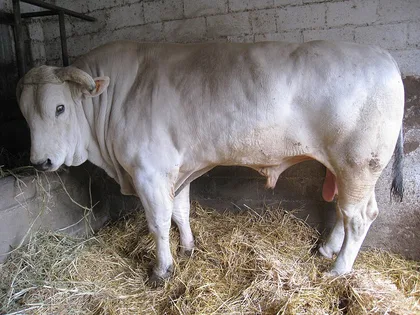 Cured meatsChianina BeefChianina is the largest cattle breed in the world: porcelain-white, bulls over 1,700 kg, from the Chiana…
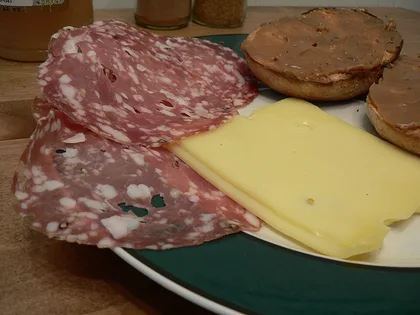 Cured meatsFinocchionaFinocchiona is Tuscany's fennel salami: coarsely ground pork seasoned with wild fennel seeds and flowers…
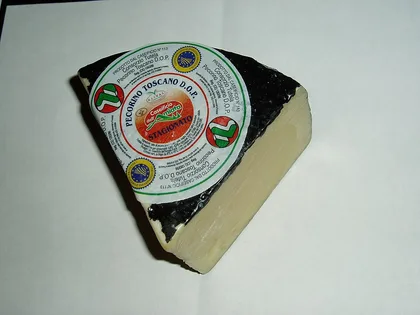 CheesePecorino ToscanoPecorino Toscano DOP is the mild one. Whole sheep's milk, calf rennet, a brief salting: soft-paste wheels…
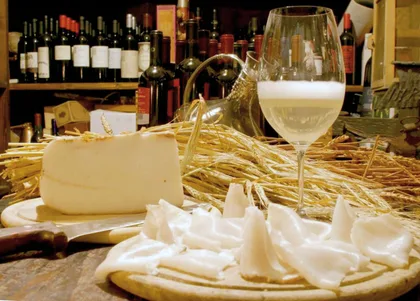 Cured meatsLardo di ColonnataLardo di Colonnata IGP is cured pork back fat, aged at least six months inside vats carved from Carrara…
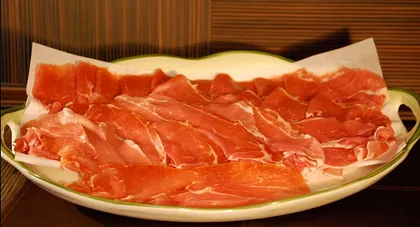 Cured meatsProsciutto ToscanoProsciutto Toscano DOP is the savoury one. It is salted harder than Parma ham and rubbed with pepper, garlic…
 WineChianti ClassicoChianti Classico is the Black Rooster wine: at least 80 per cent Sangiovese from nine communes between…
 WineBrunello di MontalcinoBrunello di Montalcino is pure Sangiovese aged five years, at least two of them in oak, made only in the…
 Pasta and breadPappardelleRibbons of egg pasta two to three centimetres wide, the widest pasta you still eat twirled on a fork.