Cheese rind: when it is cheese and when it is packaging
On some wheels the rind is the same paste, dried out. On others it is paraffin. We lined up what the specifications actually say, because by eye you cannot tell.
By the Agrofood.it editorial team · 4 September 2026 · 3 min read · 4 sources
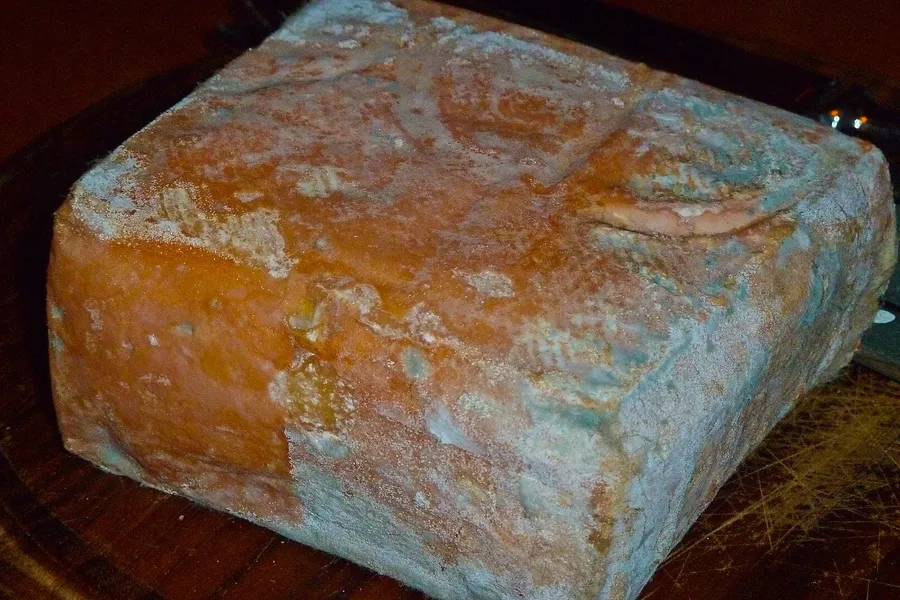
Rinds are not one thing
Three different objects hide under the same word, and confusing them is the source of nearly every misunderstanding.
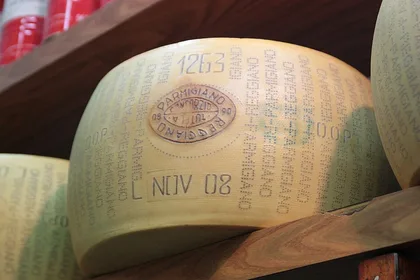
The first is the rind that forms by itself: the surface of the paste which, through brine and months in the store, loses water, compacts and darkens. Nothing was added; it is the same curd, dried. Parmigiano Reggiano works this way.
The second is the bloomy or washed rind, which is alive: a layer of moulds or bacteria that the cheesemaker cultivates on the surface and which takes part in the ripening. Taleggio, Strachitunt and Salva Cremasco belong here, and on these cheeses the rind is part of the flavour rather than a defence.
The third is not cheese at all: a coating added to protect the wheel, usually paraffin or food-grade plastic. It exists for transport and storage, and nobody ever intended it as something to eat.
What the specifications say, cheese by cheese
We looked at what the specifications require and at what the pages of the cheeses in our atlas declare. The picture that emerges cannot be deduced by looking at the wheel.
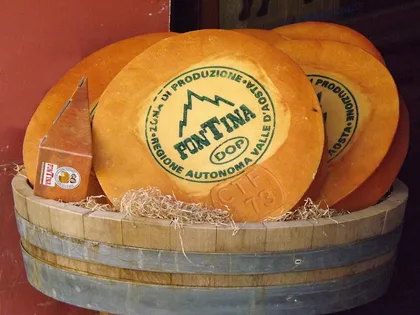
On some products treatment is forbidden outright. Parmigiano Reggiano permits no chemical treatment and no artificial coating, so the rind is the paste itself. The Fontina specification calls for a thin brown-orange rind and forbids covering it in wax. Piacentinu Ennese must not be treated at all.
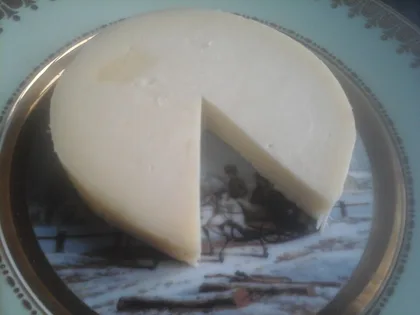
On others, treatment is standard and declared: Provolone often carries paraffin, aged Asiago is treated, Pecorino Toscano may be, Canestrato Pugliese is.
Then there is the case that surprises people most: Gorgonzola, whose wrinkled greyish rind is not treated as part of the product to eat, even though it is not an added coating either.
| Cheese | What the rind turns out to be |
|---|---|
| Parmigiano Reggiano | no chemical treatment and no coating: it is the same cheese, dried in brine |
| Fontina | the specification wants it thin and orange-brown, never waxed |
| Piacentinu Ennese | must not be treated |
| Pecorino Romano | natural rind |
| Taleggio | living, washed rind with natural moulds |
| Puzzone di Moena | left on the piece and eaten with it |
| Provolone | often treated with paraffin |
| Aged Asiago | treated |
| Pecorino Toscano | may be treated |
| Canestrato Pugliese | treated |
| Gorgonzola | wrinkled, pinkish or greyish: not eaten |
| Ragusano, Raschera, Valtellina Casera | a living rind that needs to breathe: under plastic it suffocates |
How to tell at the counter, without taking anyone's word
There is one reliable method: ask, and on a packaged product read. Labelling rules require non-edible parts to be indicated, and it is worth hunting for because it is usually set small.
Two visual clues do hold, though. A perfectly smooth, uniform and slightly glossy surface, the same colour all over the wheel, is usually a coating: natural rinds are irregular and carry the marks of the mould and of turning. And a rind that peels away in one continuous sheet, rather than crumbling, is almost always an added material.
On Parmigiano Reggiano there is one further check, this one for authenticity: the pin-dot marking pressed into the side while the wheel was still fresh. An added coating would not carry it.
What to do with it, when it is cheese
On hard pastes the rind is raw material, and in Emilia it has never been thrown away. The classic use is broth: a piece of Parmigiano rind in minestrone or a pulse soup releases glutamates and fat and changes the dish.
Two practical points, about yield rather than safety. The outer surface has been handled for months in the store, so scrape it with a knife first. And take the rind out before serving, because that part does not melt: it does its work and then turns rubbery.
On living rinds, washed or bloomy, the case is different: there the rind is eaten with the paste because that is where much of the aroma sits. Cutting the rind off a Taleggio means eating half the cheese.
On coated rinds there is nothing to do: cut them off and discard them, because they are packaging.
The rind as protection, and why cling film ruins it
A living rind breathes, which is why several of our pages say so explicitly: Ragusano, Raschera and Valtellina Casera suffocate under plastic.
Wrapping a natural rind in film against the surface stops moisture exchange. The surface turns tacky and then grows mould where it should not, and that is not the cheesemaker's good mould: it is condensation. The laminated paper used at counters exists precisely to avoid this, and at home baking parchment inside a closed container is the reasonable compromise.
There is a consequence for keeping that you can see by eye: a piece with more rind and less cut surface dries more slowly than a fully exposed piece of the same weight. The rind is the cheese's first defence, and it is worth not cutting it away early.
The short of it
- There are three different rinds: dried paste, a living rind of moulds or bacteria, and an added coating.
- On Parmigiano Reggiano the specification forbids chemical treatment and coatings: that rind is the same cheese.
- On Provolone it is often paraffin, and paraffin is not cheese.
- The Fontina specification forbids wax covering; Piacentinu Ennese forbids treatment altogether.
- On Gorgonzola the rind is not eaten, even though it is not an added coating.
- A perfectly smooth uniform rind that peels off in one sheet is almost always an added material.
Frequently asked questions
Is the Parmigiano Reggiano rind treated?
No. The specification forbids chemical treatments and artificial coatings, so that rind is the same paste, hardened in brine and through months in the store. Being the exposed and long-handled surface, scrape it with a knife before use.
Which Italian cheeses have treated rinds?
Among those in our atlas, Provolone often carries paraffin, aged Asiago is treated, Canestrato Pugliese is, and Pecorino Toscano may be. Fontina, by contrast, has a specification expressly forbidding wax covering.
Why is the Gorgonzola rind not used?
Because on an uncooked blue cheese the surface is a different environment from the interior and does not contribute to flavour in the same way. It is not an added coating; it is simply not treated as part of the product to eat.
How do I know whether a rind is a coating?
A perfectly smooth, uniform, slightly glossy surface usually is: natural rinds are irregular and carry the marks of the mould. And a coating peels in a continuous sheet rather than crumbling. On packaged products, non-edible parts must be indicated on the label.
What do I do with a Parmigiano rind?
The classic use is broth: a piece in minestrone or a pulse soup releases glutamates and fat. Scrape it first, and remove it before serving, because it does not melt and turns rubbery.
Can I wrap cheese in cling film?
On a living rind it is the worst option, because it blocks moisture exchange and the surface turns tacky. Several of our pages say so outright for Ragusano, Raschera and Valtellina Casera. Better the laminated counter paper, or baking parchment inside a closed container.
Sources
Where to check what you just read.
- 1Consortium · interested partyConsorzio del Parmigiano Reggiano, domande frequenti
Il consorzio conferma che il disciplinare vieta trattamenti chimici e rivestimenti artificiali sulla crosta. È parte interessata, quindi il dato vincolante resta il disciplinare.
- 2
Il registro da cui risalire ai disciplinari citati in tabella, dove la crosta è descritta e il trattamento ammesso o vietato.
- 3
La cornice che impone di indicare in etichetta le parti non edibili di un alimento confezionato.
- 4
L'atto che ha iscritto Parmigiano Reggiano, Fontina, Gorgonzola, Provolone Valpadana e le altre denominazioni nominate qui.
The foods behind this
 CheeseParmigiano ReggianoThree ingredients and no additives of any kind are permitted: raw cow's milk, salt and calf rennet, from five…
 CheeseProvoloneProvolone is a stretched-curd cow's milk cheese from northern Italy, rope-tied and hung to age in shapes from…
 CheeseFontinaFontina is the DOP mountain cheese of Italy's Aosta Valley: raw whole milk from a single milking, wheels of…
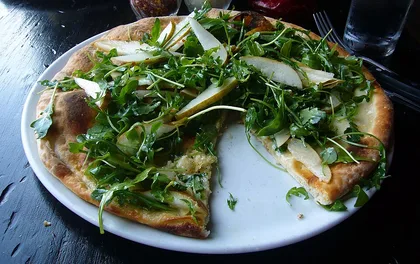 CheeseTaleggioTaleggio DOP is a square, washed-rind cow's milk cheese from the Bergamo Alps, aged at least 35 days.
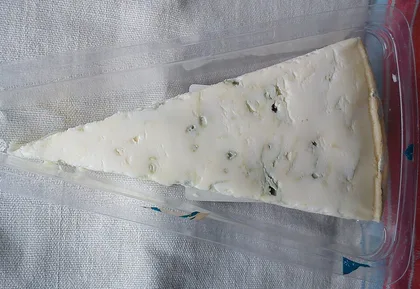 CheeseGorgonzolaThe green veining is the product, not a flaw anyone tolerates: it grows from a mould added to the milk and…
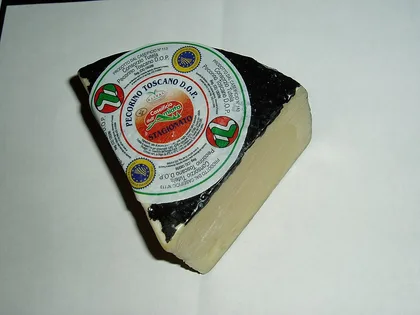 CheesePecorino ToscanoPecorino Toscano DOP is the mild one. Whole sheep's milk, calf rennet, a brief salting: soft-paste wheels…