What is Salva Cremasco?
Salva Cremasco is an uncooked whole cow's milk cheese from the Lombard plain, made across the provinces of Cremona, Bergamo, Brescia, Lecco, Lodi and Milan. The shape is a square-based block, 11 to 13 centimetres a side for the small format, 17 to 19 for the large, and 9 to 15 centimetres tall, weighing between 1.3 and 5 kilos.
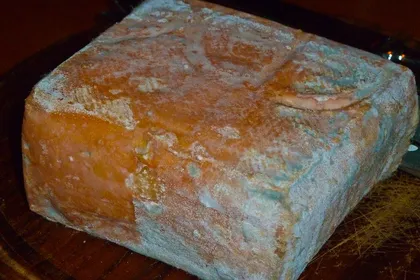
The rind is thin, yellow-pink, carrying natural surface moulds, and is washed and brushed with salted water through the ageing period. That washing keeps a bacterial smear alive on the surface, and the smear ripens the cheese from the outside in. The result is the feature that identifies Salva at a glance: a soft, almost translucent creamy band under the rind and a whiter, firmer, faintly crumbly core at the centre. The older the wheel, the further the creamy band has marched inward.
Minimum ageing is 75 days, but most Salva is sold at three to six months and some reaches a year. It has been DOP since 2011.
It is far less famous than its Lombard neighbours (Taleggio, Gorgonzola, Quartirolo) despite having the clearest origin story of any of them, one that is written into the name.
What does it taste like?
Two cheeses in one slice, and that is the point. The band under the rind is soft, lactic and savoury, with a washed-rind depth that suggests cellar and cooked butter without ever becoming pungent. The core is fresher, whiter, faintly crumbly and mildly acidic, tasting of clean milk and yoghurt.
Overall it sits between a ripe Taleggio and a young Tomme: milder than the first, more interesting than the second. The aroma is assertive when you unwrap it and much gentler on the palate. Older wheels get saltier, deeper and more mushroomy, and the acidic core recedes.
Eat it with a pickled green chilli, as they do in Crema, and the whole thing reorganises: the vinegar cuts the cream, the mild heat lifts the finish, and you understand why this specific cheese was paired with this specific pickle for a century before anyone wrote it down.
How to use it
Start with the local way, because it is not decoration: thick slices of Salva with whole tighe alongside. Tighe are green chillies pickled in vinegar, grown around Crema: barely hot, sharply acidic, still crunchy. The vinegar cuts the creamy band under the rind and the mild heat lengthens the finish. In the osterie of the Crema plain this is served as an antipasto, a light main and sometimes as the entire meal.
If you cannot find tighe, any crunchy, sharp, low-heat pickled chilli does the job: Turkish or Greek pickled peperoncini are the easiest to buy abroad and are close enough.
In cooking it melts evenly and behaves well. Lay it over hot yellow polenta, stir it into risotto off the heat, or use it in a vegetable tart where you would otherwise use Taleggio: it brings more savour and less fat. On short pasta with pumpkin or radicchio it is excellent.
Whatever you do, take it out of the fridge half an hour early. Cold, the creamy band is firm and mute; at room temperature it turns spreadable and the cheese doubles in flavour.
How long it keeps
This is a cheese that keeps working while it sits, and the rind drives it. A vacuum-packed wedge keeps at 4 to 8 C to the date the dairy prints; once open, wrap it in waxed paper and shut it in a lidded box, in the least cold part of the fridge. The box is not optional here, because the rind scents whatever shares a drawer with it. Never press cling film against the cut paste: the surface sweats and goes slick within a couple of days.
Over two to four weeks the creamy band under the rind widens further into the chalky core and the paste goes from crumbly to yielding, the smell strengthens, and the rind darkens and dries at the edges, sometimes growing a light bloom. The cut faces skin over and can be pared back with a knife before serving. Very little of this survives the freezer: the water in the paste tears the structure at minus 18 C and it thaws grainy, with liquid in the wrapping, so the fridge and a shorter horizon are the way it is kept.
Spot the real thing
Salva Cremasco is a brick, taller than it is wide, which is unusual enough to identify it across a counter: a rectangular block with square faces, a rough wrinkled rind in grey, ochre and brown patches, and the DOP mark on the label or the paper. The inside tells the age. Young, the core is chalk white, compact and crumbly, with a clean lactic smell; from a few months on, a soft creamy band spreads inward from the rind while the centre stays firm, and the rind itself gets emphatically pungent while the paste stays mild.
The two Lombard squares beside it are different cheeses. Taleggio is flat and wide with a smooth orange washed rind and a uniformly soft paste. Quartirolo Lombardo is low and flat with a very thin pale rind. Washed-rind cheeses on foreign counters, from Epoisses to Limburger, share the smell but not the crumbly centre. It is a small production and rarely leaves Italy, so where it does turn up it is priced as a specialist import and sold in wedges cut from the block.
How to pronounce Salva Cremasco
SAHL-vah kreh-MAH-skoh
Stress on the first syllable of 'Salva' and the second of 'Cremasco'. The 'c' before 'r' is hard, as in 'cream'; 'sco' at the end is 'skoh', not 'shoh'. Salva means 'it saves', the third person of the verb salvare, and Cremasco is the adjective for the area around the town of Crema, 'KREH-mah'.
Salva Cremasco compared
vsTaleggio
The closest relative and the one you already know. Both are Lombard, uncooked and washed-rind, and both ripen from the outside in. But Taleggio is a flat square slab about seven centimetres high that ripens in five or six weeks and goes creamy right through; Salva is a tall block that ages a minimum of seventy-five days and keeps a firm white core the whole time. Taleggio is smoother and more unified, Salva more structured and more varied bite to bite. Taleggio's production is roughly thirty times larger, which is why one is in every supermarket and the other is not.
| This | Taleggio | |
|---|---|---|
| Shape | Tall square block, 9-15 cm high | Flat square slab, 4-7 cm high |
| Weight | 1.3-5 kg | About 2 kg |
| Minimum ageing | 75 days | 35 days |
| Paste | Creamy band plus firm white core | Creamy and uniform throughout |
| Flavour | Lactic, savoury, moderately funky | Rounder, fruitier, more mushroomy |
| Classic pairing | Tighe (pickled green chillies) | Polenta, pears, risotto |
| Availability abroad | Rare | Widely stocked |
vsQuartirolo Lombardo
The confusion that catches visitors at the cheese counter, because both are square Lombard DOP cheeses from overlapping provinces. Height settles it: Quartirolo is a flat 4 to 8 centimetres, Salva is a tall 9 to 15. Quartirolo has a dry, thin, pale rind and is sold young and lemony; Salva has a washed, pinkish, mould-flecked rind and needs seventy-five days minimum. In practice Quartirolo is a fresh cheese with an aged option, and Salva is an aged cheese with no fresh option.
| This | Quartirolo Lombardo | |
|---|---|---|
| Height | 9-15 cm | 4-8 cm |
| Rind | Washed, pink-yellow, with moulds | Thin, dry, whitish to reddish |
| Minimum ageing | 75 days | 5 days (fresh) or 30+ days (aged) |
| Texture | Creamy band, firm core | Crumbly when fresh, softer when aged |
| Flavour | Savoury, washed-rind depth | Lemony and fresh, or gently aromatic |
| Price | EUR 13-26 per kg | EUR 9-18 per kg |
vsStracchino / Crescenza
Worth clearing up because all three belong to the same Lombard family of stracchino-type cheeses, made from the milk of cows tired, stracche, from the seasonal move between plain and mountain. Stracchino and crescenza are the fresh, spreadable, unaged end of that family, eaten within days. Salva is what happens when the same lactic curd is put in a tall mould, washed, and left alone for months. Same starting point, opposite destinations.
| This | Stracchino / Crescenza | |
|---|---|---|
| Ageing | 75 days to a year | Days, eaten fresh |
| Rind | Washed, with moulds | None |
| Texture | Sliceable, creamy under the rind | Spreadable throughout |
| Flavour | Savoury, lactic, cellar notes | Sweet, milky, faintly sour |
| Protected status | DOP since 2011 | None (generic names) |
Salva Cremasco substitutes
- Taleggio DOP
The obvious substitute and easy to find worldwide. Softer, creamier and more uniform, so it will melt more readily and give you less textural contrast. Buy a well-ripened piece rather than a young supermarket block.
1:1 - Quartirolo Lombardo DOP (aged)
The right substitute if what you want is the firm, lactic core rather than the washed-rind band. An aged Quartirolo of two months has the acidity and the crumble, but none of the smear.
1:1 - Reblochon or Tomme de Savoie
French alpine washed and natural rinds in the same weight class. Reblochon brings the creamy band, Tomme de Savoie the firmer, mushroomy body. Neither has Salva's split personality, so pick according to which half of the cheese you are replacing.
1:1 - Ardrahan, Durrus or Milleens
In the UK and Ireland these farmhouse washed rinds are far easier to buy than any Salva and sit in the right flavour register: savoury, lactic, cellar-driven. Softer, so treat them as board cheeses.
1:1 - Oma (von Trapp Farmstead) or Grayson (Meadow Creek)
The American washed-rind cheeses that come closest, and both are stocked more reliably in the US than any Lombard DOP. Serve either with a pickled chilli and the local logic still works.
1:1 - Vegetarian: microbial-rennet washed rinds
Salva Cremasco is never vegetarian: the specification requires animal rennet, as do Taleggio, Quartirolo, Gorgonzola and Reblochon. Look for British, Irish or American farmhouse washed-rind cheeses explicitly labelled 'suitable for vegetarians' or 'microbial rennet'.
1:1
Where to buy it
Salva Cremasco travels badly and sells mostly at home. In the US it appears through Italian specialist importers and the better cheese counters, at roughly 18 to 26 dollars per pound and be prepared to order rather than browse. In the UK, Italian delicatessens and cheese specialists carry it occasionally at about 24 to 34 pounds per kilo.
Ask for the age. At three months you get a centimetre of creamy band and a large fresh core; at six months the band is three or four centimetres and the cheese is a different, deeper thing. Both are correct: decide which you want.
When judging a piece, look for the two-tone paste at the cut. A uniformly firm slice means it is too young; a uniformly soft one is not Salva. The rind should be damp and pink-yellow with natural moulds, not dry and cracked, and the smell should be cellar-like rather than ammoniac.
In Lombardy the price is 13 to 19 euros a kilo for standard wheels and 20 to 26 for raw-milk artisan production. For comparison, Taleggio, thirty times the output, sells at 11 to 16.
Where to eat it in Italy
Crema is the place: a compact walled town on the Lombard plain, an hour from Milan and forty minutes from Bergamo and Cremona, with a Gothic cathedral facade on the main square and a run of osterie where salva e tighe is a standard order rather than a curiosity. Film-minded visitors will recognise the town and the surrounding countryside from Call Me by Your Name, which was shot around here.
The villages nearby repay a day on a bicycle: Pandino with its Visconti castle, Soncino with a Sforza fortress you can walk the walls of, Castelleone, Offanengo, Rivolta d'Adda. This is prosperous, flat, un-touristed farming country, and the dairies sell at the door.
At the table, do not leave without eating tortelli cremaschi, pasta parcels filled with crushed amaretti, raisins, a spiced biscuit called mostaccino and Roman mint, dressed with butter and grana. They are sweet, savoury, divisive and made nowhere else.
Cremona, half an hour away, gives you mostarda and violin workshops; Lodi and Bergamo are equally close. The whole area is an easy day trip from Milan and almost nobody makes it.
Further reading
 GuideCan you eat cheese rind?On some wheels the rind is the same paste, dried out. On others it is paraffin.
 InvestigationItalian raw milk cheeses: the full listWe counted: 19 of 43 declare raw milk, and 16 of those 19 carry a protected designation.
 GuideHow long food keeps once openedThe date on the label describes the sealed package. After that, four things govern everything: water, salt…
Frequently asked questions
Why is it called Salva Cremasco?
Because it saved the milk. In spring, cows on new grass gave more milk than could be consumed, and without refrigeration the surplus was lost. Turning it into a long-keeping cheese saved it: salva means 'it saves'. Cremasco refers to the area around Crema, where the practice began.
What are tighe?
Green chillies pickled in vinegar, grown around Crema: barely hot, sharply acidic and crunchy. They are served whole alongside slices of Salva, and the pairing is local law rather than a suggestion. The acidity cuts the creamy band under the rind.
How is Salva Cremasco different from Taleggio?
Salva is a tall block, 9 to 15 centimetres high, aged at least 75 days, and keeps a firm white core inside a creamy outer band. Taleggio is a flat slab, ripens in about five weeks and goes creamy throughout. Salva is more structured and more savoury; Taleggio is smoother and far easier to buy.
Do you eat the rind?
You can, but locals generally do not: it is thick and slightly bitter. Cut the rind away and keep the soft band immediately beneath it, which is the best part of the cheese.
Is Salva Cremasco vegetarian?
No. The specification requires animal rennet, as do Taleggio, Quartirolo Lombardo and Gorgonzola. Washed-rind cheeses from farmhouse creameries labelled 'microbial rennet' are the practical alternative.
Sources
Where to check what you just read.
- 1
L'atto del 20 dicembre 2011 che ha iscritto «Salva Cremasco» fra i formaggi DOP: fissa la data da cui il nome è protetto in tutta l'Unione.
- 2
Il PDF del disciplinare vigente, dove si controllano latte vaccino intero, crosta lavata, formato e stagionatura minima.
- 3Consortium · interested partyConsorzio Tutela Salva Cremasco
I 75 giorni minimi di stagionatura, le sei province ammesse (Bergamo, Brescia, Cremona, Lecco, Lodi e Milano) e l'elenco di caseifici e stagionatori consorziati.
Related foods
 CheeseTaleggioTaleggio DOP is a square, washed-rind cow's milk cheese from the Bergamo Alps, aged at least 35 days.
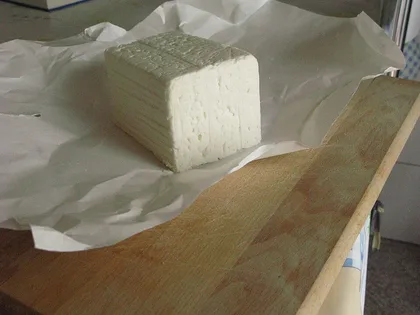 CheeseQuartirolo LombardoQuartirolo Lombardo is named after quartirola, the fourth grass cut of the year in September: it was made…
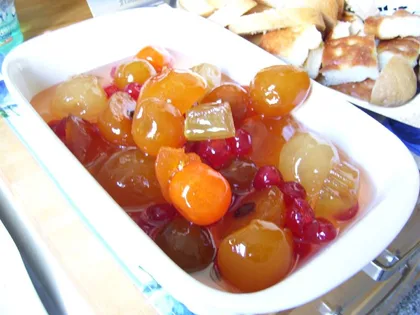 Oil and preservesMostarda di CremonaWhole candied fruit suspended in clear syrup and charged with mustard essence.
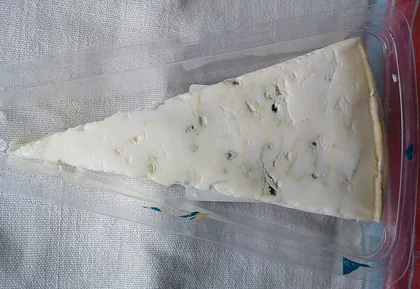 CheeseGorgonzolaThe green veining is the product, not a flaw anyone tolerates: it grows from a mould added to the milk and…
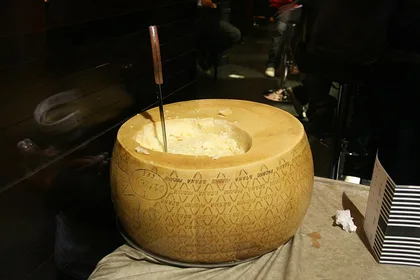 CheeseGrana PadanoNine months is the floor the specification sets before a wheel may carry the name.
 CheeseProvoloneProvolone is a stretched-curd cow's milk cheese from northern Italy, rope-tied and hung to age in shapes from…
 CheeseRobiolaRobiola is a family of soft young cheeses from north-west Italy rather than a single cheese.
 CheeseBittoBitto DOP can only be made between 1 June and 30 September, on high summer pasture, in a dismantlable stone…