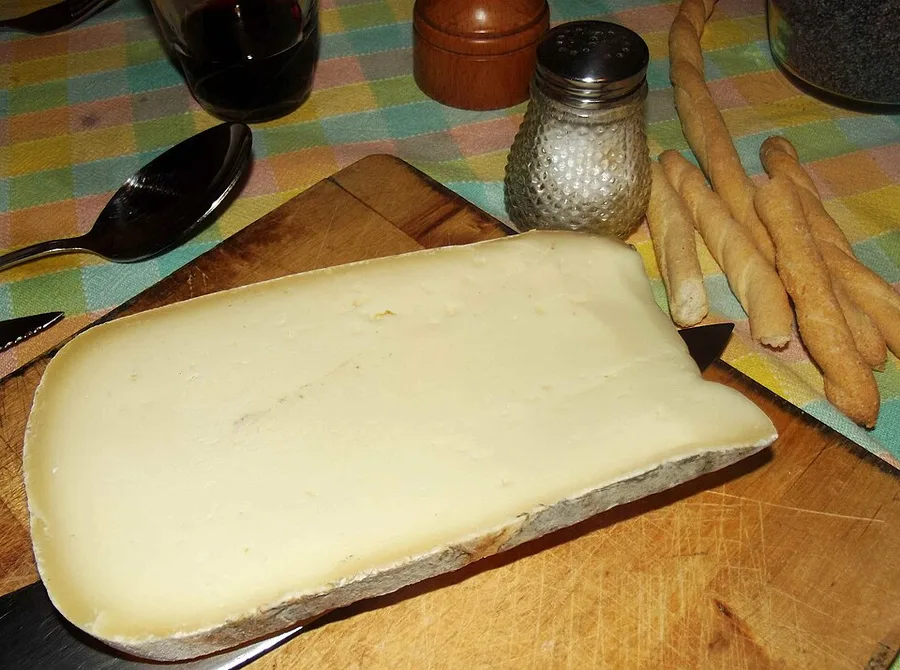
What is Raschera?
Raschera DOP is a semi-hard cow's milk cheese made throughout the province of Cuneo in south-west Piedmont, protected since 1996. The specification allows small additions of sheep's or goat's milk, a leftover from the days when a mountain dairy milked whatever was in front of it.
The shape is its oddity, because there are two. The round version is a cylinder 30 to 40 centimetres across and 7 to 15 tall, weighing 5 to 9 kilos. The square version has sides of 28 to 40 centimetres, the same height and a similar weight. Same cheese, different mould, and the reason is logistical rather than culinary.
There is also an extra designation worth knowing: Raschera d'Alpeggio. Only cheese made and matured above 900 metres, in about fifteen named communes around Mondovì and the upper Tanaro valley, may carry it. It is a genuinely different cheese (mountain pasture milk, mountain microflora, far more aroma) and it is priced accordingly.
Minimum ageing is one month. At thirty to forty days it is sweet, soft and elastic; by three or four months the paste firms up, the flavour sharpens and a measured piquancy appears. The rennet is calf rennet.
What does it taste like?
Young Raschera is mild, buttery and clean, with a faint sourness like fresh cream and a texture that gives under the tooth without any squeak. It tastes of milk more than of anything else, which is not a criticism: this is a cheese built to be eaten in quantity with bread and polenta.
At three months it changes gear. The paste tightens, a nutty savouriness comes forward, and a light peppery bite develops on the finish: never as sharp as an aged pecorino, more like a suggestion of heat behind the salt.
The alpeggio version is where it gets interesting. Milk from cows grazing above 900 metres carries herbs and flowers straight into the cheese, and the flavour picks up hay, wild thyme and a mineral edge that the valley-floor version never has. Set the two side by side and the difference is not subtle.
The rind, thin and greyish-red with rust-coloured patches, smells of a cool stone cellar. It is edible, though most people trim it.
How to use it
Young, eat it as it is at room temperature, with rye bread and cognà, the Piedmontese preserve of grape must, fruit and hazelnuts that is the standard partner for cheese in this province.
It melts exceptionally well and does not split, which makes it one of the most useful cooking cheeses in Piedmont. Use it in gnocchi alla bava in place of fontina, over polenta, in vegetable tarts, in cardoon and leek gratins. Melted very gently with a little milk it makes a lighter, less sweet alternative to a valdostana fonduta.
Aged past three months it can be grated over pasta and risotto, where it brings salt without the assertiveness of a hard grating cheese. Over tagliatelle with mushrooms, or a leek risotto, it is the local choice.
One dish from the valleys around Mondovì worth copying: boiled potatoes crushed with melted Raschera and a knob of butter, served very hot. It has no formal name and every household makes it.
How long it keeps
A young Raschera holds a lot of water and that shortens its window: a wedge at a month old is good for about a week in the fridge, while a wedge aged past three months will go two to three weeks. Wrap the cut faces in cheese paper and leave the rind exposed, in the salad drawer, in a box that is closed but not airtight. Plastic film pressed on the paste gives you a wet, slippery surface within a day and a shut in smell.
Left alone, the wedge keeps maturing. Moisture leaves through the cut face first, so that face dulls, firms and forms a pale skin, while the paste behind loses its bounce and the taste moves from milky sweet towards salty and lightly peppery. The rind darkens. Bring it to room temperature for an hour before serving, since cold hides most of what a young Raschera has. Freezing a wedge is not worth it, because the eyes collapse and the paste crumbles on thawing; grated for cooking it survives two or three months. Go by the date on the wrapping.
Spot the real thing
Raschera comes in two shapes and the square one is the giveaway: a low rectangular block with straight sides, five to eight kilos, which almost no other Italian cheese uses. The round version exists too, seven to ten kilos. Both carry the DOP mark on the flat face, with the word Alpeggio added when the wheel was made above 900 metres. The rind is thin, smooth, greyish red to pale yellow, and the paste is white to ivory, elastic and fairly moist, with small eyes scattered unevenly through it.
On a counter abroad it stands among cheeses it resembles. Toma Piemontese is rounder in shape and usually milder; Fontina is fattier and more aromatic; Bra, Montasio and Asiago all occupy similar territory and are frequently offered as substitutes. Ask for the age, because Raschera changes a great deal: a month old wheel is mild, milky and springy, while past three months it turns firmer, saltier and faintly peppery. The Alpeggio version is the more expensive and more assertive. Prices abroad sit at $18 to $30 a pound, and it is normally cut from the block to order.
How to pronounce Raschera
rahs-KEH-rah
Three syllables, stress on the second. The 'ch' is a hard 'k' as in 'school', never the English 'ch' of 'church', so not 'ra-SHARE-a'. Roll or tap the first 'r' lightly and keep the final 'a' short and open.
Raschera compared
vsToma Piemontese DOP
The comparison Piedmontese shoppers make at the counter, because both are round, pale and semi-hard. Toma Piemontese is a very broad denomination covering almost the whole region, in a wide range of sizes and in both full-fat and semi-skimmed versions; it is the region's generic table cheese with a legal frame around it. Raschera is one province, a defined rind, a firmer and saltier paste, and a square option that no Toma has. If the wheel is square, the question is already answered.
| This | Toma Piemontese DOP | |
|---|---|---|
| Area | Province of Cuneo | Most of Piedmont |
| Shape | Round or square | Round only |
| Rind | Thin, grey-red, rusty patches | Straw to reddish-brown, variable |
| Paste | Firmer, elastic, saltier | Softer, milder, more variable |
| Minimum ageing | 30 days | 15 days (semi-skimmed) to 60 days |
| Mountain version | Raschera d'Alpeggio, above 900 m | No equivalent designation |
vsCastelmagno DOP
The other great cheese of the Cuneo valleys, made about an hour west in the Valle Grana, and the opposite personality. Castelmagno is aged far longer, develops a crumbly, sometimes blue-veined paste, and tastes sharp, salty and complicated. Raschera is soft, elastic and gentle. Both come from the same mountains and from the same tradition of summer alpine dairying, and a Cuneo cheeseboard usually has both precisely because they contradict each other.
| This | Castelmagno DOP | |
|---|---|---|
| Valley | Val Casotto, Corsaglia, Tanaro | Valle Grana |
| Minimum ageing | 30 days | 60 days, often 6 months or more |
| Texture | Elastic and yielding | Crumbly, flaking, sometimes veined |
| Flavour | Mild to gently piquant | Sharp, salty, insistent |
| Price | EUR 11-28 per kg | EUR 28-45 per kg |
| Classic use | Melting, table, polenta | Gnocchi al Castelmagno, board |
vsBra DOP
The third protected cheese of Cuneo province and the one most often confused with Raschera abroad, since both are cow's milk, both come in flat wheels and both have tenero and duro registers. Bra is pressed harder and salted more heavily, and its hard version ages six months into a grating cheese; it also carries its own alpeggio designation. Raschera stays softer and sweeter and rarely goes past four or five months. Bra is the sharper of the two at every age.
| This | Bra DOP | |
|---|---|---|
| Texture | Elastic, moist | Denser, drier, more pressed |
| Salt | Moderate | Higher |
| Aged version | Rare past 5 months | Bra duro, 6 months plus, for grating |
| Shape | Round or square | Round only |
Raschera substitutes
- Toma Piemontese DOP
The nearest substitute and the easiest to find in Italy. Milder and softer, so where the recipe wants Raschera's salt and bite you may need a pinch of salt or a little grated aged cheese alongside.
1:1 - Fontina Val d'Aosta DOP
The right choice when the job is melting: gnocchi, polenta, a fondue. Fontina is sweeter, fattier and stringier when hot, so use slightly less and cut the richness with black pepper.
0.8:1 - Asiago pressato or Asiago mezzano
Widely available and structurally close: same family of pressed, uncooked or lightly cooked cow's milk cheeses. Pressato for the young Raschera, mezzano for the three-month version.
1:1 - Tomme de Savoie or Morbier
Across the Alps and easy to buy in France, the UK and the US. Tomme de Savoie matches the grey rind and the mild, earthy paste closely; Morbier is creamier and slightly funkier but melts beautifully.
1:1 - Vegetarian: none within the DOP
Raschera requires calf rennet, as does every protected Piedmontese cheese: Castelmagno, Bra, Toma Piemontese, Murazzano, Robiola di Roccaverano. For a vegetarian version of the same experience, look to microbial-rennet alpine-style cheeses from British, Swiss or American creameries and accept a different flavour.
Where to buy it
In Cuneo province Raschera costs 11 to 16 euros a kilo at the dairy and 14 to 19 in a shop. Raschera d'Alpeggio is another matter: 18 to 28 euros a kilo, and more when supply is short.
Elsewhere in Italy expect 18 to 26 euros a kilo. In the US a small number of importers list it at 16 to 28 dollars per pound; in the UK, 22 to 34 pounds per kilo from cheesemongers who work with northern Italy.
Annual production runs to a few hundred thousand wheels, of which alpeggio is a tiny fraction: a few thousand wheels made only during the summer grazing season between June and September.
Spend the difference at least once. Between a valley-floor Raschera and an alpeggio wheel from the same dairy at the same age, the gap is the difference between a good cheese and a cheese that tells you where it came from. Check the rind for the DOP mark and, on mountain wheels, the alpeggio wording.
Where to eat it in Italy
Mondovì is the base. The lower town and Mondovì Piazza on the hill above it, linked by a funicular, have old-fashioned shops that stock Raschera from several dairies and cut to order. A few kilometres away, the sanctuary at Vicoforte has the largest elliptical dome in the world, and you can climb inside it.
Head up towards Monte Mongioie and you are in alpeggio country: Frabosa Soprana and Sottana, Roburent, Pamparato, the Casotto and Corsaglia valleys. In summer several high dairies make cheese on the pasture and sell at the door; in winter the same valleys are small, unglamorous ski areas.
Ormea and Garessio, in the upper Tanaro valley, form the other side of the alpeggio zone, with a chestnut and cheese tradition worth the drive.
In September of odd-numbered years, Bra hosts Cheese, Slow Food's cheese fair. It is the fastest way to understand this province: Raschera, Castelmagno, Bra, Murazzano and Toma Piemontese, side by side, in one afternoon.
Further reading
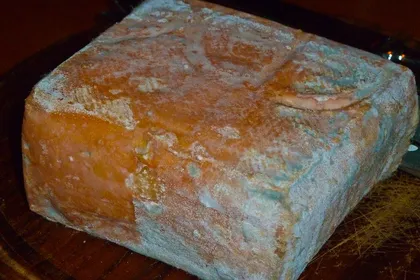 GuideCan you eat cheese rind?On some wheels the rind is the same paste, dried out. On others it is paraffin.
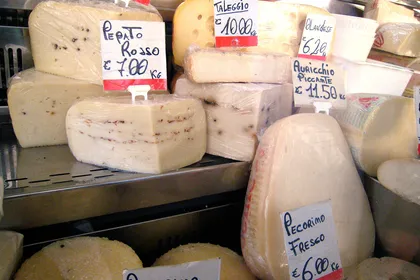 GuideHow long food keeps once openedThe date on the label describes the sealed package. After that, four things govern everything: water, salt…
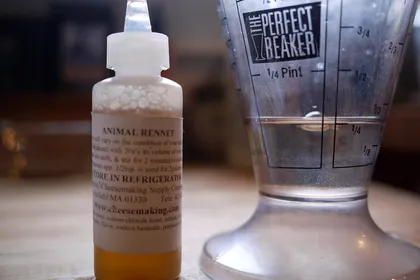 InvestigationWhich Italian cheeses are vegetarianWe counted what rennet the 43 cheeses in our atlas declare: 35 out of 43 say animal, none say otherwise.
Frequently asked questions
Why is Raschera square?
Transport. Wheels came down from the summer pastures on mule-back, and square blocks stack against each other without wasted space while cylinders roll and leave gaps. The same load carried more cheese. The shape serves no purpose today and survives purely as a mark of identity.
What is Raschera d'Alpeggio?
An additional designation reserved for cheese made and matured above 900 metres in about fifteen communes around Mondovì and the upper Tanaro valley, during the summer grazing season only. It is more aromatic and more complex than the valley version, and costs at least half as much again.
How is Raschera different from Toma Piemontese?
They are separate DOPs. Toma Piemontese covers most of the region in many sizes and two fat levels; Raschera is limited to Cuneo province, allows a square shape, has a distinctive grey-red rind and a firmer, saltier paste. If the wheel is square, it is Raschera.
Where does the name come from?
From the Raschera alp and lake at the foot of Monte Mongioie, between the Casotto and Corsaglia valleys. It is a place name, not a surname or a technical term, and it points at the exact pasture the cheese started from.
Is Raschera vegetarian?
No. The specification requires calf rennet, as do all the protected Piedmontese cheeses: Castelmagno, Bra, Toma Piemontese, Murazzano, Robiola di Roccaverano. Vegetarians need to look outside the denominations, at cheeses that state microbial rennet on the label.
Sources
Where to check what you just read.
- 1
Il regolamento del 1º luglio 1996 che iscrive «Raschera» fra le DOP dei formaggi, nello stesso atto di Bitto e Fiore Sardo.
- 2
Il disciplinare in PDF: le due forme ammesse con i rispettivi pesi, la stagionatura minima e le condizioni per la menzione «d'alpeggio».
- 3Consortium · interested partyConsorzio per la Tutela del Bra e del Raschera
Il consorzio di Cuneo: la forma quadrata da 7-10 kg e la tonda da 5-8 kg, e i comuni sopra i 900 metri che danno diritto al Raschera d'Alpeggio.
Related foods
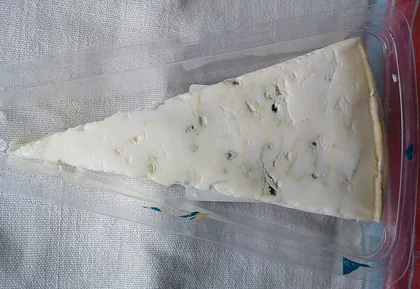 CheeseGorgonzolaThe green veining is the product, not a flaw anyone tolerates: it grows from a mould added to the milk and…
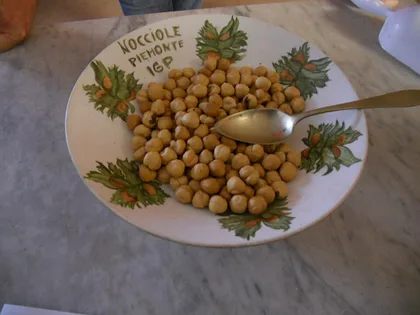 Vegetables and fruitPiedmont HazelnutNocciola Piemonte IGP is a single cultivar, the Tonda Gentile Trilobata of the Langhe hills: round, yielding…
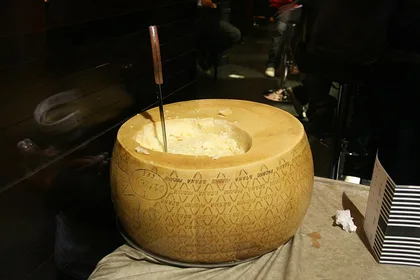 CheeseGrana PadanoNine months is the floor the specification sets before a wheel may carry the name.
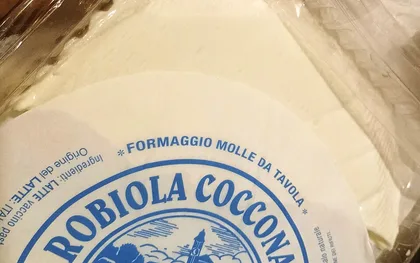 CheeseRobiolaRobiola is a family of soft young cheeses from north-west Italy rather than a single cheese.
 CheeseOssolanoOssolano DOP comes from the Ossola valleys, the most alpine corner of Piedmont, wedged between Switzerland…
 Oil and preservesGiardinieraGiardiniera means two very different jars. In Italy it is a mild mix of vegetables pickled in wine vinegar…