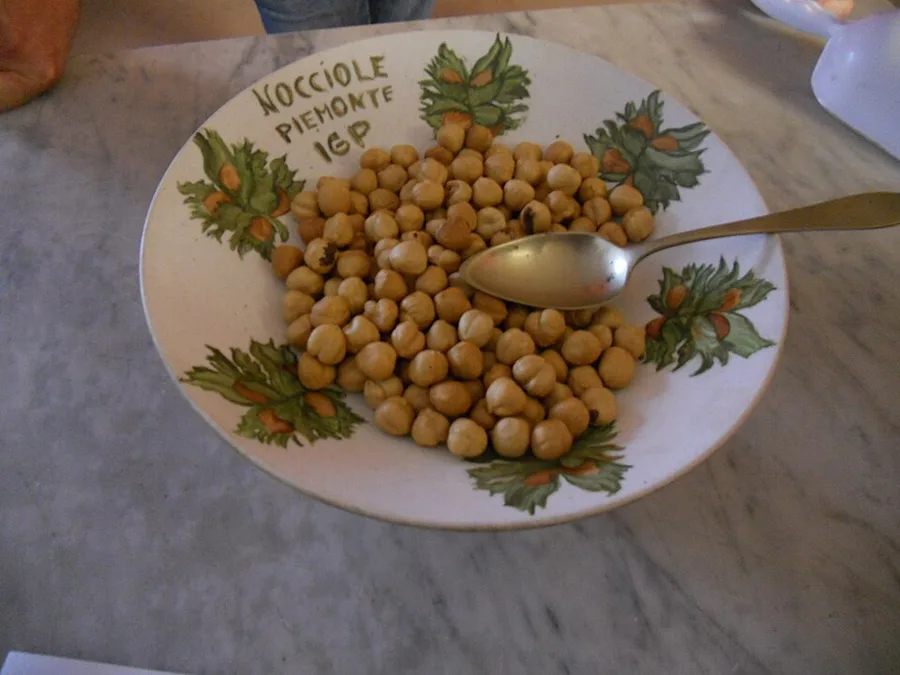
What is Piedmont Hazelnut?
Nocciola Piemonte is a protected geographical indication, registered in 1993, covering the Tonda Gentile Trilobata cultivar, historically Tonda Gentile delle Langhe, grown in the hill country of Piedmont.
A single variety, which already sets it apart from most of the world market. The nut is spherical, medium in size, with a thin pale shell, and three of its qualities are the ones that matter commercially.
First, kernel yield: 40 to 50 per cent, against 30 to 40 for average commercial hazelnuts. A kilo in shell gives close to half a kilo of nut.
Second, peelability. After roasting, the perisperm, the papery skin, comes away almost completely with a rub in a tea towel. It sounds like a laboratory detail and it is in fact the economic reason confectioners chase this nut: skin that clings leaves bitter fragments and speckles a smooth cream.
Third, aroma: fine, persistent, buttery, with a sweetness that does not tire and a crisp structure that survives baking. Add unusually stable fats, which matter in a fruit that is more than 60 per cent oil, and the result is a nut with a longer shelf life than most.
What does it taste like?
Sweet, buttery and clean, with a toasted note that arrives without any bitterness behind it. Raw, it is milder and milkier than most people expect; roasted, it turns intensely aromatic, almost like browned butter, and stays crisp rather than waxy.
The absence of bitterness is the tell. Cheap or badly roasted hazelnuts carry an astringent edge from the skin that clings to them; a properly roasted Tonda Gentile sheds its skin and tastes uniformly sweet.
Hazelnut paste made from it is pale beige, thick and glossy, and tastes of nothing but nut. Set it next to a supermarket chocolate spread and the difference is not subtle: one tastes of hazelnut, the other of sugar and vegetable oil with hazelnut somewhere in the background.
How to use it
Roasting decides everything. Oven at 150°C for twenty to twenty-five minutes, turning once, until the skins crack and the kitchen smells of them. Then tip them into a tea towel and rub. Above about 170°C they turn bitter within minutes, so stay low and trust your nose.
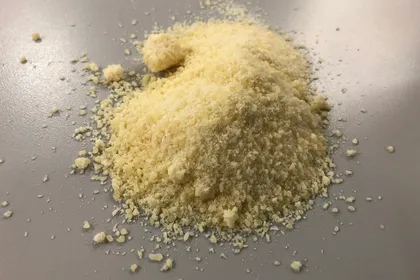
The Langhe hazelnut cake is the defining dessert: roasted nuts ground to flour, eggs, sugar, butter and little or no wheat flour. It is low, moist and served with warm zabaione.
Baci di dama are two hazelnut-paste domes joined with chocolate; brutti ma buoni are rustic meringues studded with nuts; nocciolini di Chivasso are tiny and weightless. The gianduiotto is hazelnut paste and cocoa, moulded into an ingot.
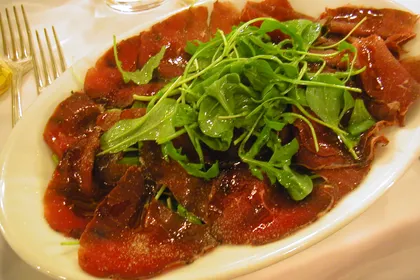
Savoury uses are underrated: coarsely chopped over raw Fassona beef, on blue cheese, in a pumpkin or Jerusalem artichoke soup, and in hazelnut pesto tossed through tajarin, cheaper than pine nuts and more robust.
Grind in short pulses. Hazelnuts are over 60 per cent fat and go from flour to butter in seconds; if you need dry flour, add a spoonful of the sugar from the recipe.
How long it keeps
A hazelnut is more than sixty per cent fat by weight, and that oil is what changes over time. In shell they are the most stable form: an open bowl away from light, in a cool dry room, holds eight to twelve months. Shelled and raw they drop to four to six months in a closed glass jar in the cool, and stretch to about eight in the fridge. Roasted, they are the most fragile of all, two to four weeks at room temperature in a sealed jar, since roasting builds the aroma and speeds up oxidation at the same time.
The freezer handles quantity: vacuum sealed or in a well closed bag, shelled kernels hold about a year and go straight into a recipe without thawing. What to avoid is the shelf above the hob, bags left open and direct light. A paint like or stale note on tasting means the oil has oxidised, and it comes through more strongly in a dessert than out of hand. Opened hazelnut paste goes in the fridge for around a month; oil separating on top is normal and stirs back in.
Spot the real thing
Shape is the first clue. The Tonda Gentile is round, not oval and not pointed, with a faint three lobed look to the shelled kernel; the long, tapered nuts in most British and American bins are Oregon filberts or Turkish varieties. The label has to read Nocciola Piemonte IGP or Nocciola del Piemonte IGP with the European logo beside it. Langhe hazelnut, Italian hazelnut and Piedmont type hazelnut are not the denomination.
Two tests settle it at home. Roast a handful at 150 °C for twenty minutes, wrap them in a tea towel and rub: on a Tonda Gentile almost all the skin comes away, and if it clings to half the kernels it is another variety. Bought in shell, a kilo should yield 400 to 500 g of kernel, and under 350 g points elsewhere. On the tongue a good hazelnut is sweet, buttery and crisp with no bitter finish. For spreads, look for the hazelnut percentage next to the ingredient: many jars declare 13 per cent or less, with palm oil and sugar doing the rest, while a serious one starts at 40.
How to pronounce Piedmont Hazelnut
noh-CHOH-lah del pyeh-MON-teh
The 'cci' in nocciola is a soft ch, as in 'church': noh-CHOH-lah. Piemonte is three syllables ending in a pronounced 'e': pyeh-MON-teh. The cultivar, Tonda Gentile, is TON-dah jen-TEE-leh, and Langhe has a hard g: LAHN-gheh.
Piedmont Hazelnut compared
vsTurkish hazelnuts (Giresun, Ordu, Akçakoca)
Turkey grows roughly 70 per cent of the world's hazelnuts along the Black Sea coast, and that supply sets the global price. Turkish nuts are good, and the best Giresun lots are excellent. The differences are yield, skin behaviour and consistency of aroma, and decisively price: Piedmont costs about twice as much and is bought by confectioners who need the peeling.
| This | Turkish hazelnuts (Giresun, Ordu, Akçakoca) | |
|---|---|---|
| Share of world crop | A small fraction of Italian output | About 70% of global production |
| Cultivar | Tonda Gentile Trilobata only | Tombul and several regional varieties |
| Shape | Spherical, faintly three-lobed | Mixed, often more oval |
| Kernel yield | 40-50% | 30-45% |
| Peels after roasting | Almost completely | Variable: often partial |
| Price shelled | EUR 18-30/kg, USD 16-28/lb | EUR 10-16/kg, USD 8-13/lb |
vsGiffoni IGP and Oregon hazelnuts
Two respectable alternatives. Nocciola di Giffoni IGP from Campania is a fine dessert nut, rounder-flavoured and slightly less aromatic. Oregon supplies almost all US-grown hazelnuts, historically Barcelona and now largely Jefferson and McDonald: bigger nuts, machine-friendly, mild, and much cheaper delivered in North America.
| This | Giffoni IGP and Oregon hazelnuts | |
|---|---|---|
| Origin | Piedmont hills, Alta Langa and Roero | Salerno province / Willamette Valley, Oregon |
| Size | Medium and uniform | Giffoni: medium. Oregon: large |
| Peelability | Excellent | Giffoni: good. Oregon: moderate |
| Flavour | Fine, buttery, long | Giffoni: sweet, rounder. Oregon: mild |
| Best use | Pastry, praline, gianduia, pure paste | Snacking, baking, general use |
| US price shelled | USD 16-28/lb | USD 8-14/lb |
vsGianduia vs chocolate hazelnut spread
Gianduia was invented in Turin in the nineteenth century, when cocoa was scarce and Langhe hazelnuts were not: hazelnut paste blended into chocolate. The gianduiotto, the ingot-shaped chocolate, dates from 1865. Modern supermarket spreads descend from it directly, but the ratios have reversed: sugar and vegetable oil lead, and hazelnut is often 13 per cent or less, correctly declared in small print.
| This | Gianduia vs chocolate hazelnut spread | |
|---|---|---|
| Hazelnut content | Gianduia: 30-45% by law-abiding tradition | Spread: typically 13% or less |
| Leading ingredient | Hazelnut and cocoa | Sugar, then vegetable oil |
| Added fat | Cocoa butter | Palm or other vegetable oil |
| Texture | Melts at body temperature, firm at room | Permanently spreadable, emulsified |
| Oil separation | Normal in pure pastes: stir it in | Prevented by emulsifiers |
| Price | EUR 12-25 per 200 g of serious cream | EUR 3-5 per 400 g jar |
Piedmont Hazelnut substitutes
- Nocciola di Giffoni IGP
The closest Italian alternative, from Campania. Sweet, round-flavoured and peels well. Use it anywhere a Piedmont nut is called for, at roughly two thirds of the price.
1:1 - Nocciola Romana DOP
Grown in the Monti Cimini north of Rome. Slightly more assertive and marginally less easy to peel, but excellent in cakes and praline.
1:1 - Turkish Giresun hazelnuts
The best of the Black Sea crop and widely available. Buy raw and roast them yourself; expect to rub harder to remove the skins and to discard a few stubborn ones.
1:1 - Oregon hazelnuts (Jefferson, McDonald)
The practical choice in North America. Larger and milder, so increase the quantity slightly where hazelnut is the main flavour, and roast a little darker for aroma.
1:1, or 1.1:1 by weight where the nut leads - Blanched almonds
Not a hazelnut, but a workable stand-in in cakes, biscuits and praline where texture matters more than aroma. Add a spoonful of hazelnut paste if you have one to bridge the gap.
1:1 in baking - Pure hazelnut paste (100%)
For creams, gelato and fillings, paste beats grinding at home because it is milled fine without heating. Reduce other fats accordingly.
100 g paste per 120 g whole nuts
Where to buy it
Italian specialists are the route: Gustiamo and Eataly in the US, Sous Chef and Italian delicatessens in the UK, and many Langhe producers ship directly. Pastry suppliers sell 100 per cent hazelnut paste and hazelnut flour as well as whole kernels.
The label should read Nocciola Piemonte IGP or Nocciola del Piemonte IGP with the EU mark. Hazelnuts from the Langhe, Italian hazelnuts and Piedmont-style are not the designation.
Buy raw and roast them yourself if you can: roasted nuts have a shelf life of weeks, raw ones of months. In shell, they keep longest of all and are the cheapest way in.
Expect 18 to 30 euros a kilo shelled in Italy, 16 to 28 dollars a pound in the US and 28 to 50 pounds a kilo in the UK; in shell, 6 to 10 euros a kilo. For spreads, read the percentage printed beside the ingredient rather than the name on the front of the jar: a serious cream is 40 per cent hazelnut or more.
Where to eat it in Italy
Cortemilia, in the Alta Langa, is the capital of the nut and holds its hazelnut fair in August. The hillsides there are planted at gradients that explain the price on their own, and producers sell direct.
Alba, half an hour away, is where the nut becomes pastry: cakes, baci di dama, pure pastes and creams in every second shop window. In autumn the town belongs to the white truffle fair, and the two things share the same counters.
Turin is the chocolate chapter: historic chocolatiers in the centre, bicerin in the old cafés, gianduiotti everywhere, and pastry shops making nocciolini and baci di dama.
Across the Roero and Monferrato, farms run hazelnut grove visits and tastings, often paired with wine. September, during the harvest, is the moment to go: the sweepers work under the trees and you finally see why nobody picks hazelnuts off the branch.
Further reading
Frequently asked questions
What makes the Tonda Gentile different from other hazelnuts?
Three measurable things: a kernel yield of 40 to 50 per cent against an average of 30 to 40, a skin that comes away almost completely after roasting, and a fine persistent aroma backed by unusually stable fats. Those are exactly the traits confectioners need, which is why it became the industry's reference nut.
Why does it cost twice as much as a Turkish hazelnut?
Piedmont groves sit on steep hills with lower yields per hectare and higher labour costs than flat mechanised plantations, and the certified area is small against enormous industrial demand. Turkey grows around 70 per cent of the world crop and sets the market price.
How do I roast hazelnuts at home?
150°C for twenty to twenty-five minutes, turning once, until the skins crack. Tip them into a tea towel and rub the skins off. Do not go above 170°C: they turn bitter within a couple of minutes, and burnt hazelnuts cannot be rescued.
What exactly is gianduia?
A blend of hazelnut paste and cocoa created in Turin in the nineteenth century, when cocoa was scarce and Langhe hazelnuts were plentiful. The ingot-shaped gianduiotto was presented in 1865 and takes its name from the Piedmontese carnival mask Gianduja. Modern chocolate spreads are its direct descendants.
Do hazelnut spreads actually contain Piedmont hazelnuts?
Often in small amounts. Many jars declare 13 per cent hazelnut or less, with sugar and vegetable oil making up the rest, all correctly stated on the label. Look for the percentage beside the ingredient: a serious cream is 40 per cent or more and costs from about twelve euros per 200 grams.
Sources
Where to check what you just read.
- 1
Il regolamento del 12 giugno 1996 che iscrive «Nocciola del Piemonte» fra le IGP europee.
- 2
L'unica cultivar ammessa, la Tonda Gentile Trilobata, l'elenco comune per comune dei territori idonei e i semilavorati che possono fregiarsi della IGP.
Related foods
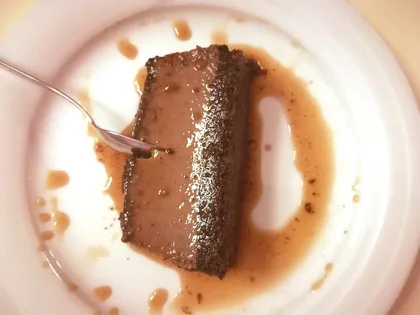 SweetsBonetBonet is the baked custard of Piedmont's Langhe hills: eggs, milk, bitter cocoa, crushed amaretti and rum…
 Vegetables and fruitCarnaroli RiceCarnaroli is the risotto rice with the highest amylose content: it sheds enough starch to build a creamy…
 Vegetables and fruitWhite truffleThe Italian white truffle, Tuber magnatum Pico, is the most expensive of Italy's truffles: in 2025 the Alba…
 Oil and preservesGiardinieraGiardiniera means two very different jars. In Italy it is a mild mix of vegetables pickled in wine vinegar…
 CheeseGorgonzolaThe green veining is the product, not a flaw anyone tolerates: it grows from a mould added to the milk and…
 CheeseGrana PadanoNine months is the floor the specification sets before a wheel may carry the name.
 Pasta and breadAgnolottiAgnolotti are Piedmont's stuffed pasta: thin egg dough around a filling of roasted meat, not ricotta.