Almost no Italian cheese is vegetarian. There is exactly one exception
We counted what rennet the 43 cheeses in our atlas declare: 35 out of 43 say animal, none say otherwise. Yet the line «no Italian PDO cheese is vegetarian», repeated everywhere, is still false.
By the Agrofood.it editorial team · 17 August 2026 · 4 min read · 5 sources
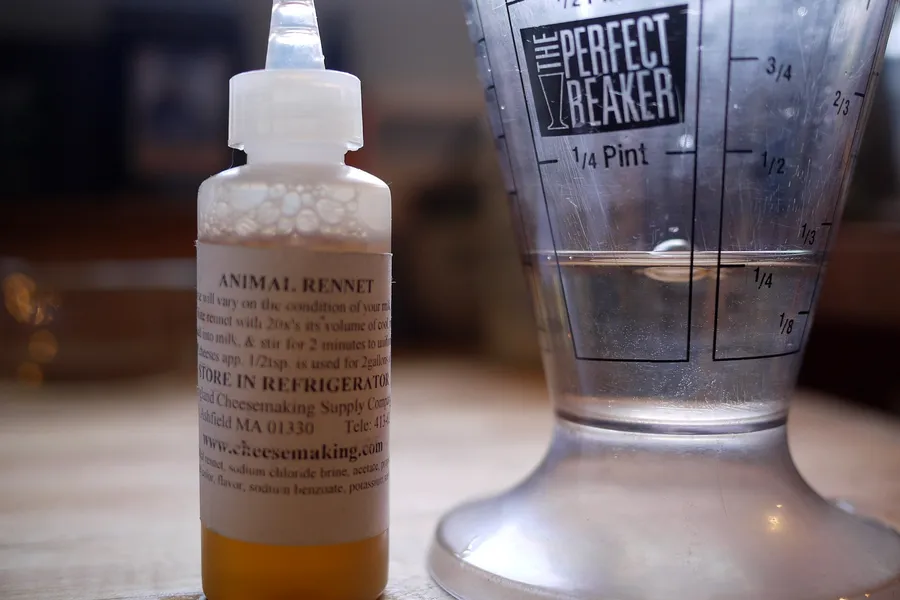
What rennet is, and why almost every cheese needs it
Making cheese means coagulating milk, taking casein from dispersed to solid. The old and still dominant way is rennet: an extract rich in chymosin, the enzyme found in the fourth stomach of young ruminants still on milk.
It comes in two forms that specifications distinguish carefully. Liquid rennet, dosed and standardised, gives a clean and predictable set. Paste rennet, which is the whole preserved stomach ground up, also carries lipases, the enzymes that split fats: it is what makes certain pecorini and sharp Provolone pungent. That is not a shortcut, it is an ingredient you can taste.
Non-animal coagulants exist too. Vegetable ones come from flowers such as thistle or artichoke; microbial ones from moulds and fermentation. They work, and in many countries they are the standard.
The count, across the cheeses we have read
We looked at what the 43 cheeses in the atlas declare, reading only the description of how they are produced rather than the rest of the page. That distinction matters more than it sounds, and we come back to it at the end.
Thirty-five out of forty-three name an animal rennet: calf in most, lamb and kid in the pecorini and the southern cheeses. None declares a vegetable or microbial coagulant. The remaining eight do not mention rennet at all, and three of those are the ricottas, which use none, because they come from whey rather than from curd.
This is a figure about our atlas, not about Italian production as a whole, and it is worth saying before someone else does. But the 43 include 33 protected designations and cover the most searched names, so the proportion says something real.
| Finding | How many |
|---|---|
| Declare animal rennet (calf, lamb, kid) | 35 of 43 |
| Declare vegetable or microbial rennet | 0 of 43 |
| Do not mention rennet in the production description | 8 of 43 |
| Of those eight, use no rennet at all because they are made from whey | 3 (the ricottas) |
| PDO or PGI cheeses among the 43 | 33 |
| Italian PDO cheeses made exclusively with vegetable rennet, nationwide | 1 (Pecorino delle Balze Volterrane) |
The exception that disproves the most repeated line
Search for vegetarian Italian cheese and the same claim comes back everywhere: no Italian PDO cheese is vegetarian, because every specification requires animal rennet. It is nearly true, which is why it travels. It is false.
Pecorino delle Balze Volterrane PDO, made in five municipalities in the province of Pisa, uses exclusively vegetable rennet drawn from the pistils of wild thistle. The method is the old one: pistils are pulled from the flower, dried, left to macerate in cold water for around two months, and the liquid is filtered. It is the only Italian PDO cheese produced entirely with a vegetable coagulant.
This is not a footnote. It is proof that a specification can allow it, and that the absolute statement has to become a relative one. The distance between «none» and «exactly one» is the whole distance between wrong information and useful information.
And that cheese was not in the atlas
The part that concerns us is that when we ran this count, Pecorino delle Balze Volterrane had no page on this site. We counted 43 cheeses, found zero exceptions, and the single Italian exception sat outside the sample.
That is the limit of any count run on your own archive: it measures what you collected, not what exists. Had we published «zero Italian cheeses with vegetable rennet» we would have stopped one step short of verification, and written something false starting from a correct figure.
We put it here because it is the same trap that catches everyone repeating that no PDO is vegetarian: the claim comes from a wide but incomplete sample, and nobody went to check the last line.
How to read the label, and why it often will not tell you
In the ingredient list rennet nearly always appears simply as «rennet», with no origin stated. The rules do not require declaring whether it is animal, vegetable or microbial, which is why the label alone is rarely enough.
Where the answer does exist, in binding form, is the production specification. For a PDO or PGI product that document is public and prescribes the type of coagulant: it is why a designated cheese can be known with certainty where a generic one can only be asked about.
Two practical signals. A «suitable for vegetarians» mark is a voluntary declaration by the producer, and where present it holds. And paste-rennet cheeses, the markedly pungent ones, are by definition animal: that flavour comes from exactly there.
How we counted, and the two mistakes we made doing it
The method is worth telling, because the first two attempts produced confident wrong numbers.
The first searched the whole page for «vegetable rennet» or «microbial», and reported that 37 of 43 cheeses used non-animal rennet. That was the reverse of the truth: those words appeared in the substitutes section, where we explain what alternatives exist for someone seeking a vegetarian cheese. Right text, wrong place.
The second attempt narrowed the field but still included source notes and comparisons, and gave a different number that was equally unreliable.
Only the third, reading solely the paragraph on how the cheese is produced, matched what the pages actually say. The lesson is unremarkable and we repeat it because we walked into it: an automated count over a text archive measures words, not facts, until you tell it exactly where to look.
The short of it
- Rennet is an enzyme from the stomach of young ruminants, and most Italian specifications require it to be animal.
- Of the 43 cheeses in the atlas, 35 declare animal rennet and none declares a vegetable or microbial one.
- «No Italian PDO cheese is vegetarian» is false: Pecorino delle Balze Volterrane PDO uses only vegetable thistle rennet.
- Paste rennet also carries lipases: the pungency of certain pecorini and of sharp Provolone comes from there, and it is animal by definition.
- Labels are not required to state the origin of the coagulant: on designated products the answer is in the specification.
- A count run on your own archive measures what you collected, not what exists.
Frequently asked questions
Is Parmigiano Reggiano vegetarian?
No. The specification requires calf rennet, and it is one of the cases where a protected designation locks in a choice the producer cannot change.
Is there a vegetarian Italian PDO cheese?
Yes, exactly one: Pecorino delle Balze Volterrane PDO, made in five municipalities near Pisa using only vegetable rennet drawn from the pistils of wild thistle.
What is the difference between liquid and paste rennet?
Liquid is standardised and gives a clean set. Paste is the whole preserved stomach ground up, and carries lipases, the enzymes that split fats: it is the source of the pungency in many pecorini and in sharp Provolone.
Can I tell from the label whether the rennet is animal?
Rarely. The rules do not require declaring the origin of the coagulant, and the ingredient list usually says only «rennet». On designated products the binding answer is in the production specification.
Do vegetable and microbial coagulants actually work?
Yes, and in many countries they are standard. They give curds and ageing with different characteristics, which is one reason Italian specifications, describing a precise historical product, often do not allow them.
Is ricotta vegetarian?
Ricotta comes from reheated whey rather than curd, so rennet plays no part in making it. That whey, however, comes from an earlier process that did use rennet: which is why the answer depends on how far upstream you want to look.
Sources
Where to check what you just read.
- 1
Il regolamento applicabile dal 13 maggio 2024, che ha sostituito il 1151/2012: il disciplinare descrive il metodo di ottenimento, ed è il documento in cui il tipo di coagulante è prescritto.
- 2
Da qui si risale ai disciplinari dei formaggi citati, compreso quello del Pecorino delle Balze Volterrane.
- 3
Conferma il caglio vegetale «ricavato dalle inflorescenze di cardo» e la zona nel Pisano. Il sito del consorzio, che sarebbe stata la fonte più diretta, al momento non risponde: DNS attivo, porta chiusa. Non citiamo indirizzi che il lettore non può aprire.
- 4
L'atto che ha iscritto gran parte dei formaggi citati qui, dal Parmigiano Reggiano al Pecorino Romano.
- 5
La cornice dell'etichettatura, che non impone di dichiarare l'origine del coagulante: è il motivo per cui l'etichetta da sola non risponde.
The foods behind this
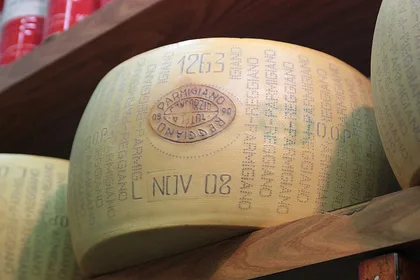 CheeseParmigiano ReggianoThree ingredients and no additives of any kind are permitted: raw cow's milk, salt and calf rennet, from five…
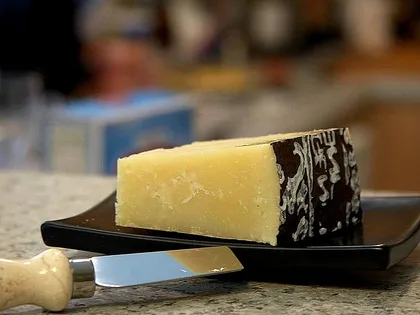 CheesePecorino RomanoPecorino Romano DOP is a hard, dry-salted sheep's milk cheese aged at least five months, made in Sardinia…
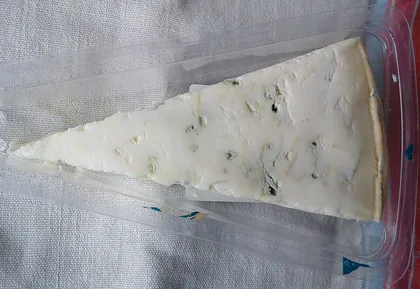 CheeseGorgonzolaThe green veining is the product, not a flaw anyone tolerates: it grows from a mould added to the milk and…
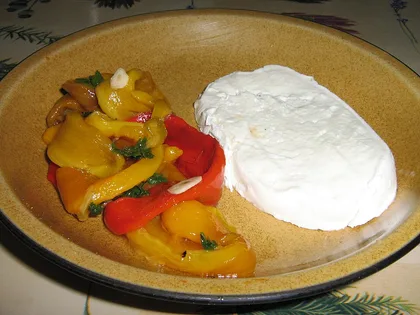 CheeseBuffalo MozzarellaMozzarella di Bufala Campana DOP is made from the whole raw milk of Italian Mediterranean water buffalo…
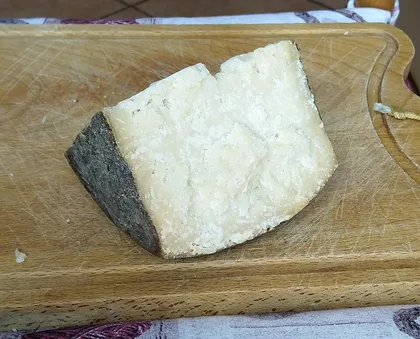 CheeseFiore SardoFiore Sardo DOP is the shepherd's pecorino of Sardinia: raw sheep's milk, lamb rennet paste, an uncooked…
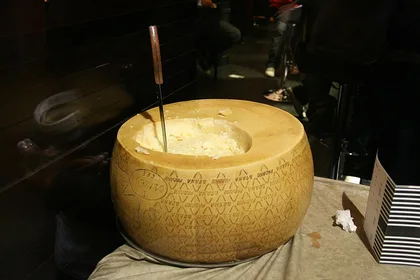 CheeseGrana PadanoNine months is the floor the specification sets before a wheel may carry the name.