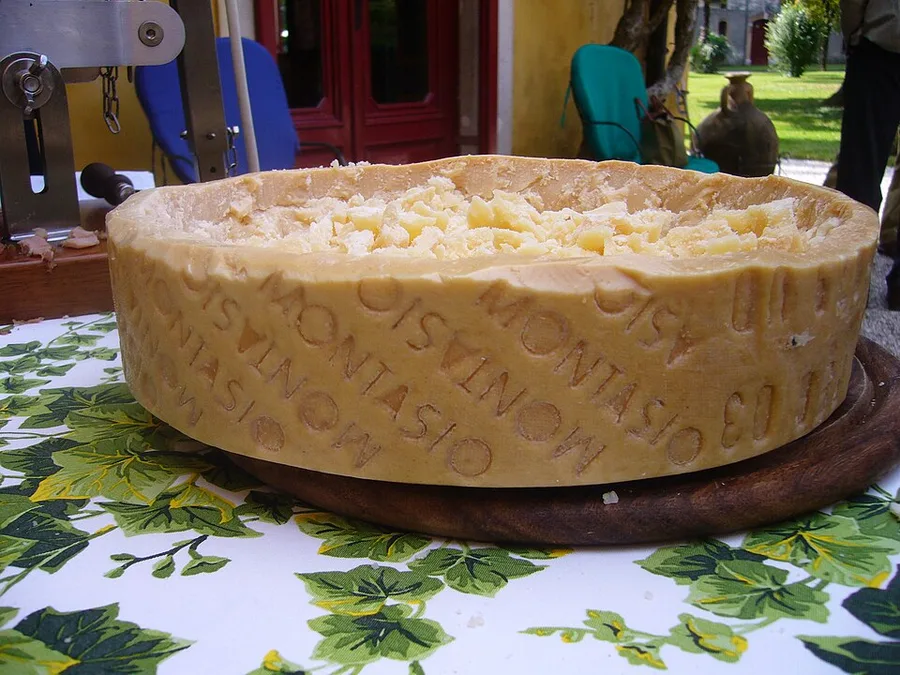
What is Montasio?
Montasio is a semi-cooked cow's milk cheese from northeastern Italy, made in cylindrical wheels of 6 to 8 kilos, 30 to 35 centimetres across, with a smooth elastic rind. The DOP zone covers all of Friuli Venezia Giulia, the Veneto provinces of Belluno and Treviso and parts of Padua and Venice.
Minimum ageing is 60 days, and the age scale is the only thing you really need to understand about it. Up to five months it is fresco: white, supple, mild, small regular eyes, and it melts. From five to ten months it is mezzano or semistagionato: yellower, nuttier, the everyday cheese of a Friulian kitchen. Past ten months it is stagionato, firm and crumbly. Past eighteen it is stravecchio, hard and granular with tyrosine crystals and a proper piquant edge.
There is also an extra mention, Prodotto della Montagna, reserved for wheels whose milk is produced, worked and aged entirely in mountain territory: in practice, the malga cheeses of Carnia and the Julian Alps.
Unlike Asiago, which splits into two different cheeses at the vat, Montasio is one cheese that becomes several things as it ages.
What does it taste like?
Fresco tastes of sweet milk and butter with a clean, almost yoghurt-like finish, and has the elastic, squeaky texture of a good young alpine cheese. It is gentle to the point of being unremarkable on its own, which is exactly why it is a cooking cheese.
Mezzano, at six to eight months, is where most people fall for it: hazelnut, browned butter, cooked cream, a savoury depth that arrives late, and enough acidity to stay lively. This is the wedge to buy if you are buying only one.
Stagionato and stravecchio go dry and granular, with dried fruit, broth and roasted nut notes, a mineral saltiness and crunchy crystals. At two years it sits somewhere between an aged Asiago and a young Comté, though it stays rounder and less brothy than either.
How to use it
Frico first, because it is what Montasio exists for. The crisp version is nothing but cheese: grate it, spread it in a dry non-stick pan over low heat, let it melt, bubble and set, then flip it once and lift out a lace wafer. The soft version adds boiled potato and slowly stewed onion, and comes out as a dense golden cake eaten with polenta.
The part Friulians never say out loud, because everyone there knows it: you need two ages. Roughly two thirds fresco, which melts and binds, and one third stagionato, which supplies the flavour. A single mid-age wedge makes frico that is either bland or greasy.
Beyond frico, fresco melts over polenta, into frittate and gratins, and into toc' in braide, the Friulian polenta served with a cheese cream. Mezzano is the sandwich and cheeseboard cheese. Stagionato and stravecchio grate over pasta, barley soup and cjarsons.
Like every semi-cooked alpine cheese it dislikes direct heat: melt it slowly, or off the flame with residual heat, or it will release fat and turn rubbery.
How long it keeps
It belongs in the vegetable drawer of the fridge, wrapped first in a barely damp cloth and then in greaseproof paper. Fresco holds about three weeks, mezzano a couple of months, and stagionato and stravecchio up to four, and the same process runs through all of them: water leaves, the paste hardens, the salt concentrates and the rind darkens. Cling film against the surface makes the paste sweat and softens the rind, so either avoid it or change it every couple of days.
Where the cut face dries and goes glassy, scraping back a millimetre exposes the paste underneath. A dry white or green bloom on the rind wipes away with a cloth dipped in vinegar or white wine; anything damp, pink or black is a question for the cheesemonger or the dairy rather than something to settle at home. Aged pieces freeze in 200 gram blocks for six months when they are headed for a grater or a frico, while fresco thaws grainy and stops stringing. Half an hour out of the fridge before it reaches the table.
Spot the real thing
On the heel of the wheel the Consorzio mark repeats the word Montasio, pressed in by the marking hoop before salting, so it sits inside the rind rather than printed on the outside. Wheels that pass a hundred days also carry a fire-branded conformity mark. The rind is smooth, elastic and pale on a young cheese and turns hard, dry and brown with age, while the paste runs from white to straw and shows small, regular eyes spread evenly through it.
Two questions are worth asking at a counter. First the age, because fresco and stravecchio are effectively different cheeses and are often sold under the same name at similar prices. Second, whether the label says Prodotto della Montagna, which marks the mountain dairy version. Anything sold as Montasio-style, or simply as latteria, is not the DOP, although latteria is an honest Friulian category in its own right. Abroad it usually sits beside Asiago, which looks similar and is a separate DOP from further west.
How to pronounce Montasio
mon-TAH-zee-oh
Four syllables, stress on the second. The 's' is voiced, like the 's' in 'rose' rather than the 's' in 'sun': 'mon-TAH-zee-oh', not 'mon-TASS-ee-oh'. The final 'o' is fully pronounced. It takes its name from the Montasio massif in the Julian Alps.
Montasio compared
vsMontasio stagionato (versus fresco)
One DOP, one recipe, and two cheeses that behave nothing alike. The distinction is time alone, but shops rarely label it clearly and the price gap is smaller than the difference in the pan. Ask for the age before you ask for the price.
| This | Montasio stagionato (versus fresco) | |
|---|---|---|
| Age | 60 days to 5 months | Over 10 months (18+ for stravecchio) |
| Paste | White, supple, small even eyes | Straw to amber, firm, crumbly, crystalline |
| Flavour | Sweet milk, butter, mild tang | Hazelnut, broth, dried fruit, piquant finish |
| Melts | Yes, cleanly and stringily | No, it separates and goes oily |
| Grates | Poorly, it gums up | Yes, powders cleanly |
| Best for | Frico, polenta, gratins, sandwiches | Grating on pasta and soups, cheeseboard |
| Keeps refrigerated | Three weeks | Three to four months |
vsAsiago
The two great semi-cooked cow's milk cheeses of northeastern Italy, and constantly mixed up abroad. Asiago is legally two products decided at the vat: Asiago Pressato, made from whole milk and eaten young, and Asiago d'Allevo, made from partly skimmed milk and aged. Montasio is one cheese with an age ladder. At equivalent ages Montasio is usually sweeter and more elastic, Asiago d'Allevo drier and sharper.
| This | Asiago | |
|---|---|---|
| Structure of the DOP | One cheese, four age bands | Two distinct cheeses: Pressato and d'Allevo |
| Milk | Cow, whole or partly skimmed by ageing target | Whole (Pressato) or partly skimmed (d'Allevo) |
| Wheel | 6-8 kg | 8-12 kg |
| Minimum ageing | 60 days | 20 days (Pressato), 60 days (d'Allevo) |
| Young flavour | Sweet, buttery, elastic | Milky, softer, more delicate (Pressato) |
| Aged flavour | Nutty, rounded, gently piquant | Sharper, drier, more assertive |
| Signature dish | Frico | Grated over polenta and pasta |
vsFontina Val d'Aosta
The comparison that matters if you are cooking. Both are Italian alpine cow's milk cheeses that melt, but Fontina is a washed-rind cheese made from whole raw milk with a much higher moisture content: it melts into a sauce. Montasio fresco melts into strings. For fonduta use Fontina; for frico use Montasio.
| This | Fontina Val d'Aosta | |
|---|---|---|
| Region | Friuli Venezia Giulia and eastern Veneto | Valle d'Aosta |
| Rind | Dry, smooth, brushed | Washed, damp, orange-brown |
| Milk | Raw or thermised, two milkings | Whole raw milk, one milking |
| Minimum ageing | 60 days | 80 days |
| Melting behaviour | Strings, then crisps at the edges | Flows into a smooth sauce |
| Flavour | Sweet then nutty with age | Earthy, mushroomy, more pungent |
Montasio substitutes
- Asiago (Pressato for young, d'Allevo for aged)
The closest Italian match and far easier to find abroad. Pressato stands in for fresco, d'Allevo for stagionato. Slightly drier at every age, so add a knob of butter if you are making frico with it.
1:1 - Fontina Val d'Aosta
Better than Montasio at flowing, worse at crisping. Excellent for polenta and gratins, and acceptable in soft frico; for crisp frico it will spread rather than set into a wafer.
1:1 - Young Gruyère or Emmental, for frico
The practical supermarket answer outside Italy. Gruyère brings more salt and more broth, Emmental more sweetness and better stretch. A half-and-half mix of young Gruyère and aged Gruyère mimics the young-plus-old blend frico actually needs.
1:1 - Piave or aged Asiago, for grating
Where the recipe wants stravecchio Montasio grated over pasta or barley soup, Piave Vecchio gives the same nutty, crystalline profile at a similar price and is widely exported.
1:1 - Mature Gouda, for the aged register only
Not remotely Italian, but a 12-18 month Gouda has the same crystalline crunch and caramel-nut sweetness as stravecchio Montasio, and is available everywhere. Do not use it for melting.
1:1 - Vegetarian: microbial-rennet alpine-style cheeses
Montasio DOP is never vegetarian: the specification requires calf rennet, as do Asiago, Fontina and Gruyère. Look for farmhouse alpine-style or tomme-style wheels labelled 'suitable for vegetarians' or 'microbial rennet'; several British and American creameries make young melting versions and aged grating versions of exactly this type.
1:1
Where to buy it
In the US, Montasio is stocked by Italian delis, Eataly, Murray's Cheese, Wegmans and many well-stocked supermarket counters, at roughly $12 to $24 per pound depending on age. Ask which age you are buying, because American counters frequently sell everything from 3-month to 18-month wheels as simply 'Montasio'.
In the UK it is harder to find than Asiago or Fontina: Italian delicatessens, La Fromagerie and online importers carry it at about £18 to £30 per kilo. Ordering a fresco and a stagionato together is worth the postage if you plan to make frico properly.
On a whole wheel, the Consorzio mark with the word Montasio repeated around the side is impressed into the rind by the moulding band before salting, not printed on afterwards. Wheels past a hundred days also carry a fire-branded conformity mark. If you want the mountain cheese, look for the words Prodotto della Montagna on the label.
Where to eat it in Italy
Carnia, the mountainous northwest of Friuli, is where the malga cheeses come from: Sutrio, Ovaro, Paluzza, Ravascletto, Forni Avoltri. In summer several high pastures sell directly, and mountain refuges serve frico with polenta stirred to order.
The Altopiano del Montasio itself, above Sella Nevea in the municipality of Chiusaforte, is the plateau that gave the cheese its name. It is reachable by road or on foot, and the malga makes and sells cheese through the grazing season.
Carpacco di Dignano, in the province of Udine, holds an annual Sagra del Frico, the fastest way to learn how many versions of the dish exist. Nearby, San Daniele del Friuli and Cividale offer the most Friulian pairing there is: young Montasio and raw ham, in osterie that have been serving it that way for a very long time.
Further reading
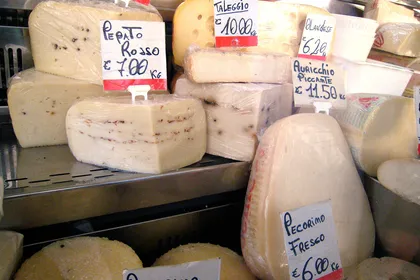 GuideHow long food keeps once openedThe date on the label describes the sealed package. After that, four things govern everything: water, salt…
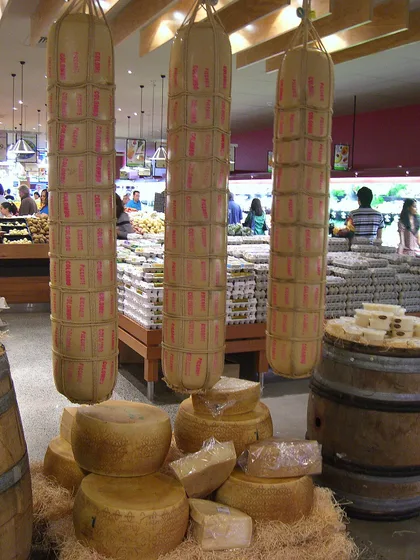 ExplainerWhich Italian cheeses contain no lactoseItaly sets a legal threshold, and long-aged cheeses clear it on their own, with no treatment involved.
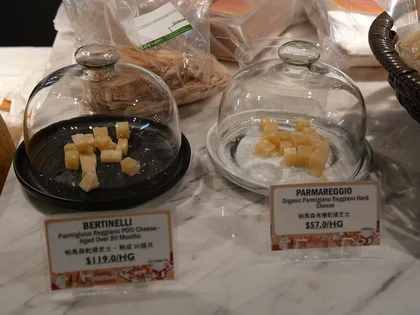 ExplainerParmesan vs Parmigiano Reggiano: the differenceIn Europe «parmesan» evokes a protected designation and cannot be used for anything else.
Frequently asked questions
What is the difference between fresco, mezzano and stagionato Montasio?
Age only, but it changes everything. Up to five months it is fresco: mild, elastic and a melting cheese. Five to ten months is mezzano: yellower, nuttier, the everyday table cheese. Past ten months it is stagionato, firm and crumbly, and past eighteen it is stravecchio, hard and piquant, for grating.
What cheese do you need for frico?
A mixture. About two thirds young Montasio, which melts and binds, and one third aged, which carries the flavour. One mid-age cheese on its own produces frico that is either bland or oily.
Is Montasio the same as Asiago?
No. Asiago is legally two cheeses decided at the vat: Pressato from whole milk, d'Allevo from partly skimmed. Montasio is one cheese sold at four ages. At comparable ages Montasio is generally sweeter and more elastic.
Is Montasio vegetarian?
No. The DOP requires calf rennet. The same applies to Asiago, Fontina and Gruyère, so a microbial-rennet alpine-style cheese is the practical vegetarian alternative.
How do you pronounce Montasio?
mon-TAH-zee-oh, with the stress on the second syllable and a voiced 's' as in 'rose'.
Sources
Where to check what you just read.
- 1
L'atto europeo del 1996 che iscrive Montasio fra le DOP, otto anni dopo il riconoscimento nazionale come DOC.
- 2
Il PDF del disciplinare vigente, dove si controllano zona di produzione, temperatura di cottura della cagliata e i mesi che separano fresco, mezzano, stagionato e stravecchio.
- 3Consortium · interested partyConsorzio per la Tutela del Formaggio Montasio DOP
L'ente di tutela con sede a Codroipo: qui si trovano i caseifici autorizzati, le marchiature e la documentazione sulle diverse stagionature.
Related foods
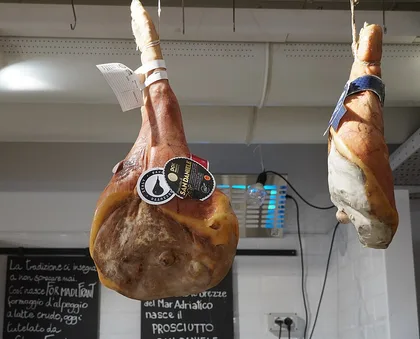 Cured meatsProsciutto di San DanieleProsciutto di San Daniele DOP is made in one town in Friuli from two ingredients: pork leg and sea salt.
 CheeseAsiagoOne name covers two cheeses nobody would mistake for each other at the counter.
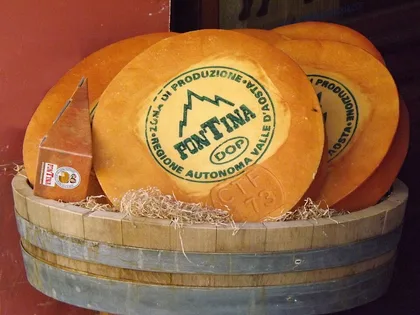 CheeseFontinaFontina is the DOP mountain cheese of Italy's Aosta Valley: raw whole milk from a single milking, wheels of…
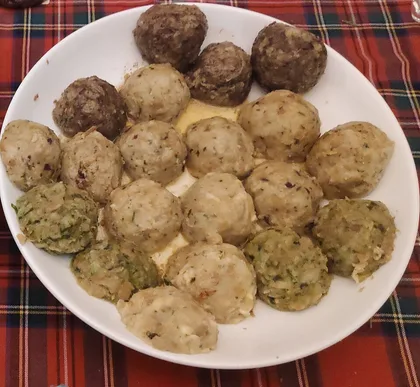 Pasta and breadCanederliIn the mountains nobody ever threw bread away, and canederli are the proof: stale white bread soaked in milk…
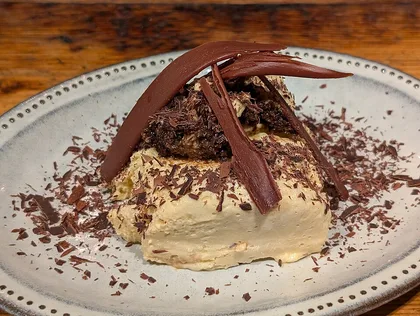 SweetsTiramisuNothing here goes near an oven. Savoiardi dipped in cold espresso, raw egg yolk whipped with mascarpone…
 WineProseccoProsecco is made from Glera grapes by the Martinotti tank method, not the traditional bottle method used for…
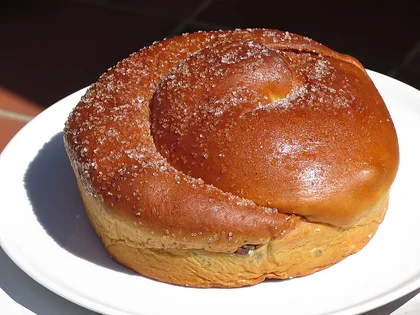 SweetsGubanaA long strip of enriched leavened dough rolled around walnuts, raisins, pine nuts and grappa, then coiled…
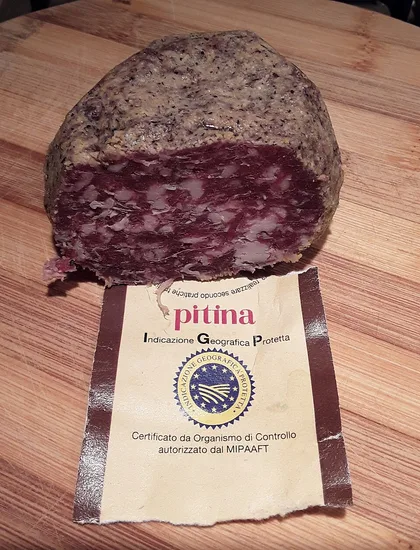 Cured meatsPitinaPitina is a smoked, cured meatball from the Friulian Dolomites: minced game or mutton bound with pork fat…