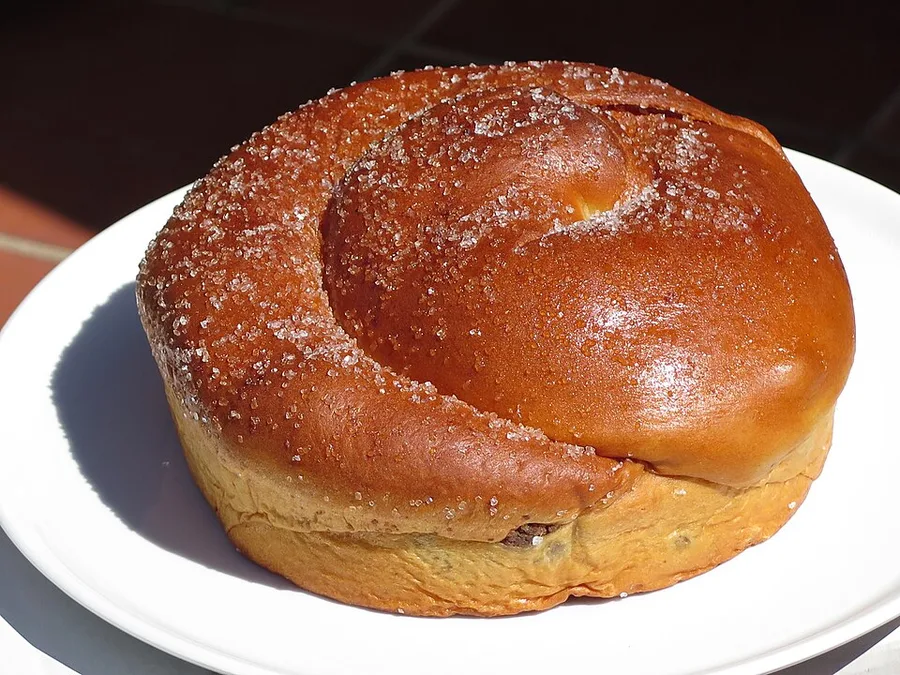
What is Gubana?
Gubana is a spiral cake. A large rectangle of rich leavened dough is spread with filling, rolled into a long cylinder, and then wound round itself inside a round tin, where it bakes into a tall golden coil. The cut face shows concentric rings of dough and filling, which is the image everyone recognises.
The filling is built on walnuts, which must dominate, with raisins, pine nuts, sugar, lemon zest, cinnamon and a serious measure of grappa. Most recipes also fold in crushed dry biscuits to bind, grated dark chocolate, candied citron and a spoonful of rum.
The dough is an enriched one, somewhere between brioche and sweet bread: flour, butter, eggs, sugar, yeast. Traditional producers use a natural starter and take twelve hours or more over the rise.
There are two different gubane and it is worth knowing which you are buying. The Natisone valley version is leavened: tall, soft, with a crumb that soaks up the liquor from the filling. The version common in Cividale and on the plain is made with puff pastry: lower, flakier, closer to a filled pastry roll. Both are called gubana, but the leavened one is the historic form.
It is served in slices, and in Friuli a spoonful of grappa is poured over each slice at the table. That is not a garnish: the cake is designed to receive it.
What does it taste like?
Walnut, immediately and throughout, with the particular slightly bitter, tannic quality that walnuts have and almonds do not. Behind it: raisins soaked in spirit, the resin of pine nuts, cinnamon, lemon zest, and the warmth of grappa running through everything.
The alcohol is present rather than suggested. A properly made gubana smells of spirit when you cut it, and the flavour is closer to a soaked fruit cake than to a pastry. That is the divide between people who love it and people who find it strong.
The dough is buttery but much less sweet than the filling: it exists to carry and absorb.
Texture depends on the version. The leavened one is soft, moist and slightly chewy, with the filling denser than the crumb around it. The puff-pastry version is crisp, flaky and drier, and reads more like a rolled biscuit. Both keep improving for a few days as the liquor spreads.
How to use it
Cut it into slices about a centimetre and a half thick, following the spiral, with a smooth blade. A serrated knife drags the walnuts out and separates the rings.
Serve at room temperature, and pour a teaspoon of grappa over each slice as it goes to the table. This is standard practice across eastern Friuli, and it restores the alcohol that baking drives off.
It suits both the end of a meal and breakfast. A day-old slice is worth ten seconds in a dry pan or a toaster to bring back the fragrance; a microwave makes it rubbery.
It holds up better against cheese than you would expect. A thin slice beside a mature Montasio or an alpine cheese works, because walnut and salt seek each other out.
When it dries out, use the slices as the base of a spoon dessert, soaked in more grappa and covered with custard, or crumble them over walnut gelato.
How long it keeps
It keeps at room temperature, wrapped in its own paper or closed in a tin, for ten to fifteen days. The alcohol in the filling and the oil in the walnuts both slow things down, and across the first few days the cake changes for the better as the liquor works its way out through the crumb. The fridge is the wrong place for it: cold pushes the starch in the leavened dough to retrograde, and the crumb turns chalky overnight.
Once it has been cut, cover the exposed face with film, because that section dries within hours and it is the part carrying the most filling. It freezes well, whole or in slices, for three months, and it should thaw at room temperature still inside its wrapper so the moisture goes back into the dough instead of onto the surface; frozen slices can go straight into a dry pan. The puff pastry version holds a few days less and takes up damp air quickly, and five minutes in a 160 °C oven brings the layers back.
Spot the real thing
Look at the cut face. The spiral should be tight and even, with the band of filling as thick as the band of dough or thicker; when the dough dominates, the saving was made exactly where the cost sits. The walnuts have to be in recognisable pieces rather than worked into a cream, because a smooth uniform filling means they were milled, or partly swapped for breadcrumbs and sugar. Smell it: grappa should come through alongside cinnamon and lemon zest, and a gubana with no alcohol on the nose has been softened for a general palate.
Decide which of the two types you are buying before you pay. The leavened one stands six to eight centimetres tall with visible crumb between the coils, while the puff pastry version is lower and shows thin flaky layers. Standard weight runs between half a kilo and a kilo, and one that feels light for its size is short on filling. Its relatives on foreign shelves are Slovenian potica and Triestine presnitz, and strudel, which is a log rather than a coil.
How to pronounce Gubana
goo-BAH-nah
Three syllables, stress on the middle one. The 'g' is hard, as in 'good', and the 'u' is a full 'oo'. Not 'GYOO-ba-na' and not 'goo-BAY-na'. The plural is gubane, goo-BAH-neh. Strucchi, the single-portion version, is STROOK-kee.
Gubana compared
vsStrudel
The other rolled sweet of Italy's north-east, and the one gubana is most often confused with by visitors. Apple strudel, from the Austro-Hungarian tradition that reaches into Trentino and Alto Adige, is a paper-thin unleavened pastry stretched until translucent, wrapped once around sliced apples, sultanas and breadcrumbs, and baked as a long log. Gubana uses a thick, rich, leavened dough, a walnut filling with no fruit pulp at all, and is coiled into a spiral rather than folded into a log. Strudel is served warm and often with cream; gubana is served at room temperature with grappa.
| This | Strudel | |
|---|---|---|
| Pastry | Enriched leavened dough | Stretched unleavened pastry |
| Shape | Spiral coil in a round tin | Long log, sliced across |
| Filling | Walnuts, raisins, pine nuts, spirit | Apples, sultanas, breadcrumbs, cinnamon |
| Alcohol | Central: grappa or rum | Occasional, a splash of rum |
| Served | Room temperature, with grappa poured over | Warm, often with cream or custard |
| Keeps | Ten to fifteen days | Two or three days |
vsPotica
The Slovenian sibling, and the honest answer is that they are two versions of the same idea separated by a border that has moved repeatedly. The Natisone valleys are a Slovene-speaking part of Friuli, and gubana takes its name from the Slovene guba, meaning fold. Potica is usually rolled and baked in a tall fluted ring mould, and it accepts a much wider range of fillings: walnut, but also poppy seed, tarragon, honey and curd cheese. Gubana is coiled flat in a round tin, and the walnut-and-spirit filling is effectively obligatory.
| This | Potica | |
|---|---|---|
| Country | Italy, Natisone valleys | Slovenia |
| Mould | Flat round tin, coiled spiral | Tall fluted ring mould |
| Fillings | Walnut, almost always | Walnut, poppy seed, tarragon, curd cheese |
| Alcohol | Grappa or slivovitz, generous | Usually light or absent |
| Occasion | Easter, Christmas, weddings | Easter, Christmas, weddings |
vsPutizza and presnitz
Trieste's two rolled nut pastries, at the other end of the same region and constantly mixed up with gubana in shops. Putizza is the closest: a leavened dough rolled with walnuts, chocolate and raisins, but baked as a loaf rather than a coil, and generally richer in chocolate. Presnitz is the pastry version: a thin, unleavened dough wrapped around a dense nut, raisin and candied fruit filling and shaped into a flat spiral or horseshoe, associated with Easter in Trieste. If a shop offers all three, gubana is the tallest and softest, presnitz the flattest and driest.
| This | Putizza and presnitz | |
|---|---|---|
| Dough | Leavened, rich | Leavened (putizza) or thin pastry (presnitz) |
| Shape | Tall spiral coil | Loaf (putizza), flat spiral (presnitz) |
| Chocolate | Optional, grated | Central in putizza |
| Home | Natisone valleys, Cividale | Trieste and its coast |
| Texture | Soft and moist | Denser (putizza), dry and crisp (presnitz) |
Gubana substitutes
- Potica
The nearest substitute and increasingly easy to find, since Slovenian bakeries ship internationally and the walnut version is the standard one. Expect a slightly drier crumb, less alcohol and a taller, ring-shaped slice. Sprinkle the slice with grappa and the difference narrows considerably.
1:1 - Bejgli or nut roll
The Hungarian and central European walnut roll, sold across the US as nut roll or kolach. Same walnut-and-raisin logic in a rolled log rather than a coil, usually with no spirit and a thinner dough-to-filling ratio. The best supermarket-level stand-in in North America.
1:1 by weight - Rum for grappa
Grappa is what the valleys use, and plum brandy, slivovitz, is the most faithful to the cake's Slovene origin. Dark rum is the easiest substitute and works well, giving a rounder and less fiery result. Do not reduce the quantity: the alcohol is a preservative as well as a flavour.
1:1 - Mixed nuts for pure walnut
Walnuts must lead, but replacing up to a third with hazelnuts or almonds is common in home versions and softens the tannic edge. Going further turns it into a different cake: the bitterness of walnut is what balances the sugar and the raisins.
Up to 1:3 by weight of the nut total - Crushed amaretti for dry biscuits
The biscuit crumbs in the filling exist to absorb the spirit and stop the mixture from becoming wet. Amaretti do the same job and add an almond note that suits the walnuts; plain digestives or rusks are the neutral option.
1:1
Where to buy it
Artisan gubana from the Natisone valleys runs 18 to 28 euro a kilo. Sizes range from 300 g to a kilo and a half; the commonest is a 500-600 g cake at 12 to 18 euro. Puff-pastry versions cost a few euro less per kilo because they skip the long rise.
The cost is walnuts, which exceed a third of the total weight in a well-made cake. Cheaper versions cut them and raise the proportion of breadcrumbs or crushed biscuit in the filling, visible in the cut face and obvious in the first bite.
Strucchi, the single-portion version of the same filling, sell at 20 to 30 euro a kilo and are the cheapest way to taste what the cake is about.
Abroad it is rare. Italian delis in northern Europe and online specialists list it at roughly 16 to 26 dollars a pound in the US and 25 to 40 pounds a kilo in the UK, mostly around Easter and Christmas. Producers in the valleys ship directly and the cake travels well, because the spirit in the filling preserves it.
Check whether you are buying the leavened or the puff-pastry version before you pay. Good labels say so; if it does not, ask.
Where to eat it in Italy
The Natisone valleys, in the province of Udine, where the cake comes from. San Pietro al Natisone and the hamlet of Azzida have the densest concentration of producers, nearly all family workshops that sell directly and ship across Italy.
Cividale del Friuli is the logical base. It is a Lombard town with a UNESCO-listed Tempietto, the Devil's Bridge hanging over the green gorge of the Natisone, and a compact old town where every pastry shop sells gubana, usually in both versions.
Easter and Christmas are the peaks, when production runs at full capacity and the valley villages hold fairs around it, but the cake is available year-round.
From the valleys, the narrow wooded roads climbing to Savogna and Drenchia reach the Slovenian border in a few kilometres, which is the quickest way to understand why gubana and potica are the same cake under two names.
One comparison worth building a day around: leavened gubana in the valleys, puff-pastry gubana in Cividale, and fried strucchi from a village shop, all in the same afternoon.
Further reading
Frequently asked questions
What is inside a gubana?
Coarsely chopped walnuts, raisins soaked in grappa, pine nuts, sugar, cinnamon, lemon zest and crushed dry biscuits to bind. Many recipes add grated dark chocolate, candied citron and rum. Walnuts have to dominate; if they do not, the cake has been cheapened.
What is the difference between leavened gubana and puff-pastry gubana?
The leavened version is the historic one from the Natisone valleys: tall, soft, with a crumb that absorbs the spirit from the filling. The puff-pastry version, common in Cividale and on the plain, is lower, flakier and much faster to make. The filling is the same.
Why do you pour grappa on the slice?
Because that is how it is served across eastern Friuli. Baking drives off much of the alcohol in the filling, and a teaspoon poured over the slice at the table puts it back. Plum brandy is the most faithful choice to the cake's Slovene roots.
Are gubana and potica the same thing?
They are two versions of the same idea, separated by a border that has moved several times: the Natisone valleys are a Slovene-speaking part of Italy, and the name comes from the Slovene guba, a fold. Potica is usually baked in a tall ring mould and accepts many fillings; gubana is coiled flat and is almost always walnut.
How do you pronounce gubana?
goo-BAH-nah, hard 'g' as in 'good', stress on the middle syllable. Two or more are gubane, goo-BAH-neh.
Related foods
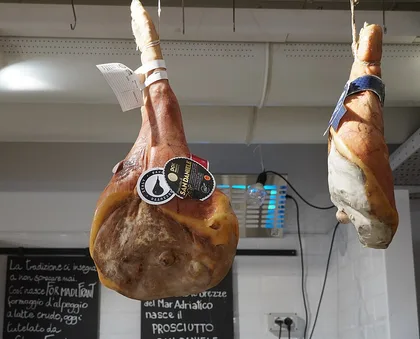 Cured meatsProsciutto di San DanieleProsciutto di San Daniele DOP is made in one town in Friuli from two ingredients: pork leg and sea salt.
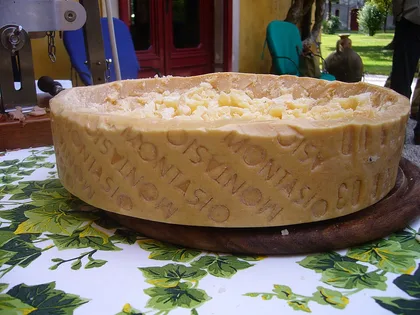 CheeseMontasioMontasio DOP is Friuli's cheese: cow's milk, semi-cooked curd, wheels of 6 to 8 kilos and an ageing ladder…
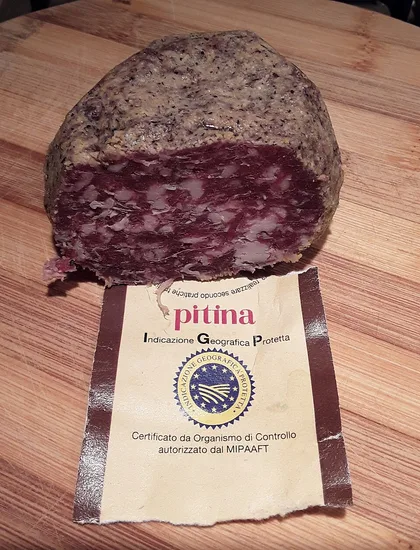 Cured meatsPitinaPitina is a smoked, cured meatball from the Friulian Dolomites: minced game or mutton bound with pork fat…
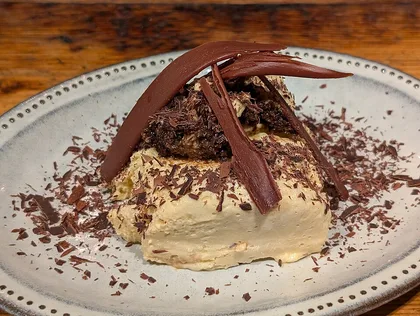 SweetsTiramisuNothing here goes near an oven. Savoiardi dipped in cold espresso, raw egg yolk whipped with mascarpone…
 WineProseccoProsecco is made from Glera grapes by the Martinotti tank method, not the traditional bottle method used for…
 SweetsCannoliIt has to be filled when you order it, and anywhere that fills them in advance has already lost: the fried…
 SweetsPanettonePanettone is Milan's Christmas bread: a tall, domed sourdough cake with butter, egg yolk, sultanas and…
 SweetsGelatoGelato is not ice cream translated. It carries less fat (4-8% against 10-18%), holds far less air (20-35%…