What is Panettone?
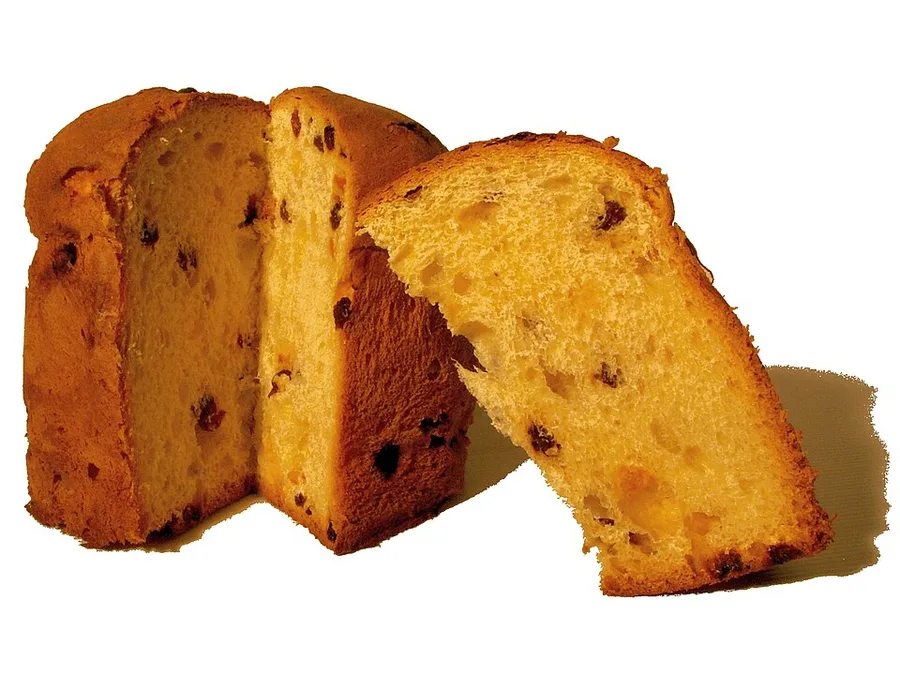
Panettone is a naturally leavened sweet bread from Milan, baked in a paper mould and shaped like a tall dome. The crumb is deep yellow, cottony and stringy rather than crumbly, studded with sultanas and cubes of candied orange and citron.
The recipe is written into Italian law. A 2005 ministerial decree reserves the name for products made with a live sourdough starter, never commercial yeast, containing at least 16% butter, at least 4% egg yolk and at least 20% raisins and candied peel by weight. Anything else can be sold, but not called panettone.
Two shapes exist. The Milanese one is tall, with a cross cut into the dome and brushed with butter before baking, so it opens into four petals. The lower, glazed version, covered in an almond and hazelnut crust, belongs to Piedmont and the Veneto. Chocolate, pear, pistachio and no-candied-fruit versions are modern, often excellent, and not what a baker is judged on.
What does it taste like?
Buttery and faintly tangy, more bread than cake. The sourdough gives a background acidity, a whisper of the sourness in good bread, that keeps the sugar in check, so a well-made panettone is far less sweet than its reputation suggests.
The dominant aromas are butter, honey, vanilla and orange. The sultanas are plump and grapey rather than boozy, and the candied peel should be translucent and juicy, not chewy: this is candied citrus made properly, which tastes almost nothing like the neon fruit in a supermarket fruitcake.
The texture is the point. Pull a piece apart and it should come away in long silky threads, moist enough to leave a shine on your fingers. Warm it slightly and the butter softens and the whole thing smells like a bakery.
How to use it
Serve it at room temperature, around 18-20°C, never cold. If the house is chilly, ten minutes in a 50°C oven wakes up the butter and the citrus; the difference between a cold slice and a barely warmed one is startling.
Cut it in vertical wedges from the top down, so every slice has both dome and base, using a serrated knife and a decisive stroke. Milan serves it with mascarpone cream, mascarpone whipped with egg yolks and sugar, or warm zabaglione, though a good one needs nothing.
Stale panettone is not a failure, it is a second recipe. Slices dipped in egg and milk and fried in butter make the best French toast you will eat; cubed, it makes bread pudding; layered with mascarpone cream it stands in for savoiardi in tiramisù.
One thing not to do: refrigerate it. The starch retrogrades and it turns rubbery within a day.
How long it keeps
Sealed in its cellophane the loaf carries a long date, often several months out, printed by the maker on the wrapper or the base of the paper mould, and that printed date is the only reference for an unopened one. The wrapper is doing real work: the sugar and butter hold moisture in, and the cellophane stops it leaving. Keep the box somewhere cool and dark, 15 to 20 C, and away from the oven, because warmth speeds up the point at which the butter starts to smell flat and papery.
Once it is cut, air is the whole story. Slice it vertically from the top, press the cut faces back together, and return the loaf to its bag with the opening folded and clipped; at room temperature it stays soft for two to four days, and the strands go dry and brittle after that. The fridge dries it faster than the counter, so it is the wrong place for it. To hold it longer, cut it into slices, wrap each one and freeze at minus 18 C for up to three months, warming them briefly in a low oven.
Spot the real thing
Read the ingredient list before you look at the box. The words to find near the top are lievito madre or natural sourdough, butter, and egg yolk; Italian law sets minimums for butter, yolk and fruit before the name panettone can be used. Margarine, palm oil, mono and diglycerides, added flavouring and a long preservative line describe an industrial sweet loaf built for a supermarket shelf. Torn open, a well-made one shows an irregular crumb that pulls apart in long yellow strands rather than breaking like cake, with candied orange and citron in visible cubes.
The tall domed shape baked in its paper mould is the giveaway, and the two things sold beside it are different products: pandoro is an eight-pointed star with no fruit, and pan d oro style loaves in plastic clamshells are usually neither. Weight in the hand matters, since a real one feels light for its size. Price sorts them plainly, with artisan panettone from a named Milanese or Veronese bakery costing several times an industrial box of the same weight.
How to pronounce Panettone
pah-neh-TOH-neh
Four syllables, stress on the third. The double 't' is held slightly, and the final 'e' is always pronounced: 'neh', not 'nee' and not silent. So never 'PAN-uh-tone' and never 'panna-tony'. The plural is panettoni, 'pah-neh-TOH-nee'.
Panettone compared
vsPandoro
Italy's two Christmas cakes, and the argument every Italian family has in December. Panettone is a sourdough bread with fruit, domed and studded; pandoro is a richer, butter-heavy star-shaped cake with no fruit at all, dusted with vanilla sugar. Panettone is from Milan, pandoro from Verona.
| This | Pandoro | |
|---|---|---|
| City | Milan | Verona |
| Leavening | Sourdough starter, required by law | Sourdough starter too, but a shorter, richer dough |
| Fruit | Sultanas and candied orange and citron, min 20% | None, fruit is forbidden in the classic recipe |
| Butter | Minimum 16% | Minimum 20%, noticeably richer |
| Shape | Tall dome, cross cut on top | Eight-pointed star, truncated cone |
| Finish | Nothing, or an almond glaze | Shaken in a bag with vanilla icing sugar |
| Texture | Stringy, bready, chewy | Softer, cakier, melts faster |
| Who prefers it | Adults, purists, the north-west | Children, and anyone who dislikes candied peel |
vsChristmas fruitcake and stollen
The English-speaking world files panettone under fruitcake, which sets up the wrong expectation entirely. Fruitcake is a dense batter cake, heavy with dried fruit and usually alcohol; stollen is a yeasted German loaf with marzipan and a thick butter-and-sugar crust. Panettone is a bread, light and airy and lightly sweet, and it is meant to be eaten within weeks, not matured for a year.
| This | Christmas fruitcake and stollen | |
|---|---|---|
| Base | Naturally leavened bread dough | Fruitcake: creamed batter. Stollen: yeasted dough |
| Density | Airy, elastic, pulls into strands | Dense and close-crumbed |
| Fruit | Sultanas and candied citrus, about 20% | Up to half the weight, often soaked in spirits |
| Alcohol | None | Brandy or rum, often fed over months |
| Spice | Vanilla and citrus only | Cinnamon, clove, nutmeg, mixed spice |
| Keeps for | 30-45 days if artisan | Months to years |
vsColomba pasquale
The same dough, a different holiday. Colomba is the Easter cake, shaped like a dove, made with the identical sourdough base and the same 36-hour method, but with candied orange only, no raisins, and a crackly almond and sugar glaze baked onto the top. If you like one you will like the other.
| This | Colomba pasquale | |
|---|---|---|
| Holiday | Christmas | Easter |
| Shape | Dome | Dove, in a shaped paper mould |
| Fruit | Sultanas and candied orange and citron | Candied orange only, no raisins |
| Top | Cut and buttered, or almond-glazed | Always glazed with almonds, sugar and pearl sugar |
| Method | Identical two-dough sourdough process | Identical two-dough sourdough process |
Panettone substitutes
- Pandoro
The obvious swap if the problem is candied peel: same season, same shelf, no fruit. It is sweeter and more buttery, so serve it in thinner slices and skip any accompanying cream.
1:1 by weight - Colomba pasquale
Panettone dough in a different shape, sold from February to April. If you want the flavour outside December, this is the accurate answer rather than a compromise.
1:1 - Brioche loaf or challah
For cooking rather than eating plain. Both are enriched breads that behave like panettone in bread pudding, French toast and trifle. Add a handful of sultanas and a little grated orange zest to close the gap.
1:1 by weight, plus 60 g sultanas and the zest of one orange per 500 g - Argentine or Latin American pan dulce
Not an imitation but a direct descendant, carried to South America by Italian emigrants. Widely sold in the US around Christmas, usually sweeter and often with nuts. Genuinely close.
1:1 - Stollen
The closest northern European equivalent in role, if not in texture. Denser, marzipan-centred and much sweeter on the outside. Works on the same table, not in the same recipe.
1:1 for serving, not for baking - Gluten-free panettone
Several Italian producers now make one with a rice and buckwheat sourdough. It will never pull into strands the way the wheat version does, but the flavour, butter and candied fruit are right. Buy it, do not attempt it at home.
Where to buy it
In the US, Eataly and Italian delicatessens carry artisan loaves from November, and warehouse clubs and supermarkets stock the big Italian brands. Expect $12-20 for a supermarket kilo and $45-90 for an artisan one. In the UK, supermarkets and department stores carry Italian brands from late autumn at £8-15, with artisan loaves at £30-45 in Italian delis.
Names worth knowing on the label: Loison, Fiasconaro, Flamigni and Olivieri 1882 for the artisan end; Tre Marie, Motta and Bauli for the industrial one, which is not a criticism. The mass-market panettone is a decent product for the price.
Read the ingredients before you pay. You want lievito madre or natural sourdough, butter rather than vegetable fat or margarine, real candied orange and citron peel, and no preservatives. A short expiry date is a good sign, not a bad one.
Buy in the first half of December. The best small producers make a fixed quantity and are gone by the 20th.
Where to eat it in Italy
Milan from mid-November onwards, when every pasticceria in the city hangs its production in the window. Marchesi, open since 1824, and Cova, since 1817, are the historic addresses; Vergani and Martesana are the names Milanese people actually give you when you ask where they buy theirs.
Re Panettone, the tasting fair held in Milan in November, is the efficient way in: dozens of small producers in one room, and twenty panettoni tasted side by side teach you more about sourdough than any amount of reading.
The other date is 3 February, the feast of San Biagio, when Milan eats leftover panettone dry for breakfast to protect the throat. Bakeries sell off the last loaves cheap that morning. It is a genuine local ritual, and the best-value panettone of the year.
Brescia, Verona and Sicily all now field award-winning bakers, so a panettone road trip is a real thing rather than a marketing idea.
Frequently asked questions
What is panettone?
A tall, domed sweet bread from Milan, leavened with a sourdough starter and enriched with butter, egg yolk, sultanas and candied orange and citron. Italian law sets minimums for all of these, including 16% butter and 20% fruit, and requires natural leavening.
How do you pronounce panettone?
pah-neh-TOH-neh, stress on the third syllable, with the final 'e' clearly pronounced. Not 'PAN-uh-tone'. The plural is panettoni, pah-neh-TOH-nee.
What is the difference between panettone and pandoro?
Panettone is a Milanese sourdough bread with candied fruit and raisins, baked as a tall dome. Pandoro is a Veronese star-shaped cake with more butter, no fruit at all, and vanilla icing sugar shaken over it. Pandoro is sweeter and softer; panettone is breadier and more complex.
Why is artisan panettone so expensive?
Because it takes 36 to 72 hours, including three feedings of a live sourdough starter, a twelve-hour first dough, six or seven hours of final proving and eight to twelve hours cooling upside down. That is three days of occupied ovens and proving rooms for one batch, plus real butter and real candied peel.
How long does panettone keep, and can you freeze it?
An artisan loaf without preservatives keeps 30 to 45 days sealed in its bag at room temperature; industrial ones last five to seven months. It freezes very well, whole or sliced, for up to three months. Never refrigerate it: it goes rubbery in a day.
Related foods
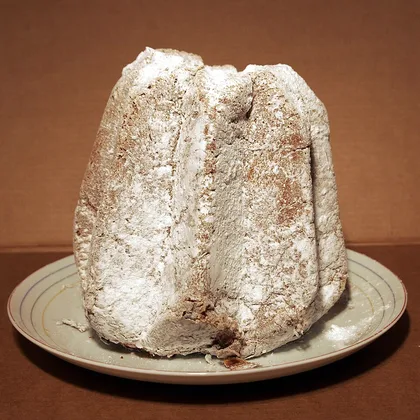 SweetsPandoroPandoro is Verona's Christmas cake: a tall eight-pointed star, at least 20% butter, no candied fruit at all…
 SweetsSbrisolonaSbrisolona is the crumbly almond and cornmeal cake of Mantua, and the only Italian cake you are supposed to…
 SweetsGelatoGelato is not ice cream translated. It carries less fat (4-8% against 10-18%), holds far less air (20-35%…
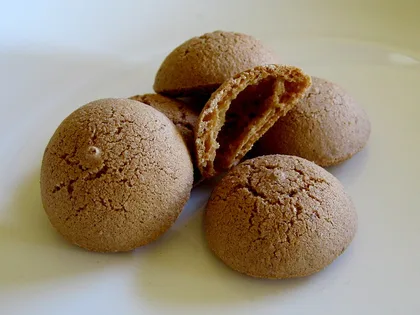 SweetsAmarettiAmaretti are flourless almond cookies whose bitter edge comes from apricot kernels, not almonds.SweetsTorroneHoney and sugar go over a water bath and stay there for hours, sometimes twelve, while someone keeps stirring.SweetsColomba (Italian Easter Cake)Colomba is Italy's Easter cake: the same slow-leavened, butter-rich dough as panettone, baked in the shape of…Pasta and breadGnocchiGnocchi are small boiled dumplings, in their modern form made of potato bound with a little flour.Cured meatsPancettaPancetta is Italian cured pork belly: salt, pepper and warm spices, dried for months, never smoked.