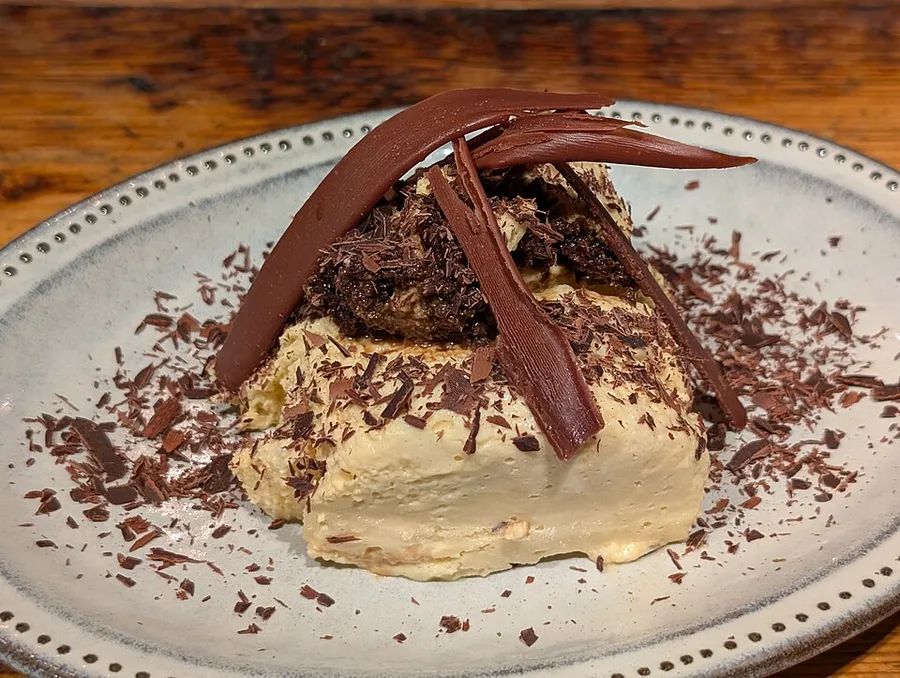
What is Tiramisu?
Tiramisu is assembled, not baked. Dry sponge-finger biscuits are dipped in cold coffee and layered with a cream made by whipping egg yolks with sugar and folding in mascarpone; the top is dusted with unsweetened cocoa. There is no flour, no gelatin and no oven at any stage: the only heat involved is the coffee, and that has to be cold before it touches the biscuits.
The working ratio is one egg yolk to 100 g of mascarpone and 20-25 g of sugar. A 20x30 cm dish serving eight people takes roughly 500 g mascarpone, five yolks, 120 g sugar, 300 g of savoiardi and 350-400 ml of espresso.
The recipe registered by the Accademia Italiana della Cucina with the Treviso Chamber of Commerce lists six ingredients and stops there: savoiardi, egg yolks, sugar, mascarpone, coffee, cocoa. No whipped cream, no marsala, no rum. The name comes from the Treviso dialect phrase 'tirame su', pull me up, and the dessert was built to be eaten by children and by people recovering from illness, which is exactly why the original has no alcohol in it.
Everything else you meet abroad arrived later: cream folded in to lighten and stabilise the mascarpone, liqueur in the coffee, gelatin in the supermarket tubs, and sponge cake in place of the biscuits.
What does it taste like?
Bitter first, then sweet. A well-made portion leads with cocoa and coffee, and the sugar arrives underneath rather than on top. Mascarpone is not tangy the way cream cheese is, having no lactic sourness at all, so what you register is fat, dense and cool, coating the spoon and clearing quickly.
The texture is the part people are not ready for. It is not cake and not mousse: the biscuit layer has gone soft and yielding without dissolving, and it sits under a cream that holds a spoon mark for a couple of seconds before it slumps. Nothing crunches. If something in your portion is still crisp, it was assembled less than four hours ago.
One portion carries real caffeine, somewhere around 40 to 80 mg, roughly one espresso, so late-evening portions are not a neutral choice. The raw egg gives it a savoury weight that a cream-and-gelatin version never has, and the difference between the two is easy to spot once you have tasted the first kind.
How to use it
The coffee has to be cold. Brew espresso or moka coffee, let it drop to room temperature or colder, then dip each biscuit one second per side, two at most. Hot coffee turns the bottom layer into sludge in seconds, and filter coffee is too weak and too acidic to register under the cream.
Bring the mascarpone to 14-16 C before you touch it: fridge-cold mascarpone seizes into lumps that never smooth out. Whip the yolks with the sugar until the mixture ribbons off the whisk and holds for a few seconds, then fold the mascarpone in gradually and stop the moment it is uniform. Overworking mascarpone splits it exactly like overwhipped cream, and there is no recovering it.
Layer biscuits, cream, biscuits, cream, level the top and refrigerate for at least four to six hours. Overnight is better: the biscuit needs that time to draw moisture out of the cream and stop being a biscuit. Dust the cocoa through a sieve immediately before serving, never in advance, or it absorbs moisture and goes patchy and wet within half an hour.
Serve it cold but not straight from the fridge: fifteen minutes out lets the coffee and cocoa come back. Skip fresh pineapple in any variation: the bromelain breaks the cream down within hours.
How long it keeps
A shop-bought tiramisu carries a date on the label, and that date and the maker are the reference for it. The rest is physical change. It is a 2 to 4 C fridge product and it moves quickly once cut: the exposed face dries and skins over within a day, the biscuit keeps drawing moisture out of the cream until the layers blur into one, and the cocoa takes up water from the surface and goes from dry powder to dark wet patches within hours.
Keep it under a rigid lid, or with film stretched across the rim rather than laid on the cream, since cling film in contact peels the cocoa off with it. Dust the cocoa at serving if it is staying more than a day. It freezes at minus 18 C for about a month, best portioned first, and thaws in the fridge over six to eight hours; brought back at room temperature the mascarpone weeps whey and the cream splits. Much of the chilled tiramisu sold abroad was frozen at the factory, so the packet states whether that applies.
Spot the real thing
Judge a tiramisu you did not make with the spoon before the tongue. The cream should hold the mark for a few seconds and then slump slowly: if it springs back there is gelatine or a setting agent in it, if it runs at once the mascarpone was overworked or stretched with whipped cream. The colour is pale ivory, not bright yellow (added colouring) and not white (few yolks, much cream). In a cut portion the layers still read separately and the soaked biscuit keeps its outline.
Cocoa tells you the rest: matt and powdery means it was sieved on shortly before serving, glossy or blotched with dark patches means hours earlier or a spell in a freezer. Most of what is sold as tiramisu abroad is a frozen industrial slab (Bindi is the biggest restaurant supplier in both the US and the UK), and it gives itself away with identical portions, sharp vertical edges and a faintly wet surface. Price is a rough guide: a pasticceria tub in Italy runs 18 to 26 euros a kilo against 8 to 14 for supermarket, and the gap is cream and thickeners.
How to pronounce Tiramisu
tee-rah-mee-SOO
Four syllables, stress hard on the last one. The Italian spelling carries a grave accent on the final letter, tiramisù, and that accent exists only to tell you where the stress falls. English speakers usually land it on the second syllable, 'tee-RAH-mee-soo', which is the single most common error; 'tira-MEE-soo' is the second. Every vowel is pronounced cleanly and the final vowel is a full 'oo', never 'yoo' or a swallowed 'uh'. Two spelling notes: 'tiramasu' and 'tirimisu' are wrong but widespread on menus, and the word does not take a plural in Italian, so two portions are still tiramisù.
Tiramisu compared
vsZuppa inglese
Italy's other great layered spoon dessert, and the one it is genuinely worth comparing. Zuppa inglese comes from Emilia-Romagna and is documented far earlier, in the 19th century. It layers pan di Spagna soaked in alchermes, a red spiced liqueur of 21 to 32 percent ABV, with cooked pastry cream, half of it turned to chocolate. It is bright red, alcoholic and unmistakably an adult dessert, where the Treviso tiramisu was built for children.
| This | Zuppa inglese | |
|---|---|---|
| Region | Veneto and Friuli, from the late 1960s | Emilia-Romagna, documented from the 1800s |
| Base | Dry savoiardi dipped in cold espresso | Pan di Spagna soaked in alchermes |
| Cream | Raw yolks and mascarpone, uncooked | Cooked pastry cream, half chocolate |
| Alcohol | None in the registered recipe | Alchermes, 21-32% ABV, central |
| Colour | Ivory and brown under cocoa | Bright red and pale yellow layers |
| Suitable for children | Yes, as originally built | No, the alcohol is not cooked off |
| Resting time | 4-6 hours minimum, overnight better | 2-3 hours, served the same day |
vsEnglish trifle
The comparison most British and American cooks reach for, and it holds only at the level of 'layered dessert in a dish'. Trifle soaks its sponge in sherry, sets a layer of jelly in the UK version, includes fruit as standard and finishes with whipped cream. Tiramisu has no fruit, no jelly, no whipped cream and one single cream layer. Trifle is spooned from a glass bowl; tiramisu is cut into squares.
| This | English trifle | |
|---|---|---|
| Sponge | Crisp savoiardi, dipped 1-2 seconds | Sponge or Swiss roll, often jam-filled |
| Soaking liquid | Cold espresso, nothing else | Sherry, sometimes fruit juice |
| Cream layers | One: mascarpone and yolk | Two: custard, then whipped cream |
| Fruit | None | Berries or tinned fruit, standard |
| Setting agent | None: structure comes from whipped yolks | Jelly layer common in the UK |
| Topping | Unsweetened cocoa, dusted at the last minute | Cream, flaked almonds, sprinkles |
| Served | Cut into squares from a tray | Spooned from a glass bowl |
vsRestaurant tiramisu with cream and liqueur
What you are almost certainly eating outside Italy, and it is a different product rather than a worse one. Whipped cream is folded into the mascarpone at 20 to 40 percent to lighten it and hold shape through a service; marsala, rum or coffee liqueur go into the coffee; industrial trays add gelatin or carrageenan so the slice survives freezing and thawing. The result is lighter, sweeter, sharper-edged and far more stable.
| This | Restaurant tiramisu with cream and liqueur | |
|---|---|---|
| Cream base | Yolks and mascarpone only | Mascarpone cut with 20-40% whipped cream |
| Eggs | Raw yolks | Pasteurised egg, or none at all |
| Alcohol | None | Marsala, rum or coffee liqueur, 1-3 tbsp |
| Stabilisers | None | Gelatin or carrageenan in industrial trays |
| Texture | Dense, slumps slowly on the plate | Lighter, holds a sharp vertical edge |
| Shelf life | 2-3 days refrigerated | Months frozen, 3-5 days once thawed |
| Price in Italy | 18-26 EUR per kg from a pasticceria | 8-14 EUR per kg in a supermarket tray |
Tiramisu substitutes
- Mascarpone: cream cheese plus double cream
Not a like-for-like. Mascarpone is a Lombard cream cheese from around Lodi and Abbiategrasso, made by acidifying cream with citric or tartaric acid, and runs 40-47 percent fat with no lactic tang. Cream cheese sits near 33 percent, ferments, and tastes sour. Whip full-fat block cream cheese with double cream to lift the fat and dilute the tang, and drop the sugar slightly to compensate.
250 g cream cheese to 60 ml double cream, replacing 250 g mascarpone - Mascarpone: make it yourself
Genuinely easy and cheaper than buying it outside Italy. Heat 500 ml of double cream to 85 C, stir in a tablespoon of lemon juice, hold for five minutes until it thickens, then drain in muslin in the fridge overnight. Use it within three days.
500 ml cream yields roughly 300 g mascarpone - Savoiardi: Pavesini or plain sponge
Pavesini are the biscuit half of Italy uses at home: smaller, thinner and drier than savoiardi at about 2.5 g each against 10-12 g, so they take up less coffee and build tighter, more compact layers. Dip them for half a second, no more. Plain pan di Spagna, pound cake or trifle sponge also work but soak fast and go to paste, so brush the coffee on instead of dipping.
1:1 by weight, dipping time halved - Raw eggs: pâte à bombe or Italian meringue
The fix for anyone who will not serve raw egg. Whip the yolks while pouring in a sugar syrup cooked to 121 C, which pasteurises them and gives a more stable cream that keeps two days longer; do the same with the whites for an Italian meringue. Most Italian pastry kitchens now work this way. Cartons of pasteurised egg are the shortcut.
100 g sugar to 30 ml water for the syrup, per 5 yolks - Egg-free version
What many Italian bars actually serve. Whip cold double cream to soft peaks, fold it into mascarpone beaten with sugar, and leave the eggs out entirely. Lighter and paler than the original, keeps four days, and holds up on a buffet where a raw-yolk version would not.
500 g mascarpone, 250 ml cream, 80 g sugar - Vegan version, described honestly
The classic is already vegetarian, so this only matters for dairy and eggs. Silken tofu blended with soaked cashews, coconut cream and sugar gives a passable body, and vegan sponge fingers exist since standard savoiardi contain egg. It is a good coffee and cocoa dessert; it does not taste like tiramisu, because the flavour of the original comes from 45 percent milk fat and raw yolk, and nothing plant-based reproduces that.
Where to buy it
In the US, mascarpone is stocked at Whole Foods, Wegmans, Trader Joe's and most large supermarkets; BelGioioso from Wisconsin and Galbani are the common brands, at 5 to 8 dollars for an 8 oz tub. Savoiardi are the harder half. American 'ladyfingers' are often the soft-baked kind, which collapse on contact with coffee. Look for the crisp Italian imports from Vicenzi, Balocco or Bonomi at Italian delis and online, 4 to 7 dollars a packet.
In the UK, every major supermarket carries mascarpone at 2 to 3 pounds for 250 g, own-label included. The biscuits are sold as sponge fingers or boudoir biscuits in the baking aisle at 1.20 to 2 pounds a pack; avoid anything labelled trifle sponges, which are far softer. Waitrose and Italian delicatessens stock proper savoiardi.
For a ready-made one: in Italy, 18 to 26 euros per kilo from a pasticceria against 8 to 14 from a supermarket chiller. Abroad, a great deal of the tiramisu served in Italian restaurants arrives frozen from industrial suppliers, Bindi being the largest in both the US and the UK, which is why so many restaurant portions have identical sharp edges and a faintly wet-looking cocoa surface.
A slice runs 9 to 14 dollars in an American restaurant and 6 to 9 pounds in a British one.
Where to eat it in Italy
Treviso, half an hour north of Venice, is the place to start. Le Beccherie in Piazza Ancilotto is the address the whole claim rests on: it closed in 2014 at the end of the Campeol family's run and reopened in 2016 under new ownership, still serving the original version with no cream and no liqueur. The pasticcerie around the old centre all make their own, and tasting two or three in an afternoon shows how much the yolk-to-mascarpone ratio changes things.
Since 2017 the town has hosted the Tiramisù World Cup, a competition open to amateurs rather than professionals, with separate categories for the original recipe and for creative versions. It is the densest tasting opportunity of the year.
The rival claim lives in Carnia, in the mountains of Friuli. Al Vetturino in Tolmezzo, associated with Norma Pielli, and the Albergo Roma in the same town both predate the Treviso date by their own accounts, and the drive from Udine takes about an hour.
In Venice, where quality varies wildly with the tourist trade, the specialist shops near San Marco (I Tre Mercanti is the best known) sell it by the portion to take away.
Frequently asked questions
How do you pronounce tiramisu?
tee-rah-mee-SOO, with the stress firmly on the final syllable. The Italian spelling tiramisù carries an accent on the last letter for exactly that reason. The usual English mistake is stressing the second syllable, 'tee-RAH-mee-soo'. The word means 'pull me up' in the Treviso dialect, and it takes no plural in Italian.
Does tiramisu contain raw eggs?
The traditional recipe does: raw yolks whipped with sugar are what hold the cream together, with no gelatin and no cooking. Many Italian pastry kitchens now pasteurise the yolks by whipping them with a sugar syrup cooked to 121 C, and cartons of pasteurised egg are common. If you are pregnant, immunocompromised or feeding young children, ask, and choose a cooked-base or egg-free version.
Can I use cream cheese instead of mascarpone?
Only with adjustments. Mascarpone is around 40-47 percent fat and has no sour note; cream cheese sits near 33 percent and is lactic and tangy. Whip 250 g of full-fat block cream cheese with 60 ml of double cream to raise the fat and soften the tang, and cut the sugar a little. Do not use spreadable tub cheese with added gums: it will not hold.
Does tiramisu contain alcohol?
Not in the version registered with the Treviso Chamber of Commerce, which lists six ingredients and no liqueur, because it was made to be eaten by children and convalescents. Marsala, rum and coffee liqueur are later additions and now extremely common in restaurants and industrial products, usually one or two tablespoons in the coffee. Ask if it matters.
Who actually invented tiramisu?
It is unsettled. Le Beccherie in Treviso, with the Campeol family and pastry chef Roberto 'Loly' Linguanotto, claims it between the late 1960s and early 1970s and has the first print reference, in the Vin Veneto magazine in 1981. Two establishments in Tolmezzo, in Friuli, Al Vetturino and the Albergo Roma, claim earlier versions, with Friulian researchers dating the documentation to 1959. In 2017 the Italian agriculture ministry listed tiramisu among Friuli Venezia Giulia's traditional products, which reopened the argument rather than settling it. Ado Campeol died in 2021 and was widely called the father of tiramisu in obituaries abroad.
Related foods
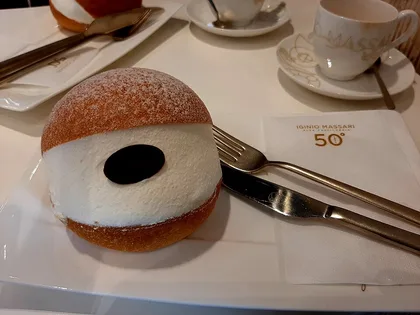 SweetsMaritozzoIn Rome this is breakfast at seven in the morning and nobody finds it odd: a soft, lightly sweet bun split…
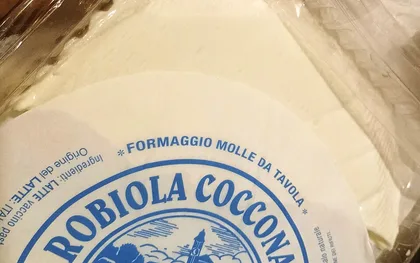 CheeseRobiolaRobiola is a family of soft young cheeses from north-west Italy rather than a single cheese.
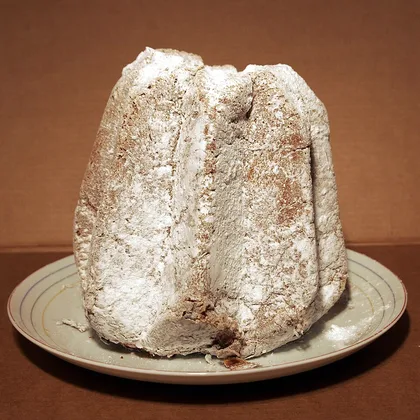 SweetsPandoroPandoro is Verona's Christmas cake: a tall eight-pointed star, at least 20% butter, no candied fruit at all…
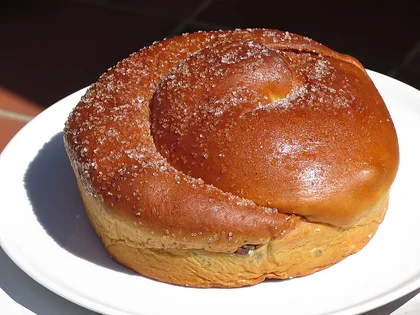 SweetsGubanaA long strip of enriched leavened dough rolled around walnuts, raisins, pine nuts and grappa, then coiled…Pasta and breadGnocchiGnocchi are small boiled dumplings, in their modern form made of potato bound with a little flour.
 WineProseccoProsecco is made from Glera grapes by the Martinotti tank method, not the traditional bottle method used for…
 CheeseAsiagoOne name covers two cheeses nobody would mistake for each other at the counter.
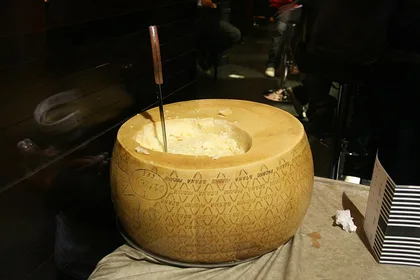 CheeseGrana PadanoNine months is the floor the specification sets before a wheel may carry the name.