
What is Maritozzo?
A maritozzo is an oval enriched bun (flour, milk, eggs, sugar, citrus zest, honey and olive oil or butter) baked, glazed with sugar syrup and then cut almost in half lengthways and filled with fresh whipped cream. The cream is levelled flush with the cut edge using a spatula, giving the flat white face that makes the thing instantly recognisable, and dusted with icing sugar.
The cream is deliberately under-sweetened, around 5% sugar. The bun brings the sweetness; heavily sweetened cream makes the whole thing cloying.
There is also an older, plainer version with no cream at all: the maritozzo quaresimale, studded with raisins, pine nuts and candied orange, eaten during Lent. That one came first. The cream-filled version is a twentieth-century idea, and it is the one that went global.
What does it taste like?
Milder and less buttery than a French brioche, and much less sweet than an American cream bun. The bun itself tastes gently of orange zest and honey, with a soft, stringy crumb that pulls apart in strands rather than crumbling.
The cream is the surprise for most visitors: it is barely sweet, cold, and there is a lot of it, often as much cream by weight as bread. The effect is closer to eating good bread and butter than to eating a frosted pastry.
Eaten properly, straight from the counter with a cappuccino, it is refreshing rather than heavy. Eaten from a sealed packet hours after filling, it is soggy. The difference is entirely about how long ago it was assembled.
How to use it
Eat it for breakfast, standing at a bar counter, with a cappuccino, between about seven and ten in the morning. That is not a rule invented for tourists: it is simply when Romans eat it, and ordering one after dinner marks you out immediately.
If you are making them, bake the buns the day before and fill them in the morning. Whip the cream cold and firm, pipe it into a diagonal cut that stops short of the base, then draw a wet spatula across the opening to level it flush. Dust with icing sugar last.
A filled maritozzo has a working life of about two hours before the cream starts wetting the crumb. This is why good bars fill them in front of you and why supermarket versions are disappointing.
The savoury maritozzo (the same bun, less sugar, filled with mortadella and burrata, or whipped salt cod) has become an aperitivo standard in Rome since the 2010s. It is a recent invention, and a good one.
How long it keeps
A filled maritozzo does not keep. Whipped cream gives up water, and within a couple of hours the crumb under it is wet. Eat it within two or three hours, refrigerate only if you have to wait, and finish it the same day. Cold holds the cream steadier but firms the butter in the dough, so the bun comes out denser than it went in.
The empty bun is a different matter. In a food bag at room temperature it holds two days, three or four if you warm it briefly before serving, going steadily drier as the starch stales. It freezes very well for about a month: thaw at room temperature, then two minutes in a 150°C (300°F) oven restores the softness.
Leftover whipped cream holds a day in a sealed container in the fridge but slackens and weeps as it sits, so whipping small amounts to order is the better plan. A microwave and a filled maritozzo do not belong in the same sentence.
Spot the real thing
The cream should be cut flat and clean across the split, not piped in a swirl. That flat face is the mark of a pastry chef with a spatula and firm whipped cream, rather than a siphon.
The crumb should be yellow and stringy: pull the bun and you should see fibres. Crumb that is compact and shatters points to a short prove or an industrial base. The surface should be glossy but dry to the touch, never tacky. The cream should taste of cream and nothing else, with no synthetic vanilla behind it, and cream that holds its shape unchanged for hours on a counter is vegetable based.
One detail separates the serious bars from the rest: a maritozzo is filled in front of you, or at least the same morning. Where they sit filled and wrapped from the night before, the cream has already soaked into the bread.
Abroad it sits on counters near Japanese-style versions loaded with fruit, English cream buns and Devon splits. Rome charges 2.50 to 4 euro; specialty bakeries elsewhere ask two to three times that.
How to pronounce Maritozzo
mah-ree-TOTS-tsoh
Four syllables, stress on the third. The double 'z' is a sharp 'ts', held slightly long: the same sound as in 'pizza', not a 'z' as in 'zoo'. So never 'mari-TOE-zo' or 'mari-TOZZ-oh'. The plural is maritozzi, 'mah-ree-TOT-tsee'.
Maritozzo compared
vsBrioche col tuppo (Sicilian brioche)
Italy's two great sweet breakfast buns, and they are used in opposite ways. The Sicilian brioche is richer, butter-based and topped with its little knot; it is split and filled with gelato or dunked into granita. The maritozzo is leaner, often made with olive oil, and filled with plain whipped cream.
| This | Brioche col tuppo (Sicilian brioche) | |
|---|---|---|
| Region | Rome and Lazio | Sicily |
| Fat | Olive oil traditionally, butter in modern versions | Butter and lard |
| Shape | Plain oval | Round with a knot, or tuppo, on top |
| Filling | Whipped cream, lightly sweetened | Gelato, or dunked in granita |
| Eaten | Breakfast, with cappuccino | Breakfast in summer, with granita |
vsCream bun, Devon split, Boston cream
Superficially the same object (sweet bun plus cream) but the balance is inverted. British and American cream buns are sweeter in every component and usually add jam, icing or custard. The maritozzo is a plain bun and plain cream, and gets its character from the ratio rather than from added sugar.
| This | Cream bun, Devon split, Boston cream | |
|---|---|---|
| Bun | Lightly sweet, citrus-scented | Sweeter, often plainer in flavour |
| Cream | 5% sugar, nothing else | Sweetened, often vanilla, sometimes jam beneath |
| Topping | Icing sugar only | Icing, glaze or chocolate |
| Cream to bread ratio | Roughly 1:1 by weight | Much less cream |
| Meal | Breakfast | Afternoon tea or dessert |
vsThe Japanese maritozzo (マリトッツォ)
Japan adopted the maritozzo around 2021 and turned it into a national convenience-store phenomenon, selling millions of them. The Japanese version uses a softer milk-bread base, even less sugar in the cream, and frequently adds fruit: strawberry and matcha are standards. It is a genuine variant, not a bad copy.
| This | The Japanese maritozzo (マリトッツォ) | |
|---|---|---|
| Bun | Enriched with olive oil or butter, citrus | Milk bread, softer and lighter |
| Cream | Plain, lightly sweetened | Even less sweet, sometimes with mascarpone |
| Additions | None, traditionally | Strawberry, matcha, chestnut, fruit slices |
| Where you buy it | Bars and pasticcerie | Convenience stores and bakery chains |
Maritozzo substitutes
- Make the bun yourself
The only really faithful route, and not difficult: a slow-risen enriched dough with milk, egg, sugar, orange zest, honey and olive oil, shaped into ovals, baked at 180°C for 12–15 minutes and brushed with sugar syrup while hot.
500 g flour makes 10–12 buns - Brioche à tête or plain brioche rolls
The easiest bakery stand-in. Richer and more buttery than the Roman original, so use slightly less cream and no extra sugar in it.
1:1 - Japanese milk bread rolls (shokupan or melonpan-style)
Closer in softness than brioche and widely available in Asian bakeries. This is the base Japan actually uses for its own maritozzi, so it is a substitute with a track record.
1:1 - Hot cross buns without the cross, or Portuguese papo-secos
In the UK, a plain unfrosted spiced bun works if you can find one without currants; in the US, Hawaiian sweet rolls are too sweet but usable if you cut the sugar in the cream to zero.
1:1 - The cream: 35% double or heavy cream
Whip cold cream with no more than a teaspoon of sugar per 250 ml, to firm peaks: it has to hold a flat spatula edge. Avoid aerosol cream and whipped topping entirely; they collapse and taste of vanilla.
80–100 g of whipped cream per bun - Vegan version
The bun adapts easily, since the traditional Roman recipe already uses olive oil rather than butter: swap milk for oat milk and the egg for a little more liquid plus a spoon of aquafaba. For the filling, whipped coconut cream chilled overnight holds a spatula edge best.
Where to buy it
Outside Italy the maritozzo has spread through the specialist bakery scene rather than through supermarkets. In New York, Los Angeles, London and Melbourne, Italian-leaning bakeries and coffee shops have added it to the counter since around 2020, usually at $6–9 or £4–6.
In Japan it is easier to buy than in most of Europe: convenience-store chains and bakery groups have sold it in volume since the 2021 boom.
It does not travel or keep, so there is no meaningful mail-order version: anything shipped will arrive with the cream soaked into the bread. If you cannot find a bakery that makes them, this is a product to make at home: the bun is a straightforward enriched dough and the filling is whipped cream.
When buying, look for cream that has been levelled flat with a blade and a bun with a visibly stringy, yellow crumb. Piped swirls and pure white, over-stable cream mean aerosol or vegetable topping.
Where to eat it in Italy
Rome, and specifically three places that between them define the range: Pasticceria Regoli in the Esquilino, open since 1916 and the benchmark for many Romans; Il Maritozzaro in Trastevere, which sells them until the early hours and is the city's last available breakfast; and Roscioli Caffè, which brought the maritozzo into the conversation about contemporary Italian pastry.
The symbolic date is the first Friday of March, when tradition had a man give one to his fiancée: some Roman bakeries still mark it. During Lent, the older cream-free version with raisins, pine nuts and candied orange reappears.
Outside the city, the bakeries of the Castelli Romani and the Sabina hills still make the plain unfilled maritozzo, eaten dunked in milk or sweet wine. It is a different and quieter thing, and worth the drive.
Recipes with it
Further reading
Frequently asked questions
What is a maritozzo?
A soft Roman breakfast bun, enriched with milk, eggs, honey and citrus zest, split lengthways and filled with a generous amount of barely sweetened whipped cream. It is eaten in the morning with coffee, not as a dessert.
How do you pronounce maritozzo?
mah-ree-TOTS-tsoh, with the stress on the third syllable and the double 'z' as a sharp 'ts', like the middle of 'pizza'. The plural is maritozzi, mah-ree-TOT-tsee.
Why is it called a maritozzo?
It comes from marito, Italian for husband. Roman tradition had a man give one to his intended on the first Friday of March, sometimes with a ring hidden inside, after which she would call him her maritozzo, her little husband. The name is documented in Rome from at least the nineteenth century.
Is a maritozzo the same as a brioche?
No. A maritozzo is leaner than a French brioche (traditionally made with olive oil rather than butter) and it is defined by the plain whipped cream filling. The closest Italian relative is the Sicilian brioche col tuppo, but that is filled with gelato.
Can you buy maritozzi outside Italy?
In specialist Italian bakeries in most large cities, and very widely in Japan, where they became a convenience-store staple after 2021. They cannot be shipped, because the cream soaks into the bun within a couple of hours, so home baking is the reliable option.
Related foods
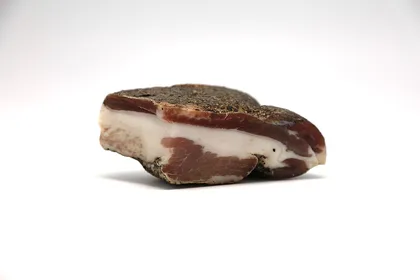 Cured meatsGuancialeGuanciale is cured pork jowl: unsmoked, rubbed with salt and pepper, aged for one to three months.
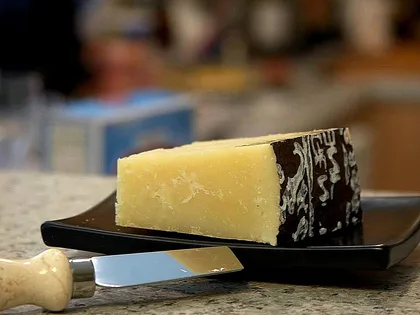 CheesePecorino RomanoPecorino Romano DOP is a hard, dry-salted sheep's milk cheese aged at least five months, made in Sardinia…SweetsCrostataA crumbly pasta frolla shell, thick preserve inside, a lattice of strips over the top.
 Pasta and breadBucatiniBucatini are thick spaghetti with a hole running through the middle.
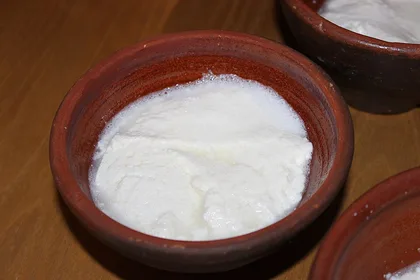 CheeseRicottaRicotta is not a cheese. It is a dairy product made from whey, the liquid left over after cheese has been…
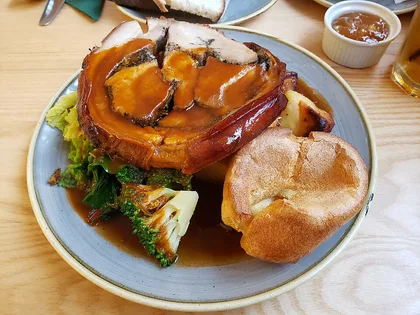 Cured meatsPorchettaSix to eight hours in a wood oven to reach two opposite textures in one piece of meat: skin that shatters…
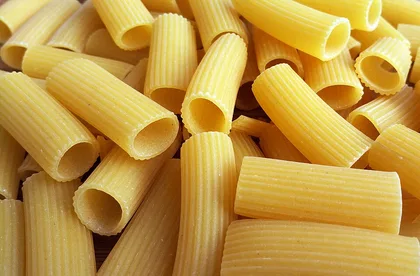 Pasta and breadRigatoniWide ridged tubes of durum semolina, cut straight across. The ridges and the square cut are engineering, not…
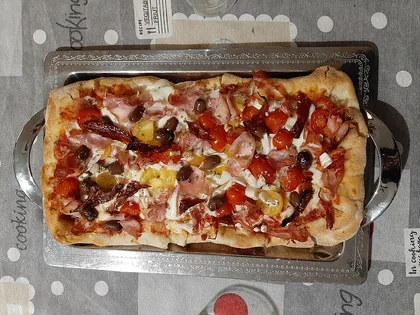 Pasta and breadPinsa RomanaIt is not pizza, and the difference starts with the flour: wheat, rice and soy blended together, hydration…