What is Crostata?
A crostata is two things: pasta frolla and a filling. Pasta frolla is Italian sweet shortcrust: flour, butter, sugar and egg yolk, worked as little as possible so it stays sandy rather than elastic. Frolla means crumbly, and that is the entire design brief.
The filling is traditionally a thick fruit preserve spread half a centimetre deep, covered with strips of pastry laid diagonally into a diamond lattice. Pastry-shop versions extend to ricotta, pastry cream with fresh fruit, and nut fillings, but the jam version is the default and the one Italians actually make.
It is a domestic dessert. It sits under a glass dome on the kitchen table, keeps for several days, and is eaten at breakfast dunked into caffellatte. That last part surprises visitors more than anything else about it: a slice of jam tart at 7am is an entirely normal Italian breakfast.
What does it taste like?
Buttery, sandy and only moderately sweet. Good pasta frolla shatters rather than bends, with a texture between a shortbread and a sugar cookie, and a clear note of lemon zest that Italian bakers add almost automatically.
The filling carries the flavour, and the traditional preserves are sharp ones: apricot, sour cherry, plum, bitter orange. That acidity is deliberate: against a rich buttery crust, a sweet jam like strawberry reads as cloying, which is why the most commonly used jam abroad is the least successful.
The Roman ricotta and sour cherry version tastes different again: cool, milky sheep's ricotta against tart cherries, sealed inside pastry that is baked until the top is properly scorched. It is one of the great Italian desserts and it is not sweet in the way that description implies.
How to use it
The dough first. Rub cold cubed butter into flour with your fingertips until it looks like coarse sand, then add sugar, egg yolk, lemon zest and salt and bring it together with as few strokes as possible. Overworking develops gluten and gives you a chewy tart. Wrap and chill for at least thirty minutes, ideally two hours.
Roll to about five millimetres, line a buttered 24 cm fluted tin, prick the base, and spread the filling half a centimetre deep. Cut strips a centimetre and a half wide with a fluted wheel and lay them diagonally in two directions to form diamonds.
Bake at 175-180°C on a low shelf for 35 to 40 minutes, until the pastry is evenly golden. Cool completely in the tin: a warm crostata falls apart, and the flavour only arrives at room temperature.
Blind-bake only if the filling does not cook: pastry cream with fresh fruit, for instance. For jam and for ricotta, everything goes into the oven together. And do not refrigerate a jam crostata: cold butter makes the pastry hard and dull.
How long it keeps
A jam crostata is one of the few baked things that improves overnight. Kept at room temperature under a glass dome or in a box that is not sealed airtight, it holds three or four days, and on the second day the pastry has drawn moisture out of the filling and gone from snappy to tender while the fruit flavour has spread into it. Beyond that the base keeps softening while the edges dry and harden. Versions built on ricotta, pastry cream or fresh fruit belong in the refrigerator instead and run about two days, out on the counter half an hour before serving.
Both stages freeze. Baked and cut into slices, a crostata keeps two months and thaws at room temperature in an hour. Assembled raw in its tin, it goes into the oven straight from frozen with ten minutes added, and comes out closer to fresh than the baked-then-frozen route. A block of raw frolla is the most useful thing to keep: three days wrapped in the refrigerator, three months in the freezer. Anything bought in a box goes by its own date and its baker.
Spot the real thing
A crostata is built on pasta frolla, an egg-yolk shortcrust closer to a biscuit than to flaky pastry, so the first thing to judge is the break: it should snap dry and crumble rather than bend. Frolla that bends was overworked or carries too much water; frolla that powders in your fingers before you bite has too much butter. The colour should be an even gold across the base and lattice, with a clean edge standing a couple of centimetres high. Roman bakeries sometimes take theirs deliberately dark at the rim, which is a style rather than an accident.
Look at the ratio next. A serious crostata carries at least half a centimetre of jam or pastry cream, and if the dough shows through the filling you are mostly buying pastry. Jam that has boiled through the lattice and caramelised on the edge went in too loose or met too hot an oven. Outside Italy the near relatives are the British jam tart, thinner and made on plain shortcrust, the French tarte with its glazed fruit, and the Austrian linzer, which adds ground nuts and spice to a similar lattice.
How to pronounce Crostata
kroh-STAH-tah
Three syllables, stress on STAH. The O is short and closed, the As are open as in 'father'. Not 'kros-TAY-ta' and not 'CROSS-tata'. The plural is crostate, 'kroh-STAH-teh', where the final E is pronounced.
Crostata compared
vsAmerican fruit pie
Both are lattice-topped and fruit-filled, and there the resemblance ends. Pie crust is built for flakiness through cold fat and water; pasta frolla is built for crumbliness through sugar, egg yolk and no water at all. Pie uses fresh fruit and thickeners; crostata uses cooked preserve.
| This | American fruit pie | |
|---|---|---|
| Pastry | Pasta frolla: flour, butter, sugar, egg yolk | Pie crust: flour, fat, ice water, no sugar or little |
| Texture | Sandy, snapping, cookie-like | Flaky, layered, tender |
| Filling | Thick preserve, ricotta or pastry cream | Fresh or frozen fruit with starch and sugar |
| Depth | Shallow, 2-3 cm | Deep, 4-6 cm |
| Tin | Fluted tart tin with removable base | Sloped pie dish |
| Served | Room temperature, at breakfast or after dinner | Warm, with ice cream, as dessert |
| Keeps | 3-4 days, improves on day two | 2 days, best on day one |
vsFrench tarte (pâte sucrée)
The closest technical relative, and the two doughs are near cousins. The French version leans towards precision and a thin, crisp, evenly baked shell; the Italian version is thicker, more rustic and more forgiving, and is usually filled before baking rather than after.
| This | French tarte (pâte sucrée) | |
|---|---|---|
| Dough | Pasta frolla, often 3:2:1 flour, butter, sugar | Pâte sucrée or sablée: more sugar, sometimes almond flour |
| Thickness | 4-6 mm | 2-3 mm |
| Blind baking | Only for uncooked fillings | Almost always |
| Filling | Jam, ricotta, pastry cream | Pastry cream, ganache, frangipane, fresh fruit |
| Finish | Lattice strips | Open, glazed, arranged fruit |
| Context | Home baking, breakfast | Pâtisserie, dessert course |
vsLinzer torte
The Austrian lattice jam tart, and the closest thing to a crostata outside Italy. Both are shortcrust shells filled with sharp preserve and finished with crossed strips; the Linzer dough is nuttier and spiced, and the jam is almost always redcurrant.
| This | Linzer torte | |
|---|---|---|
| Dough | Butter, flour, sugar, egg yolk, lemon zest | Ground almonds or hazelnuts, cinnamon, cloves |
| Colour | Pale gold | Dark brown, from nuts and spice |
| Jam | Apricot, sour cherry, plum, bitter orange | Redcurrant, almost exclusively |
| Lattice | Diagonal diamonds | Diagonal diamonds |
| Eaten | Breakfast, merenda, after dinner | Coffee time, Christmas |
| Age | Renaissance-era pastry lineage | Recipe documented from 1653 |
Crostata substitutes
- Sweet shortcrust / pâte sucrée
If you are not making the dough yourself, ready-rolled sweet shortcrust is the practical substitute for pasta frolla. It is usually less sugary and more elastic, so bake it a few minutes longer and expect a crisper, less sandy result.
1:1 by weight; 320-375 g covers a 24 cm tart with lattice - Sour cherry: morello cherry preserve or Eastern European višnja jam
Visciole are hard to find outside Italy. Morello cherry conserve, or the sour cherry jams sold in Polish, Turkish and Balkan shops, are the same fruit family and give the right acidity.
1:1 for visciole jam - Apricot jam, reduced
The safest all-purpose crostata filling and widely available. Most commercial jams are too loose, so simmer for three or four minutes in a pan and cool before spreading, or it will boil out through the lattice.
350-400 g for a 24 cm tart - Ricotta filling: whole-milk cow's ricotta, drained
Sheep's ricotta is what Roman bakers use and is rare abroad. Drain cow's ricotta overnight in a sieve, then beat with sugar, egg and lemon zest, then add a spoonful of ground almonds to compensate for the missing richness.
500 g ricotta : 120 g sugar : 2 eggs for a 24 cm tart - Gluten-free frolla
Pasta frolla adapts better than most pastry because it needs no gluten development. Use a 1:1 gluten-free blend with xanthan gum, add an extra yolk for binding, and chill the dough longer, an hour minimum.
1:1 flour swap, plus 1 extra egg yolk - Vegan frolla
Replace butter with a firm vegan block butter (not spread) and the eggs with 60 ml of plant milk plus a tablespoon of cornflour per 300 g of flour. The texture stays sandy; the flavour needs a little more lemon zest to compensate.
1:1 butter swap; 60 ml plant milk per 2 eggs
Where to buy it
Crostata is made, not bought, in most Italian households, and outside Italy the ready-made versions are rare. What you can buy easily are the components.
Italian preserves worth using: Rigoni di Asiago, Menz & Gasser and Agrimontana are stocked by Italian delis and larger supermarkets in the US and UK, at roughly 7 to 12 dollars or £4 to £8 per jar. Look for high fruit content and a firm set: anything labelled 'extra' has at least 45% fruit.
For sour cherries, Polish, Turkish and Balkan grocers sell višnja and vişne preserves that stand in perfectly for visciole, usually at half the price of the Italian jars.
A 24 cm fluted tart tin with a removable base is the only equipment that matters, around 12 to 25 dollars. A fluted pastry wheel for the lattice strips costs a few pounds and is what gives the tart its Italian look. If you want to buy the tart itself, Italian bakeries in New York, Boston, London and Melbourne bake crostata di marmellata and crostata di ricotta, usually sold by weight.
Where to eat it in Italy
Rome, and specifically the Jewish Ghetto. Forno Boccione on Via del Portico d'Ottavia bakes the crostata di ricotta e visciole, with sheep's ricotta and sour cherry sealed between two discs of pastry, baked until the top is properly blackened. There is no sign, no seating and no discussion about the scorching; it comes out at unpredictable hours and sells out fast.
Elsewhere in Rome, neighbourhood pasticcerie in Prati, Trieste and San Giovanni keep crostata di visciole and crostata di ricotta on the counter daily, and bakeries sell jam crostata by weight in the morning.
North of the city, the Tuscia and the towns of Vignanello and Canepina still grow visciole, and summer festivals build around them. In the Castelli Romani the same tart appears alongside the local white wines.
Honestly, though, the best crostata in Italy is in somebody's kitchen. If you are invited to lunch at an Italian home, this is the dessert most likely to appear.
Recipes with it
Frequently asked questions
Is a crostata the same as a pie?
No. A crostata uses pasta frolla, a sweet crumbly shortcrust made with sugar and egg yolk and no water, and is filled with cooked preserve. A pie uses an unsweetened flaky crust and fresh fruit thickened with starch. The crostata is shallower, drier and eaten at room temperature.
Why did my pasta frolla shrink in the oven?
You worked it too much, or you did not chill it long enough. Bring the dough together with minimal handling, rest it wrapped in the fridge for at least thirty minutes, and never stretch it into the tin: ease it in.
What jam should I use for a crostata?
A sharp, thick one: apricot, sour cherry, plum or bitter orange. Sweet, loose jams like strawberry boil out through the lattice and make the tart cloying. If your jam is runny, reduce it in a pan for a few minutes first.
Do you blind bake a crostata?
Only when the filling does not need cooking, such as pastry cream topped with fresh fruit. Jam and ricotta fillings bake together with the pastry from the start.
How do you pronounce crostata?
kroh-STAH-tah, with the stress on the second syllable and open A sounds. The plural, crostate, ends in a pronounced 'eh'.
Related foods
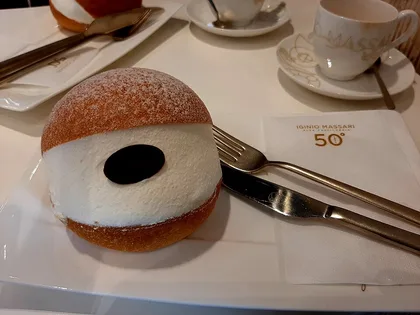 SweetsMaritozzoIn Rome this is breakfast at seven in the morning and nobody finds it odd: a soft, lightly sweet bun split…
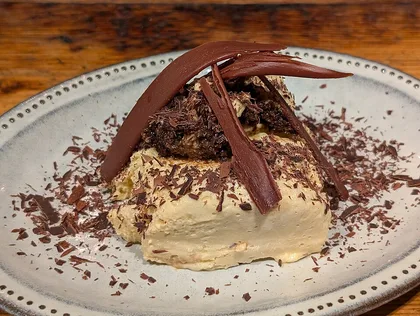 SweetsTiramisuNothing here goes near an oven. Savoiardi dipped in cold espresso, raw egg yolk whipped with mascarpone…
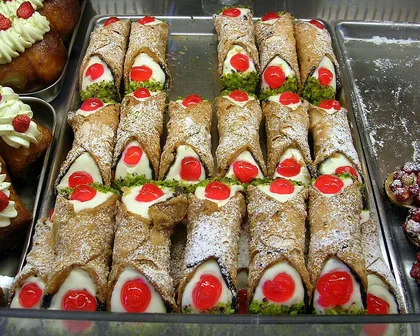 SweetsCannoliIt has to be filled when you order it, and anywhere that fills them in advance has already lost: the fried…
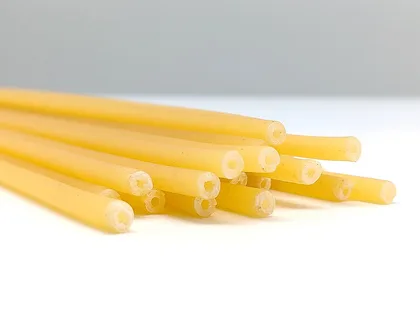 Pasta and breadBucatiniBucatini are thick spaghetti with a hole running through the middle.
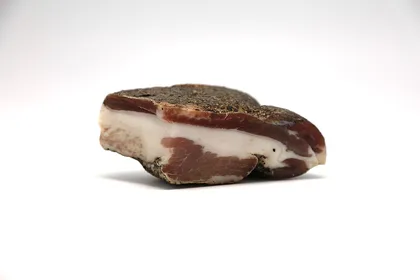 Cured meatsGuancialeGuanciale is cured pork jowl: unsmoked, rubbed with salt and pepper, aged for one to three months.
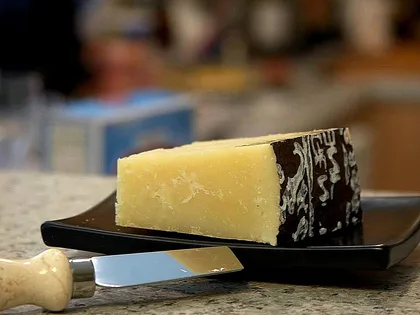 CheesePecorino RomanoPecorino Romano DOP is a hard, dry-salted sheep's milk cheese aged at least five months, made in Sardinia…
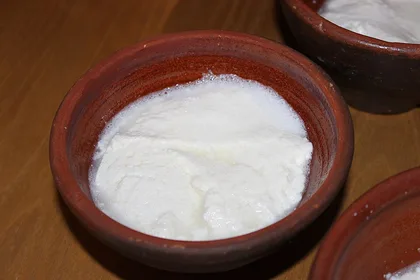 CheeseRicottaRicotta is not a cheese. It is a dairy product made from whey, the liquid left over after cheese has been…
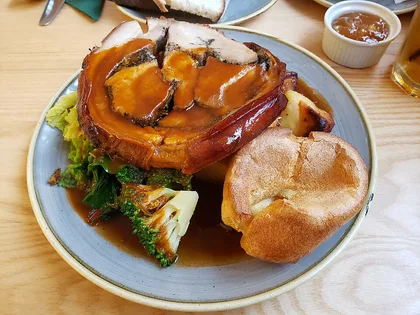 Cured meatsPorchettaSix to eight hours in a wood oven to reach two opposite textures in one piece of meat: skin that shatters…