What is Colomba (Italian Easter Cake)?
Colomba pasquale is a naturally leavened sweet bread made from strong flour, butter, egg yolks, sugar, candied orange peel and a mature sourdough starter. It is baked in a paper mould shaped like a dove with spread wings, under a glaze of ground almonds, sugar and egg white, scattered with whole almonds and pearl sugar.
It belongs to the same family as panettone: same starter, same multi-stage dough, same thirty-odd hours of fermentation. The differences are the shape, the crunchy almond crust, and the fruit: colomba takes candied citrus only, never raisins.
Italian law defines the word. A 2005 ministerial decree sets minimum standards for anything sold as colomba: natural sourdough leavening, at least 16 per cent butter, at least 20 per cent candied citrus peel and at least 4 per cent egg yolk. Products below those thresholds are legal, but have to be sold under a different name.
What does it taste like?
Buttery and airy, closer to a brioche than to a cake, with long shreds rather than crumbs. The candied orange gives bright, slightly bitter bursts against a background that tastes of butter, egg yolk and a faint sourdough tang.
The top is the counterpoint: a thin almond glaze that bakes into a crackly, macaroon-like shell, with pearl sugar that stays granular and whole almonds that toast. Every slice gets some.
A good artisan colomba is noticeably less sweet than people expect and noticeably more perfumed. A cheap one is the reverse: sweeter, softer, and vanilla-scented, because vanilla flavouring is what fills the gap left by a short fermentation.
How to use it
Serve it at room temperature, cut in thick slices from the centre outwards so the wings stay intact. If the room is cold, warm the whole cake for ten minutes in an oven that has been switched off at around 40 C, which re-melts the butter and brings the crumb back.
Day-old slices are excellent fried briefly in butter, like pain perdu. Older ones make the best possible base for a trifle: soak them in Alchermes or Marsala and layer with pastry cream.
The standard Italian Easter accompaniment is mascarpone cream: 250 g mascarpone whipped with two egg yolks, 60 g sugar and a spoon of Marsala, for four to six people. Lightly sweetened whipped cream or plain vanilla ice cream work just as well.
Do not refrigerate leftovers. Seal the bag and leave it on the counter, or freeze slices in a double bag for up to three months.
How long it keeps
In its sealed bag an industrial colomba is dated as far out as six months; an artisan one, made without preservatives, is generally given thirty or forty days. That printed date comes from the producer and is the reference point. What happens over time is drying: the crumb gives up moisture, the strands stiffen, and the butter and citrus aroma fades.
Once open, close the bag tightly or wrap the cake in film, and keep it at room temperature out of sunlight. Not the fridge, where the cold speeds up starch retrogradation and within two days the crumb turns dry and chalky.
It freezes well, whole or sliced, double bagged, for about three months. Thaw at room temperature and give it five minutes in an oven at 50°C (120°F) to loosen the crumb. Once it has firmed up after several days it stops being a cake you slice and becomes an ingredient: griddled in a pan with butter, or soaked into a spoon dessert.
Spot the real thing
The first check is on the label and takes ten seconds. Lievito madre or sourdough starter should be listed; if the only leavening is baker's yeast, the rise was accelerated. Butter should be butter rather than margarine or vegetable oil, flavourings should be natural, and the candied fruit should be orange rather than generic mixed peel.
Cut it and the holes should be elongated and irregular, running in the direction the dough grew, with a crumb that is yellow and moist. A tight, even structure like an industrial brioche means a short prove. A piece torn off should come away in strands, not crumbs. The glaze should be thin and slightly cracked, since cracking is normal and a good sign, and the almonds on top whole and pale rather than broken and dark.
Against the panettone sitting beside it in the same shops, a colomba is dove-shaped, finished with an almond and sugar glaze, and carries candied orange with no raisins. It should smell of butter and citrus; heavy vanilla usually covers for what the dough lacks.
How to pronounce Colomba (Italian Easter Cake)
koh-LOM-bah
Three syllables, stress on the middle one. The 'o' sounds are pure and short, not diphthongs, and the final 'a' is clearly pronounced. The full name is colomba pasquale, pahs-KWAH-leh. Common mistakes: 'KOL-um-buh' and 'ko-LOOM-ba'.
Colomba (Italian Easter Cake) compared
vsPanettone
The same dough with a different job. Panettone is Christmas, cylindrical, and carries raisins; colomba is Easter, dove-shaped, and carries only candied orange under an almond crust. Bakers use one starter and one method for both, which is exactly why colomba was invented.
| This | Panettone | |
|---|---|---|
| Season | Easter | Christmas |
| Shape | Flat dove, wide wings | Tall cylinder, domed top |
| Top | Almond glaze, pearl sugar | Bare crust, or glazed in some styles |
| Fruit | Candied orange only | Raisins plus candied orange and citron |
| Crumb | Slightly denser, shorter rise | Taller, more open, more shredded |
| Legal minimum butter | 16% | 16% |
| Invented | Milan, 1930s, by Motta | Milan, documented since the 1500s |
vsPandoro
Both are Italian festive leavened cakes, but pandoro is the plain one: no fruit, no glaze, a star-shaped mould and a shower of icing sugar. If someone in your household dislikes candied peel, this is the peace treaty.
| This | Pandoro | |
|---|---|---|
| Origin | Milan, Lombardy | Verona, Veneto |
| Fruit | Candied orange, 20% minimum | None |
| Finish | Baked almond crust | Icing sugar, added at the table |
| Butter | 16% minimum | 20% minimum, richer |
| Shape | Dove | Eight-pointed star |
| Season | Easter | Christmas |
vsSimnel cake and hot cross buns
The British Easter equivalents, and a useful frame of reference. All three are spiced or fruited Easter breads with almond somewhere in the picture, but colomba is a fermented dough rather than a batter, and far lighter than either.
| This | Simnel cake and hot cross buns | |
|---|---|---|
| Type | Naturally leavened bread | Simnel: fruit cake batter |
| Almond | Ground into a baked glaze | Marzipan layer or topping |
| Spice | None, citrus and butter only | Cinnamon, nutmeg, mixed spice |
| Texture | Light, shreddy, moist | Dense and rich, or bready and chewy |
| Keeps | 30-40 days sealed | Simnel: months; buns: two days |
| Served | Room temperature, with sweet wine | Buns toasted with butter |
Colomba (Italian Easter Cake) substitutes
- Panettone
The obvious stand-in and widely available year-round from Italian importers. Almost the same eating experience; you lose the almond crust and gain raisins. Toast a slice lightly and few people will object.
1:1 by weight - Pandoro
Use it when candied peel is the sticking point. It is richer and plainer, and it wants an accompaniment (mascarpone cream, whipped cream or berries) where colomba stands on its own.
1:1 by weight - Tsoureki or kulich
Greek and Russian Easter breads, both enriched, both braided or moulded, both sold in the right neighbourhoods around Orthodox Easter. Tsoureki is scented with mahlepi and mastic rather than citrus, which is a real difference but a pleasant one.
1:1 by weight - Brioche loaf with candied orange
The practical home fix: a good brioche, split and layered with candied orange and a thin almond-sugar glaze grilled for ninety seconds. Not the same fermentation, but the same flavours in the right order.
1:1 by weight - Chocolate colomba
Sold alongside the classic version everywhere in Italy, with chocolate chips replacing the candied peel. Note that it cannot legally be sold as plain colomba, so look for the longer name on the box.
1:1 by weight
Where to buy it
Colomba appears in Italian shops from early March and disappears within days of Easter Monday. Abroad, Italian delis, Eataly and the seasonal aisles of larger supermarkets carry it for roughly the same window.
Prices split into three bands. Industrial 750 g boxes cost 4 to 9 euro in Italy, 12 to 20 dollars in the US and 8 to 18 pounds in the UK. Semi-artisan versions with real butter and sourdough run 12 to 20 euro per kilo. Artisan colombe from named bakers start around 25 euro per kilo and reach 45 to 55, with limited editions above that.
Read the label before the price. You want lievito madre or pasta acida, butter rather than vegetable fat or margarine, and candied orange peel rather than unspecified candied fruit. If vanilla flavouring leads the aroma list, the fermentation was short.
Artisan bakeries take pre-orders and close them a week or two before Easter. Order early or accept what is left.
Where to eat it in Italy
Milan is the origin and still the best hunting ground: historic pasticcerie in the centre and a scattering of specialist bakers across the neighbourhoods, several of whom run tastings in the weeks before Easter.
Verona is the industrial capital of Italian festive baking, since the big groups are based there, and also has good independent pastry shops.
The wider belt across Lombardy, Piedmont and Veneto holds most of Italy's respected leavened-dough bakers, though there are now serious ones in Campania and Sicily too, often working with local citrus for their own candied peel.
If you are in Italy at Easter, the most reliable move is to walk into any well-regarded pasticceria on Holy Thursday and buy whatever is left. By Saturday, the good ones are gone.
Frequently asked questions
What is colomba?
An Italian Easter cake: a slow-fermented, butter-rich sweet bread with candied orange peel, baked in the shape of a dove and topped with an almond-sugar glaze, whole almonds and pearl sugar.
How do you pronounce colomba?
koh-LOM-bah, with the stress on the middle syllable and a clearly pronounced final 'a'. The full name, colomba pasquale, ends pahs-KWAH-leh.
Is colomba the same as panettone?
Not quite. Same dough family and same method, but colomba is dove-shaped, carries an almond crust and contains only candied orange, while panettone is cylindrical, usually bare on top and contains raisins. Colomba was created in the 1930s so panettone factories had something to make at Easter.
Why are some colombas so much more expensive?
Butter versus vegetable fat, house-made candied peel versus bought syrupy fruit, and thirty-six hours of sourdough fermentation versus twelve hours with commercial yeast. The cheap and expensive versions share a name and very little else.
How should I store colomba?
Sealed in its bag at room temperature, away from sunlight, never in the fridge, where the crumb goes dry and chalky within days. It freezes well whole or in slices for up to three months.
Related foods
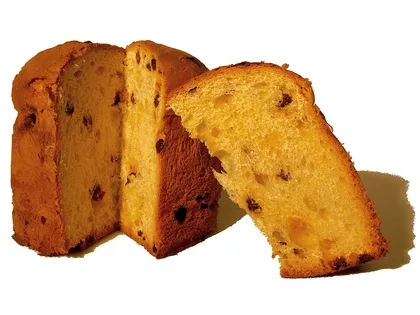 SweetsPanettonePanettone is Milan's Christmas bread: a tall, domed sourdough cake with butter, egg yolk, sultanas and…
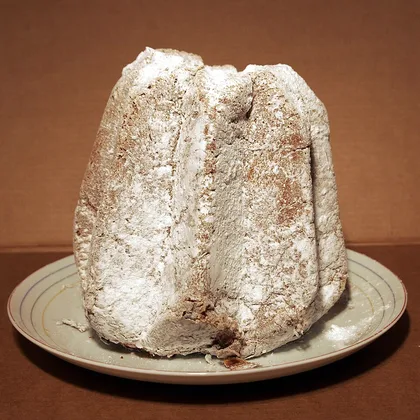 SweetsPandoroPandoro is Verona's Christmas cake: a tall eight-pointed star, at least 20% butter, no candied fruit at all…
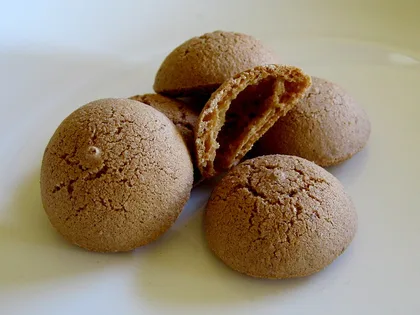 SweetsAmarettiAmaretti are flourless almond cookies whose bitter edge comes from apricot kernels, not almonds.
 SweetsGelatoGelato is not ice cream translated. It carries less fat (4-8% against 10-18%), holds far less air (20-35%…SweetsTorroneHoney and sugar go over a water bath and stay there for hours, sometimes twelve, while someone keeps stirring.
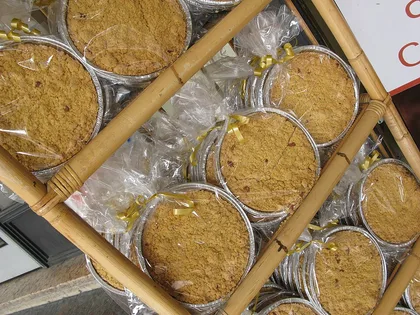 SweetsSbrisolonaSbrisolona is the crumbly almond and cornmeal cake of Mantua, and the only Italian cake you are supposed to…Pasta and breadGnocchiGnocchi are small boiled dumplings, in their modern form made of potato bound with a little flour.Cured meatsPancettaPancetta is Italian cured pork belly: salt, pepper and warm spices, dried for months, never smoked.