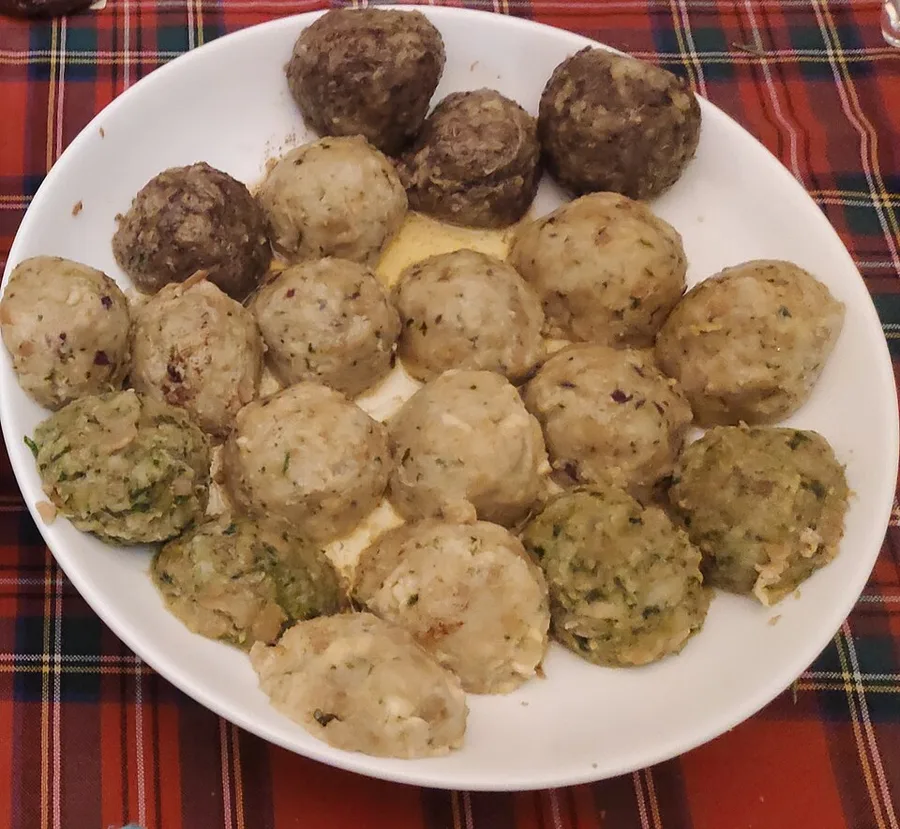
What is Canederli?
A canederlo is a dumpling made of bread rather than flour or potato. Cubed stale white bread is soaked in warm milk, then mixed with eggs, softened onion, parsley, a little flour and one defining ingredient (speck, cheese, liver, spinach, beetroot) and rolled into balls of 60 to 80 grams that poach in simmering water or broth.
The Italian name is a phonetic rendering of the German Knödel, and in South Tyrol the dish is simply called Knödel. The bilingual naming is one of the very few things in this region that nobody argues about.
The variations are endless because this is, by design, a leftovers dish: every household made it from whatever was in the larder. Five or six versions are now codified (Speckknödel, Käseknödel with cheese, Leberknödel with liver, Spinatknödel with spinach, Rote-Rüben-Knödel with beetroot) and none of them is more authentic than the others.
What does it taste like?
Savoury, milky and comforting, with the specific flavour coming from whatever is inside. The speck version tastes of smoked cured pork threaded through soft bread; the cheese version is richer and stringier; the spinach one is greener and lighter and usually served with melted butter and grated cheese.
Texture is the thing people get wrong when they imagine it. A proper canederlo is not dense and not bouncy. It should be soft enough to cut with the side of a fork, and when you cut it you should still see distinct pieces of bread inside, not a uniform paste. Dense and rubbery means it was overworked; a smooth interior means the bread was blitzed.
In broth it is delicate, almost like a savoury bread pudding floating in consommé. Drained and rolled in melted butter with grated cheese it becomes substantial mountain food, and two of them are a meal.
How to use it
Serve them one of two ways, both traditional. In brodo means three per person in a shallow bowl of clear beef or chicken broth, scattered with chives, as a first course. Asciutti means drained and rolled in melted butter with grated cheese, two per person, as a one-plate meal. The Tyrolean third way is to serve them alongside goulash, which is how they arrive in most mountain huts.
When making them, treat the bread as the critical variable: soft white bread two or three days old, cubed at about a centimetre. Rye, wholemeal and sourdough all make the mixture sour and heavy. Fresh bread turns to mush.
Always poach a test dumpling first. If it disintegrates, work another spoonful of flour or breadcrumbs into the mixture; if it comes out rubbery, you kneaded too hard. Keep the water at a bare tremble, because a rolling boil breaks them apart, and give them 15 to 18 minutes, until they float.
Leftovers are a dish in their own right: slice them and fry the slices in butter until crusted, then put a fried egg on top.
How long it keeps
Shaped and raw, canederli sit in the fridge for a day, covered, spaced apart on a floured tray so they are not touching. Past twenty four hours the bread gives back the water it took up and the mixture loosens. The unshaped mix keeps even less well: it has to be rolled within about an hour, because the bread carries on absorbing and the balance shifts as it does.
Raw ones freeze very well. Firm them on a tray, bag them, and they hold three months, going into boiling broth straight from frozen with five extra minutes. That is how a household in the Alps deals with stale bread across a whole winter. Cooked, they keep two days in the fridge and firm up as they cool; bring them back in broth, or slice and brown them in butter, which is the better version. A microwave leaves them rubbery, since the starch sets while the water is driven off unevenly.
Spot the real thing
Cut one open. The bread should still be there in visible, separate pieces alongside cubes of speck; a smooth uniform interior means it was blitzed or overworked, which is the standard failing of factory versions. The texture is soft but holds together, never as tight as a meatball, and it gives way to a fork without needing a knife.
In a restaurant the bad sign is a plate of identical spheres: that comes from a scoop or a mould and almost always out of a freezer, while handmade ones are slightly lopsided. On a pack, the ingredient list should read bread, milk, eggs, speck, onion, parsley, flour, salt, and starches, milk proteins, thickeners and generic flavourings are there to survive freezing rather than to taste of anything. German delis abroad sell the close relative, Semmelknödel, which carries no speck, and Czech knedlíky, which is a steamed loaf cut into discs rather than a ball. Boil-in-the-bag versions and powdered mixes are a different object altogether.
How to pronounce Canederli
kah-NEH-der-lee
Four syllables, stress on the second. The 'c' is hard, as in 'cat', and the 'e' sounds are short: kah-NEH, not 'kah-NAY'. Singular is canederlo, kah-NEH-der-loh. The German name, Knödel, is pronounced K'NUR-del with the initial 'k' actually sounded, which English speakers find harder than the Italian version. Avoid 'kan-uh-DAIR-lee', which stresses the wrong syllable.
Canederli compared
vsGnocchi
Both are Italian dumplings and that is where the resemblance ends. Gnocchi are potato and flour, small, cut from a rope, and sauced like pasta. Canederli are bread and milk, large, rolled by hand, and served in broth or with butter. Different ingredient, different scale, different course logic.
| This | Gnocchi | |
|---|---|---|
| Base | Stale bread soaked in milk | Boiled potato and flour |
| Binder | Egg, plus a little flour | Flour, sometimes egg |
| Size | 60-80g, one to three per plate | 5-10g, twenty or more per plate |
| Shaping | Rolled by hand, slightly irregular | Rolled into a rope and cut, often ridged |
| Served | In clear broth, or with melted butter | With sauce, like pasta |
| Region | Trentino-Alto Adige and the Alps | All of Italy, especially the north |
vsSemmelknödel and Czech knedlíky
The same idea travelling across a cultural region that ignores national borders. German and Austrian Semmelknödel are near-identical; Czech houskový knedlík takes the same dough, steams it as a loaf and slices it into discs to mop up sauce.
| This | Semmelknödel and Czech knedlíky | |
|---|---|---|
| Shape | Balls | Balls (Austria) or sliced loaf (Bohemia) |
| Cooking | Poached in broth or water | Poached or steamed |
| Add-ins | Speck, cheese, liver, spinach, beetroot | Usually plain, occasionally bacon |
| Served with | Broth, butter and cheese, or goulash | Roast meats and gravy, goulash |
| Course | First course or one-plate meal | Almost always a side dish |
vsMatzo balls
Distant cousins that arrive at a similar plate from a different tradition. Both are starch dumplings served in clear broth, but matzo balls use matzo meal and fat and puff up as they cook, while canederli use cubed bread and stay dense with visible structure.
| This | Matzo balls | |
|---|---|---|
| Base | Cubed stale bread | Matzo meal, finely ground |
| Fat | Butter, plus fat from the speck | Schmaltz or oil |
| Texture | Soft with visible bread pieces | Uniform, spongy, puffed |
| Add-ins | Cured pork or cheese, usually | None, by dietary requirement |
| Broth | Beef or chicken, clear | Chicken, clear |
Canederli substitutes
- Semmelknödel from a German deli
Effectively the same dumpling without the speck. Buy the plain ones, poach them, and serve in a good beef broth with chives. If you want the South Tyrolean version, dice 30g of smoked pancetta and fry it to scatter on top.
1:1 by piece - Homemade, in under an hour
The reliable route, since canederli are almost impossible to buy outside the Alps. Soak 250g cubed stale white bread in 250ml warm milk for 25 minutes, mix in 2 eggs, 100g diced speck, a softened onion, chopped parsley and 2 tablespoons of flour, rest 15 minutes, roll eight balls and poach for 16 minutes.
Serves three as a first course - Speck substitution: smoked pancetta or lardons
Speck Alto Adige is lightly smoked and juniper-cured; smoked pancetta is the closest widely available thing. Use a touch less, since most supermarket lardons are saltier, and skip the added salt in the mix.
80g smoked pancetta replaces 100g speck - Vegetarian: Käseknödel or Spinatknödel
Not a compromise but a standard version of the dish. Replace the speck with 120g of a semi-hard mountain cheese cut into small dice, or with 150g of squeezed, chopped cooked spinach and a grating of nutmeg.
120g cheese or 150g drained spinach per 250g bread - Gluten-free: potato gnocchi in broth
There is no honest gluten-free canederlo, because the dish is bread. Large hand-rolled potato gnocchi served in clear beef broth with chives occupy the same place in a meal and are genuinely good.
Not equivalent: a different dish, chosen deliberately - Matzo balls
For anyone who wants a dumpling floating in clear broth on a cold day and cannot manage the bread version. Lighter, spongier, no cured pork, and much quicker to make.
1:1 by piece
Where to buy it
Almost nowhere outside the Alps, which is the honest answer. In the US, German delicatessens sell frozen Semmelknödel and dry Knödel mixes at roughly 10 to 18 dollars per pound, and those are the closest ready-made product; the speck version essentially does not exist commercially. In the UK the situation is the same, with German and Austrian food importers the only reliable source.
What you can buy abroad are the components. Speck Alto Adige IGP is exported widely and costs around 30 to 45 dollars per pound in the US and 30 to 40 pounds per kilo in the UK. A hundred grams is enough for eight dumplings, so a small piece goes a long way.
In Italy, delicatessen counters in Bolzano and Bressanone sell them fresh at 12 to 18 euro per kilo, roughly a euro apiece, and every supermarket in the region carries frozen ones at 8 to 14 euro per kilo. Check the ingredients: bread, milk, eggs, speck, onion, parsley, flour, salt. Modified starch, milk proteins and thickeners mean the product was engineered to survive freezing rather than to taste good.
Where to eat it in Italy
Bolzano and the Isarco valley, where every Gasthaus has them on the menu year-round. Bressanone and Vipiteno make good bases, and Vipiteno holds a dumpling festival in early September with an enormous pan set up in the town square and thousands of Knödel cooked in a day.
The mountain huts of the Alpe di Siusi, the Catinaccio and the Odle are where the dish makes the most sense: you arrive on foot, eat three dumplings and carry on. It is the one context in which a hut-sized portion feels correct rather than punitive.
In the Val Pusteria the canederlo tradition runs alongside the speck tradition, and several inns serve a tris (speck, cheese and spinach on one plate) which is the fastest way to understand the differences.
In Trentino proper, around Trento and the Valsugana, they are made smaller and more delicately, with less speck and more cheese. Anyone who knows only the South Tyrolean version will find the comparison worth making.
Frequently asked questions
What is the difference between canederli and gnocchi?
Canederli are made from stale bread soaked in milk and bound with egg; gnocchi are made from boiled potato and flour. Canederli are large, hand-rolled and served in broth or with butter; gnocchi are small, cut from a rope and sauced like pasta.
What bread should I use for canederli?
Soft white bread two or three days old, cut into one-centimetre cubes. Rye, wholemeal and sourdough make the mixture sour and heavy, and fresh bread turns to paste because it cannot absorb the milk properly.
Why do my canederli fall apart?
Usually too much moisture or not enough binder. Work in an extra spoonful of flour or breadcrumbs and let the mixture rest 15 minutes before rolling. The other common cause is boiling too hard: the water should barely tremble.
How many canederli per person?
Three in broth as a first course, or two if served drained with butter and cheese as a main. Each weighs 60 to 80 grams. Mountain huts serve three, but theirs are bigger.
How do you pronounce canederli?
kah-NEH-der-lee, with the stress on the second syllable and a hard 'c'. The singular is canederlo. The German name Knödel is said K'NUR-del, with the initial 'k' pronounced.
Related foods
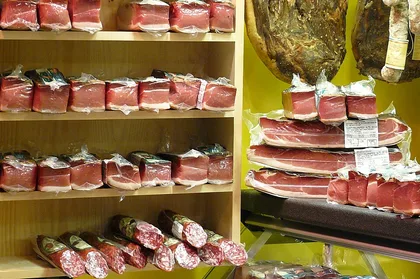 Cured meatsSpeck Alto Adige IGPA little salt, a little smoke, plenty of air: the South Tyrolean saying describes a method rather than a…
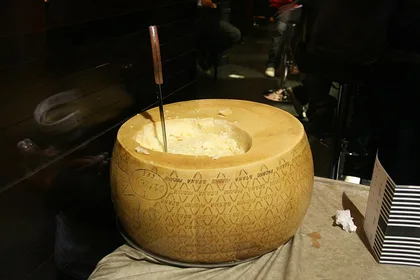 CheeseGrana PadanoNine months is the floor the specification sets before a wheel may carry the name.Pasta and breadPolenta TaragnaPolenta taragna is the dark alpine polenta of Lombardy: cornmeal cut with buckwheat flour, stirred for the…
 CheeseAsiagoOne name covers two cheeses nobody would mistake for each other at the counter.
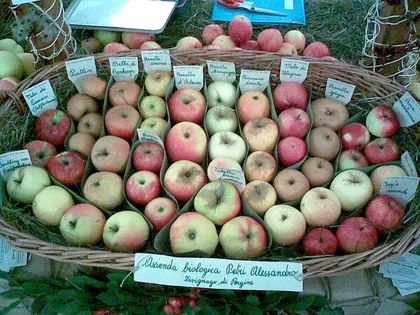 Vegetables and fruitVal di Non AppleVal di Non apples are three varieties (Golden Delicious, Renetta Canada and Red Delicious) grown between 600…
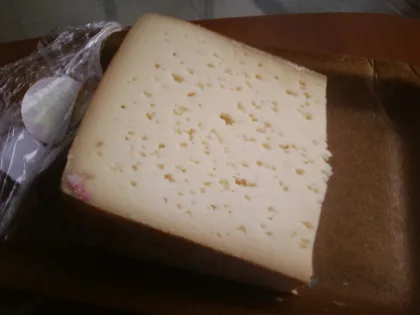 CheesePuzzone di MoenaPuzzone di Moena means 'the big stinker of Moena', and the name is earned honestly: the rind is washed with…
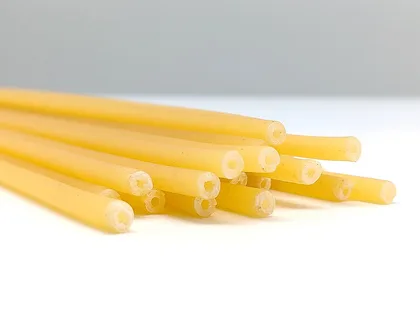 Pasta and breadBucatiniBucatini are thick spaghetti with a hole running through the middle.Pasta and breadGnocchiGnocchi are small boiled dumplings, in their modern form made of potato bound with a little flour.