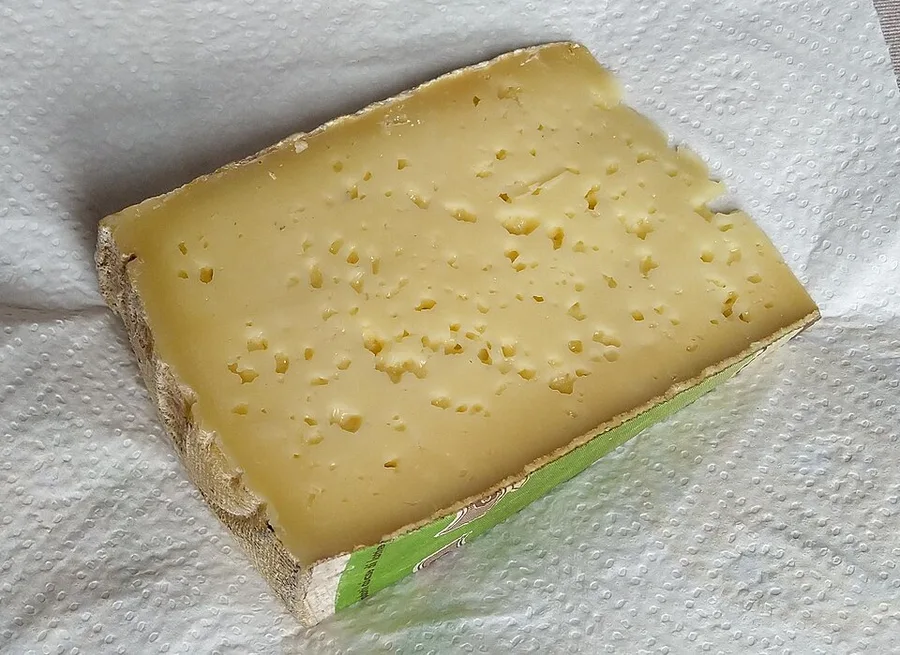
What is Ossolano?
Ossolano is a semi-cooked cow's milk cheese from the province of Verbano-Cusio-Ossola in northern Piedmont. Wheels are small by alpine standards: 5 to 7 kilos, 29 to 32 centimetres across, with a straight side 6 to 9 centimetres high. The rind is smooth and straw-yellow, browning with age; the paste is firm and elastic with small, sparse eyes.
The specification allows two designations. Plain Ossolano is made year-round in dairies on the valley floor and in the side valleys. Ossolano d'Alpe is made only during the summer transhumance, in dairies at altitude, with the specification pointing above 1,400 metres, and carries the name of the alp on the label, which is the piece of information that actually matters here. Reputation in the Ossola attaches to individual alps, not to brands.
Minimum ageing is 60 days for both. In practice the valley version sells at two to four months, the alpine version at three to twelve, by which point it has developed tyrosine crystals and a much longer finish.
The DOP is recent for a cheese this old. Before 2017 anything made in the province could be sold as ossolano, and the denomination exists mostly to protect the alpine version, which is where the value sits.
What does it taste like?
Sweet, buttery and clean, with a nuttiness that builds with age and none of the sharpness people expect from mountain cheese. The valley version tastes of good milk and cooked hay; the texture is firm but yielding, with a slight springiness.
The alpine version is where it gets interesting. Cows eating high-summer pasture put herbs into the milk, and the cheese carries a green, almost alpine-flower note over the butter. At eight months to a year it turns savoury and deep, with hazelnut, dried mushroom and a faint meatiness, plus crystals that crunch.
The honest positioning: less powerful than Bitto, less rich and molten than Fontina, more herbal than Asiago. It sits in the middle of the Italian alpine range, which is exactly why you can eat a lot of it. If you know Swiss Alpkäse or a young Comté, you are close.
How to use it
Young Ossolano melts well and belongs on polenta. The local dish is polenta concia ossolana: cornmeal polenta finished off the heat with mountain butter and cubes of cheese, stirred until it turns glossy. It also works in a potato frittata, folded into gnocchi with brown butter, or melted into a simple fonduta with milk and egg yolk over boiled potatoes.
The universal alpine-cheese rule applies: keep it off direct heat. Above about 70C the fat separates and you are left with something rubbery. Add it off the flame or use a bain-marie.
Past six months, and particularly in the alpine version, it becomes a board cheese. Serve it in shards at room temperature with chestnut honey (chestnuts are a local crop), walnuts and pears. Bilberry or raspberry compote from the side valleys is the local move on older wheels, and it works better than it sounds.
Grated in small quantities over barley soup or a risotto, an alpine wheel of a year carries the entire dish.
How long it keeps
Fridge, in the vegetable drawer, wrapped in a barely damp cloth and then in greaseproof paper. A young piece holds about three weeks, a long-aged alpine piece a good two months, drying and firming steadily as it goes.
Avoid film pressed against the cheese: it smothers the rind and leaves the cut face slippery. When the cut surface dries, scrape off a millimetre and carry on. Dry white or green bloom on the rind comes away with a cloth dipped in vinegar or white wine; pink, black or damp growth is a different matter and a question for whoever sold you the piece.
Whole wheels live in a cellar at 8 to 12°C (46 to 54°F) with high humidity, turned every couple of weeks, the rind rubbed with oil if it starts to dry and crack. Freezing is not the route, because the semi-cooked paste flakes and turns floury on thawing. Half an hour out of the fridge before serving opens up the aromatics.
Spot the real thing
Certified wheels carry the denomination mark and the producer code on the side. Alpine wheels also name the alp itself, and that is the line that matters most, because reputation in the Ossola is built alp by alp rather than dairy by dairy.
The paste should be compact and elastic, ivory when young and straw yellow when mature, with small sparse eyes. The rind is thin and even; a thickened rind points to an ageing room that ran too dry. Cut it and it should not crumble. In long-aged alpine wheels the first tyrosine crystals crunch under the teeth, which is a sign of the ageing rather than a fault.
Two practical warnings for a counter abroad. Ossolano cheese written in lower case on a sign does not mean Ossolano DOP, and the valleys make many excellent tome that are not the denomination. And if someone offers a Bettelmatt as Ossolano d'Alpe, or the reverse, the price settles it: Bettelmatt costs well over double.
How to pronounce Ossolano
oss-oh-LAH-noh
Four syllables, stress on the third. The double 's' is hissed slightly longer than in English, never voiced as a 'z'. The valley itself is the Val d'Ossola, 'vahl DOSS-oh-lah', and its main town, Domodossola, is 'doh-moh-DOSS-oh-lah', a name British train travellers may recognise from the Simplon line timetables.
Ossolano compared
vsFontina Val d'Aosta
The obvious comparison and the one Italians make themselves. Both are alpine cow's milk cheeses from the western Alps, made in valleys that look toward Switzerland and France as much as toward Rome, and both have a mountain-pasture summer version. Fontina is fatter, wetter and famously melting: it is the fonduta cheese, and it collapses into a sauce. Ossolano is firmer and drier, holds its shape better under heat, and reads sweeter and more herbal than fatty. Fontina is on shelves worldwide; Ossolano barely leaves Piedmont.
| This | Fontina Val d'Aosta | |
|---|---|---|
| Region | Piedmont, Val d'Ossola | Valle d'Aosta |
| Wheel | 5-7 kg | 7.5-12 kg |
| Texture | Firm, elastic, sliceable | Softer, yielding, semi-molten when ripe |
| Minimum ageing | 60 days | 80 days |
| Melting | Good, keeps shape | Exceptional, the classic fondue cheese |
| Alpine version | Ossolano d'Alpe, above 1,400 m | Fontina d'Alpeggio, summer only |
| Availability abroad | Very rare | Widely stocked |
vsToma Piemontese DOP
The other Piedmontese cow's milk cheese, and the one you will actually find in an Italian deli. Toma Piemontese is a large denomination covering a huge area of the region, made in both whole-milk and semi-skimmed versions, uncooked and softer. Ossolano is semi-cooked, comes from one small province, and has an alpine version tied to named pastures. Toma is the everyday cheese; Ossolano d'Alpe is the one worth the trip.
| This | Toma Piemontese DOP | |
|---|---|---|
| Zone | One province: Verbano-Cusio-Ossola | Most of Piedmont |
| Curd | Semi-cooked, 42-46C | Uncooked |
| Milk | Whole | Whole or semi-skimmed |
| Texture | Firm and elastic | Softer, more crumbly with age |
| Alpine designation | Yes, with the alp named | No equivalent |
| Price | EUR 16-38 per kg | EUR 10-18 per kg |
vsBettelmatt
The cheese most likely to confuse you when you visit the valley, because it comes from exactly the same pastures and is not the same denomination. Bettelmatt is made on a tiny handful of high alps in the upper Ossola, one of them the Alpe Bettelmatt in Val Formazza which gives it the name, and it deliberately sits outside the Ossolano DOP. Production is minuscule, the season is a few weeks, and prices run to 50-80 euros a kilo. Ossolano d'Alpe is the way to buy the same mountain and the same grass for a third of the money.
| This | Bettelmatt | |
|---|---|---|
| Status | DOP since 2017 | No protected denomination |
| Where made | Whole province, valley or alp | A handful of named high alps only |
| Season | Year-round, or summer for d'Alpe | Summer grazing only, a few weeks |
| Wheel | 5-7 kg | About 5-6 kg |
| Price | EUR 16-38 per kg | EUR 50-80 per kg when available |
| Where to find it | Piedmont delis and dairies | Almost exclusively in the Ossola |
Ossolano substitutes
- Fontina Val d'Aosta DOP
The closest Italian match and easy to find on both sides of the Atlantic. Softer and fattier, so anything you melt it into will be looser and richer. For a board, it reads sweeter and less herbal.
1:1 - Toma Piemontese DOP
Same region, gentler register, considerably cheaper. Uncooked and softer, so it will not slice as cleanly, but it is the right stand-in for everyday eating and for melting over polenta.
1:1 - Swiss Alpkäse or Le Gruyère d'Alpage AOP
For Ossolano d'Alpe specifically, this is the structural match: raw milk, summer pasture, semi-cooked paste, named alp. Saltier and more brothy than the Italian, so serve it with honey to bring it back into balance.
1:1 - Comté aged 12-18 months
Widely stocked, reliably good and in the same sweet-nutty family. It lacks the herbal top note of an alpine wheel, but on a cheeseboard nobody will feel short-changed.
1:1 - Asiago d'allevo (mezzano)
The budget option, and the one most Italian delis carry. Firmer, blunter and less aromatic, but it grates and melts in the same places and costs a third less than any alpine DOP.
1:1 - Vegetarian: microbial-rennet alpine-style cheeses
Ossolano is never vegetarian: the specification requires calf rennet, as do Fontina, Toma Piemontese, Comté and Gruyère. British, Irish and American farmhouse creameries make alpine-style wheels labelled 'suitable for vegetarians' or 'microbial rennet', and those are the only realistic substitutes.
1:1
Where to buy it
Realistically, this is a cheese you buy in Piedmont. Total DOP output is small and almost all of it is eaten between the Ossola, Lake Maggiore and western Lombardy. In the US it surfaces only through specialist importers and the more adventurous cheese counters, at roughly 20 to 30 dollars per pound; in the UK, Italian delicatessens and alpine specialists list it occasionally at 26 to 40 pounds per kilo.
Ask a good cheesemonger to source it, and ask specifically whether it is the alpine designation. Ossolano d'Alpe carries the name of the alp on the rind or the label: that is the whole point of buying it, and a wheel without one is the valley version at the valley price.
In the Ossola itself, buy at the Saturday market in Domodossola, at the valley dairies, or directly from the alps in summer, where the price is 16 to 22 euros a kilo for the standard version and 25 to 38 for the alpine one.
One warning for visitors: a sign reading 'formaggio ossolano' in lower case does not mean the DOP. Plenty of excellent unprotected tommes are made in the province, and they should not cost the same.
Where to eat it in Italy
Domodossola is the gateway, and it is easier to reach than its remoteness suggests: it is a stop on the Simplon line from Switzerland, ninety minutes from Milan and directly connected to Brig and Bern. Its arcaded medieval centre holds a Saturday market where producers come down from the side valleys.
Upstream, the Val Formazza runs to Riale, the last Walser village before the Swiss border, and to the Toce waterfall, one of the highest in the Alps and released on scheduled summer days. These are the pastures that make the valley's finest cheeses, Bettelmatt included. The Walser were German-speaking colonists who settled the high valley heads from the thirteenth century, and their language and building style survive here, and the cheese-making technique came with them.
Alpe Devero, above Baceno, is a high plateau reachable by car and then on foot, with working dairies through the summer that sell at the door. In the Val Vigezzo, Santa Maria Maggiore is the prettiest village and has good shops.
In late September the valleys hold the desalpe, when the herds come down from the high pastures wearing bells and flowers, and the whole season's cheese reaches the market at once.
Further reading
 GuideCan you eat cheese rind?On some wheels the rind is the same paste, dried out. On others it is paraffin.
 InvestigationWhich Italian cheeses are vegetarianWe counted what rennet the 43 cheeses in our atlas declare: 35 out of 43 say animal, none say otherwise.
 GuideHow long food keeps once openedThe date on the label describes the sealed package. After that, four things govern everything: water, salt…
Frequently asked questions
What is the difference between Ossolano and Ossolano d'Alpe?
Ossolano is made year-round in valley dairies. Ossolano d'Alpe is made only during the summer grazing season at altitude, with the specification pointing above 1,400 metres, and carries the name of the individual alp on the label. The alpine version is more herbal, aged longer and about ten euros a kilo dearer.
Is Ossolano the same as Bettelmatt?
No. Bettelmatt is made on a very small number of high alps in the upper Ossola, takes its name from the Alpe Bettelmatt in the Val Formazza, and sits outside the DOP entirely. Same pastures, same family of flavours, but a tiny production and two to three times the price.
How long is Ossolano aged?
The minimum is 60 days for both designations. The valley version usually sells at two to four months, the alpine version at three to twelve, at which point it develops tyrosine crystals and a much longer, more savoury finish.
Is Ossolano vegetarian?
No. The specification requires calf rennet, as do Fontina, Toma Piemontese, Comté and Gruyère. Alpine-style cheeses explicitly labelled 'microbial rennet' are the practical alternative.
What can I use instead of Ossolano?
Fontina Val d'Aosta is the closest for cooking, Toma Piemontese for everyday eating, and Swiss Alpkäse or Comté on a board, particularly as a stand-in for the alpine version.
Sources
Where to check what you just read.
- 1
L'atto del 22 settembre 2017 che iscrive «Ossolano» fra i formaggi DOP: uno dei riconoscimenti italiani più recenti.
- 2InstitutionRegione Piemonte — scheda Ossolano DOP
Le valli ammesse, le razze bovine consentite, la stagionatura minima di 60 giorni e la soglia dei 1.400 metri che separa l'Ossolano d'Alpe da quello ordinario.
- 3
L'elenco ministeriale da cui si scarica il PDF del disciplinare vigente dell'Ossolano.
Related foods
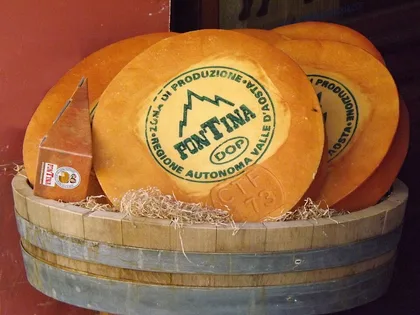 CheeseFontinaFontina is the DOP mountain cheese of Italy's Aosta Valley: raw whole milk from a single milking, wheels of…CheeseCastelmagnoCastelmagno DOP is a crumbly, sharp alpine cheese made in just three villages of the Valle Grana in Piedmont.
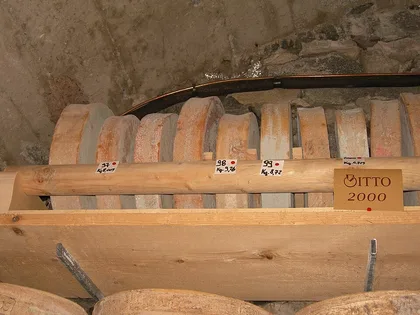 CheeseBittoBitto DOP can only be made between 1 June and 30 September, on high summer pasture, in a dismantlable stone…Pasta and breadPolenta TaragnaPolenta taragna is the dark alpine polenta of Lombardy: cornmeal cut with buckwheat flour, stirred for the…
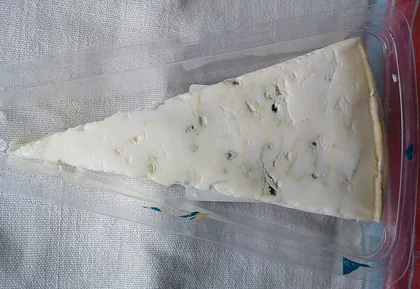 CheeseGorgonzolaThe green veining is the product, not a flaw anyone tolerates: it grows from a mould added to the milk and…
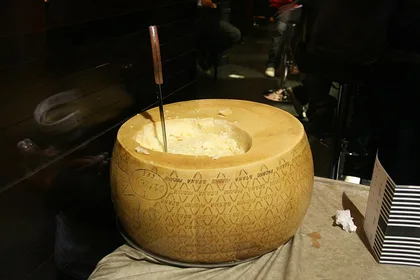 CheeseGrana PadanoNine months is the floor the specification sets before a wheel may carry the name.
 CheeseRobiolaRobiola is a family of soft young cheeses from north-west Italy rather than a single cheese.CheeseToma PiemonteseIn Piedmont, toma is not a cheese: it is a category. Dozens of different valley cheeses go by that name, and…