What is Orecchiette?
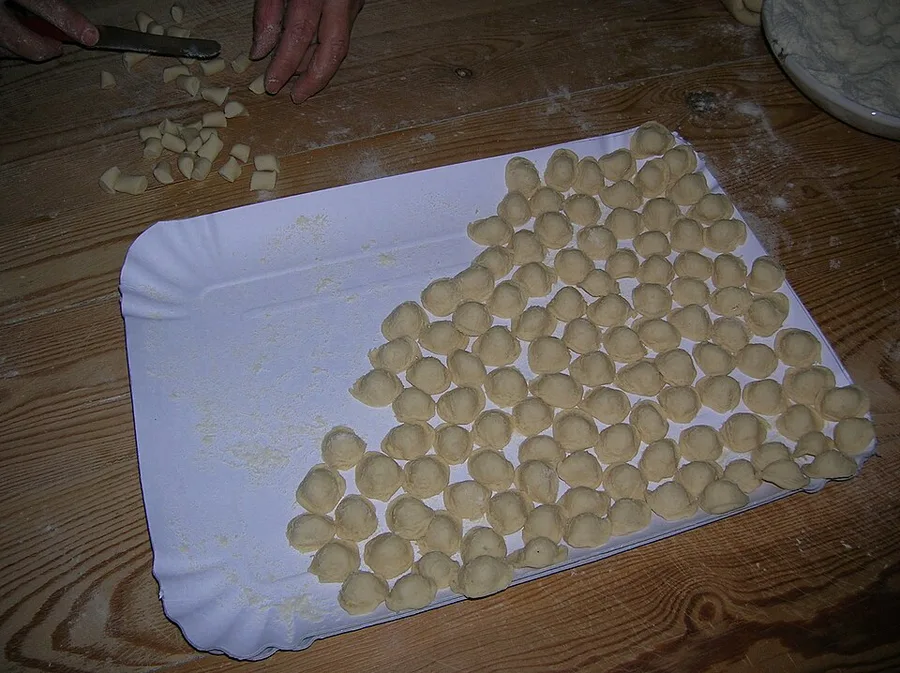
Orecchiette means 'little ears'. They are made from durum wheat semolina, water and salt (nothing else, no egg) and shaped by hand in two movements: a cube of dough is dragged across a wooden board with a blunt knife until it curls open, then turned inside out over the tip of the thumb.
The geometry is the point. The dome is thin enough to go translucent, the rolled rim is two or three times thicker. Cooked, that gives you two textures in one bite: a yielding cup that soaks up sauce and a chewy ring that holds its bite. It is why orecchiette work with the thin, oily, brothy dressings of southern Italian cooking, where a smooth pasta would simply shed them.
The name changes every few kilometres. Recchietelle or recchie around Bari and in Salento; strascinati when the disc is left open rather than flipped; chiancarelle when they are made very small, after the flat paving stones of Puglian streets; pociacche up on the Murgia plateau. They are all the same gesture, scaled to the hand that makes them.
What does it taste like?
The pasta itself tastes of wheat, and more so than most: durum semolina with no egg has a clean, faintly sweet, almost bready flavour that comes through because nothing is masking it. Good ones smell like a bakery when the water hits them.
Texture does most of the work. The thin centre goes soft and slightly slippery, the thick rim stays firm and springy, and the contrast between the two is the whole reason the shape exists. Handmade orecchiette are noticeably chewier than factory ones, closer to a fresh Asian wheat noodle than to dried spaghetti.
In the classic dish, the pasta is the mild element against strong company: bitter broccoli rabe, salt-cured anchovy that dissolves into the oil, garlic, chilli and fried breadcrumbs. Nothing is creamy and nothing is sweet: it is a savoury, bitter, olive-oil-driven plate.
How to use it
Salt the water hard and use plenty of it. If you are making the classic dish, boil the broccoli rabe first, then drop the orecchiette straight into the same water, because the greens leave behind a bitterness the pasta absorbs, and washing it away is a beginner's mistake.
Meanwhile, warm good olive oil with a crushed garlic clove, two or three salted anchovies and a dried chilli until the anchovies melt. Drain pasta and greens together, keep a ladle of the water, and toss everything hard in the pan for a minute. Finish with fried breadcrumbs, the mollica, which stand in for cheese. No parmesan goes on this dish in Puglia.
Timing: fresh 6-8 minutes, artisan dried 12-15. Test the thick rim, not the centre, because the centre is always ready first.
Beyond the classic: a slow-cooked meat ragù with rolled beef braciole, grated cacioricotta with burst cherry tomatoes, or ricotta forte loosened with pasta water. The rule is that the sauce must be liquid or creamy enough to get inside the cup.
How long it keeps
Dried semolina orecchiette are the easy case. An unopened packet keeps in a dark cupboard for a year or two, and the date printed on it is the maker's reference. Once open, decant them into a jar with a tight lid. Nothing visible happens to them, but the wheat aroma flattens over the months and the surface picks up whatever the cupboard smells of.
Fresh orecchiette run on a different clock. Spread on a tray dusted with semolina and covered with a tea towel, they hold about two days in the fridge; sealed in a plastic box they sweat and glue themselves into a block. To keep them longer, dry them: one layer on a cotton cloth in a dry, airy spot for twenty four to forty eight hours, turned once. When they snap cleanly instead of bending they go into a jar for around six months, and they will want a few extra minutes in the water. They also freeze raw, spread apart on a tray then bagged, and go into the pot frozen with two minutes more.
Spot the real thing
Handmade orecchiette are never uniform. Sizes wobble, thicknesses vary, and the print of the thumb that dragged the dough is often still visible on the dome. The colour is a matte straw yellow, never chalk white and never shiny. Run a fingertip across the surface: it should scrape like fine sandpaper. If it slides, the pasta was most likely pushed through a Teflon die. On a dried packet, look for bronze drawn or trafilata al bronzo, and for a rim clearly thicker than the centre.
Two shapes sold as orecchiette abroad are something else. Uniform little discs of even thickness cook flat and lose the double bite of thin dome against chewy rim. Half open, flattened shells are strascinati, a good Puglian shape and a different one. Cavatelli, everywhere in Italian American shops, are rolled tubes rather than ears. Price is a fair guide: a 500 g packet of industrial extruded orecchiette costs about what any supermarket pasta costs, while a bronze drawn one from a Puglian producer runs two to four times that.
How to pronounce Orecchiette
oh-reh-KYET-teh
Four syllables, stress on the third. The 'cchi' is a hard k followed by a quick 'y' sound: 'KYET', one beat, not 'chee-et'. English speakers usually land on 'orecchi-etty' or 'or-a-KEE-tee'; both split the k and y and add an extra syllable. The final 'e' is 'eh', never 'ee'. One of them is an orecchietta (oh-reh-KYET-tah); orecchiette is already plural.
Orecchiette compared
vsConchiglie (shells)
The shape most cooks reach for as a substitute, and the closest one in behaviour, since both are cups that trap sauce. But conchiglie are die-extruded, ridged and uniform, with the same thickness everywhere; orecchiette are hand-formed, rough on the outside and deliberately uneven, and in Puglia they are the shape for thin oil-based dressings.
| This | Conchiglie (shells) | |
|---|---|---|
| How made | Hand-dragged and flipped over the thumb | Extruded through a die |
| Thickness | Thin dome, thick rim: two textures | Even wall, one texture |
| Surface | Sandpaper-rough, matte | Ridged outside, smooth inside |
| Opening | Wide, shallow cup | Narrow, deep cavity that traps water |
| Best with | Oil, anchovy, greens, ricotta | Thick tomato and cream sauces, baked dishes |
| Cooking | Uneven by design, so test the rim | Even, follow the packet |
| Origin | Puglia | Industrial shape, no single region |
vsCavatelli
Cousins made from the same semolina-and-water dough across southern Italy, and often sold side by side. Cavatelli are dragged with two or three fingers rather than a knife and never flipped, so they stay long and boat-shaped instead of round and domed. They are chewier and better with chunky sauces; orecchiette are better with anything thin.
| This | Cavatelli | |
|---|---|---|
| Shape | Round dome, 2-3 cm | Elongated hull, 3-4 cm |
| Tool | Blunt knife, then thumb | Two or three fingertips |
| Dough | Semolina and water | Semolina and water, sometimes ricotta added |
| Bite | Soft centre, chewy rim | Uniformly dense and chewy |
| Classic sauce | Broccoli rabe, anchovy, garlic | Ragù, beans, mushrooms |
| Where | Puglia above all | Molise, Puglia, Basilicata, Campania |
vsDried supermarket orecchiette
Worth understanding before you spend money. A bronze-die dried orecchietta keeps some of the roughness of the handmade kind; a teflon-die one is a smooth disc with the right outline. Fresh handmade ones are a third thing again: chewier, quicker to cook, and only worth buying if you will eat them within two days.
| This | Dried supermarket orecchiette | |
|---|---|---|
| Surface | Rough and chalky | Smooth and glossy if teflon-extruded |
| Rim | Clearly thicker than the centre | Often uniform thickness |
| Cooking time | 12-15 min dried, 6-8 fresh | 10-11 min, evenly |
| Price per kg | €3.50-7 artisan dried, €5-9 fresh | €1.20-2 |
| Starch in the water | High: the water becomes the sauce | Low |
| What to look for | Puglian producer, bronze die, slow drying | Check the die: it is on the packet |
Orecchiette substitutes
- Medium conchiglie or shells
The best supermarket stand-in. Buy a bronze-die brand if you can, cook them a minute short, and finish them in the pan with a splash of pasta water so the sauce has something to cling to.
1:1 - Cavatelli
Same dough, same part of Italy, widely sold frozen in the US. Slightly denser and longer-cooking, so add two minutes. Excellent with broccoli rabe.
1:1 - Campanelle or gigli
Ruffled cones with plenty of surface area and a cavity. Not traditional anywhere, but they behave well with oil-based greens and are easy to find.
1:1 - Homemade, from semolina
The real answer, and cheaper than any of the above. Fine semolina (semola rimacinata) and water at 2:1 by weight, a long knead, thirty minutes' rest. Bread flour or 00 will not work: the dough goes slack and the shapes collapse.
500 g semolina : 250 g water : 5 g salt, serves 4-5 - Radiatori or fusilli
A last resort. They catch sauce in their folds and grooves, but you lose the thin-centre-thick-rim bite entirely. The dish still works.
1:1 - For the broccoli rabe, not the pasta
If rapini or broccoli rabe are unavailable, use purple sprouting broccoli plus a handful of mustard greens or chopped chicory to restore the bitterness. Plain broccoli alone makes the dish sweet and flat.
3 parts sprouting broccoli : 1 part bitter greens
Where to buy it
In the US, dried Puglian orecchiette from producers such as Rummo, Granoro, Riscossa and De Cecco are in most large supermarkets at 4 to 9 dollars a pound; Eataly, Gustiamo and Italian delis carry small-producer bronze-die versions. Frozen handmade orecchiette and cavatelli turn up in Italian-American markets in New York, Philadelphia and New Jersey and are better than the dried mid-market brands.
In the UK, Ocado, Waitrose and Italian delicatessens stock dried orecchiette at roughly 3 to 6 pounds per 500 g. Look for 'trafilata al bronzo' or 'bronze die' on the packet if you want something close to the rough surface of the handmade kind.
What to check: the rim should be visibly thicker than the centre, the surface should be matte and chalky rather than glossy, and the pasta should be pale straw, not bright yellow. Bright yellow with no egg listed means the semolina was dried fast and hot.
Making them at home costs about a euro of semolina per kilo and takes forty minutes once you have the knack, which takes roughly twenty ruined ones to acquire.
Where to eat it in Italy
Via dell'Arco Basso in Bari Vecchia is the address. It is a short alley where women make orecchiette on wooden tables in the street from before dawn until mid-morning, selling them fresh by weight. It is a working trade rather than a display, and watching the two movements up close teaches more than any video.
Up on the Murgia, Altamura and Gravina in Puglia serve orecchiette with broccoli rabe only in season, roughly November to March, and the good places say so rather than reaching for frozen broccoli. Pair the meal with Altamura's bread, which has DOP status of its own.
In the Valle d'Itria (Locorotondo, Cisternino, Martina Franca) the sauce is more often a slow beef ragù, and the local white wines are made for it. Further south towards Lecce they are called recchie and turn up with fresh tomato and grated cacioricotta.
Frequently asked questions
How do you pronounce orecchiette?
oh-reh-KYET-teh, four syllables, stress on the third. The 'cchi' is a hard k glued to a y sound, so the third syllable is a single beat: KYET. Saying 'orecchi-etty' adds a syllable that is not there.
What is the best substitute for orecchiette?
Medium conchiglie or shells, one to one. Cavatelli are closer in dough and origin and are widely sold frozen in the US. Whatever you use, finish the pasta in the pan with a splash of its cooking water so the sauce has something to grip.
Why do orecchiette have no egg?
They come from a poor southern kitchen where durum wheat was abundant and eggs were something you sold. Semolina and water also makes a tougher pasta that survives long cooking and can be air-dried and kept for months, which egg pasta cannot.
What sauce goes with orecchiette?
Broccoli rabe with garlic, anchovy, chilli and fried breadcrumbs is the definitive one. Others that work: a long-cooked beef ragù, cherry tomatoes with grated cacioricotta, ricotta loosened with pasta water, or potatoes and rocket. Thick, dry sauces do not get inside the cup and the dish falls apart.
Can you make orecchiette with plain flour?
Not successfully. Fine durum semolina, semola rimacinata, is what gives the dough the stiffness to hold the shape and a firm bite. Plain or bread flour produces a slack dough that flattens on the board.
Related foods
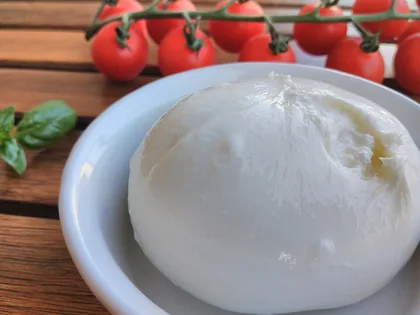 CheeseBurrataIt began as a way of using offcuts: leftover shreds of pasta filata, drowned in cream and sealed inside a…
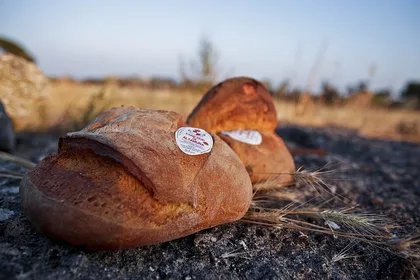 Pasta and breadPane di AltamuraPane di Altamura is a durum-wheat sourdough from the Murgia plateau in Puglia, and in 2003 it became the…
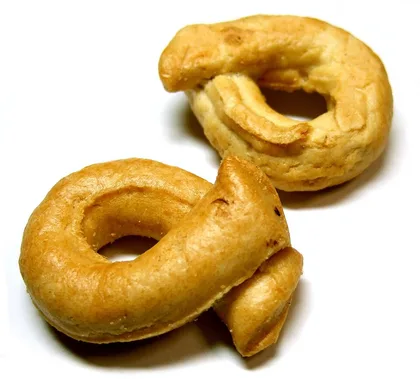 Pasta and breadTaralliTaralli are small, crunchy savoury rings from Puglia in southern Italy, made from just flour, dry white wine…
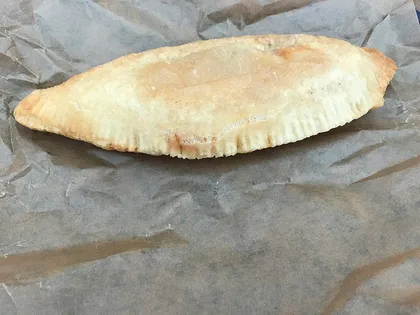 Pasta and breadPanzerottiThe oven never comes into it. A hand-sized half-moon of pizza dough, tomato and mozzarella sealed inside…Pasta and breadPuccia SalentinaPuccia is the round wood-fired bread of Salento, in the heel of Italy: a flat, soft loaf about the size of…
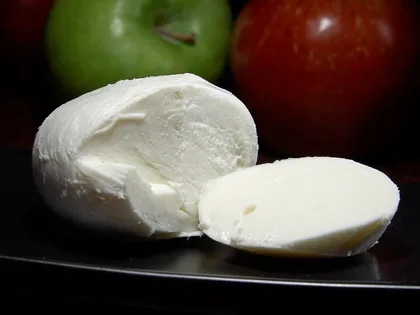 CheeseMozzarellaThe name is a verb before it is a cheese: mozzare means to lop off, which is what the cheesemaker does by…
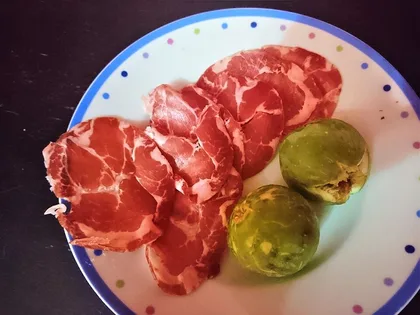 Cured meatsCapocolloCapocollo is the pork neck muscle, salted whole and aged in casing.
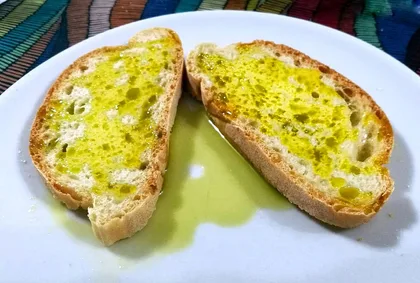 Oil and preservesExtra Virgin Olive OilTwo exams have to be passed, and one of them is carried out by people.