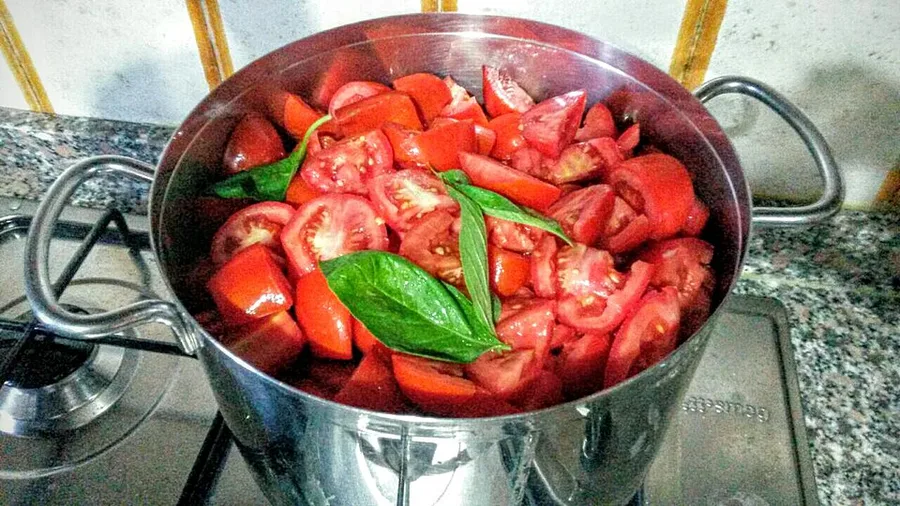
What is San Marzano Tomatoes?
San Marzano is a processing tomato: elongated, six to eight centimetres long, with a thin skin that slips off without a peeler, dense flesh, very few seeds and low water content. Its full protected name is Pomodoro S. Marzano dell'Agro Sarnese-Nocerino DOP, registered by the EU in 1996.
It is not a salad tomato and was never meant to be eaten raw. The DOP rules govern the canning as tightly as the growing, and in practice you buy it as whole peeled tomatoes or fillets packed in their own juice, with a basil leaf and salt and nothing else: no concentrate, no colouring.
Growing area: about forty municipalities across the provinces of Salerno, Naples and Avellino, on volcanic soil between Vesuvius and the Lattari mountains. Harvest runs 30 July to 30 September and is done entirely by hand, in repeated passes along the same row.
What does it taste like?
Sweet first, then a low, clean acidity, then a faintly bitter finish that keeps it from tasting like sauce out of a jar. There is very little of the sharp metallic edge that cheap canned tomatoes carry, because the fruit goes in ripe and the flesh is dense rather than watery.
Cooked briefly, it stays bright and fruity, and twenty minutes with garlic and oil is enough, and the sauce comes out sweet without any sugar added. If you find yourself reaching for the sugar jar, the tomato was not what the label said.
Raw from the can, straight onto pizza dough as the Neapolitans do it, the flavour is fresher and lighter than any cooked sauce, with the salt and the basil doing all the seasoning.
How to use it
For sauce, keep it short. Garlic in good olive oil, the tomatoes crushed by hand and never blended, since blending whips in air and dulls the flavour, salt, twenty minutes, basil off the heat. San Marzano is low in acid, so it does not need long cooking to soften, and past forty minutes it loses the fresh note it was bought for.
For Neapolitan pizza, do not cook them at all. Crush by hand, add a little salt, spread a ladleful on the dough and let ninety seconds in a very hot oven do the rest. The Associazione Verace Pizza Napoletana specifies San Marzano dell'Agro Sarnese-Nocerino DOP or equivalent long peeled tomatoes for exactly this.
Where the pieces should stay whole (acqua pazza, braised octopus, parmigiana, long meat ragù) the firm flesh is an advantage.
Never throw away the juice in the can. It is thick and sweet and belongs in the pan.
How long it keeps
Unopened tins live in a dry cupboard until the date printed on them, usually two to three years out, and away from the cooker: warmth slowly dulls the colour and flattens the aroma even inside a sealed tin. Stack them where you can see the seams. A tin dented across a seam, or one with a lid that has risen, is a question for the shop that sold it rather than something to shelve. Put new purchases at the back so the older tins move first.
Once opened, do not keep tomatoes in the tin. Acid flesh against bare metal takes on a metallic edge within hours, so tip everything into glass or ceramic, cover it, and keep it in the fridge for three to four days; the flesh softens a little each day and the juice separates from the pulp. Surplus freezes for around six months, fruit and juice together in flat bags or ice cube trays. Thawed, the tomatoes collapse, which suits sauce and rules out any dish that needs a whole piece. Cooked sauce holds about five days chilled.
Spot the real thing
Three things have to appear together on the tin: the full wording Pomodoro S. Marzano dell'Agro Sarnese-Nocerino DOP, the red and yellow European DOP roundel, and the numbered Consorzio seal with the name of the certifying body. If one of the three is missing, it is not the DOP tomato, whatever the front of the label suggests. The phrases to read slowly are San Marzano style, San Marzano variety, San Marzano type and packed in Italy. All of them are legal, and none of them means the fruit was grown to the DOP rules.
Open the tin and the fruit is whole and long, six to eight centimetres, tapering to a slight point, with two seed chambers rather than three or four. The colour is a full even red rather than orange, and the liquid is thick juice rather than pink water. Raw, the flesh is meaty and low in sharp acidity with almost no seeds; a metallic or bitter finish points to fruit picked green. Price sorts the rest: DOP tins run roughly $5 to $9 or £3.50 to £6 for 400 g, against a dollar or two for ordinary plum tomatoes.
How to pronounce San Marzano Tomatoes
san mar-TSAH-noh
The z in Marzano is a 'ts' sound, as in 'cats': 'mar-TSAH-noh', not 'mar-ZAH-no' with an English z. Stress the second syllable. Pomodoro, if you use the Italian word, is 'poh-moh-DOH-roh'.
San Marzano Tomatoes compared
vs'San Marzano style' tomatoes grown outside Italy
This is the important one. San Marzano is both a place-based protected name and a tomato variety, and only the first is legally defended. Anyone anywhere can plant San Marzano seed and sell the crop as 'San Marzano variety' or 'San Marzano style', and a great deal of it is grown in California, Peru and China. Specialist Italian importers have argued for years that the large majority of cans sold in the United States under that name are not DOP, a claim the trade repeats and no one in the industry seriously disputes. Italian enforcement agencies have also run repeated seizures of mislabelled cans within Italy itself. The genuine article is a small production; the name attached to it is a global market. The only reliable check is the numbered Consorzio seal and the DOP logo printed on the tin.
| This | 'San Marzano style' tomatoes grown outside Italy | |
|---|---|---|
| Legal status | DOP, EU-protected since 1996 | Unprotected variety or marketing phrase |
| Where grown | Agro Sarnese-Nocerino only, volcanic soil | California, Peru, China, anywhere |
| Harvest | By hand, 30 July to 30 September | Usually mechanical |
| On the can | DOP logo plus numbered Consorzio seal | Brand name and a red-white-green flag |
| Wording to watch | 'dell'Agro Sarnese-Nocerino DOP' | 'San Marzano style', 'San Marzano variety', 'packed in Italy' |
| Price (US, large can) | $5-9 | $2-4 |
vsRoma and generic plum tomatoes
Roma is the workhorse plum tomato of American and British supermarkets, bred for firmness and mechanical harvest. It is shorter, thicker-walled, seedier and more acidic than San Marzano, and it needs more cooking and often a pinch of sugar to round out. Perfectly usable, just not the same sauce.
| This | Roma and generic plum tomatoes | |
|---|---|---|
| Shape | Long, slim, two lobes | Shorter, squatter, thicker walled |
| Seeds | Few | Noticeably more |
| Skin | Thin, peels by hand | Tougher |
| Acidity | Low and balanced | Higher, often needs sugar |
| Best use | Quick sauces, raw on pizza | Long-cooked sauces, roasting |
vsPomodorino del Piennolo del Vesuvio DOP
Campania's other great DOP tomato and the one to reach for when San Marzano is not right. Piennolo are small, intensely sweet-acidic cherry tomatoes grown on Vesuvius and traditionally hung in bunches to keep through winter. Where San Marzano gives body, Piennolo gives sharpness and perfume: the classic choice for spaghetti with clams or a pizza that wants brightness.
| This | Pomodorino del Piennolo del Vesuvio DOP | |
|---|---|---|
| Size | 6-8 cm plum | 2-3 cm cherry |
| Flavour | Sweet, low acid, rounded | Intense, high acid, perfumed |
| Sold as | Whole peeled in juice | Fresh in bunches, or in jars |
| Best use | Sauce, pizza base, braises | Seafood pasta, fresh dishes, bruschetta |
San Marzano Tomatoes substitutes
- Any Italian DOP or IGP canned plum tomato
Pomodoro di Pachino IGP, Piennolo del Vesuvio DOP or a certified pelato from a named Italian producer will get you closer than an uncertified can labelled San Marzano. Buy on the certification, not on the name.
1:1 - Bianco DiNapoli (US)
California-grown organic canned tomatoes that make no false claim about origin and are genuinely well made. Widely available in the US, roughly half the price of DOP San Marzano, and the honest choice for weeknight sauce.
1:1 - Canned Roma or plum tomatoes
The default substitute. Higher acid and more seeds, so cook them ten minutes longer, and if the sauce still bites add a pinch of sugar or a small piece of carrot rather than more salt.
1:1, plus a pinch of sugar if needed - Passata di pomodoro
Sieved uncooked tomato purée. Use it when you want a smooth sauce and do not need whole pieces. For pizza it works, though the texture is flatter and it can taste cooked. Reduce the cooking time by half.
1:1 by weight, half the cooking time - Fresh plum tomatoes, peeled
In high summer, ripe fresh plums scored, blanched for thirty seconds and peeled will beat any mediocre can. Out of season they will not. You need about 1.3 kg of fresh to replace 1 kg of canned, since the can includes juice.
1.3:1 by weight - Cherry tomatoes, halved
For a quick sauce with no canned tomato in the house. Cook them hard in olive oil with garlic until they collapse, about twelve minutes, then crush. Sweeter and sharper than San Marzano, and better suited to seafood.
1:1 by weight
Where to buy it
In the US, expect 5 to 9 dollars for a 28 oz can of genuine DOP. Eataly, Gustiamo, Whole Foods and well-stocked Italian grocers carry it; supermarket shelves are full of cans that use the name without the certification, so read before you reach. A can at 2 to 4 dollars is telling you what it is.
In the UK, 3 to 5 pounds for a 400 g tin at Waitrose, Ocado, Natoora or an Italian delicatessen. Italian grocers in London and Manchester often have the 2.5 kg catering tins for around 12 to 18 pounds, which is far better value if you cook a lot.
In Italy, 2.50 to 4.50 euros for a 400 g tin and 9 to 14 for the catering size.
The check is always the same: the full wording 'Pomodoro S. Marzano dell'Agro Sarnese-Nocerino DOP', the red and yellow EU DOP logo, and the numbered Consorzio di Tutela seal naming the certifying body. Three marks, all present, or it is a different tomato.
Where to eat it in Italy
Naples, in a pizzeria that names the DOP tomato on its menu, and there are fewer than the marketing suggests. Asking to see the tin is not rude; several of the best places will show you without being asked.
In the growing area itself, between late July and September, the harvest runs in plain sight along the roads around San Marzano sul Sarno, Sarno, Striano and Angri, and the late-summer village festivals put the tomato at the centre of the plate rather than under it. Angri and Nocera Inferiore are where the Italian canning industry was born at the end of the nineteenth century.
Combine it with the coast: Cetara, on the Amalfi side of the same mountains, supplies the anchovies that share half the local recipes with this tomato.
Further reading
 InvestigationItalian sounding: what is it really worth?Sixty billion, then a hundred, then a hundred and twenty, then forty-two.
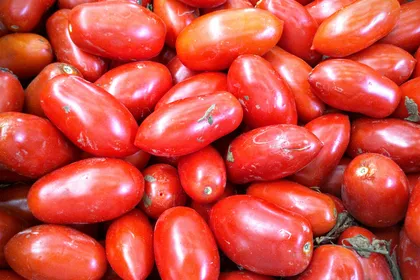 InvestigationSan Marzano DOP vs regular San Marzano«San Marzano» is at once the name of a cultivar anyone may plant anywhere, and a protected designation that…
 InvestigationProtected names vs common names: PDO and PGIEuropean protection attaches to a name in full, and that name is almost always longer than the one used at…
Frequently asked questions
Are all San Marzano tomatoes DOP?
No, and this is the crux of it. San Marzano is both a protected place-based name and a seed variety. The variety can be grown anywhere, and much of it is. Only tomatoes grown and canned in the Agro Sarnese-Nocerino under the rules carry the DOP, identified by the EU logo and the numbered Consorzio seal on the tin.
How do you tell real San Marzano from fake?
Look for three things on the can together: the full name 'Pomodoro S. Marzano dell'Agro Sarnese-Nocerino DOP', the red and yellow EU DOP logo, and the numbered Consorzio di Tutela seal with the certifying body named. 'San Marzano style', 'San Marzano variety' and 'packed in Italy' are not equivalent.
What makes San Marzano better for sauce?
Low water content, thin skin, few seeds and a low, balanced acidity. That means it reduces quickly, does not need sugar to correct it, and gives body rather than liquid. Twenty minutes is usually enough.
Can you substitute Roma tomatoes for San Marzano?
Yes, with adjustments. Roma are more acidic and seedier, so cook them ten minutes longer and taste before seasoning; a pinch of sugar or a piece of carrot in the pan balances the sharpness. The sauce will be good, just less sweet and less rounded.
How do you pronounce San Marzano?
san mar-TSAH-noh. The z is pronounced 'ts', as in 'cats', with the stress on the second syllable of Marzano.
Sources
Where to check what you just read.
- 1
Il regolamento del 1° luglio 1996 che registra «Pomodoro S. Marzano dell'Agro Sarnese-Nocerino» come DOP: la denominazione protetta include sempre la zona.
- 2
Il punto che quasi nessuna etichetta chiarisce: la DOP copre il pomodoro pelato ottenuto dalle varietà S. Marzano 2 e KIROS, con coltivazione e trasformazione entrambe nella zona delimitata.
Related foods
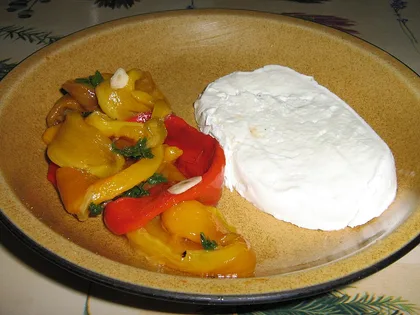 CheeseBuffalo MozzarellaMozzarella di Bufala Campana DOP is made from the whole raw milk of Italian Mediterranean water buffalo…
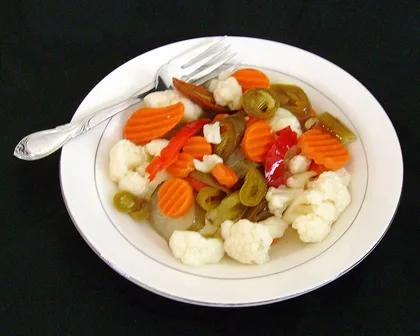 Oil and preservesGiardinieraGiardiniera means two very different jars. In Italy it is a mild mix of vegetables pickled in wine vinegar…Vegetables and fruitChestnutsFor a thousand years the Apennines made bread from them rather than dessert: Castanea sativa was the tree…
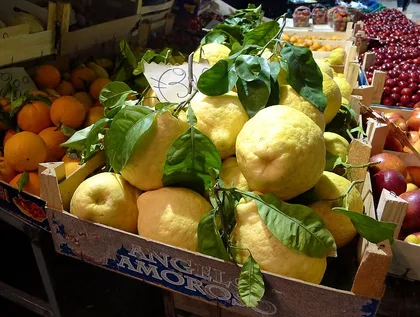 Vegetables and fruitSorrento LemonThe Sorrento lemon is a rifiorente femminello grown under chestnut-pole pergolas on the cliffs south of…Vegetables and fruitFriarielliAround Naples this turnip never reaches the root stage, because what matters grows above it.Vegetables and fruitPiennolo TomatoPiennolo tomatoes grow on the volcanic ash of Vesuvius with no irrigation at all, are cut in whole bunches in…
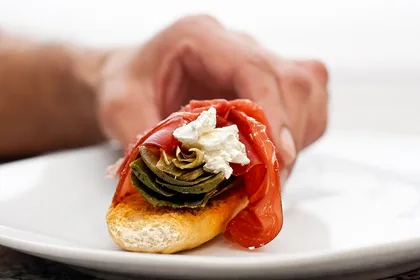 Vegetables and fruitPaestum ArtichokeThe Paestum artichoke is round, tightly closed, completely spineless and dimpled at the tip: it takes a…
 Vegetables and fruitCilento White FigThe Cilento white fig is a Dottato fig dried in the sun on cane racks in the hills south of Salerno.