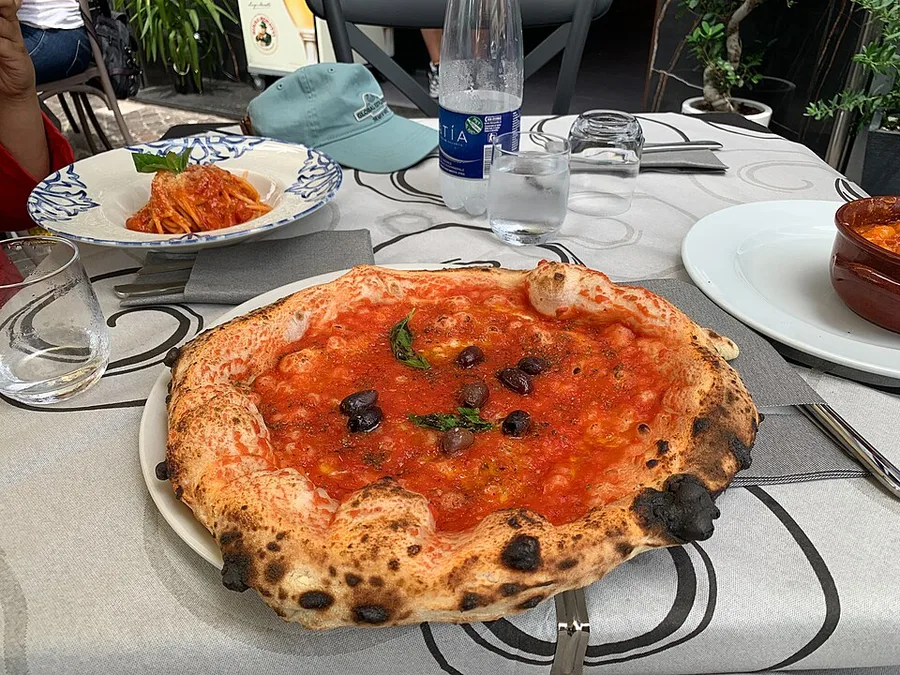
What is Neapolitan Pizza?
Neapolitan pizza carries the EU's Traditional Speciality Guaranteed mark, registered in 2010. TSG is not PDO or PGI: it protects a method, not a place. A pizzeria in Portland or Perth that follows the specification may legally call its pizza Pizza Napoletana STG, and a pizzeria inside Naples that rolls its dough with a pin may not.
The dough allows four things and nothing else: soft wheat flour, type 00 or 0, with a W strength between roughly 220 and 380; water; sea salt; and brewer's yeast or sourdough. No fat, no sugar, no milk. Two finished pizzas are recognised. Marinara is tomato, sliced garlic, oregano and extra virgin olive oil: no cheese at all, which makes it vegan by the rulebook. Margherita is tomato, mozzarella, basil and olive oil, using fior di latte from the southern Apennines, or Mozzarella di Bufala Campana PDO in the version called Margherita Extra.
A stricter private rulebook runs alongside it: the Associazione Verace Pizza Napoletana, founded in Naples in 1984, inspects pizzerias one at a time and issues a numbered plaque. In 2017 UNESCO then inscribed the art of the Neapolitan pizzaiuolo on its intangible cultural heritage list: the craft and its transmission from master to apprentice. Not the pizza.
What does it taste like?
The first surprise is that it is not crisp. The base is soft, pliable and slightly wet in the middle, with a puffed rim that pulls apart like very good bread rather than snapping, and you can fold the whole pizza in four without cracking it.
Flavour arrives in three layers. The charred blisters on the rim (the leopard spotting) are properly bitter, and that bitterness is the seasoning of the crust. Underneath, the tomato tastes raw, bright and acidic, because it is raw, hand-crushed and salted, and cooks only during those 90 seconds. Then fior di latte, a fresh high-moisture cheese, which tastes of milk and leaves small pools of whey rather than an even blanket.
How to use it
In Naples the pizza arrives whole, one per person, often wider than the plate, and it is eaten immediately, within two or three minutes, before the centre gives up. Use a knife and fork, cutting from the point toward the rim: that is the local method, not a formality. The alternative is to fold it in four, 'a portafoglio', and eat it with your hands, which is how it comes out of the takeaway window. Do not ask for grated cheese, do not reach for chilli oil before tasting, and do not send it back for being soft in the middle.
Making it at home, the dough is the easy part and the oven is the problem. Mix flour, water at 55-62 per cent, salt around 50 g per litre of water and a very small amount of yeast; rest the mass two hours, divide into 200-250 g balls, prove four to six hours. Shape with your fingertips from the centre out, pushing the gas into the rim, and never touch it with a rolling pin.
Dress it in order (raw crushed tomato spiralled from the centre, drained cheese in separate pieces rather than an even layer, basil, a thin spiral of olive oil) and use less than instinct suggests. On a preheated steel at 285-300 °C it needs four to six minutes; in a portable gas oven at 450 °C, 60-90 seconds with one turn halfway.
How long it keeps
This is not a keeping product. It is built to be eaten a couple of minutes after it leaves the peel, and it begins changing at once: steam from the topping migrates down into the base and softens it, and as the crumb cools the starch retrogrades and the rim turns firm and papery. Anything left over is usually covered and reheated the following day. The best route back is a non-stick pan with a lid over medium heat for three or four minutes, which dries the base again and remelts the cheese. A microwave only adds more steam.
What genuinely keeps is the dough. Balls hold in the fridge at 4 °C for 48 to 72 hours when the yeast was dosed low, and they need two or three hours at room temperature before shaping, because a cold ball tears instead of stretching. A baked pizza can go in the freezer, but the open crumb and the leopard spotting never come back after thawing.
Spot the real thing
The rim tells you most of it. The cornicione stands one to two centimetres high, puffed but not blown into a hollow tube, with irregular bubbles inside and leopard spotting in patches rather than an even tan. A uniformly golden edge came out of an oven that was not hot enough; a huge empty one came from dough that over-proofed. The base is thin and soft, around 30 to 35 centimetres across, and a well made one folds into quarters, the portafoglio, without cracking.
The tomato should read raw, acidic and vegetal, not like a cooked sauce with garlic and oregano in it. The mozzarella sits in separate patches leaving small pools of whey, never wall to wall. That is what separates it from a New York slice, which is crisp, sauced with cooked tomato and covered edge to edge with low moisture cheese, and from Roman tonda, which is cracker thin. Places working to the rules display an AVPN plaque, and the STG wording appears on packs of frozen versions made to the same spec.
How to pronounce Neapolitan Pizza
PEET-tsah nah-poh-leh-TAH-nah
Stress on PEET and on TAH. Italian double z is a hard 'ts', so it is PEET-tsah, not PEE-zah: hold the t and the s together. Then na-po-le-TA-na, stress on the fourth syllable. The common English mistake is 'nah-poh-lee-TAY-nah': there is no long 'ay' sound in the word.
Neapolitan Pizza compared
vsRoman pizza (pizza tonda 'scrocchiarella')
Two Italian pizzas built on opposite goals: Neapolitan dough is soft and fast-baked so the rim inflates, while Roman round pizza carries olive oil, is rolled flat with a pin, has no rim and bakes four to six minutes until it shatters. Rome's other style, pizza in teglia, is a third thing again: 80 per cent hydration and above, one to three days of cold maturation, 15-20 minutes in an oiled steel tray.
| This | Roman pizza (pizza tonda 'scrocchiarella') | |
|---|---|---|
| Hydration | 55-62% | 50-58% round; 80%+ in teglia |
| Fat in the dough | None permitted | Olive oil, roughly 2-5% of flour weight |
| Shaping | Hands only, centre outward | Rolled with a pin, often docked |
| Size | 22-35 cm, 0.4 cm at the centre | 30-33 cm, 2-3 mm throughout |
| Rim | 1-2 cm cornicione | None, flat to the edge |
| Oven and time | Wood dome, 380-430 °C floor, 60-90 seconds | Electric deck, 300-330 °C, 4-6 minutes |
vsAmerican pizza (New York and Chicago)
American pizza descends from Neapolitan immigrants but was rebuilt around a different oven: bread flour with oil and sugar, low-moisture mozzarella and a 10-15 minute bake give a base stiff enough to fold and hold in one hand, which is what a slice shop needs and what a Neapolitan pizza cannot do. Chicago deep-dish diverges further: a 5-8 cm oiled pan, cheese under the sauce, 30-45 minutes at 220-230 °C.
| This | American pizza (New York and Chicago) | |
|---|---|---|
| Flour | Type 00 or 0, W 220-380 | Bread flour, 12.5-14% protein |
| Added to the dough | Nothing but water, salt, yeast | Oil and sugar, sometimes milk powder |
| Cheese | Fresh fior di latte or buffalo | Low-moisture part-skim, shredded |
| Sauce | Raw tomato, hand-crushed, salt only | Cooked, seasoned with oregano and sugar |
| Oven and time | Wood dome, 380-430 °C, 60-90 seconds | Deck oven, 260-290 °C, 10-15 minutes |
| Diameter | 22-35 cm, one pizza per person | 40-45 cm, sold by the slice |
| Held in one hand | No, it folds and drips | Yes, the fold holds it rigid |
vsMargherita vs Marinara
The only two pizzas the TSG recognises, and the choice you will actually face in Naples. Margherita adds fior di latte and basil; marinara has no cheese at all, only tomato, raw sliced garlic and oregano, which makes it the cheaper one, the vegan one, and the one that exposes whether the dough and the tomato are any good.
| This | Margherita vs Marinara | |
|---|---|---|
| Topping | Tomato, fior di latte, basil, olive oil | Tomato, sliced garlic, oregano, olive oil |
| Cheese | Yes | None |
| Vegan | No | Yes, by the specification |
| Price in Naples | €4.50-7, or €8-11 with buffalo | €3.50-5.50 |
| Base texture | Softer and wetter, the cheese releases whey | Drier, browner, crisper underneath |
| Order it | As the pizza of the meal | As the first pizza at a pizzeria you are judging |
Neapolitan Pizza substitutes
- Type 00 pizzeria flour (Caputo Pizzeria blue bag, Le 5 Stagioni)
These bags deliver the soft wheat type 00 at W 220-380 the specification asks for. American bread flour is stronger and thirstier: it absorbs more water and fights back during shaping, so raise hydration two to three points and rest the dough an extra hour. All-purpose flour near 11.5% protein is closer to target.
1:1 by weight; add 2-3% more water with bread flour - Fior di latte (drained) or low-moisture mozzarella
Fresh fior di latte carries too much water for a slow home oven: cut it into 1 cm strips, drain it in a sieve in the fridge for 30-60 minutes and discard the whey. If your bake runs past four minutes, low-moisture whole-milk mozzarella performs better because it will not flood the centre. Never pre-shredded: the anti-caking starch turns chalky.
80-100 g per 28 cm pizza - San Marzano dell'Agro Sarnese-Nocerino PDO peeled tomatoes
Read the tin, not the front label: genuine ones carry the wording 'Pomodoro San Marzano dell'Agro Sarnese-Nocerino DOP' and a consortium number, while many tins sold as 'San Marzano style' are grown elsewhere and protected by nothing. A good non-PDO Italian plum tomato beats a bad branded one. Crush by hand, salt, never cook it first.
70-80 g of crushed tomato per pizza - Home oven plus a baking steel or stone
The realistic ceiling without dedicated equipment. Put the steel on an upper rack, run the oven at maximum for 45-60 minutes, then switch to the broiler for the last ten. You land around 285-300 °C and a 4-6 minute bake: good rim, partial leopard spotting, a drier centre than the original.
Steel 6-10 mm thick, or stone at least 15 mm - Portable high-temperature ovens (Ooni, Gozney, Effeuno)
The only home kit that reaches the 430-480 °C the method assumes, and therefore the only route to a true 60-90 second bake. Gas models such as the Ooni Koda 16 or Gozney Arc heat in about 20 minutes. Indoors, Italian-made Effeuno electric decks reach around 500 °C on a domestic socket.
- Vegan version: order the marinara
No substitution needed. Marinara has no cheese and is vegan as written in the TSG specification, which makes it the safe order on any Neapolitan menu. For a vegan margherita at home, add plant-based cheese after the bake: none melt properly in 90 seconds.
Where to buy it
In the United States, Eataly and Gustiamo stock Caputo flour, PDO San Marzano tomatoes and fior di latte. Expect roughly $5-8 for a 1 kg bag of Caputo Pizzeria, $40-55 for the 25 kg sack, $5-9 for a 400 g tin of certified San Marzano PDO, and $8-12 per pound for fresh fior di latte.
In the United Kingdom, Ocado and importers such as Vorrei, Nifeislife and Sous Chef ship nationwide, and Natoora supplies fresh Campanian mozzarella. A 1 kg bag of type 00 pizzeria flour runs £3-5, a tin of San Marzano PDO £3.50-6, and buffalo mozzarella £4-6 per 125 g ball.
On equipment, a 6-10 mm baking steel costs about $80-130 or £70-110 and is the best-value upgrade by a distance; portable gas ovens such as the Ooni Koda or Gozney Arc sit at $400-700 or £350-600. A 30-33 cm peel is not optional. Eating out, a margherita at an AVPN-certified pizzeria costs $17-26 in the US and £10-16 in the UK, against €4.50-7 in Naples.
Where to eat it in Italy
In Naples, three addresses in the historic centre cover the classic version. L'Antica Pizzeria da Michele in Forcella has served only marinara and margherita for over a century and runs on paper tickets and queueing. Gino e Toto Sorbillo sits on via dei Tribunali, the ancient decumanus, a few doors from Di Matteo, which also fries pizza at a street counter. L'Antica Pizzeria Port'Alba, opened in 1830, is counted as the oldest sit-down pizzeria in the city.
Away from the tourist spine: Starita in Materdei, known for its fried montanarine; Concettina ai Tre Santi in the Rione Sanità; Pizzeria La Notizia in Vomero, where Enzo Coccia first treated pizza as cooking rather than street food; and 50 Kalò by Ciro Salvo on piazza Sannazaro.
Outside Italy, the AVPN certifies several hundred pizzerias across some 60 countries and publishes a searchable directory, the fastest way to find a real one. In New York, Una Pizza Napoletana, Kesté and Song' e Napule are the reference points; in London, 50 Kalò sits near Trafalgar Square and da Michele has an outpost in Stoke Newington.
Further reading
Frequently asked questions
Why is Neapolitan pizza soggy in the middle?
Because it is supposed to be. A 60-90 second bake with raw tomato and fresh high-moisture cheese leaves the centre soft and slightly wet by design, and a pizza dry enough to hold flat would have a burnt rim. Eat it with a knife and fork, or fold it in four.
What is the difference between STG and AVPN certification?
STG is an EU registration from 2010 protecting the method, so any pizzeria anywhere can use it by following the specification. AVPN is a private Naples association founded in 1984 that inspects individual pizzerias against a stricter rulebook and issues a numbered plaque. A pizzeria may hold either, both or neither.
Did UNESCO make Neapolitan pizza a World Heritage food?
No. In 2017 UNESCO inscribed the art of the Neapolitan pizzaiuolo on the intangible cultural heritage list: the craft, the gestures and the way it is taught. The recognition covers the people who make it, not the pizza.
Did a pizzaiolo really invent the margherita for the queen in 1889?
It is a contested tradition, not a documented fact. The story credits Raffaele Esposito of Pizzeria Brandi, but the royal note supporting it has never been independently authenticated, and pizzas topped with tomato, mozzarella and basil were described in Neapolitan writing decades before 1889.
Can I make real Neapolitan pizza in a home oven?
You can get close, not identical. A baking steel preheated 45-60 minutes at maximum with the broiler on reaches about 285-300 °C and bakes in four to six minutes, giving a good rim and partial leopard spotting. The true 60-90 second bake needs 430 °C at floor level: a wood oven, or a portable gas or electric one.
Sources
Where to check what you just read.
- 1
Il regolamento del 4 febbraio 2010 con il disciplinare allegato: forno a legna, 60-90 secondi di cottura, diametro massimo 35 cm, cornicione di 1-2 cm e i tempi delle due lievitazioni.
- 2
Il PDF italiano del disciplinare e le altre tre STG nazionali: serve a ricordare che la STG tutela il metodo, non il luogo, e che si può fare Pizza Napoletana STG ovunque rispettando le regole.
- 3Consortium · interested partyAssociazione Verace Pizza Napoletana
Il disciplinare privato AVPN e l'albo delle pizzerie certificate: è un secondo standard, più stretto della STG, e va tenuto distinto dal marchio europeo.
Related foods
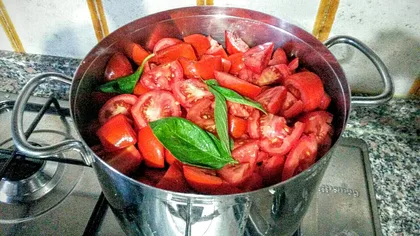 Vegetables and fruitSan Marzano TomatoesSan Marzano is a long, thin-skinned plum tomato grown in the volcanic plain between Naples and Salerno, and…
 CheeseBurrataIt began as a way of using offcuts: leftover shreds of pasta filata, drowned in cream and sealed inside a…
 Pasta and breadSpaghettiA solid round strand of durum semolina and water, 1.7 to 2.0mm across. It looks like the most neutral pasta…
 Pasta and breadFusilliTwo different pastas share this name. The industrial spiral is solid and holds sauce on its outside surface…
 Pasta and breadPaccheriPaccheri are large smooth tubes of durum wheat pasta from Campania: 4-5 cm long, 3-4 cm across, with a thick…
 Pasta and breadMaccheroniThe most misunderstood name in Italian pasta. In Naples it means dried semolina pasta in general, in Abruzzo…
 Pasta and breadPizza di Scarola (Neapolitan Escarole Pie)Pizza di scarola is Naples's Christmas Eve pie: bread dough wrapped around escarole stewed with Gaeta olives…
 CheeseMozzarellaThe name is a verb before it is a cheese: mozzare means to lop off, which is what the cheesemaker does by…