What is Peperone Crusco?
A crusco is the last stage of a three-part process. First the fresh pepper: Peperone di Senise IGP, a Lucanian variety with thin flesh and unusually little water. Then sun-drying, which turns it dark red, leathery and almost weightless. Then a flash fry, two or three seconds in hot olive oil, which makes it brittle as glass. Crusco means crisp in the local dialect.
The thing everyone gets wrong first is heat. There is none. This is a sweet pepper with essentially no capsaicin, and the flavour is toasted, sweet and faintly bitter, somewhere between sun-dried tomato and chestnut skin. Comparing it to paprika is natural and misleading: paprika is a powder, a crusco is a whole vegetable you bite.
The protected specification recognises three shapes of the fresh pepper (pointed, blunt and hooked) which differ in form rather than flavour. Peperone di Senise has held IGP status since 1996, and the crusco is its traditional transformation.
Ground versions are sold as 'polvere di peperone crusco'. Useful, aromatic, and beside the point: the texture is the reason the thing exists.
What does it taste like?
Sweet first, then toasted, then a light bitterness at the finish, the kind that makes you reach for another one. There is a distinct sun-dried-tomato character underneath, and a nuttiness that people often place as chestnut or roasted hazelnut skin.
The texture is the whole event. A properly fried crusco is airy and glassy and shatters against the teeth with almost no resistance, closer to a vegetable crisp than to anything leathery. It dissolves rather than chews.
Salt is added the second it leaves the oil, while the surface is still slick, so the first taste is salt and toasted pepper together. If it tastes bitter and dark rather than sweet, the oil was too hot: burnt crusco is a distinct and unpleasant flavour, and it happens in the space of a second.
How to use it
Start dry. Remove the stem and shake out the seeds, and make sure the pepper snaps rather than bends: if it bends, it holds moisture and will go soft in the pan. Fifteen minutes in an oven at 50-60 °C / 120-140 °F fixes that.
Heat extra virgin olive oil to 160-170 °C / 320-340 °F. Drop in two or three peppers, count to three out loud, lift them out. Drain on paper and salt immediately, while the surface is still oiled. Too hot and they go black and bitter in the space of a breath; too cool and they soak up oil and stay limp.
Keep the frying oil. Strained, it is red, fragrant and excellent on beans and greens.
The canonical dish is baccalà: rehydrated salt cod cooked in oil with garlic and cherry tomatoes, with cruschi added at the end, whole or broken. The other is pasta with fried breadcrumbs, mollica, and crumbled cruschi over the top.
The timing rule governs everything: add them off the heat, at the last second. A minute in a simmering sauce turns a crusco into a limp skin.
How long it keeps
Dryness is the whole business. Whole dried peppers hang on their strings in an airy place away from steam, or sit in a sealed jar or their vacuum bag, and any moisture in the room works against them: they lose the snap first, going supple and bendy, and a pepper in that state will not crisp in the pan. Packs carry a date from the producer. Over months the colour drifts from bright red toward dull brown as the pigments oxidise and the sweet dusty smell flattens, faster in daylight and in a warm kitchen, so a dark cupboard beats a hook by the cooker. Some households keep the strings in the freezer through a humid summer.
Once fried, the crusco has a short window. Cooled completely and then shut in an airtight jar it holds its shatter for a few days; left out on a plate it draws moisture from the air and goes limp overnight. Two or three minutes in a warm oven drives that moisture back out. Ground crusco keeps in a small airtight jar away from light, where it fades and loses aroma before anything else changes.
Spot the real thing
The pepper to look for is Peperone di Senise IGP, sold dried whole with the stalk still attached, often threaded into long strings called serte. It should be a deep brick red, almost weightless in the hand, with walls so thin they are translucent against a light, and it snaps rather than bends. Crucially it is a sweet pepper and not a hot one: the flesh has no burn at all, which is the whole point of eating a handful of them like crisps. Ready-fried crusco is also sold in vacuum bags and in a coarse powder.
This is where shopping abroad goes wrong, because the dried peppers on offer elsewhere are built for different jobs. Mexican ancho and guajillo are thick, leathery and meant to be rehydrated. Spanish nora and choricero are round and pulpy, scraped for paste. Kashmiri and Calabrian chillies carry heat. None of them will flash-fry to a brittle shell in a few seconds the way a Senise pepper does. IGP strings cost several times a bag of generic dried chillies.
How to pronounce Peperone Crusco
peh-peh-ROH-neh KROOS-koh
Two words, stress on the third syllable of the first and the first of the second. The trap is not the sound but the meaning: peperone in Italian is a sweet pepper, and peperoni is its plural. It has nothing to do with the American cured sausage, which Italians call salame piccante. Order a 'pepperoni pizza' in Italy and you will be served a pizza with peppers on it. The plural of the whole phrase is peperoni cruschi, peh-peh-ROH-nee KROOS-kee.
Peperone Crusco compared
vsPaprika and pimentón
The same botanical starting point and a completely different product. Paprika and Spanish pimentón are dried sweet peppers ground to a powder and used as a seasoning; crusco is a whole dried pepper, briefly fried, eaten as a solid. Pimentón de la Vera is additionally smoked over oak, which crusco never is. Where a recipe wants colour and background warmth, use paprika; where it wants crunch and a toasted top note, only a crusco will do.
| This | Paprika and pimentón | |
|---|---|---|
| Form | Whole pepper, eaten in pieces | Fine powder |
| Final processing | Flash-fried in olive oil, 2-3 seconds | Dried, then milled |
| Smoke | None | Central to pimentón de la Vera; absent in Hungarian paprika |
| Heat | None | None in dulce, moderate in picante grades |
| Role in a dish | Texture and a finishing crunch | Colour and base seasoning |
| Added | At the very end, off the heat | Early, into the fat |
| Origin | Senise, Basilicata | Hungary; La Vera and Murcia in Spain |
vsPeperoncino (dried chilli)
The confusion that ruins the first attempt. Both are dried red pods from the same genus; one is a sweet pepper and one is a chilli. A crusco is eaten by the handful and a dried Calabrian chilli is used a fragment at a time. The visual tells are size and wall thickness: cruschi are large, 10 to 15 centimetres, with a broad hollow body, while dried chillies are small, narrow and dense.
| This | Peperoncino (dried chilli) | |
|---|---|---|
| Heat | None | Moderate to very high |
| Size | 10-15 cm, broad | 2-8 cm, narrow |
| Eaten | Whole, as food | In fragments, as seasoning |
| Fried | 2-3 seconds, then eaten | Infused into oil at low heat |
| Portion | 3-5 peppers per person | Half a pod for a pan of pasta |
| Region | Basilicata | Calabria above all |
vsMexican dried chiles (ancho, guajillo)
The closest technical relatives outside Italy, and a genuinely useful reference for American cooks. Ancho and guajillo are also dried, mild-to-moderate, thin-walled pods that are briefly toasted before use: the same principle of waking up a dried pepper with a moment of heat. The differences are that Mexican chiles carry real, if gentle, heat and are then usually rehydrated and blended into a sauce, while a crusco is fried and kept dry and crisp.
| This | Mexican dried chiles (ancho, guajillo) | |
|---|---|---|
| Heat | None | Mild (ancho) to medium (guajillo) |
| After toasting | Eaten immediately, crisp | Soaked, blended into sauce |
| Toasting method | Deep-fried in olive oil, seconds | Dry-toasted on a comal, 20-30 seconds |
| Flavour | Sweet, toasted, faintly bitter | Raisiny and smoky (ancho), tart and berryish (guajillo) |
| Texture in the dish | Crunch is the point | Smooth, texture is removed |
| Substitutability | Guajillo is the best stand-in | A crusco makes a poor mole |
Peperone Crusco substitutes
- Spanish ñoras
The closest European equivalent: small, round, sweet, thin-walled dried peppers from Murcia. They are smaller than a Senise pepper, so you will need more of them, and they fry the same way in seconds. The best substitute on this list.
2-3 ñoras per crusco - Guajillo chiles
Widely available in the US and structurally very close. They carry mild heat, which a crusco does not, so scale back any chilli elsewhere in the dish. Remove seeds and stem, make sure they are bone dry, and fry for the same two or three seconds.
1:1 - Dried Hungarian or Turkish sweet peppers
Sold whole and strung in Central European and Middle Eastern grocers, often for stuffing. Check the wall thickness: thick-fleshed ones hold moisture and go soft rather than crisp.
1:1 - Make your own
Any thin-walled sweet pepper (corno di toro, ramiro, sweet pointed peppers) dried whole in a dehydrator at 55-60 °C for 12 to 20 hours until they snap rather than bend. Not the Senise variety, but the technique carries most of the way.
1 kg fresh yields roughly 100-120 g dried - Sweet paprika, for flavour only
If the recipe uses crusco as a crumbled seasoning rather than a crisp, a good sweet paprika stirred in off the heat gets you part of the way. Accept that you have removed the entire point if the dish relied on crunch.
1 tsp paprika per 2 peppers - Jarred pre-fried cruschi
Sold in oil across Italy and by online importers. Convenient, never as crisp as freshly fried, and expensive by weight. Drain them well and add them at the last moment.
Where to buy it
Outside Italy this is an online purchase. US and UK importers of Southern Italian food carry dried Senise peppers at roughly 20 to 35 dollars or pounds for a bag, and jarred pre-fried ones at similar prices for far less product. Eataly and specialist Italian grocers stock them intermittently.
Buy them dried and whole rather than fried in jars. The frying takes three seconds and is the difference between the real thing and a soft approximation.
In Italy, dried whole peppers cost 25 to 45 euros a kilo, a figure that sounds alarming and is not, because they weigh almost nothing. A 100 g bag at 5 to 7 euros holds around twenty peppers, or four to five servings.
What to check: deep glossy red with no black patches or white bloom, stems intact, and a body that shatters when you press it. Look for the Peperone di Senise IGP mark if you want to know the raw material came from Basilicata: plenty of good cruschi are made from peppers grown elsewhere, and only the label will tell you.
Where to eat it in Italy
Senise, in the province of Potenza, in August. The town's pepper festival coincides with the stringing season, when the balconies along the Sinni valley are hung with two-metre garlands of drying peppers and the whole valley changes colour. It is also when you can buy direct from growers.
The surrounding villages (Chiaromonte, Francavilla in Sinni, Valsinni, Noepoli) serve salt cod with cruschi year-round, and at Christmas the whole valley eats little else.
Matera has turned the crusco into a restaurant garnish, crumbled over everything. It is good, but to understand the product, eat it in its poor form in a village trattoria: pasta, fried breadcrumbs, crumbled peppers, nothing else.
Village festivals across Basilicata through the summer fry them to order, which is the only way to taste one at its best: a crusco has a working life of about two hours. While you are in Senise, the Monte Cotugno dam is worth the short detour: it reshaped this whole valley.
Frequently asked questions
Is peperone crusco spicy?
No. It is a sweet pepper with essentially no capsaicin. The flavour is toasted, sweet and slightly bitter, closer to sun-dried tomato than to chilli. The dark shrivelled appearance is what misleads people.
How do you pronounce peperone crusco?
peh-peh-ROH-neh KROOS-koh. The important part is the meaning rather than the sound: peperone is Italian for sweet pepper and has no connection to American pepperoni sausage. Asking for a pepperoni pizza in Italy gets you peppers.
How long do you fry them?
Two or three seconds in olive oil at 160-170 °C / 320-340 °F, two or three peppers at a time, then straight onto paper and salted immediately. Longer and they blacken and turn bitter, and there is no rescuing them.
What can I use instead of peperone crusco?
Spanish ñoras are the closest, at two or three per crusco. Guajillo chiles are the best option in the US, allowing for their mild heat. Any thin-walled sweet pepper dried until it snaps will work; sweet paprika replaces the flavour but not the crunch, which is the whole point.
How do I use them in a dish?
Always at the end, off the heat. Whole or broken over salt cod, crumbled onto pasta with fried breadcrumbs, scattered on bean purées, poached eggs or fresh cheese. Anything that keeps cooking will soften them within a minute.
Related foods
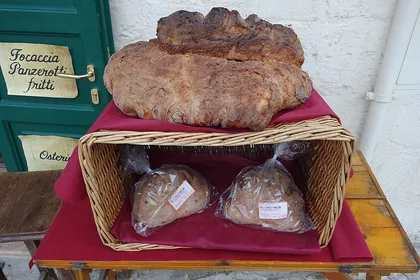 Pasta and breadPane di MateraPane di Matera is a durum-wheat sourdough from Basilicata, IGP since 2008, leavened with a mother culture…
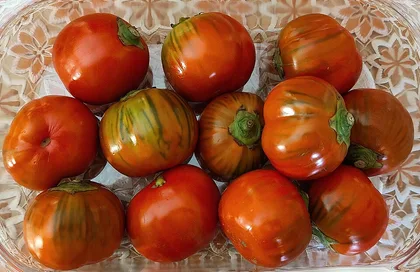 Vegetables and fruitRotonda Red EggplantThe Rotonda red eggplant looks exactly like a ribbed tomato and is not the eggplant you know: it is Solanum…
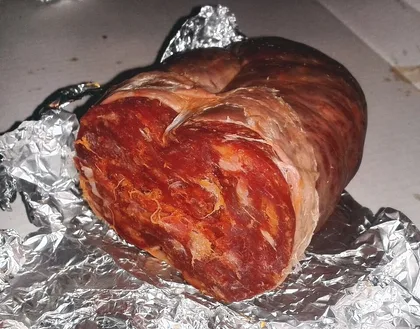 Cured meatsSoppressataSoppressata is a coarse-ground dry salami from southern Italy, pressed flat between boards while it dries…
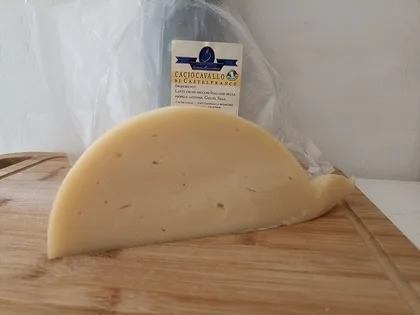 CheeseCaciocavalloCaciocavallo is a stretched-curd cow's milk cheese from southern Italy, aged in a distinctive gourd shape…CheeseCaciocavallo PodolicoCaciocavallo Podolico is made from the milk of semi-wild Podolica cattle, a rustic grey breed that yields…Cured meatsPodolica BeefPodolica is the grey, lyre-horned cattle breed that lives outdoors year-round in the southern Italian…Cured meatsSalsiccia di FegatoSalsiccia di fegato is Italian pork liver sausage: coarsely chopped liver, pork fat, salt and spices in…
 Vegetables and fruitSan Marzano TomatoesSan Marzano is a long, thin-skinned plum tomato grown in the volcanic plain between Naples and Salerno, and…