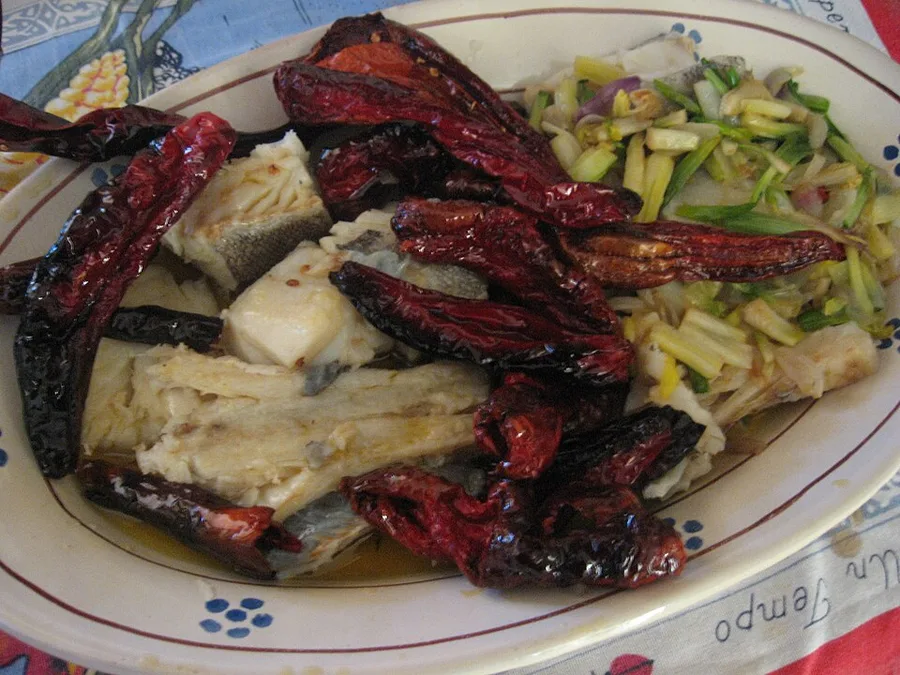
What is Baccalà?
Baccalà is cod, Gadus morhua, Atlantic cod, split open, boned and packed in dry salt. Salting draws water out of the flesh until bacteria cannot survive in it. It is a preservation technique, not a cooking method, and it predates refrigeration by five centuries.
The salted fish loses about forty per cent of its weight and turns stiff, pale and crusted with salt crystals. Before cooking it has to be desalted: soaked in cold water for one to two days with frequent changes. Only then does it regain its texture and become edible.
The distinction worth learning immediately is the one with stoccafisso. Same fish, two techniques: baccalà is salted, stoccafisso is air-dried in cold wind with no salt whatsoever. They soak differently, cost differently, taste differently and behave differently in the pan. Almost every confusion around Italian cod cookery traces back to this one point.
What does it taste like?
Concentrated cod: meatier, saltier and far more assertive than the fresh fish. Salting firms the proteins, so properly desalted baccalà flakes into wide, translucent, almost meaty leaves rather than falling apart into shreds. Fresh cod is delicate; baccalà is emphatic.
Underneath the salinity there is a clean sweetness and a mineral note that people who dislike 'fishy' fish tend to find surprisingly easy. It is not oily, so it does not taste of anchovy or mackerel; it tastes of the sea in a much cooler register.
Well desalted, it should taste of fish with only a whisper of salt. If it stings the tongue, it needs more water. If it tastes of nothing, someone soaked it for four days and washed the flavour out along with the salt.
How to use it
Everything starts with the soak, and getting it wrong ruins the dish before you have cooked anything. Rinse the surface salt off under running water, then submerge the fish in plenty of cold water in the refrigerator for 24 to 48 hours depending on thickness, changing the water every eight hours. Keep the piece skin side up so the salt sinks away from the flesh rather than sitting under it.
Test before cooking. Pull a flake from the thickest part and taste it raw: it should taste of fish with only a hint of salt. Stinging on the tongue means more water; tasting of nothing means you have gone too far.
Then cook it gently. Baccalà hates a rolling boil: braise it covered on the lowest heat and move the pot rather than stirring with a fork, or the fish breaks up.
The classic Italian treatments are fried in light batter and eaten scalding, as in Rome; simmered briefly and dressed cold with oil, lemon, olives and parsley, as at a Neapolitan Christmas; and braised with tomato, garlic and parsley, as in Livorno. Salt goes in at the end, if at all, and usually not at all.
How long it keeps
Dry salted cod in its original state is preserved by the salt itself and keeps for months in a cool, dark, airy place, ideally 10 to 15 C, loosely wrapped in paper or hung rather than sealed in plastic, since trapped moisture makes the surface tacky. The change to watch over time is in the fat: the flesh yellows from white to straw and the smell turns oilier as it oxidises, and it moves faster in warmth. Vacuum packs and pre-soaked pieces are a different case entirely and carry a date printed by the seller, which is the only reference for those.
Once it has been soaked out, it stops being a preserved product and behaves like fresh fish. Do the soaking in the fridge at 0 to 4 C with the water changed several times, then keep the drained pieces covered in the fridge and use them within a day or two. Soaked portions freeze at minus 18 C for a couple of months, though the flesh flakes more loosely on thawing and releases water into the pan.
Spot the real thing
Two dried fish sit side by side and only one is baccala. Salt cod is stiff but still bends, is coated in visible salt crystals, and shows thick ivory flesh with the grain running long; stockfish, stoccafisso, is unsalted, dried to the hardness of a plank and pale grey-brown, and it is the one Venetian baccala mantecato is actually made from. On the label, look for the species: Gadus morhua from Norway, Iceland or the Faroes is the reference cod, and Nordic or Norwegian origin usually comes with a thicker loin.
In shops abroad the word salt fish covers a wider net. Caribbean and West African grocers often sell salted pollock, saithe or ling, which come as thinner, narrower, more yellow-toned pieces and cost far less per kilo than cod. Ask for the loin, il filetto, the thick centre cut, rather than the tail and belly flaps that dry hard. A yellow cast across the flesh is oxidised fat rather than salt, and the difference in price between true cod and its substitutes is usually two to three times.
How to pronounce Baccalà
bah-kah-LAH
Three syllables, stress firmly on the last, because the written accent on the final 'a' is telling you exactly that. The double 'c' is a hard 'k' held slightly longer. Do not say 'ba-KAH-la' with the stress in the middle: that is the most common error, and it is the one Italian speakers notice first. In Veneto you will hear it with a single 'c' as bacalà, which is the local spelling and pronounced the same way.
Baccalà compared
vsStoccafisso (stockfish)
The single most important distinction in Italian fish cookery, and the one almost everyone gets wrong. Both are Atlantic cod. Baccalà is preserved with salt; stoccafisso is preserved by cold air alone, dried on wooden racks in the Lofoten Islands until it is as hard as timber. Then comes the paradox: the famous Venetian and Vicentine dishes named after baccalà are made with stoccafisso.
| This | Stoccafisso (stockfish) | |
|---|---|---|
| Preservation | Dry salt, 2-3 weeks under pressure | Air-dried outdoors, February to May, no salt |
| Appearance | Flat, pale, flexible, salt-crusted | Rigid board, tan-grey, must be beaten |
| Soaking | 24-48 hours, water changed every 8 hours | 3-4 days, water changed twice a day |
| Texture cooked | Wide firm flakes, holds together | Fibrous, stringy, melts into creams and stews |
| Price per kilo (dry) | 14-22 euro | 40-70 euro |
| Classic dishes | Roman fried fillets, Neapolitan Christmas salad, alla livornese | Baccalà alla vicentina, baccalà mantecato, stocco alla mammolese |
| Confusingly | Called baccalà everywhere in Italy | Also called bacalà in Veneto, hence the mess |
vsFresh cod
Not a substitute so much as a different ingredient with the same Latin name. Salting restructures the proteins, which is why baccalà holds its shape in a four-hour braise and fresh cod disintegrates in twenty minutes.
| This | Fresh cod | |
|---|---|---|
| Water content | Reduced by roughly 40 per cent | Full |
| Texture | Firm, large translucent flakes | Soft, small flakes, breaks easily |
| Flavour | Concentrated, savoury, faintly saline | Mild, delicate, sweet |
| In a long braise | Holds together for hours | Falls apart in minutes |
| Preparation | One to two days of soaking | None |
vsBacalhau and bacalao
The same product under Portuguese and Spanish names, from the same northern waters, cured the same way. What differs is the cuisine around it, and slightly the cut: Iberian shops sell more thick loin pieces and more heavily salted fish than Italian ones.
| This | Bacalhau and bacalao | |
|---|---|---|
| The fish | Salted Atlantic cod | Salted Atlantic cod |
| Typical cut | Split sides, tranches, tails | Thick loin pieces (lomo), often skin-on |
| Salt level | Moderate to high | Often higher, so soak longer |
| Signature dishes | Fried fillets, alla livornese, mantecato | Bacalhau à Brás, pil-pil, bacalao a la vizcaína |
| Interchangeable | Yes, with an adjusted soak | Yes, with an adjusted soak |
Baccalà substitutes
- Portuguese or Spanish bacalhau
The same product, usually easier to find outside Italy and often better cut. Iberian salt cod tends to be more heavily salted, so add twelve hours to the soak and taste a flake before you commit.
1:1 by weight - Home-salted fresh cod
A genuinely good workaround if you cannot buy salt cod. Bury thick skinless cod loin in coarse sea salt for 24 to 36 hours in the fridge, rinse, then soak for four hours. You get most of the firmness and concentrated flavour in two days rather than three weeks.
1kg fresh cod yields about 700g salted - Salted pollock or ling
Sold in Caribbean, West African and Portuguese shops and considerably cheaper. Slightly softer and less sweet than cod, so best in dishes with strong company: tomato, olives, capers, chilli.
1:1 by weight - Stoccafisso, where the recipe actually wants it
Not a substitute but a correction. If you are making baccalà alla vicentina or baccalà mantecato, the traditional ingredient is stockfish. Using salt cod gives you a firmer, flakier, less creamy result: good food, wrong dish.
Different soak entirely: 3-4 days for stockfish - Fresh cod, for stews only
Acceptable in a tomato braise where the fish goes in at the end, useless in anything that cooks for more than half an hour. Add it in the last ten minutes and salt the sauce properly to compensate.
1.4:1 by weight, since there is no soaking gain - Vegetarian: banana blossom or hearts of palm
For fritters specifically, where the batter and the seasoning do most of the work. Drain banana blossom well, break it into flakes, season with seaweed and lemon, and batter as you would fillets of cod.
Where to buy it
In the US, salt cod is widely available in Italian, Portuguese, Spanish, Caribbean and West African grocers, typically 12 to 20 dollars per pound for whole dried sides and rather more for boneless loin. Many Italian delis also sell it pre-soaked in the refrigerated case, which is convenient, but cook it the same day.
In the UK, Portuguese and Spanish delicatessens are the most reliable source, at roughly 18 to 30 pounds per kilo, with Brixton, Stockwell and the Portuguese quarters of most large cities the obvious places to look. Some fishmongers will salt cod to order given a few days' notice.
Buy on thickness, not on price per kilo: a piece three to four centimetres thick from the front of the fish stays in whole pieces through a long braise, while thin tail pieces shred (fine for fritters and croquettes, and half the price). Flesh should be white to pale ivory and firm; yellow or brown patches mean the fats have oxidised and no amount of soaking will fix the rancid taste. Remember that dry weight is not cooked weight: a kilo of dried salt cod becomes about a kilo and a half once rehydrated.
Where to eat it in Italy
Vicenza and its province, where the dish is an institution. Sandrigo, just north of the city, holds a festival every September, and the version served there follows the recipe codified by the local confraternity, with polenta, as the rule requires. Be aware that what you will be eating is stockfish.
Venice, where the bacari of Cannaregio and San Polo serve baccalà mantecato on grilled polenta as a cicchetto: a couple of euro each, eaten standing at the bar, and one of the best ways to start an evening anywhere in Italy.
Rome, and specifically the tiny fried-cod counter at Largo dei Librari behind Campo de' Fiori, which has fried fillets and almost nothing else for decades. Naples, where salt cod is the fish of Christmas and the fishmongers of the Pignasecca market keep tubs of it soaking from the first days of December.
Livorno for the tomato version, and the Calabrian coast for a whole family of preparations almost unknown outside the region.
Frequently asked questions
What is the difference between baccalà and stoccafisso?
The preservation method, not the fish: both are Atlantic cod. Baccalà is packed in dry salt; stoccafisso is air-dried on wooden racks with no salt at all. Baccalà soaks for one to two days to remove salt; stockfish soaks for three or four days to rehydrate. They differ in texture, price and flavour.
Is baccalà alla vicentina made with baccalà?
No: it is made with stoccafisso, and this is the most widespread confusion in Italian fish cookery. In Veneto the word bacalà traditionally means dried cod rather than salted cod, so a Vicentine saying bacalà means stockfish. The same applies to Venetian baccalà mantecato.
How long do you soak salt cod?
Twenty-four to forty-eight hours in the refrigerator, in plenty of cold water changed every eight hours. Thin pieces need a day; thick loin pieces of three or four centimetres need two. Keep the fish skin side up so the salt falls away from the flesh.
How do I know when the salt cod is desalted enough?
Taste it. Pull a flake from the thickest part and eat it raw: it should taste of fish with only a trace of salt. If it stings, keep soaking. Starting salt levels vary enormously between producers, so tasting is the only reliable test.
Can I use fresh cod instead of baccalà?
In a quick tomato braise, at a push. Salting restructures the proteins and gives baccalà its firm, wide-flaked texture and concentrated flavour; fresh cod is softer, wetter and breaks up in any long cooking. It is a different ingredient wearing the same name.
Related foods
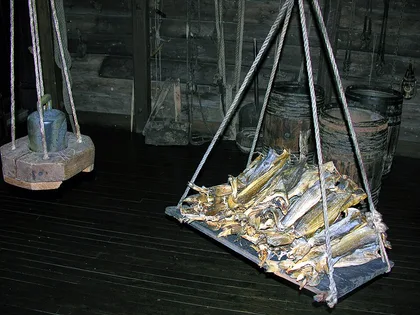 Fish and seafoodStoccafissoStoccafisso is cod air-dried on wooden racks in the Norwegian Lofoten Islands, with no salt at all, until it…
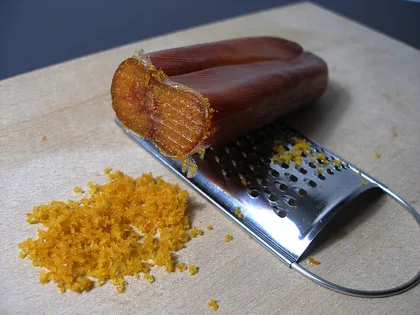 Fish and seafoodBottargaFifteen grams a head is enough, and that is not meanness: bottarga is the salted, pressed, air-dried roe sac…
 Fish and seafoodColatura di Alici (Italian Anchovy Sauce)Colatura di alici is the amber liquid that drains from anchovies packed in salt in chestnut barrels at…
 SweetsTiramisuNothing here goes near an oven. Savoiardi dipped in cold espresso, raw egg yolk whipped with mascarpone…Pasta and breadGnocchiGnocchi are small boiled dumplings, in their modern form made of potato bound with a little flour.
 WineProseccoProsecco is made from Glera grapes by the Martinotti tank method, not the traditional bottle method used for…
 CheeseAsiagoOne name covers two cheeses nobody would mistake for each other at the counter.
 CheeseGrana PadanoNine months is the floor the specification sets before a wheel may carry the name.