What is Stoccafisso?
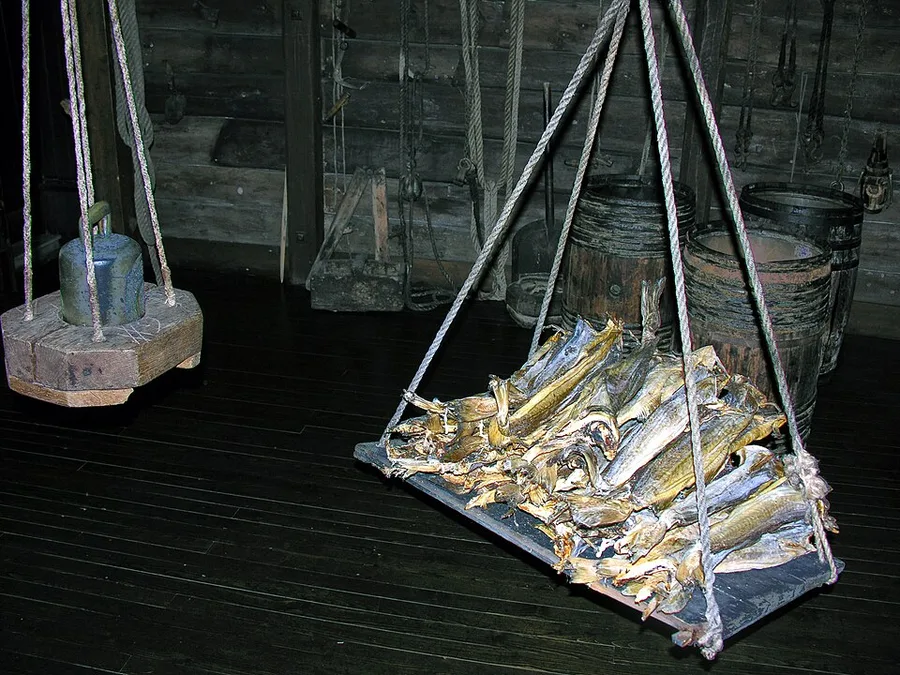
Stockfish is North Atlantic cod hung on outdoor wooden racks and dehydrated by cold wind and low arctic sun. No salt, no smoke, no heat. It loses seventy to eighty per cent of its weight and turns rigid, feather-light and leather-coloured: a fish you can hold by the tail like a board.
The name comes from the Norse and Dutch stokvis, 'stick fish', after the poles it hangs from; Italian turned it into stoccafisso.
Technically it is remarkable. With no water and no salt in it, it keeps for years at room temperature and retains almost the full protein profile of fresh fish: over eighty per cent protein by dry weight. Before canning and industrial refrigeration, it was the most transportable protein in Europe, and it is why a mountain village in Calabria ended up building its cuisine around an arctic fish.
What does it taste like?
Once rehydrated and cooked, stockfish is softer, more fibrous and far more delicate than salt cod. It does not flake into wide leaves; it separates into fine threads, which is exactly why it can be beaten into a white cream with olive oil, as the Venetians do, and why salt cod cannot.
The flavour is concentrated cod with a distinctive dried, faintly cheesy depth from the months of air-curing: savoury rather than salty, since no salt was ever added. Anything salty in the finished dish came from the anchovies, the cheese or the cook.
Dried and unsoaked it smells strong, sweet and slightly barnyard; that is normal. Ammonia is not. If it stings the nose, the fish has gone and no amount of soaking will bring it back.
How to use it
Soaking is long and there is no way around it. First beat the dried fish with a mallet or a rolling pin to break up the fibres: noisy, necessary, and something most fishmongers will do for you. Then submerge it in plenty of cold water in the refrigerator for three to four days, changing the water morning and evening. It will roughly triple in weight.
Unlike salt cod, you are not removing anything; you are putting water back. So judge readiness by texture, not by taste: when the flesh yields under a finger and is evenly springy all through, it is ready.
The signature dish is baccalà alla vicentina. Flour the pieces, lay them in a heavy pot on a bed of slow-cooked onion with anchovies and parsley, cover with equal parts olive oil and milk, and cook for four to five hours on the lowest possible heat without ever stirring. The dialect word for the required simmer is pipare: the surface should blow the occasional bubble, like a pipe. Serve it with white polenta.
Venetian baccalà mantecato is the other great preparation: stockfish poached, then beaten for twenty minutes with extra virgin olive oil until it becomes a pale, glossy cream, served on grilled polenta. In Calabria, stocco is stewed with potatoes, tomato, olives and chilli.
How long it keeps
Dried, it is one of the most durable foods in an Italian kitchen, because there is almost no water left in it. A whole or cut piece keeps for a year or more hung or laid flat in a cool, dry, airy place, wrapped in paper or cloth, never in a sealed plastic bag, which holds in whatever moisture the fish gives up. It does not need the fridge in that state. The pack or the fishmonger carries the date, and that is the reference.
Once soaked, everything reverses. The rehydrated fish has gone back to roughly three times its dried weight and behaves like fresh fish: keep it in the fridge, covered in clean cold water, change that water daily, and use it inside two days. Over the drying year the flesh continues to lose the last of its moisture, going harder and more amber, and the surface oils oxidise slowly, which is why the trade grades and sells within a season. Soaked stockfish freezes usefully in portions, drained and wrapped tight, for two to three months.
Spot the real thing
Dried stockfish is unmistakable once you have seen it: a flat, board hard plank of fish, pale straw to grey beige, so rigid it will not bend, and surprisingly light for its size. There is no salt crust and no salt crystals anywhere on it, which is the whole difference from salt cod. Salt cod is whiter, visibly salted, heavier and pliable. In the Veneto the two get tangled because the local name for stockfish is baccalà, which everywhere else in Italy means the salted one.
Grade is printed on the label and matters. Italian buyers take almost the whole Lofoten production and grade it themselves: Ragno is the top tier, thick, pale and even, and it is what Vicenza and Naples pay for. Look for Norway or Lofoten as origin and Gadus morhua as the species, since Arctic pollock dried the same way is thinner and cheaper. Fishmongers abroad sometimes sell it already soaked, sitting in cold water, and that version is priced per pound of wet weight. Dried, expect $30 to $60 a pound; soaked, roughly a third of that.
How to pronounce Stoccafisso
stoh-kah-FEE-soh
Four syllables, stress on FEE. The double 'c' is a held hard 'k' and the double 's' is held too, so give both consonants a fractional pause: stohk-kah-FEES-soh if you want to be precise. It is not related to the English 'stock' in stock cube, despite the spelling, and it does not begin with a 'stow' sound. In Calabria you will hear the shortened stocco, STOHK-koh, which is what the dish is called there.
Stoccafisso compared
vsBaccalà (salt cod)
The comparison that matters more than any other in Italian fish cookery, and the one that trips up nearly everyone. Same fish, two entirely different preservation methods, and then a naming paradox on top. Baccalà is packed in salt. Stoccafisso is dried in cold air with no salt at all. But in Veneto the local word for dried cod is bacalà, which is why the region's two most famous stockfish dishes are both named after salt cod.
| This | Baccalà (salt cod) | |
|---|---|---|
| Preservation | Cold air on outdoor racks, 2-3 months, no salt | Dry sea salt, 2-3 weeks under pressure |
| Weight lost | 70-80 per cent | About 40 per cent |
| Appearance | Rigid board, tan, must be beaten before soaking | Flat, pale, flexible, crusted with salt |
| Soaking | 3-4 days to rehydrate, water changed twice daily | 24-48 hours to desalt, water changed every 8 hours |
| Purpose of the soak | Putting water back in | Taking salt out |
| Texture cooked | Fine fibres, melts into creams and long braises | Wide firm flakes, holds its shape |
| Price per kilo (dry) | 40-70 euro | 14-22 euro |
| Yield after soaking | Triples in weight | Gains about 50 per cent |
| The famous dishes | Baccalà alla vicentina, baccalà mantecato, stocco alla mammolese | Roman fried fillets, Neapolitan Christmas salad, alla livornese |
vsNorwegian klippfisk
The third member of the family and the one that explains why the terminology is such a mess. Klippfisk is cod that has been both salted and then dried on rocks, so it sits between the two Italian products. Portugal and Spain buy most of it; Italy buys mainly the unsalted dried kind.
| This | Norwegian klippfisk | |
|---|---|---|
| Salt | None | Salted first, then dried |
| Drying | On racks, in wind | Historically on coastal rocks, now indoors |
| Rigidity | Board-hard | Stiff but flexible |
| Soaking | 3-4 days | 1-2 days |
| Main markets | Italy, and Nigeria for the heads | Portugal, Spain, Brazil |
vsFresh cod
Air-drying does something no other treatment does: it breaks the flesh down into separable fibres while concentrating the flavour enormously. That is why stockfish can be whipped into an emulsion with olive oil and fresh cod simply falls apart into wet flakes.
| This | Fresh cod | |
|---|---|---|
| Water content | Reduced by 70-80 per cent, then restored | Full |
| Fibre structure | Separates into fine threads | Flakes and disintegrates |
| Long cooking | Four to five hours without falling apart | Twenty minutes at most |
| Can be whipped with oil | Yes: this is baccalà mantecato | No, it turns to mush |
| Preparation time | Three to four days of soaking | None |
Stoccafisso substitutes
- Salt cod (baccalà)
The nearest thing available almost anywhere, but be honest about the difference: it gives firmer, flakier results and will not whip into a cream. Desalt for 24 to 48 hours, and reduce or omit the anchovies since the fish already brings salt.
1:1 by rehydrated weight; 600g dry salt cod for 400g dry stockfish - Pre-soaked stockfish from an Italian fishmonger
The sensible option if you can get it. Four days of soaking with twice-daily water changes is a genuine commitment, and Italian pescherie sell it ready at 18 to 28 euro per kilo. Cook it within two days.
3kg soaked replaces 1kg dry - West African dried stockfish
Frequently the same Norwegian product sold through a different trade route, often as heads and lower grades. African and Caribbean grocers in the US and UK stock it at a fraction of Italian prices. Choose thick body pieces, not heads, and soak the full four days.
1:1 by dry weight - Fresh cod loin, for mantecato only
Poach thick cod loin in milk, drain thoroughly, and whip it with olive oil. It will never reach the fibrous elasticity of stockfish, so add a small boiled potato to help the emulsion hold. Good enough for crostini, not for a braise.
1kg fresh cod plus one 100g potato - Smoked haddock, for the fibre
An unorthodox but effective stand-in for a long braise, because smoked haddock keeps its fibres under prolonged cooking. It brings smoke that stockfish does not have, so use less onion and no anchovy.
1:1 by weight, unsoaked - Vegetarian: jackfruit with kombu
For the Calabrian tomato-and-potato style, where the fish is one element among several. Young jackfruit shreds into convincing fibres; a strip of kombu in the pot supplies the marine depth. Not a substitute for the Vicentine dish, which is entirely about the fish.
Where to buy it
In the US, Italian importers and specialist fishmongers sell dried stockfish at roughly 25 to 45 dollars per pound, and African and Caribbean grocers frequently carry the same Norwegian product for considerably less. Choose thick body pieces over heads and tails. Some Italian delis in New York and New Jersey will sell it pre-soaked around Christmas.
In the UK, Norwegian and Italian importers ship it, and African food shops are the most reliable high-street source, generally 30 to 60 pounds per kilo dried. Very few British fishmongers stock it as a matter of course.
The price looks alarming until you account for yield: a kilo of dry stockfish becomes about three kilos of cooked-ready fish, or eight to ten portions, so the real cost per serving lands close to a decent fresh fish. Four hundred grams of dry fish feeds four people.
Judge quality by thickness, colour and smell. Uniform straw to pale leather colour, dry and matte on the surface, rigid but not crumbling, with a strong, clean, faintly sweet smell. Brown or greenish patches, an oily film, or any hint of ammonia mean the fish is finished.
Where to eat it in Italy
Vicenza and its province, where baccalà alla vicentina is a civic institution. Sandrigo, home of the confraternity that codified the recipe, holds a festival every September; in Vicenza itself the dish is on osteria menus year-round, served with white polenta.
Venice, for baccalà mantecato. In the bacari of Cannaregio and San Polo and around the Rialto it comes as a cicchetto on a slice of grilled polenta for two or three euro. It is the quickest possible education in what this fish becomes after twenty minutes of beating with olive oil.
Calabria is the surprise. Mammola, a mountain town in the Aspromonte in the province of Reggio Calabria, built its cuisine on stockfish, holds a summer festival for it, and has restaurants whose menus are largely one ingredient. Nearby Cittanova has a parallel tradition. A landlocked Calabrian village living off arctic cod explains more about pre-refrigeration food history than any museum.
Genoa and Liguria have their own version, stoccafisso accomodato, with olives, pine nuts and potatoes.
Frequently asked questions
What is the difference between stockfish and salt cod?
The preservation method. Both are Atlantic cod. Stockfish is air-dried on outdoor racks with no salt; salt cod is packed in dry salt. Stockfish soaks three to four days to rehydrate, salt cod one to two days to desalt. Stockfish loses far more weight in curing and costs roughly three times as much.
Why is baccalà alla vicentina made with stockfish?
Because in Veneto the word bacalà traditionally means dried cod, not salted cod, a linguistic legacy of centuries of Venetian trade with the north. A Vicentine saying bacalà means stockfish, and the dish name preserves that local usage. The same is true of Venetian baccalà mantecato.
How long do you soak stockfish?
Three to four days in plenty of cold water in the refrigerator, changing the water twice a day, after beating the dried fish with a mallet to break up the fibres. You are rehydrating rather than desalting, so judge it by texture: the flesh should be evenly springy throughout.
How much dried stockfish do I need per person?
About 100 grams of dry fish per person, since it triples in weight during soaking. Four hundred grams dried feeds four. This is why the per-kilo price of dried stockfish should always be divided by three when you are budgeting a meal.
Who brought stockfish to Italy?
Tradition credits Pietro Querini, a Venetian merchant shipwrecked in January 1432 on the Røst archipelago in the Lofoten Islands. He spent about four months among the local fishermen, watched how they dried cod, and wrote an account of it on his return to Venice. The Italian trade is dated from that report.
Related foods
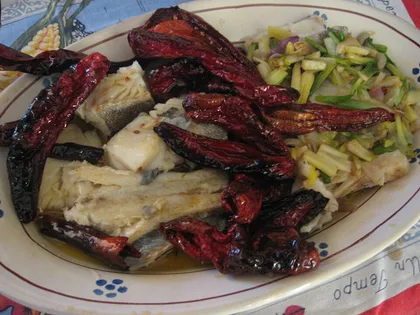 Fish and seafoodBaccalàBaccalà is North Atlantic cod preserved in salt. It is not the same thing as stoccafisso, which is the…
 Fish and seafoodColatura di Alici (Italian Anchovy Sauce)Colatura di alici is the amber liquid that drains from anchovies packed in salt in chestnut barrels at…
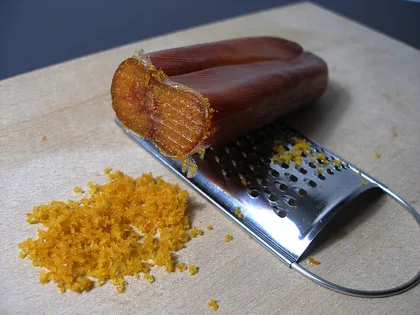 Fish and seafoodBottargaFifteen grams a head is enough, and that is not meanness: bottarga is the salted, pressed, air-dried roe sac…
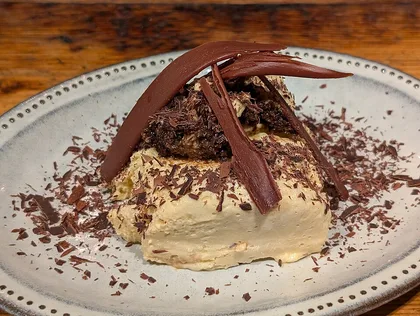 SweetsTiramisuNothing here goes near an oven. Savoiardi dipped in cold espresso, raw egg yolk whipped with mascarpone…Pasta and breadGnocchiGnocchi are small boiled dumplings, in their modern form made of potato bound with a little flour.
 WineProseccoProsecco is made from Glera grapes by the Martinotti tank method, not the traditional bottle method used for…
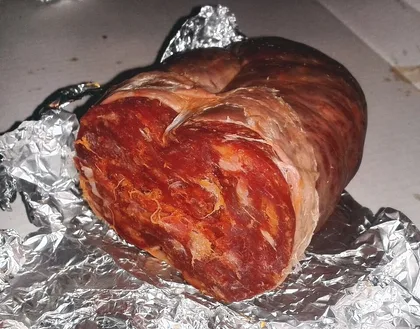 Cured meatsSoppressataSoppressata is a coarse-ground dry salami from southern Italy, pressed flat between boards while it dries…
 CheeseAsiagoOne name covers two cheeses nobody would mistake for each other at the counter.