What is Colatura di Alici (Italian Anchovy Sauce)?
Colatura is a clear, amber-to-mahogany liquid made from two ingredients: anchovies and sea salt. It is not an extract, a reduction or a flavoured condiment. It is what the fish release as the salt slowly breaks down their proteins over months in a sealed barrel.
It is intensely salty and intensely savoury, and it is sold in small bottles (50 or 100 ml) because a recipe for four people uses about two tablespoons.
The protected name is Colatura di Alici di Cetara DOP, granted by the EU in 2020 after years as a Slow Food Presidium. Before any of that, it was simply what fishing families in one Amalfi Coast village made in their cellars for themselves.
The technique is the surviving thread back to garum, the fermented fish sauce that seasoned Roman cooking. The Roman garum workshops at Pompeii are about forty kilometres away.
What does it taste like?
Salt first, then a deep, round savouriness that spreads across the whole tongue and stays there. It is closer to the flavour of a very good anchovy fillet dissolved in warm oil than to anything fishy in the unpleasant sense.
Compared with Southeast Asian fish sauce, colatura is cleaner and less pungent. Because it is made only from beheaded, gutted anchovies with no water and no sugar added, it lacks the barnyard funk and the faint sweetness that nam pla and nuoc mam have. It smells of salt and clean sea rather than of fermentation.
On pasta it does not read as fish at all. It reads as depth: the same trick anchovy plays in a Caesar dressing or a Provençal daube, except undiluted.
How to use it
Never heat it. Direct heat turns colatura bitter and burns off everything you paid for. It goes in raw, at the end, off the flame.
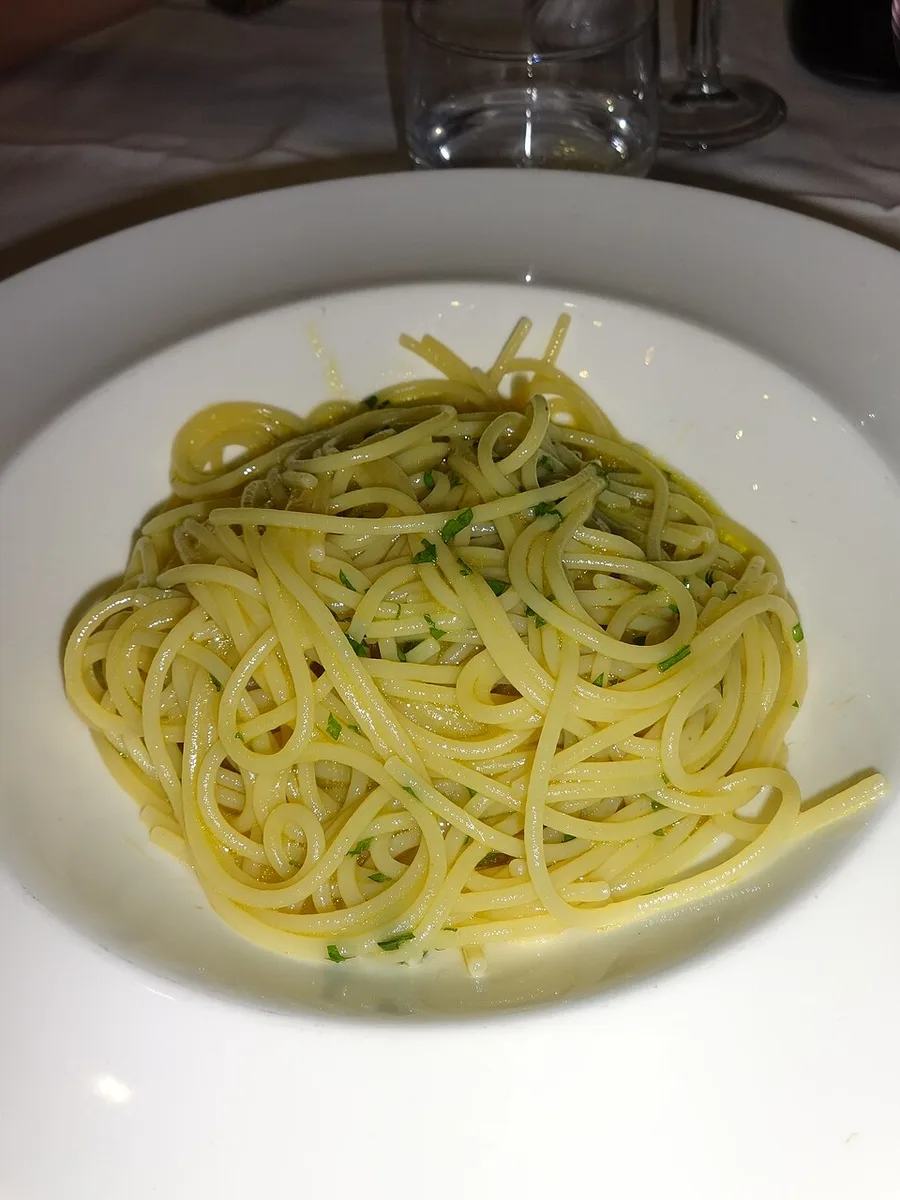
The defining dish is spaghetti alla colatura, and it is almost aggressively simple. Boil the pasta in unsalted water: the colatura brings all the salt. In a bowl, whisk together good olive oil, finely chopped garlic, chopped parsley, a little chilli and the colatura: about 30–40 g for 320 g of spaghetti, roughly one scant tablespoon per person. Drain the pasta, tip it into the bowl, loosen with a splash of pasta water and serve at once.
Do not add cheese. Pecorino or Parmigiano on this dish is the standard mistake: it buries the aroma and stacks salt on salt. If you want texture, use toasted breadcrumbs.
Beyond pasta, it is excellent over steamed or boiled greens (broccoli, chicory, escarole), over warm boiled potatoes, on buffalo mozzarella, whisked into a Caesar-style dressing, on a poached egg, or stirred into mayonnaise.
How long it keeps
Because it is a saturated brine drawn off salted fish, the bottle is stable at room temperature and does not need chilling. Keep it capped tight, upright, in a dark cupboard away from the hob, and go by the producer date, which is usually set eighteen months to three years out. Light and warmth are what change it: over months on an open shelf the amber deepens towards dark brown and the aroma loses its top notes and turns flatter and heavier. Amber or green glass protects it better than clear glass, which is why most producers use it.
Once opened the same rules hold, and the practical enemy is evaporation: a loose cap leaves salt crystals crusting round the neck and the liquid slowly concentrates. Some producers suggest the fridge after opening, where it thickens slightly, may throw a fine deposit and can turn hazy as salt comes out of solution; the haze clears again as it returns to room temperature. Freezing serves no purpose, since the salt load keeps it from setting anyway. The bottle date and the producer are the reference.
Spot the real thing
It comes in small bottles, most often 40 to 100ml, and it should be clear enough to read light through: amber to mahogany, filtered, never cloudy or thick like a paste. The label lists two things, anchovies and salt. Water, sugar, flavourings or preservatives mean something else is in the bottle. The protected wording is Colatura di Alici di Cetara DOP, and serious producers state the year the anchovies were laid down, since the liquid is drawn off in December from fish salted the previous spring.
On a shop shelf the nearest neighbour is Southeast Asian fish sauce, which is thinner, paler, made with a very different fish to salt ratio and often carries added sugar or water. Worcestershire sauce, tubed anchovy paste and bottled anchovy essence are further away still. The price gap is the plainest signal there is: colatura runs 25 to 45 euro for 100ml in Italy and $18 to $35 abroad, while a large bottle of fish sauce costs a few euro. A cheap bottle labelled colatura is worth reading the ingredients on twice.
How to pronounce Colatura di Alici (Italian Anchovy Sauce)
koh-lah-TOO-rah dee ah-LEE-chee
Colatura has the stress on the third syllable. In alici the 'ci' is soft, as in 'cheese', and the final 'i' is a clear 'ee': 'ah-LEE-chee', never 'a-LIE-sigh'. Cetara is stressed on the first syllable: 'CHEH-tah-rah', with a soft 'c'. Not 'seh-TAR-ah'.
Colatura di Alici (Italian Anchovy Sauce) compared
vsAsian fish sauce (nam pla, nuoc mam)
Same family, different discipline. Colatura uses only beheaded and gutted anchovies with salt, no water and no sugar, and yields a cleaner, less pungent liquid. Southeast Asian sauces typically use whole fish including the guts, which drives a faster, funkier fermentation. They substitute for each other, with adjustments.
| This | Asian fish sauce (nam pla, nuoc mam) | |
|---|---|---|
| Fish | Anchovy only, gutted and beheaded | Whole anchovy or mixed small fish, guts included |
| Added ingredients | Sea salt only | Salt, often water, sometimes sugar |
| Aroma | Clean, marine, restrained | Pungent, funky, more assertive |
| Sweetness | None | Often slightly sweet |
| Maturation | Months to three years in chestnut barrels | Typically 12–24 months in vats |
| Price | €150–250 per litre | €5–15 per litre |
| Swapping in | Not applicable | Use a little more, and cut any sugar elsewhere in the dish |
vsGarum (Roman)
Colatura is the closest living relative of garum, but not a reconstruction of it. Roman garum was made from whole oily fish and their entrails, fermented in the sun for weeks, and existed in several grades from luxury to industrial. Colatura is the same principle, refined into one clean product.
| This | Garum (Roman) | |
|---|---|---|
| Fish | Anchovy, cleaned | Whole fish and entrails, various species |
| Process | Salt maturation in sealed barrels, cool cellar | Sun fermentation in open vats |
| Grades | One product, plus long-aged riserve | Garum, liquamen, allec, muria: many grades |
| Still made | Yes, at Cetara | No: reconstructed by archaeologists only |
vsAnchovy paste and salted anchovy fillets
Same fish, different form and different job. Anchovy paste and fillets carry oil, texture and body; colatura carries only the liquid essence. Where a sauce needs to stay clear or a dressing needs to stay thin, colatura is the answer; where you want the fillet to melt into a soffritto, it is not.
| This | Anchovy paste and salted anchovy fillets | |
|---|---|---|
| Form | Clear liquid | Solid fillet or thick paste |
| Cooked? | Never: always added off the heat | Usually melted into warm oil |
| Other ingredients | None | Olive oil, sometimes vinegar or sugar in pastes |
| Strength | 1 tsp equals roughly 2 fillets | The reference point |
Colatura di Alici (Italian Anchovy Sauce) substitutes
- Red Boat fish sauce (or any pure anchovy-and-salt fish sauce)
The closest widely available substitute, because it shares the two-ingredient rule: anchovy and salt, no water, no sugar. Slightly more pungent than colatura but structurally the same thing.
1:1 - Thai nam pla or Vietnamese nuoc mam
Works, with adjustment. Most brands are a little sweeter and funkier, so use marginally more and drop any sugar elsewhere in the dish. Add it off the heat as you would colatura.
1.2:1 - Salted anchovy fillets melted in olive oil
The pantry answer, and the one most Italian cooks use when the bottle runs out. Warm the fillets in the oil until they dissolve, then take the pan off the heat before adding pasta.
2 fillets per teaspoon of colatura - Anchovy paste
Convenient and consistent, but many brands include vinegar or sugar, which will show. Thin it with a little warm water or pasta water before using so it disperses.
1 tsp paste per 1 tsp colatura, thinned - Worcestershire sauce, in a pinch
It genuinely contains fermented anchovy, but also tamarind, vinegar, molasses and spice. Use it only where the dish can absorb that: never in spaghetti alla colatura.
1:1, and reduce other acids - Vegetarian and vegan: kombu and soy
Simmer a strip of kombu with light soy sauce, a splash of rice vinegar and a few dried shiitake, then strain and cool. You get salt and glutamate rather than the marine note, but on pasta with garlic, chilli and parsley the dish still works.
1.5:1, added off the heat
Where to buy it
In the US, Italian specialists including Gustiamo, Eataly and Market Hall Foods carry Cetara colatura; a 100 ml bottle typically costs $22–40. In the UK, Sous Chef, Natoora and Italian delicatessens stock it at around £16–30 for 100 ml.
Read the ingredients before anything else. A real colatura lists two things: anchovies and salt. Water, sugar, vinegar, flavourings or preservatives mean you are buying an industrial fish sauce with an Italian label.
Look for Colatura di Alici di Cetara DOP if you want the guarantee: only a handful of producers are certified, among them Nettuno, Delfino Battista, Iasa and Armatore. Good uncertified colatura exists and should cost noticeably less.
The colour should be clear amber, not cloudy and not black. A 100 ml bottle will dress roughly ten dinners for four, which makes the price per plate far more reasonable than the price per bottle suggests.
Where to eat it in Italy
Cetara, a working fishing village of about two thousand people wedged between the mountain and the sea on the Amalfi Coast, and effectively nowhere else. A handful of restaurants along its marina serve spaghetti alla colatura as the house dish, and two or three historic producers sell direct.
Go in August for the Notte delle Lampare, when the boats go out with their lamps lit as they did for night anchovy fishing and the eating happens along the harbour. The village also holds a summer festival dedicated to tuna, the other half of its economy.
Everything else on the coast is within a short drive: the ceramics of Vietri sul Mare, the Roman villa at Minori, Amalfi and Ravello. Cetara is the least touristed of its neighbours, largely because it is still a port that works.
Further reading
Frequently asked questions
What is colatura di alici?
An amber liquid drained from anchovies layered with sea salt in chestnut barrels and matured for months, made in the village of Cetara on the Amalfi Coast. Two ingredients, no water or sugar. It is the closest surviving relative of Roman garum and has been DOP-protected since 2020.
How do you pronounce colatura di alici?
koh-lah-TOO-rah dee ah-LEE-chee. The 'ci' in alici is soft, like 'cheese'. Cetara is CHEH-tah-rah, stressed on the first syllable.
Is colatura the same as Asian fish sauce?
They are relatives, not twins. Colatura uses only cleaned anchovies and salt, so it is cleaner, less pungent and not sweet; most Asian fish sauces use whole fish including the guts and sometimes add sugar. You can substitute one for the other, but expect a funkier, sweeter result from nam pla.
Can you cook with colatura di alici?
Not with heat. Cooking makes it bitter and destroys the aroma, so it is always added raw, off the flame, at the very end. In pasta, that means whisking it into oil and garlic in a bowl and tossing the drained pasta through it.
How much colatura do you use per person?
About one scant tablespoon, roughly 10 g, for a plate of pasta, and cook the pasta in unsalted water, because the colatura salts the dish on its own. Start with less than you think and adjust at the end; it cannot be taken out.
Sources
Where to check what you just read.
- 1
L'atto del 14 ottobre 2020 che ha protetto «Colatura di alici di Cetara» come DOP nella classe 1.7: la tutela è recente, quindi molte bottiglie in circolazione non sono certificate.
- 2
Il PDF del disciplinare vigente, dove si verificano l'area di pesca entro le 12 miglia, i tempi di maturazione sotto sale e i parametri chimici del liquido.
Related foods
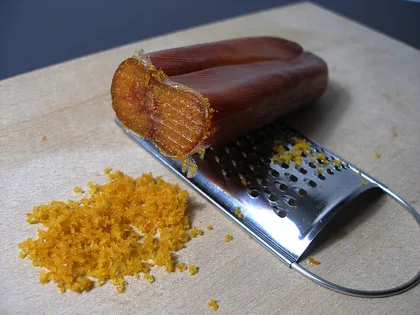 Fish and seafoodBottargaFifteen grams a head is enough, and that is not meanness: bottarga is the salted, pressed, air-dried roe sac…
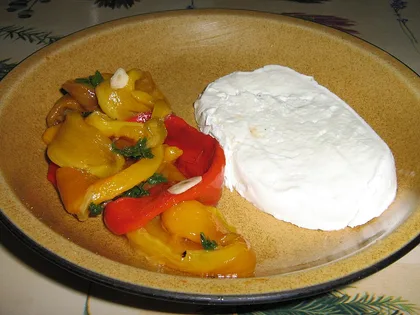 CheeseBuffalo MozzarellaMozzarella di Bufala Campana DOP is made from the whole raw milk of Italian Mediterranean water buffalo…Fish and seafoodCantabrian AnchoviesCantabrian anchovies are caught in the Bay of Biscay in spring, cured under salt for six to eighteen months…Fish and seafoodMenaica AnchoviesMenaica anchovies are ordinary Mediterranean anchovies caught in an extraordinary way: in a wide-mesh drift…
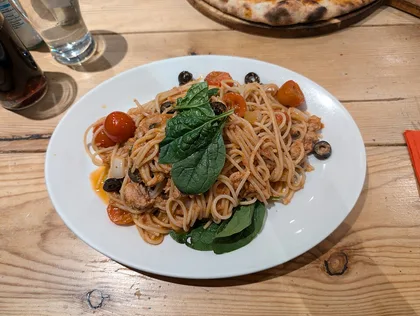 Pasta and breadSpaghettiA solid round strand of durum semolina and water, 1.7 to 2.0mm across. It looks like the most neutral pasta…
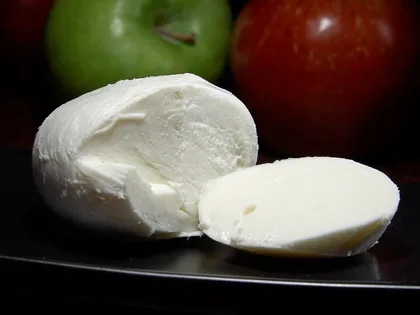 CheeseMozzarellaThe name is a verb before it is a cheese: mozzare means to lop off, which is what the cheesemaker does by…
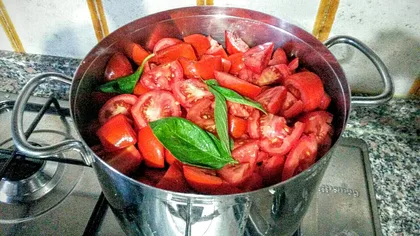 Vegetables and fruitSan Marzano TomatoesSan Marzano is a long, thin-skinned plum tomato grown in the volcanic plain between Naples and Salerno, and…
 SweetsZeppoleZeppole are Naples' feast-day pastry for Saint Joseph on 19 March: a piped choux ring, fried or baked, filled…