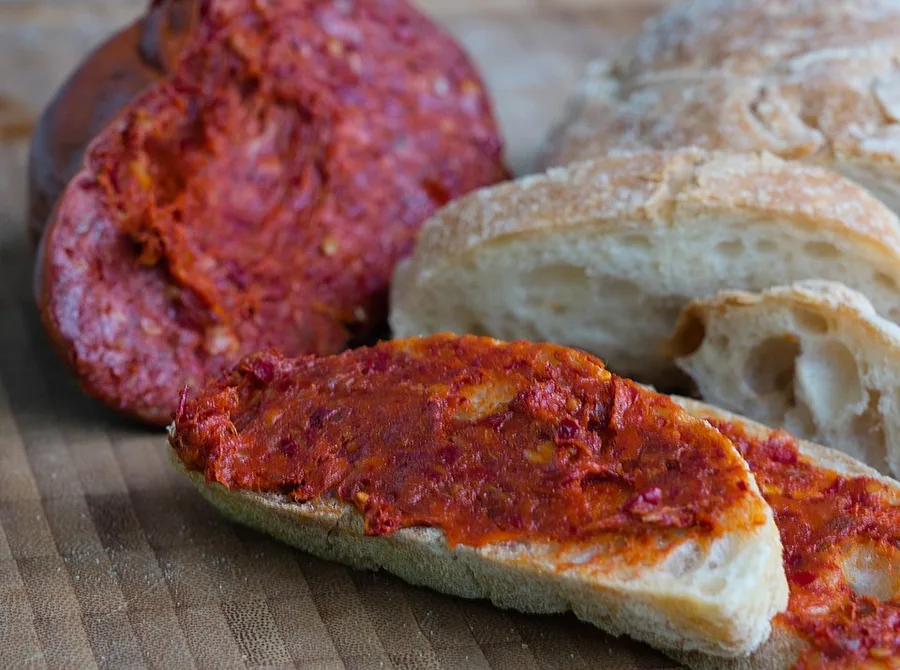
What is 'Nduja?
'Nduja is a cured raw pork sausage from Calabria, the toe of Italy. It is made from fatty cuts (belly, jowl, back fat, trimmings) ground very fine and worked together with dried, milled Calabrian chilli and salt, then stuffed into a natural casing, lightly smoked and aged for three to six months.
The chilli content is what makes it unlike anything else in the Italian salumi cabinet: between a quarter and 40% of the mix. That is not seasoning, it is a structural ingredient. The capsaicin acts as a preservative, which is the only reason a paste this fatty can be cured at all.
Because of the fat and the fine grind, it does not slice. At room temperature it has the consistency of a firm pâté and spreads with a knife. Warm it and it dissolves completely into a red, oily, extremely spicy liquid, which is how most restaurant kitchens use it.
It carries Italy's PAT designation (a traditional-product register) but no DOP or IGP, so the name is legally open. Quality varies wildly as a result.
What does it taste like?
Fire first, then pork. The heat arrives immediately and builds for several seconds: clean and bright rather than the slow burn of a habanero, and it fades faster than you expect. Behind it is deep, sweet, almost funky cured pork fat, plus a distinct smokiness from the brief wood smoking.
The chilli itself is a big part of the flavour, not just the heat. Calabrian peperoncino is fruity and slightly sweet when dried, closer to a good ancho than to cayenne, so 'nduja tastes of red pepper as much as of capsaicin.
On the Scoville scale a traditional Spilinga 'nduja lands somewhere in the jalapeño-to-serrano range overall, but because the fat carries the capsaicin it coats your mouth and reads hotter than the number suggests. Commercial versions sold in supermarkets are usually toned down considerably.
How to use it
The simplest use is still the best: spread it thickly on warm bread or grilled bruschetta and let the heat of the toast soften it.
In cooking, treat it as a concentrated condiment rather than as a meat. A tablespoon melted in a pan over low heat with a splash of oil is enough to build a pasta sauce for two: the classic Calabrian combination is 'nduja and Tropea red onion, with or without tomato. Keep the heat low. Fry it hard and the chilli scorches and turns bitter.
It goes into scrambled eggs, stirred through braised greens, whisked into a vinaigrette, dropped into a bean or lentil soup, and folded into a meat ragù for depth. On pizza it goes on in small dabs in the last seconds of baking or immediately after the pizza comes out.
The pairing that has taken over restaurant menus in the last decade is 'nduja with fresh dairy (burrata, stracciatella, ricotta) where the cold sweet cream cuts the heat. It is not traditional and it works extremely well.
How long it keeps
Whole in its casing and unopened, it sits in the fridge or a cool larder and carries a long date from the producer, since salting, fermentation and light smoking have already taken most of the free water out. Once you cut into it, the exposed face is what changes: within a few days it dries, darkens towards brown red and forms a firmer crust, so wrap the cut end in baking paper and then foil rather than pressing cling film against the meat. An opened jar goes in the fridge, always with a clean spoon; level the surface and let the released fat settle back over it, because air on the surface is what dries and dulls it.
Over weeks the fat oxidises and the smell turns sharper and less sweet, and light fades the red towards a dull rust, which is why jars keep better at the back of a shelf. It freezes well in portions, wrapped tightly; the texture stays spreadable after thawing because the fat content is so high. The producer date on the casing or lid is the reference.
Spot the real thing
The ingredient list is the fastest check: pork, Calabrian chilli, salt. Paprika, tomato, added oil, colouring or starch point to something built to look the part. The colour is brick to orange red, deep but never fluorescent. In a casing it feels firm from the fridge and turns spreadable within twenty minutes on the counter; in a jar the surface is smooth and a layer of clear rendered fat on top is normal. The smell is sweet roasted pepper with smoke behind it, not raw heat.
Abroad it is most often mixed up with sobrasada, the Mallorcan spreadable sausage, which is paprika based, paler orange and far milder, and with soft chorizo sold in the same chiller. Chilli pastes and harissa sit nearby and are not the same thing at all. Labels reading 'nduja flavoured or 'nduja style are usually sauces with a small percentage of it. Spilinga, in the province of Vibo Valentia, is the reference town and often appears on the label. Expect roughly $12 to $20 or £6 to £10 for 200g.
How to pronounce 'Nduja
en-DOO-yah
The leading apostrophe stands for a dropped vowel, so you begin with a short 'n' sound almost like 'un' or 'en', not a silent letter, and not a hard 'nuh'. Crucially, the 'j' is a 'y' sound, as it is throughout southern Italian dialect: 'DOO-yah', never 'DOO-jah' with an English j. Stress falls on the middle syllable. The three errors you will hear constantly are 'en-DOO-jah' (English j), 'in-DOO-ee-yah' (too many syllables), and 'NUH-doo-ja'. Calabrians themselves often compress it to something close to 'NDOO-ya', with the n barely voiced.
'Nduja compared
vsSpanish chorizo
The comparison everyone reaches for, and it is roughly right in spirit and wrong in detail. Both are red, both are pork, both get their colour from dried peppers. But chorizo's red comes from pimentón, which is smoky and barely hot, and chorizo is firm enough to slice. 'Nduja's red comes from actual chilli in quantity, and it is a spread. Swap one for the other and you change both the heat and the texture of the dish.
| This | Spanish chorizo | |
|---|---|---|
| Texture | Soft, spreadable paste | Firm, sliceable sausage |
| Red comes from | Dried Calabrian chilli, 25-40% | Pimentón (smoked paprika), 3-6% |
| Heat | Genuinely hot | Mild to warm; picante versions mild-medium |
| Fat content | Very high: 50-70% fatty cuts | Moderate: 25-35% |
| In a pan | Melts completely into the oil | Renders but holds its shape |
| Eaten raw | Yes, spread on bread | Cured versions yes; fresh must be cooked |
| Origin | Spilinga, Calabria | Spain and Portugal, region-wide |
| Price (US) | $18-30 per lb | $12-20 per lb |
vsSobrasada
The closest relative 'nduja has anywhere. Sobrasada from Mallorca is also a spreadable cured pork paste coloured red by dried peppers, and it behaves almost identically in the pan. The difference is heat and sweetness: sobrasada uses sweet pimentón and is often finished with honey, so it is rich and mellow where 'nduja is aggressive. If a recipe calls for 'nduja and you want the texture without the fire, sobrasada is the answer.
| This | Sobrasada | |
|---|---|---|
| Origin | Calabria, Italy | Mallorca, Balearic Islands |
| Pepper used | Hot and sweet Calabrian chilli | Sweet pimentón, occasionally hot |
| Heat level | Hot | Mild, sometimes sweet |
| Texture | Spreadable, slightly grainy | Spreadable, smoother and softer |
| Smoked | Lightly, olive or beech wood | Not traditionally |
| Classic pairing | Burrata, Tropea onion, bread | Honey, bread, Mahón cheese |
| Curing time | 3-6 months | 1-6 months by size |
vsCalabrian chilli paste
A genuine point of confusion in American shops, where both sit near each other in a jar and both are red and Calabrian. Chilli paste (bomba calabrese, crushed Calabrian chillies in oil) contains no meat at all. It brings heat and pepper flavour but none of the cured-pork depth or the fat that makes 'nduja emulsify into a sauce. If a recipe calls for 'nduja and you use chilli paste, add fat and something savoury to compensate.
| This | Calabrian chilli paste | |
|---|---|---|
| Contains meat | Yes: cured pork, the majority of it | No |
| Fat | Rendered pork fat, high | Olive oil, moderate |
| Flavour | Pork, smoke, chilli | Chilli, vinegar, oil |
| Vegetarian | No | Yes |
| In a sauce | Emulsifies and enriches | Adds heat only |
| Shelf life once open | 1-3 months, refrigerated | 6+ months, refrigerated |
'Nduja substitutes
- Sobrasada
The closest match in texture and behaviour. Much milder, so add chilli flakes or a spoon of Calabrian chilli paste to bring the heat back. Widely available in Spanish delis and increasingly in US and UK supermarkets.
1:1, plus 1 tsp chilli paste per 2 tbsp sobrasada - Soft cooking chorizo plus Calabrian chilli paste
Take fresh (uncured) chorizo out of its casing, render it hard so it breaks down, then stir in chilli paste. You will not get the fine paste texture, but the flavour lands close and it is the easiest fix in a supermarket.
3 parts chorizo to 1 part chilli paste - Calabrian chilli paste plus fatty salami
Finely mince a soft salami (a mild soppressata or a Neapolitan salame) and mash it with chilli paste and a spoon of olive oil. Works well melted into a pasta sauce, less well spread on toast.
2 parts salami to 1 part chilli paste - Harissa plus lardo or rendered pork fat
A workable improvisation if you have a North African pantry rather than an Italian one. Harissa brings the heat and the pepper fruit; the fat brings the body and mouthfeel that harissa alone lacks. Add a pinch of smoked paprika for the missing smoke.
1 part harissa to 1 part fat - Vegetarian: roasted red pepper and sun-dried tomato paste
Blitz roasted red peppers, sun-dried tomatoes, smoked paprika, chilli flakes and good olive oil into a coarse paste. No cured-pork depth, but a spoon of miso or a few drops of soy will give you the savoury weight, and the colour and consistency are convincing.
1:1 by volume - Halal: sujuk or merguez blitzed with chilli
Beef sujuk or lamb merguez, removed from the casing and processed with Calabrian chilli paste and a little olive oil, gives a spreadable spiced meat paste that works the same way in a pan. Merguez already carries harissa, so taste before adding more heat.
3 parts sausage to 1 part chilli paste
Where to buy it
In the US, the standout domestic producer is 'Nduja Artisans Salumeria in Chicago, whose version is closer to the Calabrian original than most imports and is stocked by good cheese shops nationwide. Tempesta Artisan Salumi, Olympia Provisions and Creminelli also make one. For imports, Eataly, Gustiamo, Murray's Cheese and Formaggio Kitchen carry Calabrian producers. Expect $18 to $30 per pound, or $8 to $14 for a 7oz jar.
In the UK, 'nduja is unusually well distributed: Ocado, Waitrose, Sainsbury's and M&S all carry it, and the UK searches for it more than the US does in relative terms. For the real thing, Natoora, The Ham & Cheese Company, Vallebona and Delicatezza import from Calabria. Prices run £4 to £8 for a 200g jar, £25 to £40 per kilo for whole casings.
Buy the whole casing rather than the jar where you can. It costs less per kilo, keeps far longer because the surface stays protected, and it has not been pasteurised, which jarred versions usually are. Read the ingredients: pork, chilli, salt. Anything listing paprika, starch, beef or 'flavourings' has been stretched.
Where to eat it in Italy
Spilinga, a village of about a thousand people in the province of Vibo Valentia, is the origin and still the best place to eat it. The Sagra della 'Nduja takes over the town every 8 August; the rest of the year the historic producers sell directly from their workshops.
The whole Monte Poro plateau (Ricadi, Joppolo, Zungri, Rombiolo) has serious production at producer prices. Tropea, twenty minutes away on the coast, is the practical base: it has the hotels, the beaches, the red onions and a 'nduja in every deli window.
Vibo Valentia and Pizzo have good salumerie in their old centres. Further north, Cosenza and the Sila highlands run on a different salumi tradition built around soppressata and capocollo, where 'nduja is present but not native.
Outside Italy, London has arguably the deepest 'nduja habit of any city (it turns up on pizza, on toast and in pasta across the city) and New York's Italian restaurants have adopted it wholesale.
Further reading
Frequently asked questions
What is 'nduja?
A spreadable cured pork sausage from Calabria made with fatty pork cuts and a very large proportion of dried Calabrian chilli, up to 40% of the mix. It spreads like a soft pâté and melts into a sauce when heated.
How do you pronounce 'nduja?
en-DOO-yah. The 'j' is pronounced as a 'y', never as an English j, and the apostrophe stands for a dropped vowel so the word starts with a short n sound.
How spicy is 'nduja?
Properly hot, though not extreme: roughly jalapeño-to-serrano territory. Because the capsaicin is carried in pork fat it coats the mouth and reads hotter than the number suggests. Supermarket versions are usually toned down.
Is 'nduja the same as chorizo?
No. Chorizo is firm and sliceable and gets its colour from smoked paprika, which is barely hot. 'Nduja is a soft spread and gets its colour from actual chilli in large quantity. The closest relative is Mallorcan sobrasada, not chorizo.
Do you eat 'nduja raw or cooked?
Both. It is a cured product, so it is safe to spread straight onto bread. Heated gently it dissolves into oil and becomes a sauce base. Just do not fry it over high heat: the chilli burns and turns bitter.
Related foods
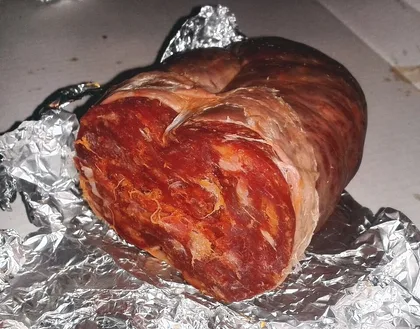 Cured meatsSoppressataSoppressata is a coarse-ground dry salami from southern Italy, pressed flat between boards while it dries…
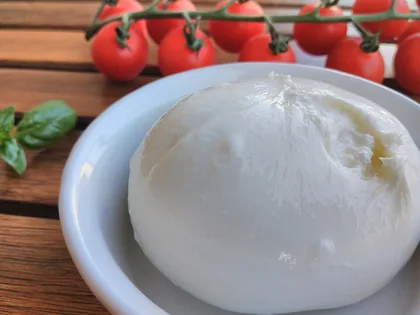 CheeseBurrataIt began as a way of using offcuts: leftover shreds of pasta filata, drowned in cream and sealed inside a…
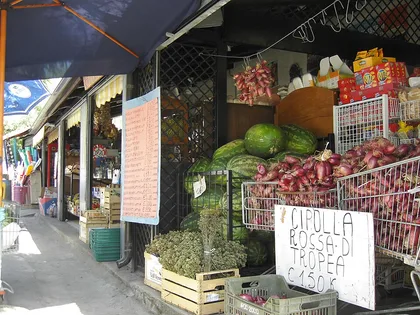 Vegetables and fruitTropea Red OnionTropea red onions are grown on a narrow strip of sand along Calabria's Tyrrhenian coast, and they are sweet…
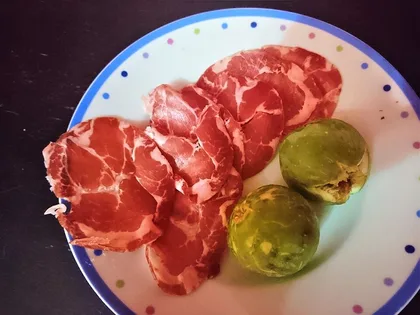 Cured meatsCapocolloCapocollo is the pork neck muscle, salted whole and aged in casing.
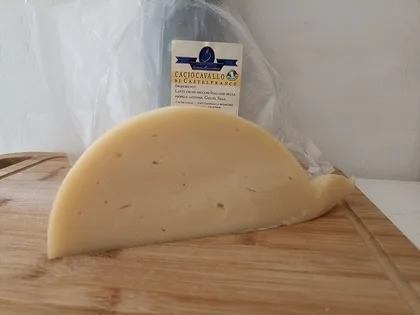 CheeseCaciocavalloCaciocavallo is a stretched-curd cow's milk cheese from southern Italy, aged in a distinctive gourd shape…Vegetables and fruitBergamotBergamot is the most geographically concentrated citrus on earth: around 90 per cent of world production…
 Fish and seafoodStoccafissoStoccafisso is cod air-dried on wooden racks in the Norwegian Lofoten Islands, with no salt at all, until it…
 SweetsTorrone di BagnaraThe only Italian nougat with a European denomination: IGP since 2014.