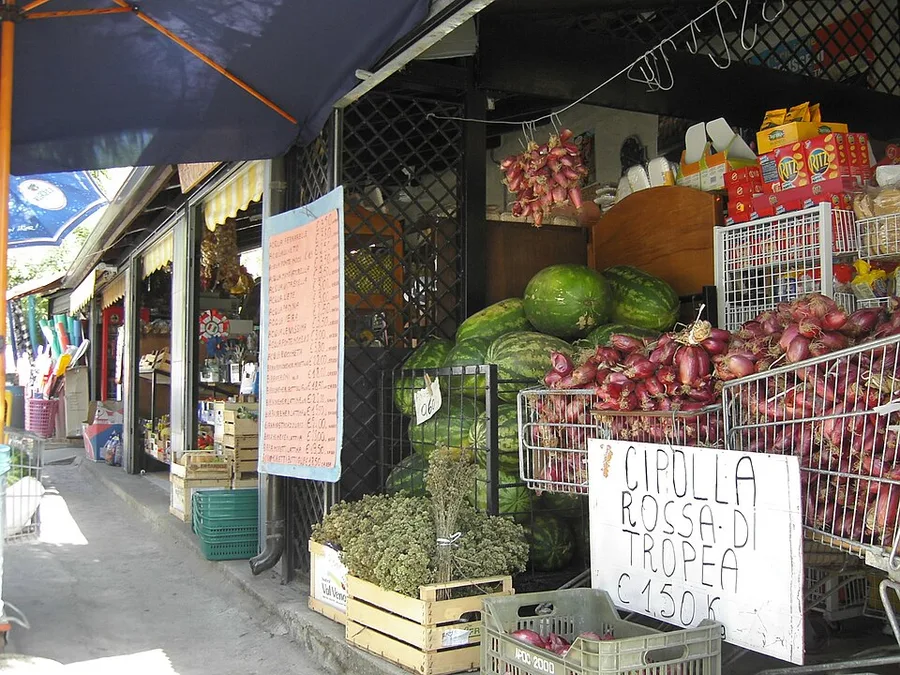
What is Tropea Red Onion?
Cipolla Rossa di Tropea Calabria IGP, protected by the EU since 2008, is not one variety but a family of local ecotypes, sold in three distinct forms depending on when they are pulled.
The cipollotto is the early harvest, February to May: a small bulb with the green stem still attached, eaten whole like a spring onion. The fresh onion, lifted between April and July, is a full purple bulb for immediate use. The storage onion, from July onwards, is sun-dried and hand-plaited into the braids you see hanging along the coast road, and keeps for months.
What makes it famous is sweetness, but that is mostly the absence of pungency. The sulphur compounds that make onions burn and make you cry are much lower here than in a standard onion, while the sugar content is higher. The result is an onion you can eat raw in slices without it dominating the dish or staying on your breath all evening.
Shape depends on the type: rounded and slightly flattened in the early harvests, oval and elongated in the storage onion. The outer skins are glossy red-violet; the flesh is white with faint pink rings.
What does it taste like?
Raw, it is crisp and juicy with an immediate clean sweetness, closer to a very good apple than to an onion, and a light peppery lift at the end that fades rather than burns. It does not linger on the palate or the breath the way a standard onion does.
Cooked, the high sugar takes over. Roast one whole with olive oil and it collapses into something almost jammy in forty minutes, deeply sweet with a savoury base note. In a pan it caramelises faster than a yellow onion and browns unevenly if you rush it.
Compared side by side with a supermarket red onion the difference is not subtle: the standard one is sharp, sulphurous and slightly bitter at the core, and it needs cooking to be pleasant. The Tropea does not.
If even the Tropea tastes too assertive to you raw, ten minutes in cold water with a splash of vinegar removes the edge completely.
How to use it
The defining use is raw. Sliced paper-thin into a tomato salad with oregano and olive oil, or in the Calabrian winter combination of sliced oranges, black olives, red onion and oil, a plate of three ingredients that only works with a sweet onion.
Cooked, it plays to its sugar. Roasted whole with olive oil and oregano it turns soft and almost jam-like in forty minutes. In a pan it becomes the base for pasta with 'nduja, or for cipollata, the Calabrian stew of onions, tomato and chilli.
Onion marmalade, cooked down with sugar, red wine and a little vinegar, is the standard preserved form and is genuinely good with aged sheep's cheese and cold meats.
It outperforms white onion in a frittata because it does not bully the egg, and on pizza it goes on raw after the bake rather than before. If you find any raw onion too strong, ten minutes in cold water with vinegar solves it completely.
How long it keeps
The keeping type, the one sold in braids, hangs in a dry, dark, ventilated room and holds three to six months there. The braid is not decoration: it keeps the bulbs apart and lets air move around each one. Two things end that quickly. Sealed plastic bags trap the moisture the bulb is slowly giving off, and a bag of potatoes nearby adds both humidity and ethylene, which pushes the onion into sprouting within about a week. The spring type, pulled young with the green stem still on, does not store at all: two or three weeks in the vegetable drawer of the fridge.
What a stored bulb does over months is lose water. The outer tunics go papery and loose, the flesh tightens and the sugars concentrate, and eventually a green shoot climbs up through the centre and draws on the bulb, which softens around it. A cut half goes into an airtight box for three or four days, and it will scent everything sharing the shelf. Sliced onion freezes for cooked uses only, since thawing leaves it limp: the crunch of a raw Tropea does not survive it.
Spot the real thing
Look for the mark first. The IGP travels with the Consortium logo on the net, on the band around a braid or on the pack, alongside the yellow and blue EU symbol; without it you have a red onion, which is a different vegetable at a third of the price. Then the shape, because the keeping type is oval and drawn out at both ends rather than spherical, so a round, regular ball is almost certainly another variety. Cut one open and the flesh should be white with faintly pink rings; a standard red onion is evenly coloured right through to the centre.
The last check is a raw slice: crisp, sweet, with a light heat that closes and fades rather than burning and lingering. Seed of the variety, sold in English as Red Torpedo or Rossa Lunga di Tropea, is grown in Britain, the United States and Australia, and those onions have the shape and the sweetness but not the IGP. Note also that far more Tropea onion is sold than is grown: braids at tourist stalls are often ordinary red onions plaited on the spot.
How to pronounce Tropea Red Onion
chee-POH-lah ROH-sah dee TROH-peh-ah
The 'ci' in cipolla is soft, like the 'chi' in 'chip', never 'sip-OH-la' or 'kip-OH-la'. Tropea is three syllables with the stress on the middle one, and the final 'a' is pronounced: TROH-peh-ah, not 'tro-PAY'. In English shops it is usually just called a Tropea onion.
Tropea Red Onion compared
vsStandard red onion
They look related in a photograph and behave completely differently on a plate. A standard red onion is bred for storage and yield, is high in the sulphur compounds that make onions sharp, and really wants cooking. A Tropea is low-pungency, high-sugar, and is at its best raw. It also costs two to three times as much, which is why so much ordinary red onion is sold under the Tropea name.
| This | Standard red onion | |
|---|---|---|
| Shape | Oval, elongated (storage type) | Round and regular |
| Flesh | White with faint pink rings | Deep red rings through to the centre |
| Pungency | Low: minimal eye-watering | High |
| Sugar | High, caramelises fast | Moderate |
| Best raw? | Yes, sliced thin, unsoaked | Only after soaking |
| Price | 4-7 EUR per kg in Italy | 1.20-2 EUR per kg |
vsVidalia onion
The closest American equivalent in behaviour, and the best substitute if you cannot get Tropea. Vidalias from Georgia are also grown on low-sulphur sandy soil and are also famous for being sweet and mild. The differences are colour, shape and shelf life: Vidalias are pale yellow, squat and notoriously poor keepers, while the Tropea storage type braids up and lasts months.
| This | Vidalia onion | |
|---|---|---|
| Colour | Red-violet skin, white flesh | Pale straw skin, white flesh |
| Shape | Oval, elongated | Squat and flattened |
| Sweetness | High | High, sometimes higher |
| Keeping | 3-6 months as a braid | A few weeks; often refrigerated |
| Raw in salad | Excellent, and adds colour | Excellent, but visually plain |
| Season | February to September, staggered | April to September |
vsShallot
Both are the go-to alliums when you want something civilised rather than aggressive, but they are not interchangeable. Shallots are more concentrated, more garlicky and dissolve into a sauce; Tropea onions are watery, crisp and stay visible.
| This | Shallot | |
|---|---|---|
| Flavour | Sweet, clean, mildly peppery | Sharper, faintly garlicky, more complex |
| Texture raw | Crisp and juicy | Firm and dense |
| In sauces | Stays as visible pieces | Melts into the base |
| Best use | Salads, roasting whole, jams | Vinaigrettes, pan sauces, braises |
| Substitution | Use 1 Tropea for 2-3 shallots | Use 3 shallots for 1 Tropea |
Tropea Red Onion substitutes
- Vidalia or Walla Walla sweet onion
The best available match in the US: same low pungency, same high sugar, same ability to be eaten raw. You lose the purple colour, which matters in a salad but nowhere else.
1:1 - Red torpedo onion (rossa lunga di Firenze)
Long, tapered, purple-skinned Italian onion sold in the US as torpedo or Italian red. Visually almost identical to a Tropea and noticeably sweeter than a standard red, though a little sharper than the real thing.
1:1 - Standard red onion, soaked
Slice thin, soak fifteen minutes in ice water with a spoonful of vinegar, drain and dry. This strips most of the harshness and gets you surprisingly close for salads. Do not bother for cooked dishes.
1:1 after soaking - Spring onions or scallions
Stands in for the cipollotto rather than the bulb. Good raw in salads and excellent grilled whole, but too watery to caramelise.
4-5 spring onions per medium Tropea - Shallots
For cooked dishes only, where you want sweetness without volume. More concentrated, so use fewer, and expect them to disappear into the sauce rather than hold their shape.
3 shallots per medium Tropea
Where to buy it
Outside Italy this is a specialist item. In the US, Italian importers and online grocers such as Eataly and Gustiamo list Tropea onions and Tropea onion products seasonally, usually from late spring; expect 6 to 12 dollars per pound for fresh bulbs, and considerably more for a shipped braid. Onion marmalade and dried braids are easier to find year-round than the fresh onion.
In the UK, Italian delis and specialist greengrocers stock them in season at roughly 6 to 12 pounds per kilo, and Natoora has carried them through restaurant supply.
Check for the consortium mark and the yellow-and-blue IGP symbol on the net bag, band or box. Then check the bulb itself: oval and elongated rather than round, and white flesh with faint pink rings rather than solid red. If a braid is being sold at a motorway stop or a tourist market with no labelling, assume it is ordinary red onion plaited on site.
If you cannot find them fresh, a jar of Tropea onion marmalade travels well and is the easiest way to taste what the fuss is about.
Where to eat it in Italy
Tropea itself, a town on a cliff above the sea with the church of Santa Maria dell'Isola below it, sells braids and marmalades in every shop in the old centre, and the gelaterie serve red onion gelato, which is far less strange than it sounds.
Ricadi, a few kilometres away on the Capo Vaticano headland, holds the summer festival dedicated to the onion, and it is the best place to see the product in the hands of the people who grow it.
All along the coast between Nicotera and Amantea the trattorie use it everywhere: in the orange salad, in pasta with 'nduja, in frittata. May to July is the ideal window, when the fresh crop and the first storage onions overlap.
The best buying is done directly from the growers on the road towards Capo Vaticano, where braids are sold in front of the fields they came out of.
Further reading
Frequently asked questions
Why are Tropea onions sweet?
They contain fewer of the sulphur compounds that make onions sharp and make your eyes water, and more sugar than a standard onion. The IGP rules attribute this to the sandy, free-draining coastal soils, the mild maritime climate and the strong light on Calabria's Tyrrhenian coast.
Can you eat Tropea onions raw?
Yes: that is the point of them. Sliced thin they go straight into salads without soaking. The classic Calabrian plate is sliced oranges, black olives, raw Tropea onion and olive oil.
What is a good substitute for Tropea onions?
A Vidalia or Walla Walla sweet onion is the closest widely available match, or an Italian red torpedo onion if you also want the purple colour. At a pinch, slice a standard red onion thin and soak it in iced water with a splash of vinegar for fifteen minutes.
How long do Tropea onions keep?
The plaited storage type keeps three to six months hanging in a dry, dark, ventilated place: the braid exists to keep the bulbs separated and aired. Fresh spring-harvested onions last only two or three weeks and belong in the fridge.
How do you pronounce cipolla di Tropea?
chee-POH-lah dee TROH-peh-ah. The 'ci' is soft as in 'chip', and Tropea has three syllables with the stress in the middle and the final 'a' clearly sounded.
Sources
Where to check what you just read.
- 1
L'atto del 2008 che registra «Cipolla Rossa di Tropea Calabria»: il nome tutelato è quello lungo, non «cipolla di Tropea» da sola.
- 2
Le tre tipologie ammesse (cipollotto, da consumo fresco, da serbo) e l'elenco puntuale dei comuni di Cosenza, Catanzaro e Vibo Valentia che rientrano nella zona.
- 3Consortium · interested partyConsorzio di tutela
Aziende associate fra produttori, confezionatori e trasformatori, e l'area download con statuto e documenti di controllo.
Related foods
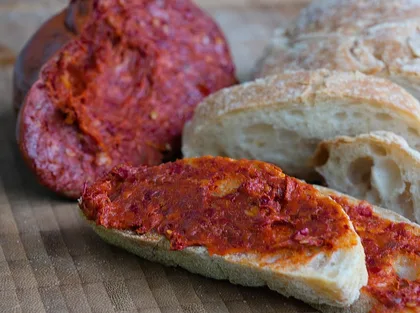 Cured meats'Nduja'Nduja is a soft, spreadable Calabrian pork salume that is up to 40% chilli.
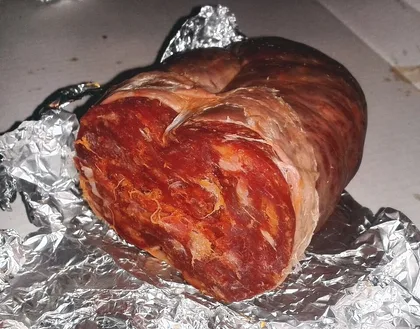 Cured meatsSoppressataSoppressata is a coarse-ground dry salami from southern Italy, pressed flat between boards while it dries…
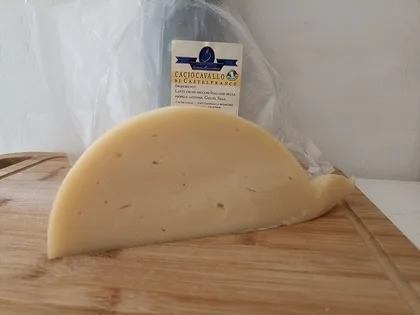 CheeseCaciocavalloCaciocavallo is a stretched-curd cow's milk cheese from southern Italy, aged in a distinctive gourd shape…Vegetables and fruitBergamotBergamot is the most geographically concentrated citrus on earth: around 90 per cent of world production…Vegetables and fruitCitron of Santa Maria del CedroYou do not eat the flesh of a citron: there is barely any and it is fiercely sour.Vegetables and fruitSila PotatoSila potatoes are grown above 1,000 metres on the granite plateau in the middle of Calabria.
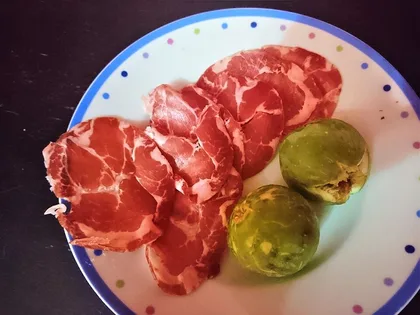 Cured meatsCapocolloCapocollo is the pork neck muscle, salted whole and aged in casing.
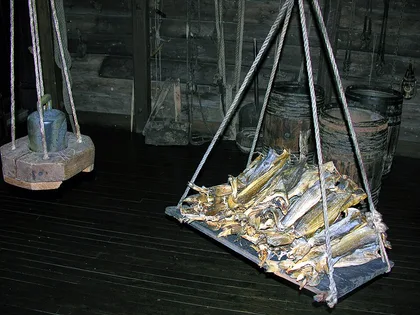 Fish and seafoodStoccafissoStoccafisso is cod air-dried on wooden racks in the Norwegian Lofoten Islands, with no salt at all, until it…