What is Sila Potato?
Patata della Sila is a protected geographical indication granted by the European Union in 2011. It covers potatoes grown on the Sila plateau across the provinces of Cosenza, Catanzaro and Crotone, at altitudes between roughly 1,000 and 1,500 metres.
It is not a variety but a place. The specification permits several yellow and white-fleshed cultivars (Agria and Désirée above all, then Nicola, Marabel, Kennebec) and what defines the product is where they grow, not the name on the sack.
The first thing you notice is the skin: thick, matt, rough and firmly attached, nothing like the flimsy jacket of a lowland potato. Underneath, the flesh is dense and yellow, and the dry matter runs around 21 to 22 per cent against 17 to 18 for an irrigated lowland crop.
Those numbers turn into kitchen behaviour. A potato with less water does not disintegrate when boiled, does not weep in the pan, takes up less oil when fried and survives a long roast intact. The thick skin, which the plant grows as protection against cold, is why the crop keeps in a cellar until spring.
What does it taste like?
Properly potato-flavoured, which is not a given any more: nutty, faintly sweet, with a chestnut edge that comes through most clearly when they are baked in their skins or cooked slowly in olive oil.
Texture is the real argument. Boiled, the pieces stay whole with a waxy-to-floury middle that holds a dressing. Roasted, the outside goes glassy and crisp while the inside turns creamy. Fried, they brown faster and stay crisp longer than a watery potato, because there is less moisture to drive off before browning starts.
The skin is worth eating. Thick and slightly earthy, it crisps hard in the oven and carries most of the mineral flavour of the granite soil.
How to use it
The dish to make first is the local one: patate 'mpacchiuse. Slice the potatoes thin, put them in a wide pan with plenty of olive oil, and cook them over low heat for about forty minutes, disturbing them as little as possible, until they stick together into a single golden cake: crisp outside, creamy inside. The dialect word means exactly that: stuck together.
For frying, the low water content does the work. Cut thick, dry the pieces on a cloth, and fry once at 150 C to cook through, then again at 180 C to colour. They brown faster and stay crisp longer than a wet potato.
Roasted, cut into wedges with the skin on, olive oil, rosemary and coarse salt, 200 C for forty minutes. There is no need to parboil and rough up the edges the way you would with a floury lowland potato.
Boiled, they hold their shape, which makes them right for potato salads and for any dish where the pieces must stay whole. For gnocchi and purée the low moisture is an advantage: you need less flour, and the result stays light.
Local pairings are direct: melted 'nduja over roast potatoes, soppressata, porcini from the Sila woods, Tropea onions, melted caciocavallo, eggs. Less obvious and very good: 'mpacchiuse with crumbled dried crusco peppers scattered over at the last second.
How long it keeps
Potatoes want dark, cool and airy: six to ten degrees, a paper or hessian sack rather than a plastic bag, and a cellar or a low cupboard rather than a worktop. Condensation inside plastic is what makes the skins go slimy. The fridge is the wrong place for a different reason, since below about four degrees the starch converts to sugar, the potatoes taste sweet and they brown much faster and darker in hot oil. Keep them away from onions, which speed up sprouting when the two share a box.
Over weeks in the right conditions they slowly lose water: the skins wrinkle, the tubers give under a thumb, and the flesh turns denser. Warmth breaks dormancy and shoots push out of the eyes, first as white points and then as long pale sprouts. Light does something separate again, turning the skin and the layer just beneath it green as chlorophyll forms, which is why the sack is kept closed. Anything you want a judgement on belongs to the grower or the shop. Raw potato does not freeze, since ice crystals collapse the texture; blanched chips do.
Spot the real thing
The bag is where the identification lives: Patata della Sila IGP with the consortium mark, a named variety such as Agria, Bianca, Desiree or Marabel, and the Calabrian highland origin. The tubers are regular and oval with a thin, tight skin, still carrying a little of the grey granitic soil they grew in, and the flesh runs from pale cream to a definite gold. They are grown above a thousand metres and harvested from late summer into autumn, so the freshest bags appear in early autumn.
Outside Italy the useful translation is not the name but the type. These are floury, high dry matter potatoes, the family a British cook knows as Maris Piper or King Edward and an American cook as russet or Idaho: they collapse into flour when boiled, which is why they make good gnocchi and good chips. Waxy potatoes such as Charlotte, red new potatoes or fingerlings behave in the opposite way and will not substitute. Yukon Gold sits somewhere in between. An IGP bag costs several times a supermarket sack of the same weight.
How to pronounce Sila Potato
pah-TAH-tah DEL-lah SEE-lah
Patata is three even syllables with the stress in the middle: pah-TAH-tah. Della is DEL-lah with a held double 'l'. Sila is SEE-lah, stress on the first syllable, the 'i' long as in 'see', not 'SY-lah' and not 'SEE-lay'.
Sila Potato compared
vsStandard lowland potatoes
The everyday supermarket potato is grown on irrigated flat land, bred for yield and size, and harvested on a short cycle. It costs a fraction and it is a perfectly good ingredient. The differences that show up in a pan are water content and skin, and both come from altitude rather than from anything done to the crop.
| This | Standard lowland potatoes | |
|---|---|---|
| Altitude | 1,000-1,500 m | Sea level to 400 m |
| Growing cycle | 4-5 months | 2.5-3.5 months |
| Irrigation | Occasional, rain-fed | Systematic |
| Dry matter | 21-22% | 17-18% |
| Skin | Thick, corky, firmly attached | Thin, rubs off |
| Boiled | Holds shape | Tends to break up |
| Fried | Crisps fast, low oil uptake | Steams first, absorbs more oil |
| Storage | 4-6 months | 6-10 weeks |
vsYukon Gold
The closest thing on a North American shelf, and a fair fight. Yukon Gold is a yellow-fleshed all-rounder with medium dry matter, bred in Canada in the 1960s. It behaves similarly enough to be the default substitute, but it is thinner-skinned, wetter and does not store anywhere near as long.
| This | Yukon Gold | |
|---|---|---|
| Flesh | Yellow to cream, dense | Yellow, medium density |
| Dry matter | 21-22% | 18-20% |
| Skin | Thick and corky | Thin and smooth |
| Roasting | Crisps hard, creamy centre | Good, slightly softer crust |
| Storage | Until spring | 2-3 months |
vsJersey Royal PDO
The other European potato with legal protection, and the instructive opposite. Jersey Royals are new potatoes, grown on warm coastal slopes, lifted young and eaten within days: thin-skinned, waxy, sweet and fleeting. Sila potatoes are the mirror image: mature, thick-skinned, high in starch and built to keep.
| This | Jersey Royal PDO | |
|---|---|---|
| Type | Maincrop, fully mature | New potato, lifted early |
| Where | Granite plateau, 1,000-1,500 m | Coastal slopes, sea level |
| Season | Harvest Aug-Oct, sold to spring | April-June only |
| Skin | Thick, kept on | Papery, rubs off |
| Best use | Roast, fry, slow-cook, gnocchi | Boiled, with butter |
Sila Potato substitutes
- Yukon Gold
The default swap in the US and Canada. Yellow-fleshed and versatile, but wetter, so dry the slices well before frying and give roast potatoes an extra five minutes.
1:1 by weight - Agria
The same cultivar the Sila grows most of, widely available across Europe and New Zealand. Grown at low altitude it holds less dry matter, but it is the closest genetic match you can buy.
1:1 - Maris Piper or King Edward
The UK answer: floury, high in starch, excellent roasted and fried. Both break up more in water than a Sila potato, so boil them whole and skin them afterwards.
1:1, boil whole - Désirée
Red-skinned, yellow-fleshed and also permitted under the Sila specification. The best all-round choice when a dish needs pieces to stay intact: stews, slow-cooked pan dishes, potato salad.
1:1 - German Butterball or Kennebec
Both are dense, yellow and store well, which is the combination that matters here. Kennebec in particular fries beautifully and is the frying potato of choice in much of Spain.
1:1
Where to buy it
Be realistic: this is a heavy, low-value vegetable and it does not travel. Sila potatoes are sold across southern and central Italy from October through to spring, and almost nowhere else. No serious quantity reaches the US or the UK.
In Italy expect 1.20 to 2.50 euro per kilo at retail, rising late in the winter as stocks run down. The specification requires sealed packaging with a lot number and the words Patata della Sila IGP alongside the EU mark, so loose potatoes sold from crates at roadside stalls on the plateau are not the protected product, however good they may be.
Outside Italy, buy for the characteristics rather than the name: a yellow-fleshed maincrop potato with high dry matter and a thick, matt skin. Yukon Gold, Agria, German Butterball and Kennebec in the US, Maris Piper, King Edward or Désirée in the UK. Expect 2 to 4 dollars per pound or 2 to 4 pounds per kilo for good ones.
Wherever you buy, take unwashed potatoes if you can. Washing removes the natural protective layer and halves how long they keep.
Where to eat it in Italy
Camigliatello Silano, in the province of Cosenza, holds a potato festival in mid-August and cooks 'mpacchiuse in metre-wide pans in the street. It is the most direct introduction available.
San Giovanni in Fiore, the largest town on the plateau, is the better base for a longer stay: the full mountain kitchen of the Sila is here (potatoes, wild mushrooms, black pork, caciocavallo) plus the Florensian abbey founded by the medieval mystic Joachim of Fiore.
The scenery is the surprise. Three lakes, Cecita, Arvo and Ampollino, sit among pine and beech forest, and the Giants of the Sila at Fallistro are a stand of forty-metre laricio pines several centuries old. It looks nothing like the Calabria of the postcards, and the Ionian beaches are half an hour down the road.
September and October are the best months: the harvest is under way, the mushroom season peaks, and the woods turn. In winter the plateau takes snow and becomes a small ski area.
Further reading
Frequently asked questions
What makes Sila potatoes different from ordinary ones?
Altitude and water. Grown between 1,000 and 1,500 metres over a four to five month cycle with cold nights, they build starch instead of water: around 21 to 22 per cent dry matter against 17 to 18 for an irrigated lowland crop. They hold their shape when boiled, absorb less oil when fried and keep for months.
Why is the skin so thick?
It forms slowly and corks over during a long, cool growing season, and growers wait ten to fifteen days after the plant dies back before lifting so it can set properly. That thick skin is what allows the crop to be stored from October through to spring.
When are they harvested?
From late August through October, occasionally into early November in a cold year. Planting is in April or early May, as soon as snow leaves the fields and the ground is dry enough to work.
Can I substitute another potato?
Yes, if you match the characteristics rather than the label: a yellow-fleshed maincrop with high dry matter. Yukon Gold, Agria, German Butterball or Kennebec in the US; Maris Piper, King Edward or Désirée in the UK. Dry the slices well before frying, since most of these hold more water.
Should I keep potatoes in the fridge?
No. Below about 4 C the starch converts to sugar, which makes them taste sweet and turn dark when fried. Keep them in the dark at 6 to 10 C, unwashed, in paper or wood rather than sealed plastic, and away from apples and onions.
Sources
Where to check what you just read.
- 1
L'atto dell'8 ottobre 2010 che iscrive «Patata della Sila» fra le IGP degli ortofrutticoli.
- 2
Da qui si scarica il disciplinare con l'altitudine minima di coltivazione, i comuni ammessi e i calibri di commercializzazione.
- 3Consortium · interested partyConsorzio PPAS — produttori patate associati
Le quattro varietà ammesse dalla IGP (Agria, Marabel, Nicola, Désirée) e i 26 comuni fra Cosenza e Catanzaro che circondano l'altopiano.
Related foods
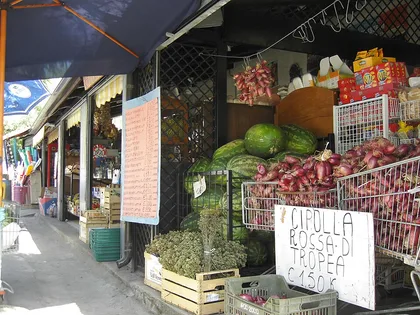 Vegetables and fruitTropea Red OnionTropea red onions are grown on a narrow strip of sand along Calabria's Tyrrhenian coast, and they are sweet…
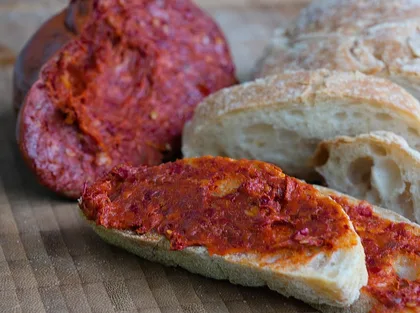 Cured meats'Nduja'Nduja is a soft, spreadable Calabrian pork salume that is up to 40% chilli.Vegetables and fruitBergamotBergamot is the most geographically concentrated citrus on earth: around 90 per cent of world production…Vegetables and fruitCitron of Santa Maria del CedroYou do not eat the flesh of a citron: there is barely any and it is fiercely sour.
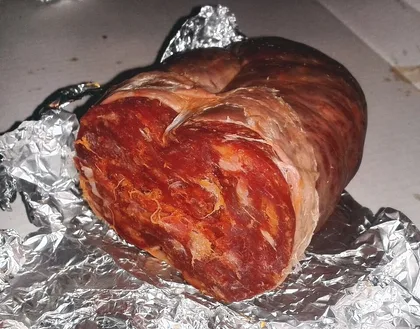 Cured meatsSoppressataSoppressata is a coarse-ground dry salami from southern Italy, pressed flat between boards while it dries…
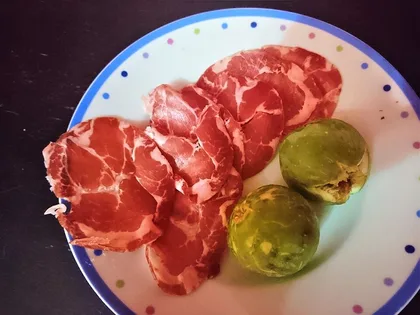 Cured meatsCapocolloCapocollo is the pork neck muscle, salted whole and aged in casing.
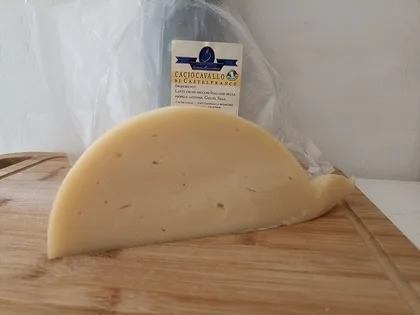 CheeseCaciocavalloCaciocavallo is a stretched-curd cow's milk cheese from southern Italy, aged in a distinctive gourd shape…
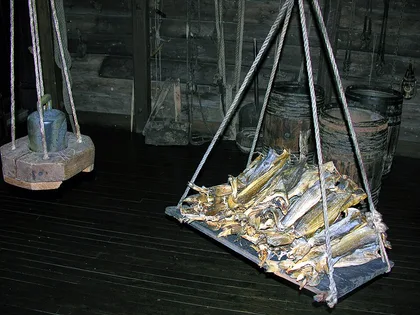 Fish and seafoodStoccafissoStoccafisso is cod air-dried on wooden racks in the Norwegian Lofoten Islands, with no salt at all, until it…