What is Citron of Santa Maria del Cedro?
The citron is Citrus medica, the first citrus to reach the Mediterranean and one of the three ancestral species from which almost every other citrus descends. The fruit grown at Santa Maria del Cedro and the neighbouring towns on Calabria's Tyrrhenian coast belongs to the Liscia Diamante cultivar and is a Slow Food Presidium.
It is big and heavy, one to two kilos as a rule and up to three or four on the best trees, and structurally the opposite of a lemon. The yellow rind is very thin. Beneath it sits a white layer up to five centimetres thick, the albedo. At the centre there is a small core of intensely sour flesh with almost no juice.
That albedo is the product. In nearly every other citrus the white pith is bitter and thrown away; in a citron it is firm, crisp and faintly sweet, eaten raw in salad or candied. Calabrian candied citron has been going into Milanese panettone, Sicilian cassata and Neapolitan pastiera for well over a century.
Then there is the second use, which is not culinary and which kept the crop alive when the candying industry paid badly. In Jewish tradition the citron is the etrog, one of the four species used at the festival of Sukkot, and fruit intended for that purpose must meet exacting requirements. Each summer buyers and rabbis from Israel, the United States and Europe come to this coast to inspect fruit one by one. A specimen judged perfect can be worth hundreds of euro; the rest, the overwhelming majority, go back into the food chain.
What does it taste like?
Nothing like a lemon, and the surprise is how mild it is. The white pith eaten raw is crisp and watery with a faint sweetness and only a whisper of bitterness, closer to a firm cucumber or a raw water chestnut than to any citrus you have chewed by accident.
The yellow rind is where the aroma lives, and it is intense: resinous, floral, almost pine-like, far less sharp than lemon zest and much more perfumed. Grated over anything it reads as expensive.
The small central pulp is very sour and very dry, and it is not the point. Candied, the albedo turns translucent and chewy with a long floral finish that a supermarket cube of green peel does not approach.
How to use it
Start with the Calabrian salad, because nobody expects it. Cut away the yellow rind, discard the small sour core, and slice the white albedo thin or dice it. Dress with extra virgin olive oil, salt, oregano and chilli, and leave it half an hour. It is crisp, cool and barely bitter, and it is very good with salted anchovies or good tuna.
Candied is how the fruit travelled. Diced into panettone, cut in strips through Sicilian cassata, folded into pastiera and cannoli filling. Good candied citron is worth eating on its own with coffee.
The yellow rind, grated, is a serious aromatic and behaves differently from lemon zest: more resinous, more floral, much less acidic. Use it in pastry cream, in biscuit doughs, over baked fish, or on raw fish, where it perfumes without adding acid.
For drinks, steep the rind in neutral spirit as you would for limoncello, and the result is more bitter and more balsamic, or make cedrata, the citron cordial that was Italy's soft drink before cola arrived.
One under-used trick: slice the albedo thick, blanch it for two minutes, then sauté it in olive oil with garlic. It behaves like a vegetable rather than a fruit.
How long it keeps
A whole fresh citron is the most patient citrus there is: that thick rind is armour, and a sound fruit keeps two to four weeks at cool room temperature in a bowl, longer in the fridge, though the cold dulls the perfume. Keep it dry and unwrapped, with air around it, and do not bag it. Once cut, the exposed pith dries and yellows within hours, so wrap the remaining half tight in the fridge and work through it in two or three days.
Over weeks the rind loses water, hardens and shrinks against the pith, the surface goes from glossy to matte and slightly wrinkled, and the aromatic oils in the peel fade, which is why the perfume is strongest in the first days. Calabrian practice is not to store the fruit at all but to convert it: candied in syrup it keeps a year in a sealed jar; the peel dries and stores in a tin; grated zest freezes in small portions for six months. Candied citron in a shop carries a date on the pack, and the maker is the reference for it.
Spot the real thing
A citron is not a big lemon. The fruit is large and heavy, often a kilo or more, with a knobbly, ribbed, thick yellow rind and oil glands you can see. Cut it and the surprise is inside: almost the whole fruit is white pith, dense and firm like a melon, with a small dry core and almost no juice. The scent is the real signature, resinous and floral rather than sharp, and it stays on your hands. The Diamante variety grown at Santa Maria is elongated rather than round.
Two things abroad borrow the name. Candied citron sold in the baking aisle is very often not citron at all but unripe melon or orange rind, dyed and sugared; read the ingredients for Citrus medica. Buddha hand is a citron too, but the fingered variety, all rind and perfume with no flesh. Fresh Calabrian citron appears in Italian greengrocers from September to November, sometimes with the Presidio Slow Food tag or Cedro di Santa Maria del Cedro on the crate, and is priced by the piece rather than the pound, commonly $8 to $15 a fruit.
How to pronounce Citron of Santa Maria del Cedro
CHEH-droh dee SAHN-tah mah-REE-ah del CHEH-droh
The 'ce' in cedro is soft, as in 'chess': CHEH-droh, never 'SEE-dro' or 'KEH-dro'. Two syllables, stress on the first. Maria takes the stress on the 'i': mah-REE-ah. The whole name means, quite literally, Saint Mary of the Citron.
Citron of Santa Maria del Cedro compared
vsLemon
Both are citrus and there the resemblance ends. A lemon is a juice fruit with a thin skin; a citron is a pith fruit with almost no juice. Substituting one for the other in a recipe fails in both directions: a citron will give you no acid, and a lemon will give you no white flesh to work with.
| This | Lemon | |
|---|---|---|
| Weight | 1-2 kg, up to 4 | 100-150 g |
| Pith | 3-5 cm thick, the edible part | 2-3 mm, bitter, discarded |
| Juice | Almost none | 40-50 ml per fruit |
| Pulp | Small, very sour, dry | Most of the fruit |
| Zest aroma | Resinous, floral | Sharp, bright |
| Raw use | Pith sliced into salad | Juice and zest only |
| Propagation | From cuttings, ungrafted | Usually grafted |
vsIndustrial candied peel
The green and yellow cubes in a supermarket baking aisle are the reason most people think they dislike candied citron. They are frequently not citron at all but assorted citrus peel, held together with glucose syrup and dyed. Real candied citron is a different food, and it is the single easiest quality upgrade in Italian baking.
| This | Industrial candied peel | |
|---|---|---|
| Raw material | Citron albedo only | Mixed citrus peel, often orange |
| Colour | Amber, translucent | Bright yellow or green, opaque |
| Texture | Soft, slightly sticky | Hard, rubbery |
| Ingredients | Citron, sugar | Peel, glucose syrup, dyes, preservatives |
| Process | Brined, then weeks of syruping | Days, industrial infusion |
| Price | 22-40 euro per kilo | 6-8 euro per kilo |
vsBuddha's hand
The same species, a fingered variety, and the most useful comparison for anyone in the US where Buddha's hand appears in winter farmers' markets. Both are all pith and rind with no juice, and both are used for zest and candying. Buddha's hand splits into finger-like segments and has almost no flesh at all; the Calabrian citron is a solid fruit with a usable white body.
| This | Buddha's hand | |
|---|---|---|
| Species | Citrus medica | Citrus medica var. sarcodactylis |
| Shape | Solid oval, 1-2 kg | Split into finger-like lobes |
| Albedo | Thick, solid, sliceable | Thin, wrapped around each finger |
| Best for | Salad, candying, liqueur | Zest, infusions, candying |
| Availability | Calabria, autumn and winter | US and Asian markets, Nov-Jan |
Citron of Santa Maria del Cedro substitutes
- Buddha's hand citron
The same species and the best stand-in for zest, infusions and liqueur. There is far less usable white flesh, so it cannot replace a citron in a raw salad, so use it wherever the aroma is what you are after.
1:1 for zest, not for salad - Pomelo pith
The closest texture available in most cities: thick, firm, white and only mildly bitter. Peel away the outer rind, blanch the pith once to soften the edge, then dress it exactly as you would citron.
1:1 by weight, blanch first - Artisan candied citron
For baking, buy the finished product rather than trying to approximate it. Look for amber, translucent, soft pieces and an ingredient list of citron and sugar. Italian and French pâtisserie suppliers carry it.
1:1 in any recipe calling for candied peel - Lemon zest plus a little lemon pith
A partial fix for the aroma only. Take the zest of two lemons for the perfume, then add a spoonful of finely diced blanched lemon pith for texture. It will be sharper and less floral.
2 lemons per 100 g of citron zest called for - Grapefruit peel, candied
If you are candying at home and cannot get citron, grapefruit peel gives the closest thickness and holds up to repeated syruping. Blanch it three times in fresh water to strip the bitterness before you start.
1:1, blanch three times
Where to buy it
Fresh citrons appear in Italian markets from October to December and in specialist grocers in the US and UK sporadically over the same months, usually at 6 to 12 dollars a pound or 8 to 16 pounds a kilo. In Calabria itself, expect 3 to 8 euro per kilo.
Candied citron is much easier to find and much more worth getting right. Italian and French pastry suppliers sell whole candied halves or large pieces at 22 to 40 euro per kilo, or 25 to 45 dollars per pound. Buy pieces rather than pre-diced cubes: you can cut them yourself and the quality is visible before you taste. Amber and translucent is right; fluorescent green or yellow, hard and rubbery is the industrial product, frequently not citron at all.
Around Sukkot, whole fruit sold as etrog is handled by religious suppliers rather than food shops, at prices unrelated to the produce market. That is a separate trade with its own standards, and the fruit is not sold for eating.
When buying fresh, pick the heaviest fruit for its size with firm, unyielding skin: weight means dense pith, which is the part you want.
Where to eat it in Italy
Santa Maria del Cedro, in the province of Cosenza, which took its name from the fruit in 1968: the town had been called Cipollina until then. The growers' consortium is based here, along with a small museum, and it is possible to walk into a cedriera: low reed-shaded pergolas, green half-light, enormous fruit hanging at shoulder height.
Diamante, five kilometres south, is the seaside centre of the Riviera dei Cedri, its old town covered in murals, and it hosts a chilli festival in September, chilli being the coast's other obsession.
Inland the road climbs fast into the Orsomarso mountains and the edge of the Pollino: Verbicaro, Grisolia, Orsomarso, Papasidero. Twenty kilometres takes you from beach to a thousand metres.
Two different windows are worth planning around. October to December for fresh fruit, citron salad and the candying season. Late July and August for the ritual selection, when buyers work through the groves fruit by fruit, the strangest and most compelling thing on this coast.
Frequently asked questions
What is the difference between a citron and a lemon?
Structure. A lemon is mostly juice and pulp under a thin skin. A citron is mostly albedo, the white pith up to five centimetres thick, around a small, very sour, almost dry core. In a citron the white part is the food, eaten raw or candied.
Why do rabbis come to Calabria to select citrons?
The citron is the etrog, one of the four species used during the Jewish festival of Sukkot. Fruit for ritual use must be unblemished, symmetrical and grown on ungrafted trees. Calabrian citrons have been propagated from cuttings rather than grafted for centuries, which is why this coast is regarded as a reliable source. Selection runs from late July into August and is done fruit by fruit.
When is the citron in season?
The main harvest for food use is October to December. The tree flowers several times a year and carries fruit at various stages almost continuously, but the ritual selection is concentrated in late July and August.
Can you eat citron raw?
Yes, and it is the best way to understand it. Remove the yellow rind and the small core, slice the white pith thin and dress it with olive oil, salt, oregano and chilli. It is crisp, mild and refreshing: a traditional Calabrian salad, not a chef's conceit.
Is supermarket candied peel the same thing?
No. Real candied citron is amber, translucent and soft, made from citron albedo and sugar over weeks. The hard fluorescent cubes are usually assorted citrus peel with glucose syrup and colouring, and often contain no citron at all. The prices tell the story: 22 to 40 euro a kilo against 6 to 8.
Related foods
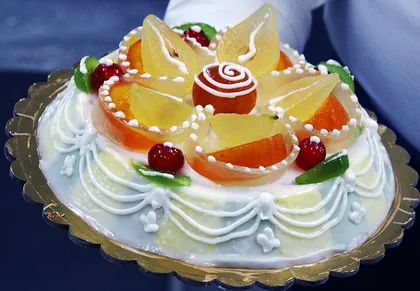 SweetsCassata SicilianaCassata siciliana is a layered Palermo cake: sponge soaked in liqueur, sweetened sheep's-milk ricotta studded…
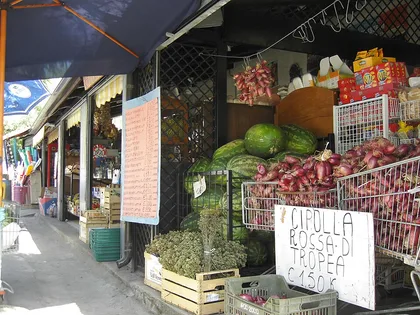 Vegetables and fruitTropea Red OnionTropea red onions are grown on a narrow strip of sand along Calabria's Tyrrhenian coast, and they are sweet…Vegetables and fruitSila PotatoSila potatoes are grown above 1,000 metres on the granite plateau in the middle of Calabria.
 Cured meatsSoppressataSoppressata is a coarse-ground dry salami from southern Italy, pressed flat between boards while it dries…
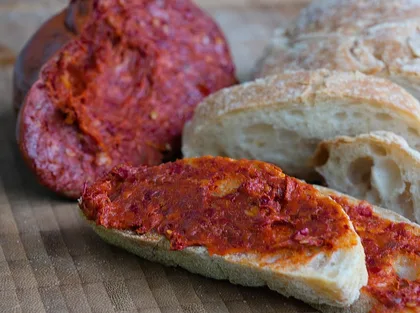 Cured meats'Nduja'Nduja is a soft, spreadable Calabrian pork salume that is up to 40% chilli.
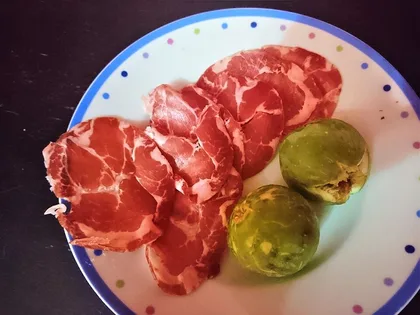 Cured meatsCapocolloCapocollo is the pork neck muscle, salted whole and aged in casing.
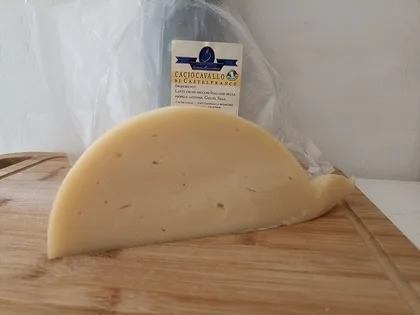 CheeseCaciocavalloCaciocavallo is a stretched-curd cow's milk cheese from southern Italy, aged in a distinctive gourd shape…