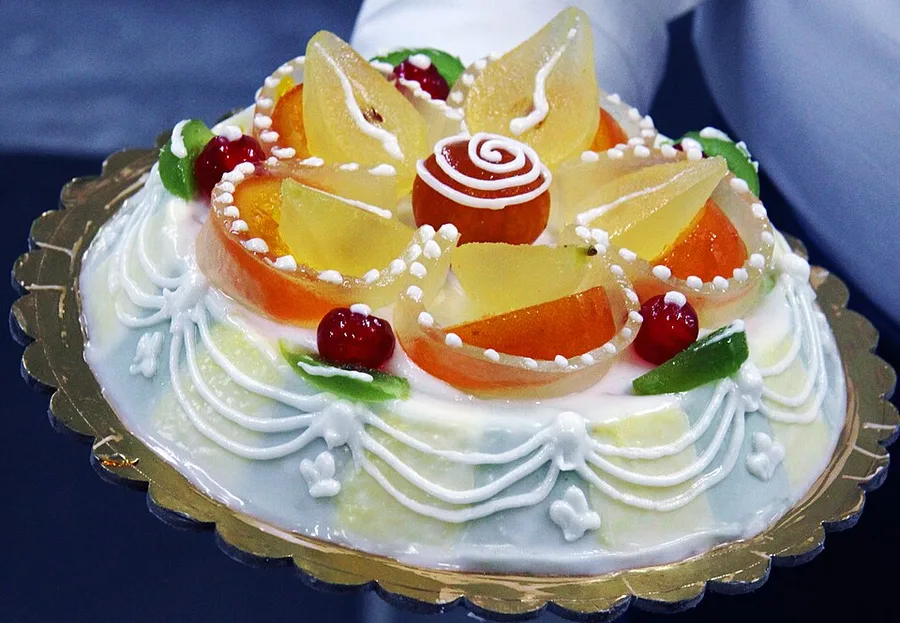
What is Cassata Siciliana?
Cassata is a shallow domed cake built in concentric layers. A sloped mould is lined with alternating strips of liqueur-soaked sponge and green marzipan, filled with sieved sheep's-milk ricotta sweetened and folded with dark chocolate chips, sealed with a lid of sponge, chilled, then turned out, coated in a white sugar glaze and decorated with whole candied fruit.
Every layer does a job. The sponge carries the syrup and holds the shape; the marzipan insulates and adds almond; the ricotta supplies the cool, fatty centre; the glaze seals the cake and extends its life; the candied fruit provides the final sugar hit and the visual signature. Remove any one and you have made something else.
There is also cassata al forno: a baked version with a shortcrust pastry shell instead of sponge, no marzipan and no glaze. That is the everyday Sicilian home version. The glazed, decorated one is the pastry-shop showpiece, and it is what people mean when they say cassata without qualification.
Be aware that 'cassata' in Britain and much of northern Europe often means an ice cream: layered vanilla, pistachio and strawberry studded with candied peel. That is cassata gelata, a real but entirely separate Italian dessert.
What does it taste like?
Sweet, and unapologetic about it. The first impression is sugar (the glaze is essentially a thin sheet of set icing) followed immediately by cool, slightly tangy ricotta. Sheep's-milk ricotta is the thing that keeps it from being cloying: it has a faint lactic sharpness and a mineral note that cow's-milk ricotta lacks entirely.
Underneath, the marzipan brings bitter almond and the sponge brings whatever the pastry chef used for the syrup, usually maraschino or a rosolio, sometimes just orange syrup. Chocolate chips give bursts of bitterness through the cream. The candied citron and orange on top are chewy and floral rather than sugary-hard, if they have been made properly.
Texturally it is soft all the way through, with three distinct softnesses: the yielding glaze, the dense cool cream, the damp sponge. There is no crunch anywhere, which is deliberate. Portions are small for a reason: a hundred-gram slice is a full dessert.
How to use it
Cassata is not cooked, it is served, and serving it badly ruins it. Take it out of the fridge twenty minutes before cutting. Straight from the cold, the ricotta is mute and the marzipan is hard; at around 16°C both open up.
Cut with a smooth-bladed knife dipped in hot water and wiped dry between slices. A serrated knife drags the glaze across the cut face and smears the layers.
Keep portions small. A hundred grams is a generous dessert, and Sicilian pastry shops sell single-portion cassatine for exactly this reason. If you are serving it after a long meal, a fifty-gram sliver with an espresso is the right measure.
If you are building one, the ricotta is the whole job. Sheep's-milk ricotta, drained overnight, beaten with about 300 g of sugar per kilo and passed through a fine sieve twice: twice is not a flourish, it is what makes the cream silk rather than grainy. Fold in dark chocolate chips at the very end so they do not bleed.
Assemble, chill for at least six hours, then unmould, glaze and decorate. Decorate last and serve within a day: candied fruit sitting on glaze slowly weeps.
How long it keeps
Cassata is a refrigerated dessert with a short working life and Sicilian pastry shops assemble it close to the day it is sold. Keep it at 4 C, uncovered or under a dome rather than wrapped, since cling film pressed on the icing lifts it away in patches. Anything bought boxed carries a date from the pasticceria or the producer, and that is the reference. Over two or three days in the fridge the parts move at different speeds: the ricotta slowly releases whey into the sponge, which darkens and softens where it sits, the marzipan band dries at the exposed edge and can crack, and the glaze loses its gloss.
Temperature swings show immediately. Taken from the fridge into a warm room the sugar glaze draws condensation and goes tacky, so bring it out twenty minutes before serving and no longer. Freezing is not how this one is kept: at minus 18 C the ricotta separates and thaws grainy and watery, and the icing goes matte and crazed. Cut portions with a hot dry blade and return the rest to the cold.
Spot the real thing
A Sicilian cassata is built in visible layers and you can read them from the side: a band of pale green marzipan standing upright around the rim, a mirror-smooth white sugar glaze across the top, whole candied fruit laid on it, and beneath all that a thin sponge shell holding sweetened ricotta studded with chocolate. The ricotta should be sheep's milk, sieved to a dense paste that holds a clean edge when cut, not whipped, not cream, not mascarpone. A slice that oozes rather than standing up was made with something else.
Outside Sicily the name has been borrowed twice over. In American and Australian shops cassata usually means a moulded ice cream brick in coloured stripes, closer to spumone, sold frozen. Ricotta cheesecake is a different construction entirely, baked and without marzipan. Cassata al forno is a genuine Sicilian variant but a baked shortcrust pie, without the glaze or the green band. Marzipan and candied citron are expensive, so a real one is sold by weight from a pasticceria at a price well above a supermarket cake.
How to pronounce Cassata Siciliana
kahs-SAH-tah
Three syllables, stress on the middle one. The double 's' is held slightly longer than a single one: 'kahs-SAH', not 'kuh-SAH'. Both 'a' sounds are open, as in 'father', never the flat 'a' of 'cat'. The final 'a' is pronounced fully, not swallowed into a schwa: 'kahs-SAH-tah', not 'kuh-SAH-tuh'. Full name: cassata siciliana, kahs-SAH-tah see-chee-lee-AH-nah.
Cassata Siciliana compared
vsCannolo siciliano
Same filling, opposite philosophy. Both are built on sweetened sheep's-milk ricotta, but the cannolo is a fried tube assembled seconds before eating and the cassata is a chilled cake assembled hours before. One is about crunch, the other about layers.
| This | Cannolo siciliano | |
|---|---|---|
| Shell | Sponge cake and marzipan | Fried pastry tube (scorza) |
| Filling | Ricotta with chocolate chips | Ricotta with chocolate or candied fruit |
| Assembly | Hours ahead, then chilled | Filled to order, or it goes soggy |
| Texture | Soft throughout | Crisp shell, soft centre |
| Served | Cold, sliced from a whole cake | Room temperature, one per person |
| Occasion | Easter, celebrations | Any day, any time |
| Shelf life | 3–4 days refrigerated | Under an hour once filled |
vsCassata al forno
The domestic version. Shortcrust pastry replaces the sponge, the whole thing is baked, and neither marzipan nor glaze appears. It is what most Sicilian families actually make at home, and it eats more like a ricotta tart than a celebration cake.
| This | Cassata al forno | |
|---|---|---|
| Casing | Sponge and marzipan | Sweet shortcrust (pasta frolla) |
| Baked | No | Yes |
| Glaze | White sugar icing | Dusting of icing sugar |
| Candied fruit | On top, decorative | Inside the filling, if at all |
| Sweetness | Very high | Moderate |
| Made by | Pastry shops | Home cooks |
vsCassata gelata (cassata ice cream)
The frozen relative, and the source of most confusion abroad. In Britain and Australia 'cassata' usually means a moulded ice cream bombe with candied peel. It borrows the shape and the fruit from the cake but contains no ricotta cream, no sponge shell and no marzipan band.
| This | Cassata gelata (cassata ice cream) | |
|---|---|---|
| Base | Ricotta cream | Ice cream, usually three flavours |
| Served | Refrigerated, not frozen | Frozen |
| Marzipan | Green band around the sides | None |
| Glaze | Set sugar icing | None |
| Origin | Palermo | Sicilian gelaterie, spread worldwide |
Cassata Siciliana substitutes
- Whole-milk cow's ricotta for sheep's ricotta
The most common compromise outside Italy. Cow's ricotta is wetter and blander, so drain it for a full 24 hours in a lined sieve under a weight, and cut the sugar by about a fifth, because it cannot carry as much.
1:1 by weight, drained longer - Ricotta plus a spoon of goat's cheese
A trick that recovers some of the sheep's-milk tang. Beat 30 g of soft fresh goat's cheese into every 500 g of cow's ricotta before sieving. It should read as a background note, not as goat.
30 g goat's cheese per 500 g ricotta - Almond paste for pasta reale
Buy almond paste, not marzipan: the difference is the almond-to-sugar ratio, and marzipan is far sweeter. Colour it with a little pistachio paste rather than food dye if you want the traditional muted green.
1:1, tinted with 1 tsp pistachio paste per 250 g - Génoise or plain pound cake for pan di Spagna
Pan di Spagna is a fatless whipped-egg sponge. Génoise is the closest supermarket equivalent; a dense pound cake will work but soaks up far less syrup, so brush rather than soak.
1:1 by volume - Candied orange and citron for zuccata
Zuccata, candied long squash, is almost impossible to buy outside Sicily. Candied citron is the nearest in texture and mildness; candied pumpkin, sold in Latin American grocers as cabello de ángel, is closer still in flavour.
1:1 - Orange syrup for maraschino
The classic soak is maraschino liqueur. For an alcohol-free cake, use sugar syrup with fresh orange juice and a strip of zest: it keeps the citrus register the liqueur provides.
50 ml syrup + 50 ml orange juice per 100 ml liqueur
Where to buy it
In the US, Sicilian-American bakeries in New York, Philadelphia, Boston, Chicago and New Orleans make cassata around Easter, often to order, so call two weeks ahead. Expect 45 to 70 dollars for a cake serving eight to ten. Italian specialty importers ship shelf-stable versions, which are a compromise: the glaze survives shipping, the ricotta does not.
For ingredients: sheep's-milk ricotta is sold by some Greek and Middle Eastern grocers as well as Italian ones; almond paste is stocked by most good baking suppliers; candied citron is the hard one, and worth ordering from an Italian importer rather than buying supermarket mixed peel, which is bitter and dry.
In the UK, Italian delicatessens in London and Manchester take Easter orders, typically 35 to 60 pounds for a whole cake. Sheep's-milk ricotta is scarce; drained cow's ricotta plus a spoonful of fresh goat's cheese is the practical workaround. Good candied fruit runs 20 to 35 pounds per kilo and is worth every penny against the neon supermarket version.
Beware of anything sold as cassata in a freezer aisle: in Britain that almost always means the ice cream, not the cake.
Where to eat it in Italy
Palermo. The pastry shops of the historic centre keep cassata in the window year-round, and the ones worth stopping at say ricotta di pecora on the label and offer several sizes, which means they actually make it rather than buying it in.
Piana degli Albanesi, twenty kilometres south of Palermo, is a sheep's-milk town founded by Albanian refugees in the fifteenth century. Its ricotta is the raw material for much of the province's pastry, and its cassate and cannoli are a pilgrimage.
Catania and the Val di Noto have their own hand: a lighter, more citrus-forward syrup. Around Trapani and up in Erice, convent pastry survives and the cassate are smaller and less ornately decorated.
Go at Easter if you can choose. That is when every pastry shop puts its best version in the window, when the candied fruit is freshest, and when zuccata, the candied squash that most producers have quietly abandoned, actually turns up.
Recipes with it
Frequently asked questions
What does cassata taste like?
Very sweet, with a cool tangy centre. The sugar glaze and candied fruit hit first, then the sheep's-milk ricotta cream, which is slightly sharp and keeps the whole thing from cloying. Almond from the marzipan and bitterness from dark chocolate chips run underneath.
Is cassata a cake or an ice cream?
In Sicily, a cake: sponge, ricotta cream, marzipan and sugar glaze, served chilled but not frozen. In Britain and Australia the word usually refers to cassata gelata, a moulded ice cream with candied fruit: a real Italian dessert, but a different one.
How do you pronounce cassata?
kahs-SAH-tah, stress on the middle syllable, with a slightly held double 's' and open 'a' sounds throughout. Not 'kuh-SAH-tuh'.
Why is cassata associated with Easter?
It was made in Sicilian convents for the spring festivals, when sheep's milk is at its most abundant and ricotta at its best. Convent production during Holy Week became so intense that a diocesan synod in 1575 formally told the nuns to stop making it during Lent.
Can I make cassata without sheep's-milk ricotta?
Yes, with adjustments. Drain cow's-milk ricotta for a full day under a weight, reduce the sugar by roughly a fifth, and consider beating in a small amount of fresh goat's cheese to recover some of the tang the sheep's milk would have provided.
Related foods
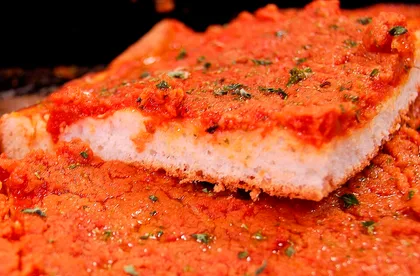 Pasta and breadSfincioneSfincione is Palermo's thick, spongy street focaccia: slow-cooked onion and tomato sauce, anchovies melted…SweetsTorroneHoney and sugar go over a water bath and stay there for hours, sometimes twelve, while someone keeps stirring.
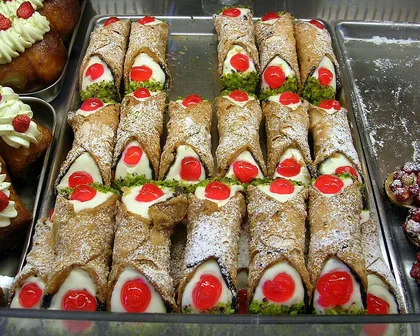 SweetsCannoliIt has to be filled when you order it, and anywhere that fills them in advance has already lost: the fried…
 SweetsGelatoGelato is not ice cream translated. It carries less fat (4-8% against 10-18%), holds far less air (20-35%…
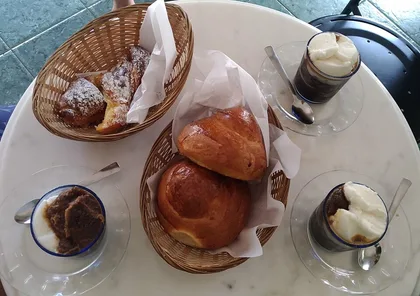 SweetsGranitaSicilian granita is churned, not crushed. Water, sugar and one flavouring (lemon, mulberry, almond, espresso)…
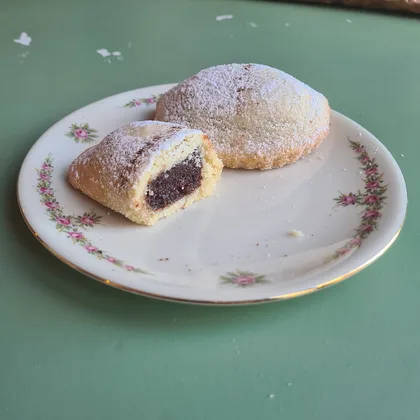 SweetsCassatellaA cassatella is a fried Sicilian turnover: thin wine-based pastry folded around sweetened sheep's-milk…
 SweetsCotognata (Quince Paste)Cotognata is quince pulp cooked with sugar and then air-dried for days in moulds until it sets into a firm…
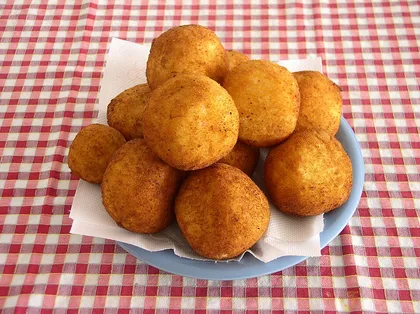 Pasta and breadAranciniArancini are deep-fried Sicilian rice balls: saffron rice moulded around a filling of meat ragù and peas, or…