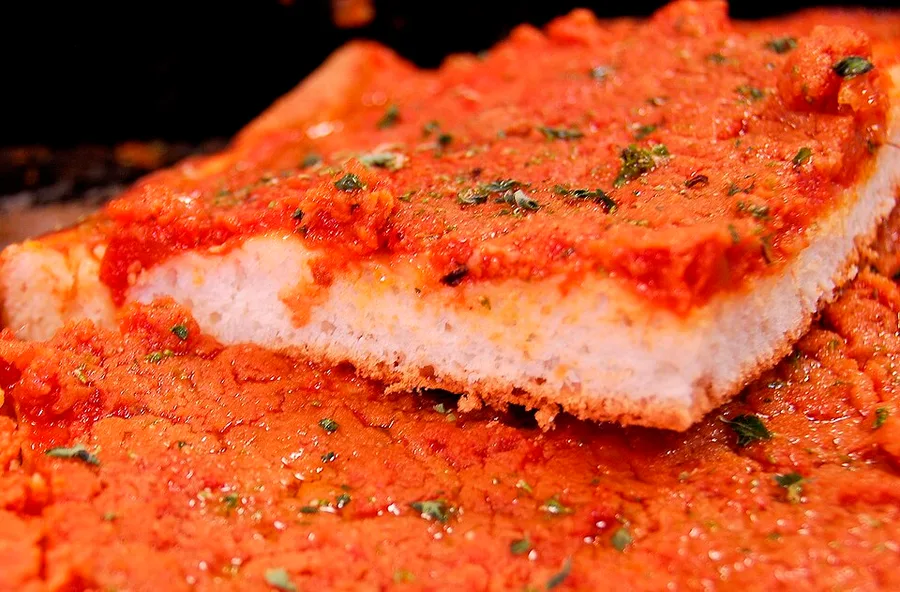
What is Sfincione?
Sfincione is a pan-baked topped bread, three to four centimetres tall, with a wide open crumb that stays damp under the sauce. The name comes from the Latin spongia, sponge, and the structure explains it: the dough is supposed to drink the sauce without turning to mush, staying soft in the middle and crisp on the oiled base.
Calling it pizza in Palermo will get you corrected. The difference is architectural. On a pizza the topping sits on the dough; in sfincione the two interpenetrate. Cubes of caciocavallo are pressed into the raw dough with your fingers so they melt inside it, the onion sauce goes on top, and breadcrumbs go on last, toasting in the oven into a thin sandy crust.
It is eaten warm or at room temperature, never straight from the oven: the cheese fat and the oil in the sauce need twenty minutes to settle. It is cut into squares, sold by weight, and carried away in waxed paper.
If you have eaten thick, rectangular 'Sicilian pizza' in New York or Boston, you have eaten sfincione's descendant. The immigrant version swapped the onion sauce for plain tomato and the caciocavallo for mozzarella, and the breadcrumbs disappeared entirely.
What does it taste like?
Sweet first, then salty. The onions are stewed for half an hour or more before the tomato goes in, so they arrive at the table caramelised rather than sharp, and that sweetness is the base note of the whole thing. Under it runs the anchovy, dissolved and not visible, giving a deep savoury hum rather than a fishy hit. People who swear they hate anchovies eat sfincione happily and never identify what they are tasting.
The caciocavallo is the third layer: a firm, slightly piquant cow's-milk cheese that goes molten inside the crumb and leaves buttery pockets. Oregano cuts across all of it, and the toasted breadcrumbs add a dry, nutty crunch that keeps every bite from being soft all the way through.
Texturally it is unlike anything in the American pizza family. The crumb is bread, not crust, and closer to a very good focaccia, while the base is fried crisp by the oil in the pan. The contrast between that greasy-crisp underside and the pillowy interior is the point.
How to use it
Sfincione is bought, not usually built, but if you are making it, the sauce is the job. Slice white onions thin and stew them in olive oil over low heat for at least thirty minutes, until they collapse and go sweet. Only then add tomato passata and the rinsed anchovies, which will melt into the pan in a couple of minutes. Oregano goes in off the heat.
Make the sauce a day ahead if you can. It improves overnight in the fridge, and cold sauce spreads more neatly on a risen dough without deflating it.
Use a high-hydration semolina dough, around 75% water, and give it a long, slow rise. Oil the pan generously; the base is meant to fry a little. Press cubes of cheese into the dough, spread the sauce, scatter oiled breadcrumbs, and bake hot, around 240°C, for twenty to twenty-five minutes.
Let it cool on a rack for twenty minutes before cutting. To reheat the next day, use a dry non-stick pan with a lid over low heat for five minutes, because the oven dries it out and the microwave makes it rubbery.
Serve it cut into squares as a starter, or with a salad of orange, raw fennel and black olives as a light meal. It travels well and holds for six or seven hours unrefrigerated, which is exactly why it became street food.
How long it keeps
At room temperature under a clean cloth, and never under cling film, sfincione holds two days comfortably. Film traps the moisture the dough is still giving up, and the breadcrumb crust goes limp within a few hours of being covered that way. In the fridge it stretches to about four days, but the cold sets the caciocavallo hard and flattens the oregano, so it wants an hour on the counter first, or better a few minutes in a dry pan with a lid on.
It freezes well, which is the sensible answer to a full tray: cut it into portions, wrap each piece in baking paper and put them in a bag, where they hold three months. Bring them back straight from frozen in a 180 °C oven for twelve to fifteen minutes rather than thawing first, since thawing on the counter leaves the base wet. The onion sauce, if it was made separately, keeps five days in the fridge under a finger of oil and freezes in single portion tubs.
Spot the real thing
Look at it from the side. A properly made sfincione stands at least three centimetres tall and shows irregular holes, some the size of a hazelnut; a tight even crumb means the dough was underproved or rolled out with a pin, which is not how it is done. The base should be golden and lightly fried by the oil in the tin rather than pale. The surface must never be glossy with stretching cheese: if mozzarella pulls into strings, what you have is pizza in teglia under another name, and that is precisely what an American Sicilian slice or a grandma pie is.
The breadcrumb is the detail that exposes lazy versions. It should sit in a thin dry layer, toasted and not burnt, and be audible under the teeth; absent altogether, or so thick that it soaks up all the sauce, the recipe was not followed. The anchovy should not be visible at all, only present as a salty note underneath. Whole fillets laid on top are a tourist rosticceria shortcut, and the cheese is caciocavallo, not mozzarella.
How to pronounce Sfincione
sfeen-CHOH-neh
Three syllables, stress on the second. The 'sf' cluster is pronounced fully: do not soften it into 'sfin' with a silent s, and do not insert a vowel ('suh-fin'). The 'ci' is soft, as in 'choke'. The final 'e' is always sounded: 'CHOH-neh', never 'CHOHN' and never 'sfin-see-own'. Plural: sfincioni, sfeen-CHOH-nee.
Sfincione compared
vsAmerican Sicilian pizza
Sicilian pizza in the US is what happened to sfincione after it crossed the Atlantic. The pan and the thickness survived; the onion sauce, the caciocavallo and the breadcrumbs did not. If you order Sicilian in Brooklyn expecting sfincione, you will get a good square pizza that tastes nothing like Palermo.
| This | American Sicilian pizza | |
|---|---|---|
| Sauce | Onions stewed with tomato and anchovy | Plain tomato, sometimes sugared |
| Cheese | Caciocavallo or tuma, pressed into the dough | Mozzarella, spread on top |
| Breadcrumbs | Always, toasted on top | Never |
| Anchovy | Dissolved into the sauce | Optional topping, if at all |
| Served | Warm or room temperature | Hot |
| Crumb | Open, damp, bread-like | Tighter, more pizza-like |
| Eaten as | Street snack, holiday dish | Meal, by the slice |
vsFocaccia (Genoese)
Both are oiled pan breads, but they belong to different meals. Focaccia genovese is plain (oil, salt, brine dimples) and functions as bread. Sfincione is a complete dish with a cooked sauce, cheese and fish, and nobody puts anything on top of it.
| This | Focaccia (Genoese) | |
|---|---|---|
| Flour | Durum semolina, often blended | Soft wheat flour |
| Topping | Onion-tomato sauce, cheese, breadcrumbs | Olive oil and coarse salt |
| Height | 3–4 cm | 1.5–2 cm |
| Surface | Dry, crumbed, matte | Glossy with oil, dimpled |
| Role | A dish in itself | Bread, eaten alongside food |
| Region | Palermo, western Sicily | Liguria |
vsSfincione bianco di Bagheria
The white cousin, from a town fifteen kilometres east of Palermo. No tomato at all: sheep's-milk ricotta takes the sauce's place, with onion, anchovy and caciocavallo on top. Sweeter, creamier, richer, and defended locally with real passion.
| This | Sfincione bianco di Bagheria | |
|---|---|---|
| Tomato | Yes, in the onion sauce | None |
| Ricotta | No | Sheep's-milk ricotta, generously |
| Colour | Red-orange top | Pale cream and gold |
| Flavour | Sweet-sour, sharper | Sweeter, milkier, rounder |
| Where | Palermo city | Bagheria |
Sfincione substitutes
- Provolone dolce for caciocavallo
The closest widely available cheese. Caciocavallo and provolone are both pasta filata cow's-milk cheeses; young provolone melts the same way. Buy it in a block and cube it yourself, because pre-shredded is coated in starch and will not melt cleanly.
1:1 by weight - Low-moisture scamorza or young Asiago
Also pasta filata, slightly milder. Asiago pressato is sweeter than caciocavallo, so add a little extra salt to the sauce to compensate.
1:1 - Anchovy paste for salted anchovies
Salt-packed anchovies, rinsed and boned, are the traditional choice. Anchovy paste from a tube dissolves faster and is far easier to find, but it is saltier, so start with less.
1 teaspoon paste per 2 whole salted anchovies - Vegetarian: capers, olives and white miso
Anchovy is doing umami and salt, not fish flavour, so it can be replaced. Half a teaspoon of white miso stirred into the hot onions, plus chopped capers and black olives, gets you most of the way there.
½ tsp miso + 1 tbsp chopped capers per 4 anchovies - Panko for Sicilian breadcrumbs
Sicilian mollica is made from stale semolina bread and is coarse. Panko is a decent stand-in if you toast it first in a dry pan with olive oil and oregano; plain fine breadcrumbs turn to paste under the sauce.
1:1, toasted before use - Bread flour plus fine semolina for the dough
If you cannot find semola rimacinata, blend bread flour with fine semolina. The semolina gives the yellow colour and the slightly sandy bite that plain flour cannot.
70% bread flour, 30% fine semolina
Where to buy it
Outside Sicily, sfincione is hard to buy and easy to make. In the US, Sicilian bakeries in New York, Philadelphia, Boston and New Orleans sometimes bake it at Christmas, but ask for it by name rather than for 'Sicilian pizza', which will get you something else. Frozen imported trays turn up in Italian specialty freezers at roughly 12 to 20 dollars per pound.
For the ingredients: caciocavallo is stocked by most Italian delis and by Eataly; salt-packed anchovies from Sciacca or Cetara are worth ordering online rather than settling for oil-packed; semola rimacinata is sold by Italian importers and by better flour specialists.
In the UK, no supermarket carries sfincione. Italian delicatessens in London, Manchester and Edinburgh will have caciocavallo and salted anchovies, and semola rimacinata is easy to find online at around 3 to 5 pounds per kilo. A homemade tray costs about 6 to 8 pounds in ingredients and feeds six.
In Palermo itself, expect 8 to 14 euros per kilo at a bakery and 1.50 to 2.50 euros for a street-sized square.
Where to eat it in Italy
Palermo, obviously, and specifically its markets. Ballarò, the Capo and the Vucciria all have stalls turning out trays from early morning, and the trays are usually gone before lunch. Arrive by eleven.
The sfincionari, vendors selling from three-wheeled vans and shouting a call that every Palermitano can recite, are the most authentic version of the experience. They work residential piazzas rather than the tourist streets, so walk fifteen minutes out of the centre to find them.
Bagheria, a short train ride east, is the place for the white version with ricotta. The bakeries along the main corso make it daily, and the town holds an autumn festival dedicated to it.
If you are in Sicily in late December, sfincione is everywhere: it is the traditional Christmas Eve dish in Palermo, and every bakery in the city puts a sign in the window.
In eastern Sicily (Catania, Syracuse, Taormina) you can find it, but it is not native there. The east has its own street-bread traditions and does sfincione as a courtesy.
Recipes with it
Frequently asked questions
Is sfincione the same as Sicilian pizza?
American Sicilian pizza descends from sfincione but is not the same dish. Sfincione uses a stewed onion-and-anchovy sauce, caciocavallo cheese pressed into the dough, and a topping of toasted breadcrumbs; Sicilian pizza in the US uses plain tomato and mozzarella and no breadcrumbs at all.
Does sfincione have anchovies in it?
Yes, but they are dissolved into the hot onion sauce and disappear completely. They read as savoury depth rather than as fish. People who dislike visible anchovies almost always like sfincione.
How do you pronounce sfincione?
sfeen-CHOH-neh, with the stress on the middle syllable and the final 'e' clearly pronounced. The plural is sfincioni, sfeen-CHOH-nee.
Why is there no mozzarella on sfincione?
Because the cheese in sfincione is caciocavallo, a firm aged cow's-milk cheese that is cubed and pushed into the dough so it melts inside rather than on top. Mozzarella would release water into the crumb and flatten the flavour.
Is sfincione eaten hot?
No. It is served warm or at room temperature, twenty minutes or more out of the oven, which is when the fat settles and the breadcrumb crust stays dry. It is a street food designed to be good hours after baking.
Related foods
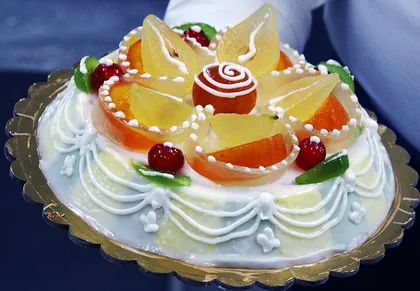 SweetsCassata SicilianaCassata siciliana is a layered Palermo cake: sponge soaked in liqueur, sweetened sheep's-milk ricotta studded…
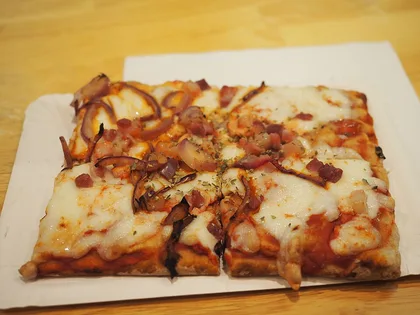 Pasta and breadPizza al TaglioPizza al taglio is Roman pizza by the slab: a very wet dough baked in an oiled rectangular pan, sold by…
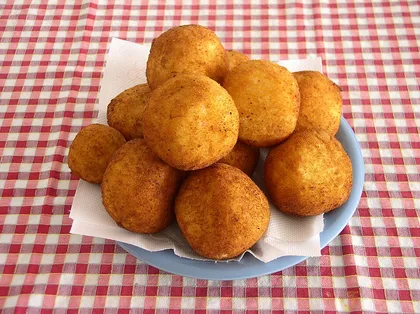 Pasta and breadAranciniArancini are deep-fried Sicilian rice balls: saffron rice moulded around a filling of meat ragù and peas, or…
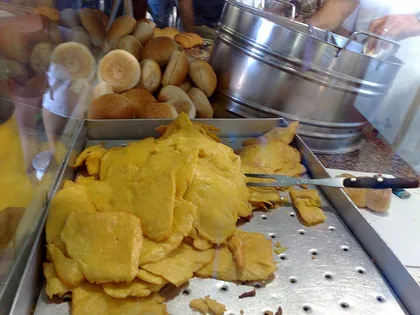 Pasta and breadPanelle (Sicilian Chickpea Fritters)Panelle are Sicilian chickpea fritters: a chickpea-flour batter cooked like polenta, spread paper-thin…
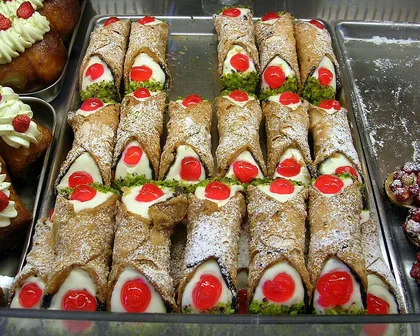 SweetsCannoliIt has to be filled when you order it, and anywhere that fills them in advance has already lost: the fried…
 SweetsGelatoGelato is not ice cream translated. It carries less fat (4-8% against 10-18%), holds far less air (20-35%…
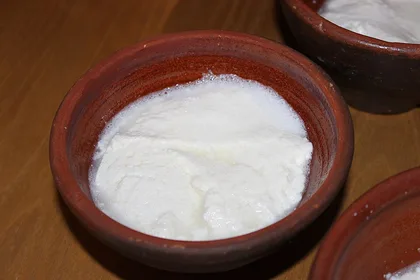 CheeseRicottaRicotta is not a cheese. It is a dairy product made from whey, the liquid left over after cheese has been…
 Fish and seafoodBottargaFifteen grams a head is enough, and that is not meanness: bottarga is the salted, pressed, air-dried roe sac…