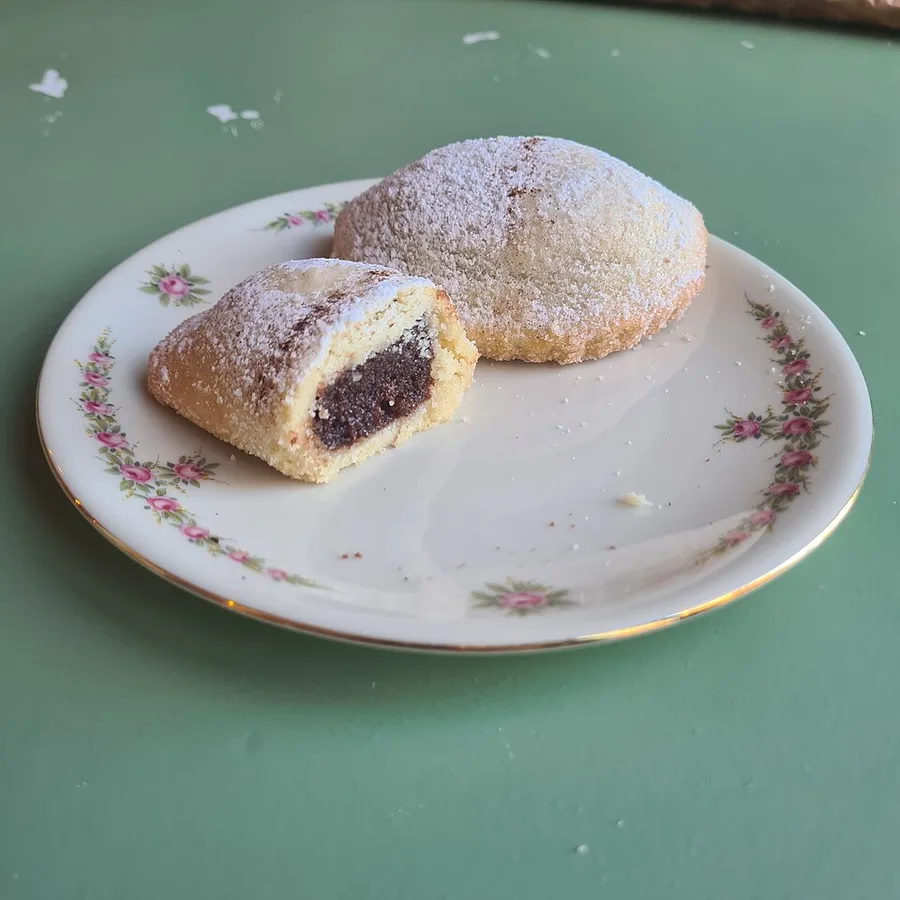
What is Cassatella?
A cassatella (cassatedda in the Trapani dialect) is essentially a sweet fried raviolo. A disc of thin pastry made with white wine or Marsala and lard is folded around a spoonful of sheep's ricotta sweetened with sugar and studded with dark chocolate chips, sealed with a fluted cutter, deep-fried and covered in icing sugar the moment it comes out of the oil.
The wine in the dough is functional, not decorative. Alcohol flashes off fast in hot oil, which is what makes the pastry puff and blister into an uneven, crisp surface a water-based dough will not give you. Together with the lard it keeps the pastry light despite the frying.
The name is a diminutive of cassata, which is where nearly all the confusion starts. Cassata siciliana is a chilled layered cake (sponge, ricotta, green marzipan, sugar glaze, candied fruit) assembled over hours and served in slices. A cassatella is a single-portion fried pastry eaten standing up, minutes after it was made. Sweetened sheep's ricotta is the only thing they share.
And there is a second Sicilian sweet with the same name, worth knowing before you order: in Catania, the cassatelle di Sant'Agata, also called minne, are small domed cakes filled with ricotta cream, coated in white icing and topped with a candied cherry, tied to the patron saint's feast on 3–5 February. Same word, different province, different pastry.
What does it taste like?
Warm ricotta first (mild, faintly grassy, sweetened but not heavily) then the snap of the pastry and small bursts of bitter chocolate. Sheep's ricotta is the flavour that carries it, and it tastes noticeably more savoury and more lactic than the cow's-milk kind most people know.
The contrast is temperature as much as texture: hot, blistered, crunchy shell against a filling that is soft and just above body temperature. Lemon zest and a pinch of cinnamon in the dough sit in the background and stop the whole thing reading as plain fried sweetness.
The sugar level is lower than you would expect from something buried in icing sugar. Trapanese pastry cooks sweeten the ricotta at roughly 200–250 g of sugar per kilo, which is about half what goes into a cannolo filling: the dusting on the outside does the rest.
How to use it
Deep-fry in plenty of oil held at 170°C, a minute and a half to two minutes a side, turning once. Shallow oil means one scorched face and one pale one; oil that is too hot colours the pastry before the filling has warmed through.
Do not overfill. A generous spoonful, a clear centimetre of border, all the air pressed out, then seal with a fluted cutter. An overfilled cassatella splits in the pan, and once ricotta hits the oil the whole batch of oil is finished.
Dust with icing sugar immediately, while the surface is still hot and slightly damp: cold pastry will not hold it. Serve within minutes. This is street pastry, fried to order in Trapani bars, and twenty minutes on a plate already costs it something.
Baking is possible and some shops do it for volume, but the wine pastry will not puff: you get a dry biscuit shell instead of a blistered one. Leftover sweetened ricotta is already cannoli filling and keeps two days in the fridge.
How long it keeps
Fried, they do not keep. The working window is under an hour, and within twenty minutes the pastry is already drawing moisture out of the filling and losing its snap from the inside outwards. Four minutes in a 180 C oven brings some of the crispness back by driving that water off again; a microwave does the opposite and leaves them rubbery. Unfried, they hold about twenty-four hours in the fridge, laid out separately on a floured tray, never stacked, because the sealed edges stick to one another and tear when you lift them.
Raw is also how they freeze, and they freeze well for up to two months: spaced on a tray until firm, then bagged. Fry them straight from frozen with the oil dropped to 165 C and about a minute more per side, since thawing first is what makes the edges open in the pan. The sweetened ricotta filling on its own keeps two days in an airtight box in the fridge and separates a little, releasing whey at the bottom, so it wants stirring before use.
Spot the real thing
The pastry should be thin and covered in blisters, golden in an uneven, patchy way. A smooth, pale, thick shell means dough made without wine, rolled badly or fried at the wrong temperature. The filling has to be sheep ricotta, and you can smell it: a faintly wild lactic note that cow ricotta simply does not have. If it reads as sweet and nothing else, it is cow milk or an industrial pastry cream. The ricotta should also stay where it is; a filling that spreads across the plate, or that has already soaked the pastry from inside, was not drained.
Icing sugar goes on while the pastry is hot, generously but loosely. A wet sugar crust means it was dusted late or has been standing in the case. The simplest test of all is temperature, because this is a hot pastry: in the fry shops around Trapani they are made to order and handed over in paper. Do not confuse the name with cassata, the iced ricotta cake, which is another dessert entirely, and abroad any fried ricotta turnover tends to be called a cannoli variant.
How to pronounce Cassatella
kahs-sah-TEL-lah
Four syllables, stress on the third. The double 's' is held slightly, the double 'l' likewise: kahs-sah-TEL-lah, not 'kassa-tella' rushed together. The plural is cassatelle, kahs-sah-TEL-leh, with a clear 'eh' at the end. In dialect you will see cassatedda, kahs-sah-TED-dah, where the double 'd' replaces the 'll', a standard Sicilian sound shift.
Cassatella compared
vsCassata siciliana
Close names, unrelated pastries. Cassatella is the diminutive of cassata, and that is genuinely all the two have in common besides sweetened sheep's ricotta. One is a chilled architectural cake from Palermo built from sponge, marzipan, glaze and candied fruit and cut into slices; the other is a fried turnover from Trapani eaten hot in the street. Ordering one expecting the other is the single most common mistake visitors make with Sicilian sweets.
| This | Cassata siciliana | |
|---|---|---|
| Format | Single-portion fried turnover | Whole chilled cake, sliced |
| Cooking | Deep-fried in oil | Assembled, never baked |
| Shell | Thin wine-and-lard pastry | Sponge cake and green marzipan |
| Filling | Ricotta with chocolate chips | Ricotta with chocolate, sometimes zuccata |
| Finish | Icing sugar, dusted hot | Set white sugar glaze and candied fruit |
| Served | Hot, within the hour | Cold, from the fridge |
| Where | Trapani and the Belice valley | Palermo |
vsCassatelle di Sant'Agata (Catania)
The other cassatella, and the reason to specify which province you mean. Catania's version, also called minne di Sant'Agata, is a small domed cake with a ricotta cream centre, covered in white icing with a single candied cherry on top, made for the feast of the city's patron saint on 3–5 February. It is baked, iced and eaten cold: the opposite of the Trapanese pastry in every respect except the ricotta.
| This | Cassatelle di Sant'Agata (Catania) | |
|---|---|---|
| Shape | Half-moon turnover | Small dome |
| Cooking | Fried | Baked, then iced |
| Coating | Icing sugar | White sugar glaze, candied cherry |
| Temperature | Hot | Cold |
| Occasion | Easter and weddings | Feast of Sant'Agata, 3–5 February |
| Province | Trapani | Catania |
vsCannolo siciliano
The same two raw materials, assembled in opposite orders. A cannolo shell is fried empty and filled cold at the last second, so a crisp tube meets a cool, heavily sweetened ricotta cream. A cassatella is filled raw and fried whole, so the pastry and the filling cook together and arrive hot. If you like the cannolo but find the filling too sweet, the cassatella is the one to try.
| This | Cannolo siciliano | |
|---|---|---|
| Order of work | Filled, then fried | Fried, then filled |
| Temperature | Hot throughout | Cold filling, room-temperature shell |
| Sugar in filling | 200–250 g per kg ricotta | 300–400 g per kg ricotta |
| Shell | Soft-ish, blistered | Hard, bubbled, snaps |
| Shelf life | An hour | Under an hour once filled |
Cassatella substitutes
- Cow's-milk ricotta for sheep's
The usual compromise outside Italy and it needs managing. Cow's ricotta holds far more water and tastes blander, so drain it a full 24 hours in a lined sieve under a light weight, and cut the sugar by about a fifth so the filling does not read as flat sweetness.
1:1 by weight, sugar reduced 20% - Ricotta plus fresh goat's cheese
Recovers some of the tang that sheep's milk provides. Beat 30 g of soft fresh goat's cheese into every 500 g of drained cow's ricotta. It should sit in the background: if you can identify it as goat, you used too much.
30 g goat's cheese per 500 g ricotta - Marsala or dry white wine in the dough
Either works and both are traditional; Marsala adds a caramel note and a touch more colour. For an alcohol-free dough use orange juice with a teaspoon of white vinegar, and accept a slightly flatter, less blistered pastry.
1:1 by volume - Butter or olive oil for lard
Lard gives the crispest, most bubbled shell. Butter is the closest swap and makes the dough a little softer to roll; olive oil produces a firmer, snappier pastry that browns faster, so drop the oil temperature by five degrees.
1:1 by weight for butter, 0.8:1 for oil - Frozen empanada discs
A genuine shortcut if you are making a lot, and better than pre-rolled shortcrust. They are thicker than a Trapanese sfoglia, so run them through a rolling pin once before filling or the pastry-to-ricotta ratio goes wrong.
One 12 cm disc per cassatella, rolled thinner
Where to buy it
In Sicily, from pastry shops and bars across the province of Trapani, fried to order in the mornings and especially in the run-up to Easter. Sicilian producers also sell them raw and frozen throughout Italy at 10 to 14 euro a kilo: a sensible option, because frying them yourself removes the one real weakness of the industrial product, which is the time between the fryer and the plate.
Outside Italy they are genuinely rare. Italian-American and Italian-British bakeries make them around Easter, at roughly 14 to 22 dollars a pound or 18 to 28 pounds a kilo. Otherwise they are a home project, and an easy one.
The ingredient to source carefully is the ricotta. Sheep's-milk ricotta is sold by Italian delis and some cheesemongers; if you can only get the cow's-milk kind, buy whole-milk ricotta rather than the smooth tub sort, and drain it for a full day.
Where to eat it in Italy
Trapani and the towns inland from it, and above all Erice, the medieval hill town reached by cable car from Trapani, where the almond-pastry tradition came out of the enclosed convent of San Carlo and is still practised in several shops in the same few streets.
The Belice valley is where the pastry comes from: Salemi, Santa Ninfa, Castelvetrano. At Gibellina, destroyed by the 1968 earthquake, Alberto Burri's Cretto covers the streets of the old town in white concrete, one of the largest land-art works in the world, and half an hour from the best bakeries.
The Greek temples of Segesta and Selinunte, the salt pans between Trapani and Marsala with the island of Mozia, and the Cous Cous Fest at San Vito lo Capo in September are all within an hour.
Go at Easter, when production peaks. And if you are in Catania between 3 and 5 February, every window in the city fills with the other cassatelle (those of Sant'Agata) for the patron saint's feast.
Recipes with it
Frequently asked questions
What is the difference between a cassatella and a cassata?
They are different pastries with related names. Cassata siciliana is a chilled cake of sponge, ricotta, green marzipan, white glaze and candied fruit, assembled over hours and served in slices. A cassatella is a single-portion fried turnover of thin pastry filled with sweetened ricotta, eaten hot. Sweetened sheep's ricotta is all they have in common.
Are cassatelle di Sant'Agata the same thing?
No. Those are a Catania speciality for the feast of Sant'Agata on 3–5 February: small domed cakes filled with ricotta cream, covered in white icing and topped with a candied cherry. The Trapanese cassatella is a fried half-moon with no icing. Same name, different province, different sweet.
Why is there wine in the pastry?
Because alcohol evaporates quickly in hot oil, puffing the dough and creating the blistered, crisp surface the pastry is known for. A water-only dough stays smooth and hard. Dry white wine or Marsala are both traditional, and both add aroma as well.
Can you bake cassatelle instead of frying them?
You can, and some shops do it to handle volume, but it becomes a different pastry: the wine dough does not puff and ends up dry, more like a biscuit case. Deep-frying at 170°C is what defines the original.
How do you pronounce cassatella?
kahs-sah-TEL-lah, with the stress on the third syllable and both double consonants held slightly. The plural is cassatelle, kahs-sah-TEL-leh.
Related foods
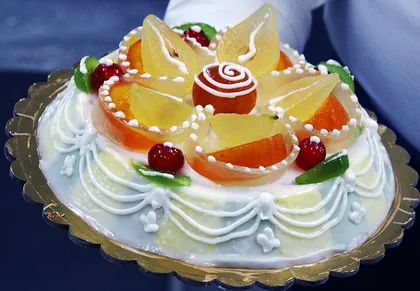 SweetsCassata SicilianaCassata siciliana is a layered Palermo cake: sponge soaked in liqueur, sweetened sheep's-milk ricotta studded…
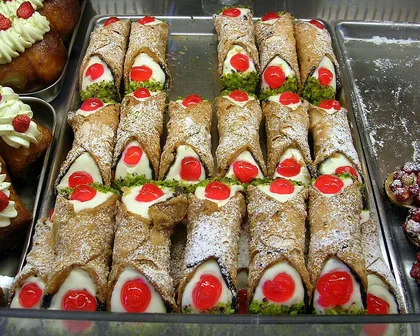 SweetsCannoliIt has to be filled when you order it, and anywhere that fills them in advance has already lost: the fried…
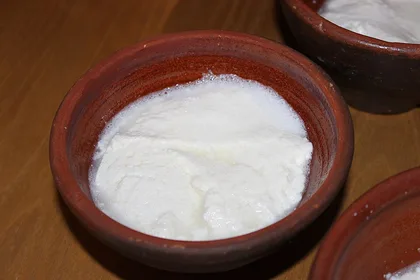 CheeseRicottaRicotta is not a cheese. It is a dairy product made from whey, the liquid left over after cheese has been…
 SweetsGelatoGelato is not ice cream translated. It carries less fat (4-8% against 10-18%), holds far less air (20-35%…
 SweetsGranitaSicilian granita is churned, not crushed. Water, sugar and one flavouring (lemon, mulberry, almond, espresso)…
 SweetsCotognata (Quince Paste)Cotognata is quince pulp cooked with sugar and then air-dried for days in moulds until it sets into a firm…
 Pasta and breadAranciniArancini are deep-fried Sicilian rice balls: saffron rice moulded around a filling of meat ragù and peas, or…
 Fish and seafoodBottargaFifteen grams a head is enough, and that is not meanness: bottarga is the salted, pressed, air-dried roe sac…