What is Pandolce Genovese?
Pandolce genovese is a fruit-and-nut cake that Genoa has made for Christmas for at least four hundred years. Four ingredients define it: sultanas, pine nuts, candied citron and fennel seeds. The fennel is what makes it recognisable in the first bite and what surprises anyone expecting a straightforwardly sweet Christmas cake.
There are two versions and they are not variants of each other. Pandolce alto is leavened with a natural starter, rises into a dome, stays soft and moist, and lasts about a week. Pandolce basso has no natural leavening at all, only a chemical raising agent or nothing, and stands four or five centimetres high, is dense and crumbly like a rich shortcrust, and keeps for months.
The low version is a flattened disc with a cross scored into the top. The tall one is a squat dome, usually scored as well.
Compared with the great northern Italian Christmas breads, panettone and pandoro, pandolce is far less sweet, carries much more fruit relative to dough, and lacks the butter-and-vanilla perfume that defines Milanese and Veronese pastry. Most first-time tasters place it closer to a British fruit cake than to an Italian sweet bread, and that instinct is broadly right.
What does it taste like?
Fruit and fennel, in that order. The sultanas dominate, soft and winey and concentrated, with candied citron cutting through in sharp floral bursts and pine nuts adding a resinous, slightly waxy richness that no other Italian Christmas sweet has.
Then the fennel arrives. It is subtle in a good pandolce, an aniseed shadow behind the fruit rather than a flavour of its own, and it is what stops the cake from tasting like a generic fruit loaf. Orange flower water runs alongside it.
Sweetness is low by Christmas-cake standards, and there is no vanilla, no cinnamon and no mixed spice. What you get instead is butter, dried fruit and that faint liquorice-adjacent lift.
Texture depends on which one you have. The alto is springy and moist with an irregular open crumb; the basso is short and sandy, crumbling under the knife, closer to a rich biscuit than to cake.
How to use it
Serve at room temperature. Cut the alto into wedges like a panettone; cut the basso into thin slices, because it is dense and a thick slice is heavy going.
It is a cake for the end of a meal and for breakfast in equal measure. In Genoa the basso gets dunked in milk in the morning and eaten with a small glass of passito in the evening, and a day-old slice is worth thirty seconds in a dry pan to wake the butter up.
It works better with cheese than most people expect. The basso, being the less sweet of the two, holds up against aged pecorino or a mild gorgonzola, with the fennel bridging the fruit and the salt.
When the alto dries out, and it always does, toast the slices in butter, or use them for a spoon dessert with crème anglaise. Do not reheat a whole pandolce in the oven: the candied fruit caramelises at the edges and the fennel turns bitter.
How long it keeps
The two versions behave in opposite ways, so establish which one you have. Pandolce basso, the low one, was built to keep: in a tin or wrapped in its paper it holds two or three months at room temperature, and the first weeks improve it as the butter and candied fruit settle through the crumb. It dries slowly the whole time, which is exactly why the Genoese ritual of saving a slice until 3 February, San Biagio, works at all.
Pandolce alto is the reverse, seven to ten days at most, closed in a food bag that keeps its moisture in. After that it goes dry rather than soft, and it gets toasted or dunked instead of sliced plain. The fridge helps neither: it dries the tall one within a day and leaves the low one leathery. A cool dry cupboard is the place, and anything boxed carries the baker's own date.
Both freeze well, whole or in slices, for about three months. Thaw the tall one at room temperature inside its bag, so the moisture goes back into the crumb instead of evaporating off it.
Spot the real thing
Look at a cut section. The fruit should be plentiful and spread through the whole crumb, not gathered in the middle or sunk to the bottom: raisins, pine nuts and diced candied citron should turn up in every slice. Find the pine nuts and check that they are whole and pale. Industrial versions swap in flaked almonds, which cost a third as much and are obvious on sight.
Smell it. Fennel seed and orange flower water should both be present, with neither one taking over. One that smells only of butter and vanilla is a generic fruit cake with the wrong name on the box.
On the tall version, read the holes: irregular and elongated is the mark of a long natural rise, while small round holes all the same size mean a heavy dose of baker's yeast and a short schedule. On the low version, judge the crumble, which should shed a few crumbs under the knife; a rubbery one was overworked. Abroad it sits beside panettone, which is taller, lighter and far less dense with fruit.
How to pronounce Pandolce Genovese
pahn-DOL-cheh jeh-noh-VEH-zeh
Pandolce is three syllables with the stress in the middle; the 'ce' is soft, as in 'chair'. Genovese has the stress on the third syllable and a soft 'g' as in 'gender', with the 's' pronounced like a 'z'. Alto is AHL-toh, basso is BAHS-soh.
Pandolce Genovese compared
vsPanettone
Both are Italian Christmas breads with dried fruit, and that is where the resemblance ends. Panettone is a Milanese enriched dough taken through three long leavenings with a stiff sourdough starter, producing a tall, feather-light, buttery crumb with candied orange and raisins suspended in it. Pandolce carries roughly twice the fruit relative to dough, uses citron rather than orange as the lead candied fruit, and adds pine nuts and fennel seed. Even the tall version is denser and drier than panettone, and considerably less sweet; the low version is not a bread at all. If you find panettone too airy and too sweet, pandolce is the answer.
| This | Panettone | |
|---|---|---|
| City | Genoa | Milan |
| Leavening | Sourdough (alto) or none (basso) | Stiff sourdough, three risings |
| Fruit load | Very high, up to half the weight | Moderate, suspended in the crumb |
| Candied fruit | Citron above all | Orange |
| Nuts | Pine nuts, always | None inside; almonds on the glaze |
| Aromatics | Fennel seed, orange flower water | Vanilla, butter, citrus zest |
| Crumb | Dense (alto), short and sandy (basso) | Tall, open, feathery |
| Keeps | A week (alto), months (basso) | Two to three weeks |
vsChristmas pudding
The comparison British readers reach for, and it is a fair one for the low version. Both are dense, fruit-dominated, alcohol-scented Christmas sweets built to survive storage, and both belong to a medieval logic of preserving fruit in a rich batter. But Christmas pudding is steamed for hours, bound with suet and breadcrumbs, black with treacle and mixed spice, and served hot with brandy butter. Pandolce basso is baked, made with butter, pale gold inside, spiced only by fennel, and served at room temperature in thin slices. It is drier, far less sweet and much less spiced.
| This | Christmas pudding | |
|---|---|---|
| Cooking | Baked, about an hour | Steamed for four to eight hours |
| Fat | Butter | Suet, traditionally beef |
| Colour | Pale gold | Almost black |
| Spice | Fennel seed only | Mixed spice, nutmeg, cinnamon, cloves |
| Served | Room temperature, thin slices | Hot, flamed, with brandy butter |
| Ageing | Weeks to months in a tin | Months to a year, fed with spirits |
vsAlto vs basso
The choice to make before you buy, because they behave completely differently. The alto is the older form and the one Genoese households rate most highly: sourdough-leavened over twelve to sixteen hours, domed, soft, moist, and gone within a week. The basso is the nineteenth-century pastry-shop version, easier to make, and engineered to last: the one sold in tins, exported, and used for the slice kept until February. Take the alto if you are eating it within days and want softness; take the basso if you are travelling with it, posting it, or want something to slice thin alongside cheese.
| This | Alto vs basso | |
|---|---|---|
| Leavening | Natural starter, 12-16 hours | Chemical or none |
| Height | Domed, 10-15 cm | Flat disc, 4-5 cm |
| Texture | Soft, moist, open crumb | Short, sandy, crumbling |
| Shelf life | Seven to ten days | Two to three months |
| Price | 22-34 euro a kilo | 18-28 euro a kilo |
| Exported | Almost never | Yes, the version sold abroad |
Pandolce Genovese substitutes
- Anise seed for fennel seed
If fennel seed is unavailable, anise seed is the nearest aromatic and shares the same family of notes, though it is sharper and more penetrating. Use less than the recipe states or it will take over, which is the single most common way to ruin a homemade pandolce.
0.7:1 - Candied orange peel for candied citron
Citron is milder, more floral and more expensive, and it is the correct fruit. Good candied orange peel is an honest substitute; a tub of cheap dyed mixed peel is not, and it will make the cake taste generic.
1:1 - Chopped blanched almonds for pine nuts
Industrial producers make this swap to cut costs and it is visible in the slice. Almonds give crunch but not the resinous, buttery quality that pine nuts bring. If you use them, toast them lightly first and accept that the cake will read differently.
1:1 by weight - Marsala or sweet sherry for the orange flower water
Orange flower water is hard to dose and easy to find in Middle Eastern groceries; if you have none, a spoonful of marsala, vin santo or sweet oloroso in the fruit soak gets you a rounder, less floral version that still works.
2 tbsp per 500 g flour - Panettone or a British fruit cake as a stand-in
Neither is pandolce, but each covers half of it. Panettone matches the alto for softness and format while being sweeter and more aromatic; a plain, lightly spiced British fruit cake matches the basso for density and keeping. Add a pinch of crushed fennel seed to either and the resemblance improves noticeably.
1:1
Where to buy it
In Genoa, from the pastry shops of the old town, at 18 to 28 euro a kilo for the basso and 22 to 34 for the alto. Standard sizes are 500 g and 1 kg. The basso is available in the city year-round, which is unusual for an Italian Christmas sweet; the alto appears only in December and is worth ordering in advance from a shop that genuinely uses a natural starter.
Industrial tins run 8 to 14 euro a kilo. The gap is fruit percentage, since artisan versions push it towards half the total weight, and pine nuts, which cheap producers replace with flaked almonds. You can see both in a cut slice.
Abroad, only the basso travels: 14 to 22 dollars a pound in US Italian delis, 22 to 35 pounds a kilo in the UK, almost exclusively in December. The alto is rarely exported because its shelf life does not survive the journey.
Check the ingredient list for finocchio or fennel seed. A pandolce without it is a fruit cake wearing the wrong name.
Where to eat it in Italy
Genoa, in the caruggi, the narrow lanes of the old town, where the historic pasticcerie sit within a few dozen metres of each other. Via Soziglia is the street: Pietro Romanengo fu Stefano, confectioners since 1780 and still candying their own fruit, and Klainguti, trading since the early nineteenth century, tell the city's sweet history between them.
The Mercato Orientale, the covered market off via XX Settembre, is where Genoese households buy the candied peel and dried fruit to make it at home, which many still do.
Along the coast, the pasticcerie of Camogli, Santa Margherita and the Cinque Terre villages make their own versions. The Cinque Terre trip pairs well with the cake for a specific reason: Sciacchetrà, the local passito, is the wine pandolce is meant to be drunk with, and the producers sell directly.
December is the season, but Genoa is the one place you can buy a good basso in July.
Further reading
Frequently asked questions
What is the difference between pandolce alto and pandolce basso?
The alto is leavened with a natural starter over twelve to sixteen hours, rises into a dome, and stays soft for about a week. The basso has no natural leavening, stands four or five centimetres high, is short and crumbly like rich shortcrust, and keeps for two to three months. Same fruit, two different cakes.
Why does pandolce contain fennel seeds?
They are its aromatic signature, inherited from a Mediterranean tradition older than the northern Italian Christmas breads. The dose is small, under a teaspoon per kilo of flour, and it is the ingredient everyone recognises and the one that ruins the cake if overdone.
Is pandolce the same as panettone?
No. Pandolce carries far more fruit relative to dough, uses candied citron rather than orange, includes pine nuts and fennel seed, and is much less sweet. Only the tall version resembles panettone at all, and even then it is denser and drier. The low version is not a leavened bread in any sense.
What is the slice of San Biagio?
A Genoese custom: one slice of the Christmas pandolce is set aside and eaten on 3 February, the feast of Saint Blaise, protector of the throat. It only works with the basso, which after two months is dry but perfectly edible, which is precisely the point of the ritual.
How long does pandolce keep?
The basso keeps two to three months in a tin at room temperature and improves over the first few weeks. The alto lasts seven to ten days. Both freeze for three months; refrigeration ruins both, drying the alto and toughening the basso.
Related foods
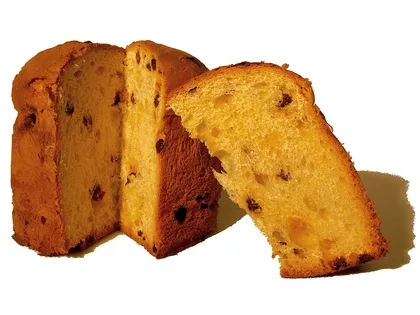 SweetsPanettonePanettone is Milan's Christmas bread: a tall, domed sourdough cake with butter, egg yolk, sultanas and…Pasta and breadFocacciaTwo centimetres tall, dimpled with the fingertips, flooded with a brine of water, salt and olive oil before…
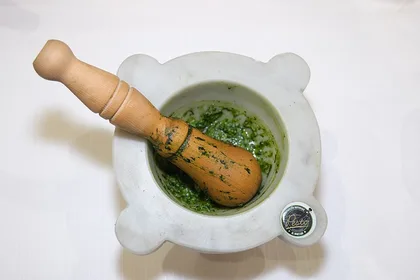 Oil and preservesPesto GenoveseHeat never touches this sauce, and by the rule neither does a blender: basil pounded in a marble mortar with…Fish and seafoodSardinesSardines are not small anchovies. They are a different species with a different snout, a different mouth and…
 Pasta and breadTrofieTrofie are the pasta that pesto was made for: short, tapered twists of flour and water, rolled one by one…
 Pasta and breadFarinataFarinata is a paper-thin chickpea flour pancake baked in a copper pan in a blistering wood oven.Fish and seafoodCantabrian AnchoviesCantabrian anchovies are caught in the Bay of Biscay in spring, cured under salt for six to eighteen months…
 Pasta and breadTorta di Ceci (Cecina)Chickpea flour, water, olive oil and salt, baked in a wide copper pan in a fierce wood oven.