What is Saffron?
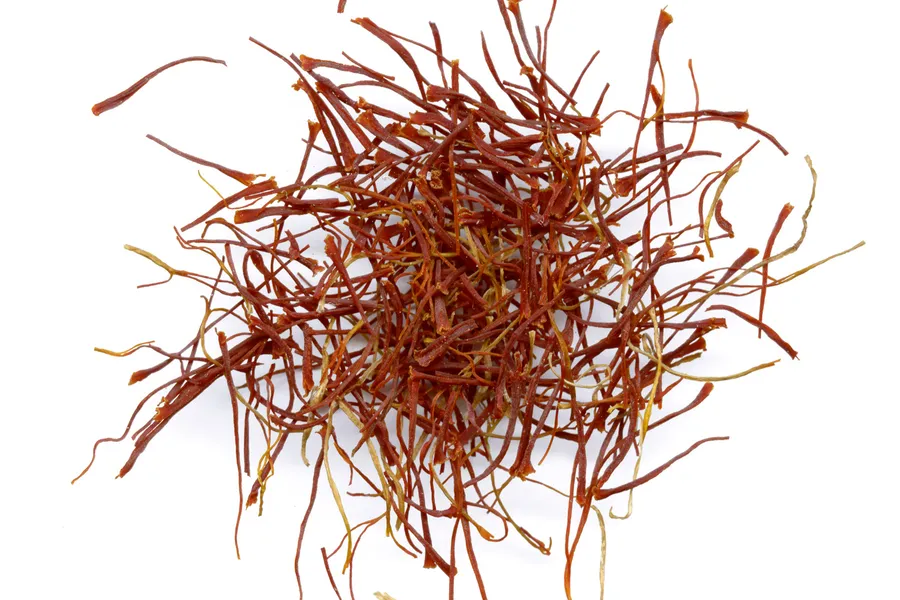
Saffron is the female part of a flower. Each purple Crocus sativus bloom contains one pistil that splits into three bright red stigmas; those three threads, separated from everything else and dried, are the spice. Petals, yellow stamens and the white style are not saffron and are worth nothing.
The plant cannot reproduce on its own. Crocus sativus is a sterile triploid that sets no viable seed, so it has been propagated for thousands of years only by dividing its corms: every saffron plant on earth is a clone passed from field to field.
Italy has three protected designations: Zafferano dell'Aquila DOP on the Navelli plateau in Abruzzo, at 700 metres between the Gran Sasso and the Sirente; Zafferano di Sardegna DOP from San Gavino Monreale, Turri and Villanovafranca in the Marmilla; and Zafferano di San Gimignano DOP in Tuscany, documented in city records since 1228. All three allow whole threads only and forbid powder outright.
Quality is measurable. ISO 3632 grades saffron into categories I, II and III using three lab readings: crocin for colouring strength, picrocrocin for bitterness, safranal for aroma. Category I starts at 190 colouring power; Italian DOP saffron routinely tests above 200 and often above 240, which means you need less of it per dish.
Globally Italy is a rounding error: a few hundred kilos a year against a world crop of two to three hundred tonnes, roughly 90% of it Iranian.
What does it taste like?
Hay, honey and something faintly metallic and iodine-like, with a bitter edge underneath and a floral sweetness on top. It is not a warm spice, since there is nothing of cinnamon or clove about it, and it is not simply a colouring. Real saffron smells of a barn in summer and tastes slightly medicinal on its own.
Infused into rice, milk or broth it turns the dish orange-gold and leaves a long, faintly bitter finish that keeps butter and cheese from tasting flat. Used with a heavy hand it stops being aromatic and starts tasting like cough medicine, which is why the dose matters as much as the quality. Abruzzese saffron dried over embers carries a light toasted note that oven-dried Sardinian saffron does not have.
How to use it
Never sprinkle saffron dry onto a finished dish. Its colour and aroma compounds are water-soluble and need time in a warm liquid to come out of the threads.
Either grind the threads in a mortar with a pinch of coarse salt or sugar as an abrasive and dissolve the powder in two tablespoons of warm stock, water, milk or white wine; or better, steep the whole threads in a little warm, never boiling, liquid for twenty minutes, or overnight in the fridge. Use the liquid and the threads together.
Dose 0.1 to 0.15 grams for four people, about fifty stigmas. Doubling it does not double the perfume; it makes the dish bitter and medicinal.
Add it late: in risotto during the last two or three minutes or straight into the final beating-in of butter and Parmigiano; in soup, off the heat; in bread, into the liquid of the dough. Long boiling destroys safranal, the aromatic fraction. Fat and alcohol extract it as well as water, so a milk infusion for a custard works too.
Classic uses: risotto alla milanese; Sardinian malloreddus, fregola and ricotta pardulas; fish soups; mussels and prawns.
How long it keeps
Saffron keeps by being kept away from light, heat, air and damp. The right container is small, airtight and opaque, a tin or amber glass rather than a clear jar on an open rack, stored in a cool dark cupboard. Light breaks down the crocin that carries the colour, and warmth drives off the volatile safranal that carries the aroma, which is why a jar by the hob fades far faster than the same jar in a drawer. The fridge is not the answer either, since every opening deposits condensation on the threads.
Whole threads hold on to their strength far longer than ground saffron, which loses its aroma within months. Producers date the jar by harvest year, and the change afterwards is gradual rather than sudden: over two or three years the red dulls towards brown, the perfume flattens, and threads that have taken up moisture stop snapping and turn limp. Keep it away from strongly scented spices, because it picks up their aroma. The harvest year and the producer are the reference.
Spot the real thing
Buy threads, never powder, because powder is where substitution happens. Each thread is a single stigma: trumpet shaped, flared and slightly ragged at one end, tapering at the other, and deep red along its whole length. Italian DOP saffron from L'Aquila, San Gimignano and Sardinia is sold with the pale style removed, so you should see very little yellow. Dry threads are brittle and snap when pressed. The smell is hay and honey with a metallic edge. Dropped into cold water, real saffron gives up its colour slowly over ten to twenty minutes while the thread itself stays red.
What is sold in its place abroad: safflower, often labelled Mexican saffron, which is flat orange-yellow petals with almost no smell; turmeric; marigold; and dyed corn silk. All of them bleed colour into water instantly and go pale. Price is the clearest signal of all. Real saffron retails around 10 to 30 euro per gram, so jars are sold in tenths of a gram, and a full gram for a few euro is not saffron. DOP jars carry a consortium seal and a harvest year.
How to pronounce Saffron
dzahf-feh-RAH-noh
Four syllables, stress on the third. The opening 'z' is a voiced 'dz', as at the end of 'kids', not an English 'z'. The double 'ff' is held slightly longer than a single one. L'Aquila, the Abruzzo appellation, is 'LAH-kwee-lah'.
Saffron compared
vsGround saffron powder
Whole threads can be inspected; powder cannot. Powder is the format in which adulteration with turmeric, safflower and marigold is easy, common and effectively invisible, which is why all three Italian DOP disciplinari ban it. Buy threads unless the producer is named on the tin.
| This | Ground saffron powder | |
|---|---|---|
| Verifiable by eye | Yes: trumpet-flared red stigmas | No: every orange powder looks alike |
| Common adulterants | Dyed fibres, added yellow style | Turmeric, safflower, marigold, spent re-dyed stigmas |
| Italian DOP status | The only permitted format | Banned under all three DOPs |
| Shelf life | Two to three years | Six to twelve months |
| Convenience | Needs 20 minutes to infuse | Dissolves instantly |
vsIranian saffron
Iran grows about 90% of the world crop and much of it is excellent, so this is not a quality-versus-junk comparison. What Italian DOP saffron buys you is traceability to a named plateau, whole stigmas only, and lab values consistently above ISO category I. What Iranian saffron buys you is the same spice for a quarter of the price.
| This | Iranian saffron | |
|---|---|---|
| Share of world crop | Under 1% | About 90% |
| Retail price | EUR 15-40 per gram | EUR 3-8 per gram |
| Grades | Whole stigmas, ISO category I, crocin 200-250 | Negin, Sargol, Pushal, Bunch, with quality varying widely |
| Drying | Almond or oak embers (Abruzzo), low heat (Sardinia) | Shade or mechanical drying |
| Traceability | Named producer, plot and harvest year | Often repacked and relabelled in Spain or the UAE |
| Harvest scale | Family plots, corms lifted yearly in Abruzzo | Large plantations in Khorasan |
vsTurmeric and safflower
Both are sold as cheap saffron and neither is saffron. Safflower is marketed as 'Mexican saffron' or 'bastard saffron' and is dried florets, not stigmas. Turmeric is a rhizome. They colour; they do not taste remotely alike.
| This | Turmeric and safflower | |
|---|---|---|
| What it is | Three stigmas of a crocus flower | Safflower florets or turmeric root |
| Colour released | Slow, clear golden orange | Instant opaque yellow, or weak red-orange |
| Aroma | Hay, honey, iodine | Earthy and gingery / almost none |
| Price per gram | EUR 3-40 | Cents |
Saffron substitutes
- Nothing, and a smaller quantity of the real thing
The honest answer first: no spice reproduces saffron. If cost is the problem, buy a gram of good Iranian threads rather than a substitute: it runs eight to ten risottos.
0.1 g serves four people - Turmeric
Colour only, and it will taste of turmeric. Acceptable where saffron was decorative; never in risotto alla milanese, where saffron is the flavour.
1/4 teaspoon turmeric per 0.1 g saffron - Safflower (cartamo, 'Mexican saffron')
Neutral in taste, weak in colour, cheap. Infuse longer than you would saffron. Useful in breads where you want a yellow crumb.
1 teaspoon florets per 0.1 g saffron - Annatto (achiote)
Strong orange colour with a faint peppery note. The closest thing to saffron's visual effect in a rice dish.
1/2 teaspoon seeds steeped in warm oil per 0.1 g saffron - Ground saffron from a named producer
If threads are unavailable, powder from a producer who prints harvest year and ISO category is a fair fallback. Anonymous powder is not.
1:1 by weight, used immediately
Where to buy it
In the US, buy from spice specialists who publish origin and harvest year rather than from supermarket jars (Rumi Spice, Burlap and Barrel and Kalustyan's all do) and from Italian importers such as Eataly and Gustiamo, who carry Abruzzese and Sardinian DOP saffron in sealed vials. In the UK, Steenbergs, Sous Chef, Persepolis in Peckham and Italian delicatessens are the reliable route.
Buy whole threads in glass or tin, never loose in a market bag, and check four things on the label: the exact DOP name, ISO 3632 category I, harvest year and net weight in grams. A 0.5 g vial is the sensible first purchase.
Expect roughly 15 to 40 euros per gram for Italian DOP, about 450 to 1,200 dollars an ounce, or 13 to 35 pounds per gram. Good Iranian threads cost a quarter of that, and anything sold as Italian below 10 euros a gram is not Italian. Do the cold-water test at home: real saffron blooms slowly into clear gold and the threads stay red.
Where to eat it in Italy
Navelli and Civitaretenga, in the province of L'Aquila, at the very end of October and the first days of November. That is the harvest week, and several farms on the plateau let visitors join the evening stripping of the flowers: an hour of it explains the price better than any label. Local restaurants put saffron in everything, ice cream included.
San Gavino Monreale in Sardinia, where the saffron festival runs between November and December and the fields start at the edge of town. Turri and Villanovafranca nearby sell direct from the growers, and trattorie across the Marmilla use it in malloreddus and ricotta pardulas as an everyday ingredient.
San Gimignano in Tuscany, where a handful of farms still grow it among the vineyards. And Milan, for the dish that made it famous: the old trattorie still finish risotto alla milanese to order, and one spoonful separates real threads from a supermarket sachet.
Further reading
Frequently asked questions
Why is saffron so expensive?
One kilo needs 150,000 to 200,000 flowers, picked by hand at dawn across a three-week window, opened one at a time the same day to remove three red stigmas each, then dried at a five-to-one loss, about five hundred hours of manual work per kilo, with no step that can be mechanised.
How much saffron do I need for risotto for four?
0.1 to 0.15 grams, roughly fifty threads. Steep them in a little warm stock for twenty minutes and add the infusion in the last few minutes of cooking. More turns bitter rather than more aromatic.
Are saffron threads better than powder?
Yes. Threads can be inspected and tested; powder is where adulteration with turmeric, safflower and marigold happens, because nothing is visible. All three Italian DOPs permit whole stigmas only.
How can I tell if my saffron is fake?
Drop a few threads in half a glass of cold water. Real saffron releases a clear golden yellow over ten to fifteen minutes while the threads stay red. Instant red or orange water with whitening threads means dyed fibres; instant opaque yellow means turmeric.
Is Italian saffron better than Iranian?
Not automatically. Iran grows about 90% of the world's saffron and much of it is excellent. Italian DOP saffron offers whole stigmas only, crocin above ISO category I, and traceability to a named field and harvest year. You buy certainty as much as flavour.
Related foods
 Vegetables and fruitCarnaroli RiceCarnaroli is the risotto rice with the highest amylose content: it sheds enough starch to build a creamy…
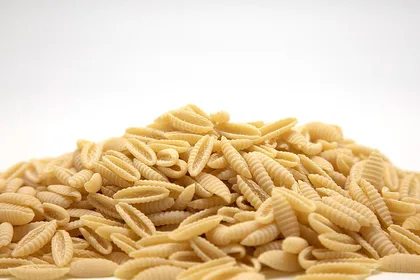 Pasta and breadMalloreddusThe ridges are not decoration: they hold sauce on a shape that would otherwise be smooth and slippery.
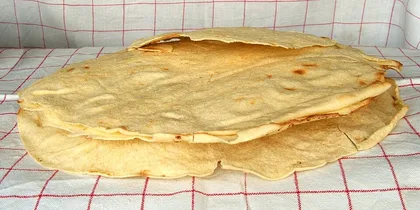 Pasta and breadPane carasauBaked twice because it had to survive months in a shepherd's saddlebag: a paper-thin disc of durum semolina…
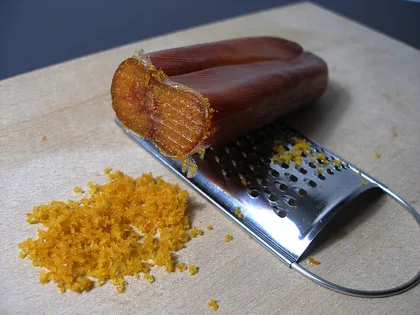 Fish and seafoodBottargaFifteen grams a head is enough, and that is not meanness: bottarga is the salted, pressed, air-dried roe sac…Oil and preservesStrawberry Tree HoneyStrawberry tree honey is bitter, and the bitterness is the product rather than a fault: it is one of the very…
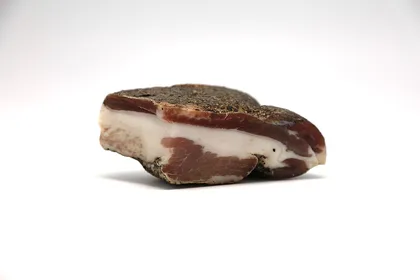 Cured meatsGuancialeGuanciale is cured pork jowl: unsmoked, rubbed with salt and pepper, aged for one to three months.
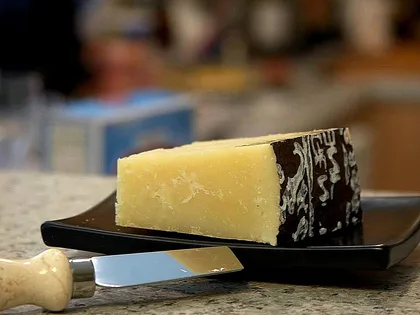 CheesePecorino RomanoPecorino Romano DOP is a hard, dry-salted sheep's milk cheese aged at least five months, made in Sardinia…
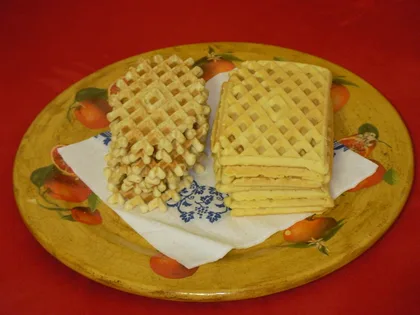 SweetsPizzellePizzelle are thin anise-scented Italian waffle cookies pressed between two engraved iron plates.