What is Strawberry Tree Honey?
Miele di corbezzolo is a monofloral honey from the nectar of Arbutus unedo, the strawberry tree of the Mediterranean maquis. Sardinia is by a wide margin the main producer.
What defines it is bitterness. Not intensity, not strength, not a balsamic edge, but actual bitterness with an extremely long finish. The compound responsible is homogentisic acid, which laboratories also use as the marker to authenticate it.
Freshly extracted it is amber with greenish or grey glints, but it crystallises fast and very finely into a pale, opaque, spreadable paste. A jar still clear and liquid months after harvest is not pure strawberry tree honey.
On the nose and palate it reads as roasted and vegetal rather than floral: coffee grounds, dark cocoa, ash, raw artichoke, wet earth. Sweetness is present but arrives late and is immediately overtaken by the bitterness, which stays in the mouth for a good minute after the spoon.
It has no protected designation and never has. What guards it is laboratory analysis and, in practice, the price.
What does it taste like?
Like nothing else labelled honey. The first impression is roasted, burnt coffee grounds and unsweetened cocoa, followed by a green, vegetal note somewhere between raw artichoke and bitter leaf, and then a bitterness that expands rather than fades.
Sweetness is there but subordinate, which is what makes it work with cheese and fried pastry. It behaves less like a sweetener and more like an amaro in spoonable form.
The texture is fine-grained and creamy once crystallised, spreading like a stiff paste rather than pouring. That crystallisation is fast, expected and a sign of authenticity, not of age or damage.
How to use it
There is one canonical pairing and it is worth the airfare: seadas. The Sardinian pastry of thin dough filled with fresh sour cheese, fried and served hot, is covered with strawberry tree honey poured straight over. The salt of the cheese, the fried dough and the bitterness of the honey balance in a way no other honey manages, while acacia would make the whole thing cloying.
Cheese comes next. Aged pecorino sardo, fiore sardo, casizolu, and rich salty cheeses generally: the bitterness cleans the palate where a sweet honey would weigh it down. It works equally well with blues.
On bread with salted butter it is direct and badly underrated. In plain yoghurt a single teaspoon is enough.
In pastry, use it deliberately. Semifreddo, panna cotta, a bitter honey ice cream, or alongside 70 per cent dark chocolate, where the two bitternesses add up rather than argue. Keep it out of baked and enriched doughs, where long heat destroys the roasted aromatics you paid for.
On the savoury side it glazes game (wild boar, kid, roast Sardinian lamb) and is very good with foie gras. Add it off the heat, at the end.
How long it keeps
A closed glass jar in a dark cupboard between 10 and 20 degrees is all it asks, and honey holds that way for years. The refrigerator is counterproductive: cold speeds crystallisation and makes it coarse and hard, and a spot near the hob does the opposite kind of damage. Crystallisation itself is not something to fight here. Corbezzolo sets quickly and very finely, which is part of how the honey identifies itself, and the pale compact paste in the jar after a few months is the expected state rather than a change to correct.
If you need it liquid, stand the jar in water under 40 degrees and no hotter, never in a microwave, because the roasted coffee and cocoa notes leave above that line and do not come back. Use a dry clean spoon every time: water carried into the jar dilutes the sugar locally and can start a fermentation, which shows itself as a vinous smell and foam on the surface. Over two or three years the paste grows firmer and the aroma quieter. The harvest year and the beekeeper on the label are what to read.
Spot the real thing
Taste comes first, and it is the part nobody can fake: this honey is bitter. Not strong, not balsamic, not merely dark, but properly bitter with a long finish that sits in the mouth afterwards. Anything simply deep and assertive, like chestnut or honeydew, is a different honey. The nose backs it up with coffee grounds and unsweetened cocoa; flowers, fruit or caramel belong elsewhere. Colour is amber with greenish or grey glints while liquid, and pale opaque beige once set, never pure white and never dark brown. It crystallises fast and very finely, so a jar still clear and runny months after harvest has usually been blended or heated.
Price is the sharpest filter of all. Yields per hive are so low that pure arbutus honey cannot come in under about 50 euros a kilo, and the 250 gram jars at six or seven euros on souvenir shelves are blends in which corbezzolo, if present, is the minority. Look for the beekeeper, the collection area and the harvest year, which serious producers always print. In English it is sold as strawberry tree, arbutus or bitter honey.
How to pronounce Strawberry Tree Honey
MYEH-leh dee kor-BEHT-tsoh-loh
Miele is two syllables, not three: the 'mie' is a single glide, MYEH-leh, and the final 'e' is pronounced. Corbezzolo takes the stress on the second syllable, and the double 'zz' is a hard 'ts' as in 'pizza': kor-BEHT-tsoh-loh.
Strawberry Tree Honey compared
vsOrdinary honeys (acacia, wildflower, orange blossom)
The everyday honeys sit at the opposite end of the spectrum: sweet, floral, pale, slow to crystallise and priced in single figures. Strawberry tree honey is not a premium version of them, it is a different kind of ingredient, and it fails in most places they succeed: in tea, on toast for a child, in a marinade that needs sweetness.
| This | Ordinary honeys (acacia, wildflower, orange blossom) | |
|---|---|---|
| Dominant taste | Bitter, roasted | Sweet, floral |
| Colour | Amber-green, then pale opaque | Pale gold, clear |
| Crystallisation | Fast and very fine | Slow (acacia barely at all) |
| Flowering | October to December | Spring and summer |
| Yield per hive | 2-5 kg in a good year | 20-40 kg |
| Price per kilo | 60-90 euro | 8-20 euro |
| Best with | Aged cheese, fried pastry, chocolate | Tea, toast, yoghurt, baking |
vsChestnut honey
The closest thing in the Italian range and the substitute to reach for. Chestnut honey is dark, tannic, aromatic and slightly bitter, and it partners cheese in the same way. The difference is where the bitterness sits: chestnut is astringent and tannic with real sweetness underneath, while strawberry tree is bitter to the end with sweetness in the background.
| This | Chestnut honey | |
|---|---|---|
| Bitterness | Dominant, long | Present, behind the sweetness |
| Character | Coffee, cocoa, ash | Tannic, woody, aromatic |
| Colour | Amber-green to pale paste | Very dark brown, stays liquid |
| Crystallisation | Fast and fine | Slow, often stays liquid |
| Season | October to December | June to July |
| Price per kilo | 60-90 euro | 12-25 euro |
vsManuka honey
The comparison English-speaking buyers reach for, because both are expensive, strongly flavoured and treated as more than a sweetener. Manuka is priced on its antibacterial activity and marketed medicinally; strawberry tree honey is priced on scarcity and bought for flavour. Manuka is earthy and mineral but fundamentally sweet. This one is not.
| This | Manuka honey | |
|---|---|---|
| Plant | Arbutus unedo | Leptospermum scoparium |
| Where | Sardinia, some Tuscany and Corsica | New Zealand, Australia |
| Taste | Bitter, roasted, vegetal | Earthy, mineral, sweet |
| Sold for | Flavour and rarity | Antibacterial activity (UMF/MGO) |
| Texture | Fine crystallised paste | Thick, thixotropic, gel-like |
| Price per kilo | 60-90 euro | 50-500 euro by grade |
Strawberry Tree Honey substitutes
- Chestnut honey
The nearest available substitute, widely sold across Europe and in Italian delis. It does the same job with cheese and fried pastry, but it is sweeter and more tannic, so use a little less and accept a woodier finish.
1:1, use slightly less - Buckwheat honey
The best North American stand-in: dark, malty, molasses-like and assertive enough to hold up to aged cheese. It brings no real bitterness, so add a few crushed cocoa nibs if you want to approximate the finish.
1:1 - Heather honey (Calluna)
Common in the UK, Ireland and northern Spain. Thick, jelly-like, strongly aromatic with a faintly bitter edge, and excellent with sheep's cheese. Its gel texture makes it harder to drizzle, so warm it gently first.
1:1, warm before pouring - Manuka honey
Expensive and easy to buy, with the earthy weight to survive next to a strong cheese. It is much sweeter and thicker, so use around two thirds the quantity and expect no bitterness at all.
2:3, two thirds the quantity - Mild honey with espresso and cocoa nibs
The improvised route when the dish needs the bitter-roasted profile more than the honey itself. Warm a neutral honey, stir in a teaspoon of strong espresso and a few crushed cocoa nibs per hundred grams, then strain.
1:1 by weight, infuse and strain
Where to buy it
Italian specialist importers and online honey merchants carry it in the US and the UK, almost always in 250 gram jars. Expect 45 to 75 dollars per pound in the US and 70 to 110 pounds per kilo in the UK. In Italy it runs 60 to 90 euro per kilo, with 250 gram jars at 18 to 25 euro.
Price is the most reliable filter that exists here. Pure strawberry tree honey cannot be produced below roughly 45 to 50 euro per kilo, because a hive yields two to five kilos in a good year and nothing at all in a bad one. A jar at ordinary honey prices contains ordinary honey.
Check the label for the beekeeper's name, the collection area and, above all, the harvest year. Serious producers always state the year, because seasons differ wildly.
Check the jar itself. It should be a pale, opaque, fine-grained paste rather than a clear liquid within a few months of harvest. And taste before you commit if you can: it must be bitter, not merely dark and strong. Blends cut with chestnut or wildflower honey are the most common misrepresentation.
Where to eat it in Italy
Barbagia, the mountainous interior of Sardinia and the heart of production: Fonni, Desulo, Gavoi, Orgosolo and Oliena, with the Gennargentu behind and the Supramonte to the east. Here the honey is eaten where it is made, next to pecorino and pane carasau, and beekeepers sell direct.
Nuoro is the practical base. From there, Orgosolo for its painted walls, Oliena for Cannonau and the Su Gologone spring, Dorgali and Cala Gonone for the coast.
The other collection areas are Ogliastra on the east coast and the Sulcis-Iglesiente in the south-west: dense uninterrupted maquis and very quiet roads.
November and December are when the hives are out in the maquis and the work can be seen, and autumn village festivals are the easiest way to eat seadas made properly. The honey itself keeps for years, so buying is not seasonal.
Frequently asked questions
Why is strawberry tree honey bitter?
Because of the composition of the nectar, and specifically homogentisic acid, which is also the compound laboratories use to authenticate it. The bitterness is the defining characteristic of the product, not a sign of spoilage or bad storage.
Why is it so expensive?
The strawberry tree flowers in autumn, October to December, when bees fly for only a few hours a day and a week of rain can wipe out the crop. A hive yields two to five kilos in a good year against twenty to forty for a spring honey, and many years yield nothing at all.
How do I know it is genuine?
Taste it: it must be bitter with a long finish, not merely dark and strong. Look at it: it crystallises fast and finely into a pale opaque paste within months, so a clear liquid jar is suspect. Smell it: coffee and cocoa. And check the price: below about 45 euro a kilo it cannot be pure.
What do I eat it with?
Seadas first, the fried Sardinian cheese pastry, with the honey poured over hot. Then aged and blue cheeses, bread with salted butter, dark chocolate and ice cream. Avoid it in baked goods, where sustained heat destroys the roasted aromatics.
Should I worry that it has gone solid?
No, that is what it does. Fast, fine crystallisation into a pale paste is normal and is one of the signs of authenticity. If you need it liquid, warm the jar in a water bath below 40 C, never higher and never in a microwave, or the aromatics are lost for good.
Related foods
 SweetsSeadasSeadas are large fried pastries filled with fresh, tangy sheep's cheese and covered in warm honey.
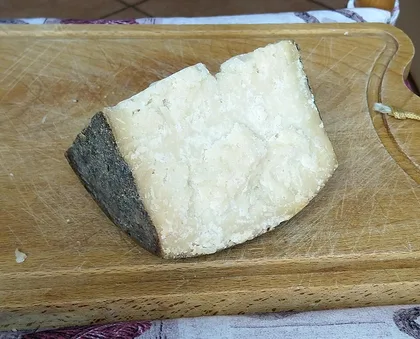 CheeseFiore SardoFiore Sardo DOP is the shepherd's pecorino of Sardinia: raw sheep's milk, lamb rennet paste, an uncooked…
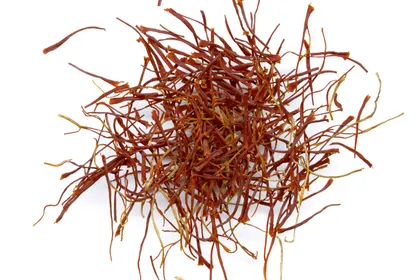 Oil and preservesSaffronOne kilo takes between 150,000 and 200,000 flowers, and every flower gives up three stigmas that have to be…
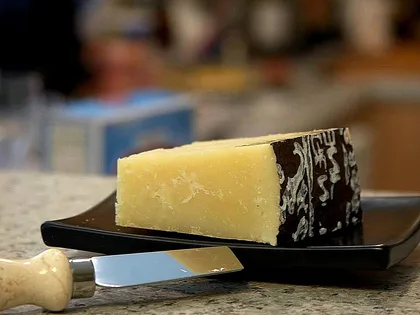 CheesePecorino RomanoPecorino Romano DOP is a hard, dry-salted sheep's milk cheese aged at least five months, made in Sardinia…
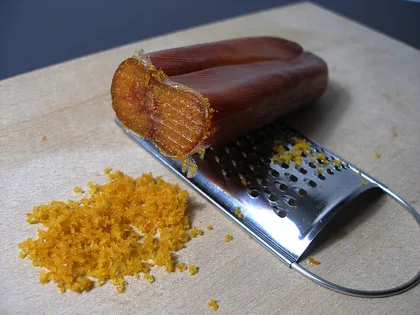 Fish and seafoodBottargaFifteen grams a head is enough, and that is not meanness: bottarga is the salted, pressed, air-dried roe sac…
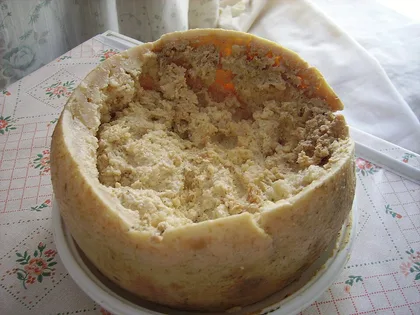 CheeseCasu MarzuCasu marzu is a Sardinian sheep's cheese whose ripening is carried on by the larvae of the cheese fly.
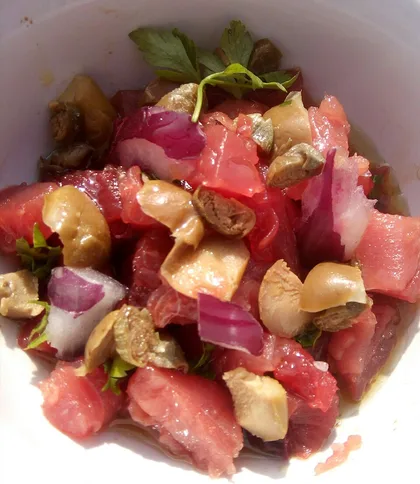 Fish and seafoodBluefin TunaAtlantic bluefin, Thunnus thynnus, is the fish Sicily and Sardinia built their tonnare around, with a…
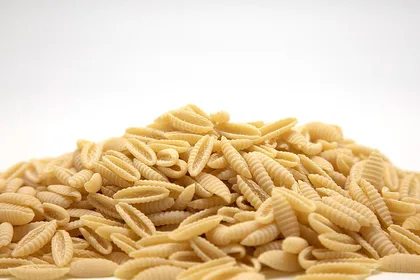 Pasta and breadMalloreddusThe ridges are not decoration: they hold sauce on a shape that would otherwise be smooth and slippery.