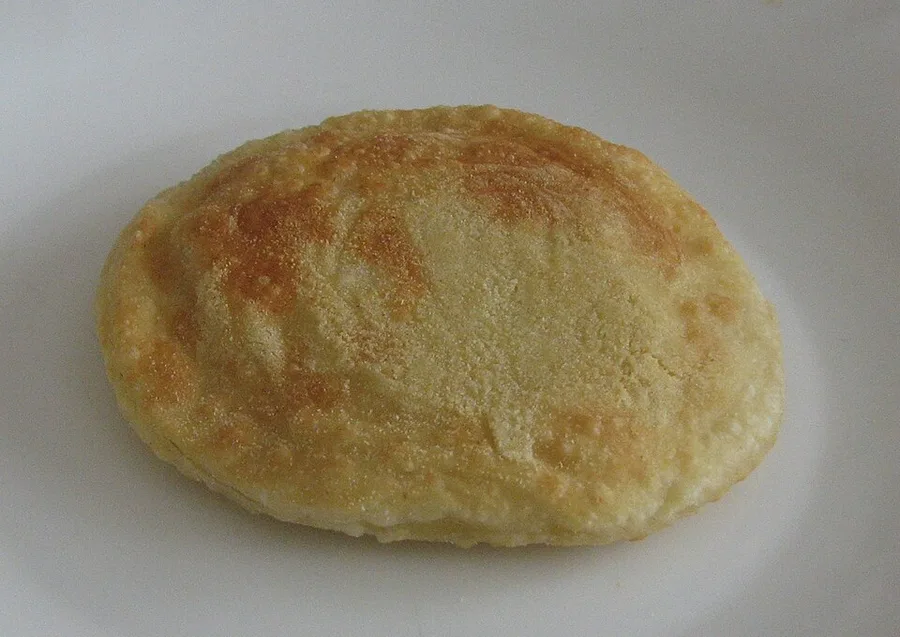
What is Seadas?
A seada is two discs of thin semolina pastry sealed around a disc of fresh sheep's cheese, deep-fried until the pastry blisters and puffs, then covered with warmed honey and eaten immediately, while the cheese still stretches.
Calling it a dessert requires a footnote. There is no sugar inside: the filling is pecorino two or three days old, deliberately left to acidify, usually scented with lemon or orange zest. Sweetness arrives only at the end, from the honey poured over, and in the traditional version that honey is corbezzolo, made from strawberry-tree blossom, which is genuinely bitter. Salty, sour, fatty and bitter, with sugar as the fourth element rather than the point.
That is also why Sardinians do not always eat them at the end of a meal. Seadas began as shepherds' food, a single dish made when there was fresh cheese to use up, and in plenty of households they still replace a course rather than follow one.
The spelling varies (seadas, sebadas, seada, sebada) because Sardinian alternates between b and v sounds. Menus almost always use the plural, even for one.
What does it taste like?
The first thing you register is not sweetness but salt and lactic sourness. Fresh pecorino left to acidify tastes tangy and faintly sharp, somewhere between young halloumi and very fresh curd, and it arrives molten and stretchy. The citrus zest cuts through the fat and is much more noticeable than you would expect.
The pastry is thin, blistered and shatteringly crisp where it has puffed, chewier where it wrapped the cheese. Lard in the dough is what makes those bubbles; olive-oil versions are flatter and less crisp.
Then the honey. Corbezzolo is dark amber and openly bitter, with notes people usually describe as coffee and artichoke, and it works against the cheese instead of alongside it. With a mild wildflower or asphodel honey the dish becomes sweeter and much more conventional: pleasant, but it loses the tension that makes it interesting.
How to use it
Deep-fry at 170°C in plenty of oil, a minute and a half a side, turning once with a slotted spoon. Cooler oil and the pastry soaks; hotter and it colours before the cheese has melted. Drain briefly on paper.
Warm the honey for a few seconds only, just until it flows. Overheating it destroys the aromatics, which in corbezzolo honey are the entire reason to buy it. Pour it over immediately and get the plate to the table in under two minutes: the cheese sets fast, and a lukewarm seada has lost the point.
One per person is a full dessert: they weigh 100 to 140 g each. Some Sardinian households skip the honey and use caster sugar, and some skip the sweetening entirely and eat them savoury at the end of a meal with red wine.
If you are making them, the professional step is melting the cheese first with a splash of water and the zest, spreading it half a centimetre thick to cool, then cutting discs. It makes the filling even and, more importantly, drives off water that would otherwise burst the pastry in the fryer.
How long it keeps
Frozen is how seadas travel and how they keep. Leave the pack sealed in the freezer until the day, go by the date on the box, and fry them straight from frozen at a slightly lower oil temperature so the cheese has time to melt before the pastry colours. Do not thaw them first: the pastry takes up water from the filling as they soften, turns slack and tears in the oil. Fresh ones from a Sardinian shop are refrigerated with a short date, a few days at most.
If you make them, freeze them raw on a floured tray until hard, then stack them with baking paper between the discs in a rigid box; they hold two to three months before the pastry starts to dry at the edges and crack. Fried ones do not wait: within ten minutes the cheese sets firm and the pastry softens as steam moves outward. A cold seada can be put back in a hot oven for a few minutes, though the filling never regains the same stretch. Honey goes on at the last second, never before storing.
Spot the real thing
A seada is a single disc, eight to twelve centimetres across, made of two thin sheets of durum semolina pastry sealed around a flat round of cheese, with a fluted edge cut by a pastry wheel. Held to the light the raw pastry is pale and almost translucent, and you can see the disc of filling inside. It should feel heavy for its size, 100 to 140 grams. The filling is fresh, unaged sheep cheese, faintly sour, scented with lemon or orange zest, and it stretches rather than runs when hot.
Outside Sardinia it is nearly always sold frozen, four to six to a pack, from Sardinian importers, and the spelling swings between seadas, sebadas and sevadas without meaning anything different. Read the filling on the pack: fresh pecorino or formaggio acidulo is the tradition, while ricotta, mozzarella or a curd blend makes something milder and less sour. It is not a sweet ravioli and not a Sicilian cassatella, both of which use a ricotta and sugar filling; the sugar in a seada arrives only as honey, at the table. Frozen packs run $12 to $20.
How to pronounce Seadas
seh-AH-dahs
Three syllables, stress on the middle one. The first syllable is 'seh', not 'see': nothing to do with the sea. The variant sebadas is seh-BAH-dahs. All vowels are open and the final 's' is pronounced. One of them is a seada, seh-AH-dah, but you will hear the plural used for a single piece.
Seadas compared
vsCasgiule
The baked cousins. Across Sardinia there is a family of cheese-filled pastries known regionally as casgiule or casgiatini in the north and as casadinas or pardulas further south: fresh cheese or ricotta mixed with sugar, egg, saffron and citrus zest, held in an open pastry shell and baked. They share the raw material with seadas and take the opposite route with it. Casgiule sweeten the cheese and bake it; seadas leave the cheese savoury and sour, fry it, and add sweetness only at the end, on top.
| This | Casgiule | |
|---|---|---|
| Cooking | Deep-fried | Baked |
| Shape | Sealed round, like a large raviolo | Open shell with a crimped rim |
| Filling | Fresh pecorino, no sugar | Cheese or ricotta sweetened, with saffron |
| Sweetened | Outside, with honey | Inside, with sugar |
| Served | Hot, within two minutes | Room temperature |
| Occasion | Restaurant dessert, shepherds' dish | Easter and festivals |
vsSaganaki and fried halloumi with honey
The comparison most English speakers reach for, and it is closer than it sounds: Greek and Cypriot cooks also fry cheese and pour honey on it. The difference is structural. Saganaki and halloumi are firm cheeses that hold their shape and never melt; seadas depend on a soft, acidified cheese that goes molten inside a pastry case. One is a slab of fried cheese; the other is a sealed pastry that happens to be full of cheese.
| This | Saganaki and fried halloumi with honey | |
|---|---|---|
| Cheese behaviour | Melts and stretches | Holds its shape, squeaks |
| Pastry | Thin semolina dough, sealed | None, or a light flour dusting |
| Honey | Bitter corbezzolo, poured warm | Usually sweet thyme honey |
| Course | Dessert, or a dish in its own right | Appetiser or meze |
| Frying | Deep-fried in oil or lard | Pan-fried in a little oil |
vsCannoli
Both are fried pastry around sweet-adjacent cheese, and that is where it ends. Cannoli use ricotta whipped with sugar and are assembled cold, seconds before serving, so the shell stays crisp against a cool filling. Seadas are fried with the cheese already inside and eaten hot, and the filling is savoury cheese that only meets sugar at the table.
| This | Cannoli | |
|---|---|---|
| Cheese | Fresh pecorino, unsweetened | Ricotta, sweetened |
| Temperature | Hot, molten | Cold filling, room-temperature shell |
| Assembly | Filled, then fried | Fried, then filled |
| Sweetener | Honey poured on top | Sugar mixed into the filling |
| Region | Sardinia | Sicily |
Seadas substitutes
- Fresh pecorino (primo sale), 2–3 days old
The correct cheese, and worth ordering from an Italian cheesemonger if you can. One caveat that matters: Italian pecorino is almost always made with animal rennet, usually lamb or kid, so traditional seadas are not vegetarian. There is no way around this with authentic cheese.
120 g cheese per seada - Young caciotta, tuma or fresh scamorza
All three melt properly and are easier to find. They are milder and less acidic than Sardinian fresh pecorino, so sharpen them: work in a tablespoon of lemon juice per 250 g of cheese while melting it, along with the zest.
1:1, plus 1 tbsp lemon juice per 250 g - Low-moisture mozzarella, drained
The supermarket fallback. It stretches beautifully and tastes of very little, so it needs both acid and salt. Drain it 12 hours in the fridge first or the filling will steam and burst the pastry.
1:1, plus 1 tbsp lemon juice and a pinch of salt per 250 g - Vegetarian version
Use a vegetarian-rennet young cheese that melts: a mild vegetarian Gouda, a young vegetarian cheddar or vegetarian mozzarella. Avoid paneer and halloumi: they hold their shape instead of melting, which defeats the dish. Replace the lard in the pastry with butter or olive oil.
1:1 for the cheese; 100 g butter per kg of semolina - Chestnut honey for corbezzolo
The best widely available stand-in, because it is one of the few honeys with real bitterness. Buckwheat honey also works and is easier to find in the US. Ordinary wildflower or acacia honey makes the dish simply sweet.
1:1 - Lard in the pastry
Lard is what makes the surface blister. Butter gives a decent result with a softer crust; olive oil gives a flatter, crisper, less bubbly pastry. If you use oil, roll the dough a fraction thinner.
100 g lard per kg semolina, or the same weight in butter
Where to buy it
Frozen seadas from Sardinian producers are now sold across Italy and shipped throughout the EU, and they are a reasonable product when the label names pecorino rather than generic cheese. In the US and UK you will find them in Italian delicatessens and through online Sardinian specialists, at roughly 12 to 20 dollars a pound or 16 to 26 pounds a kilo.
They are also very makeable at home, and the pastry is more forgiving than it looks: semolina, lard, warm water and salt, rolled thin.
The expensive item is the honey. Corbezzolo has a short autumn flowering and low yields, and runs 30 to 60 euro a kilo, more than the pastry it dresses. It is sold online by Slow Food Presidium producers and by Sardinian food exporters. Buy a small jar; it keeps for years in the dark, and if it crystallises a warm water bath below 40°C brings it back.
Where to eat it in Italy
In the Barbagia, at the agriturismi and village trattorie around the Gennargentu massif (Oliena, Orgosolo, Mamoiada, Fonni, Desulo) where the cheese comes from the same valley and the honey from someone in the village.
Between October and December, Cortes Apertas takes over Barbagia: every weekend a different village, around thirty across the season, opens its courtyards for bread, cheese and pastry workshops. It is the best chance to watch seadas being made by people who have made them all their lives.
In Ogliastra, around Baunei and Urzulei, they tend to be larger and the honey darker. In Gallura orange zest is used more than lemon.
Cagliari and Alghero restaurants serve them everywhere, competently, but the versions inland are on another level, and the drive across the Supramonte to get there is one of the best in Italy.
Frequently asked questions
Are seadas a dessert or a cheese dish?
Technically fried cheese with honey on it. There is no sugar in the filling: it is fresh, acidified sheep's cheese with citrus zest. Sardinians serve them at the end of a meal, but they originated as a shepherds' dish and are often eaten in place of a course rather than after one.
Are seadas vegetarian?
Traditionally no. The fresh pecorino is made with animal rennet, usually from lamb or kid, and the pastry is made with lard. Both can be swapped (a vegetarian-rennet melting cheese and butter or olive oil in the dough) but the authentic version is not suitable for vegetarians.
Seadas or sebadas: which is correct?
Both. Sardinian alternates between b and v sounds, so seadas, sebadas, seada and sebada all name the same thing. Menus generally use the plural even for a single piece.
Why is the honey bitter?
Because the traditional honey is corbezzolo, from strawberry-tree blossom, which flowers in autumn and yields one of the very few genuinely bitter honeys in the world, often described as tasting of coffee and artichoke. It is what balances the salt and fat of the melted cheese.
Can seadas be baked instead of fried?
You can bake them, and some kitchens do to serve many at once, but the pastry will not blister: it goes biscuity rather than crisp and bubbled. Deep-frying at 170°C is what produces the real thing.
Related foods
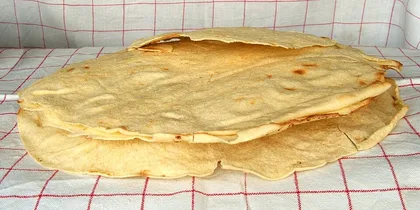 Pasta and breadPane carasauBaked twice because it had to survive months in a shepherd's saddlebag: a paper-thin disc of durum semolina…
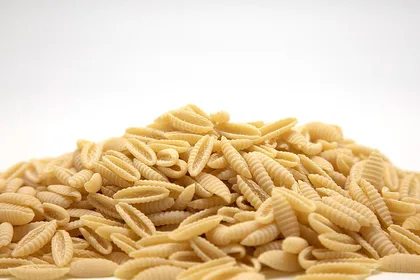 Pasta and breadMalloreddusThe ridges are not decoration: they hold sauce on a shape that would otherwise be smooth and slippery.
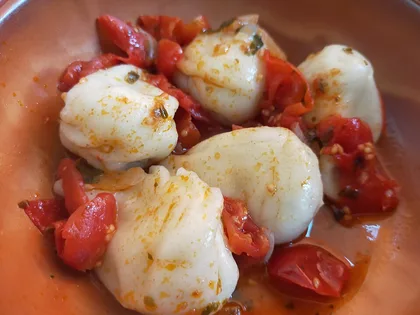 Pasta and breadCulurgionesCulurgiones are Sardinian filled pasta: potato, pecorino and mint sealed inside a semolina wrapper by hand…
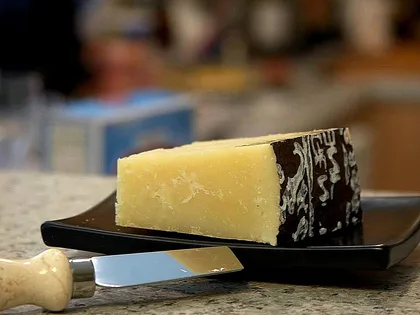 CheesePecorino RomanoPecorino Romano DOP is a hard, dry-salted sheep's milk cheese aged at least five months, made in Sardinia…
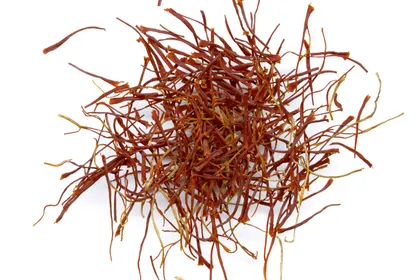 Oil and preservesSaffronOne kilo takes between 150,000 and 200,000 flowers, and every flower gives up three stigmas that have to be…
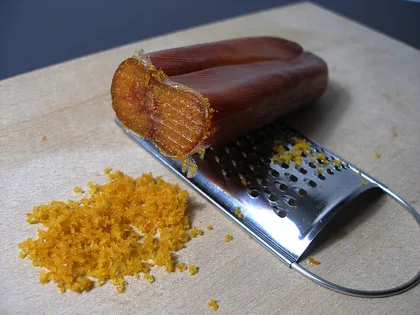 Fish and seafoodBottargaFifteen grams a head is enough, and that is not meanness: bottarga is the salted, pressed, air-dried roe sac…
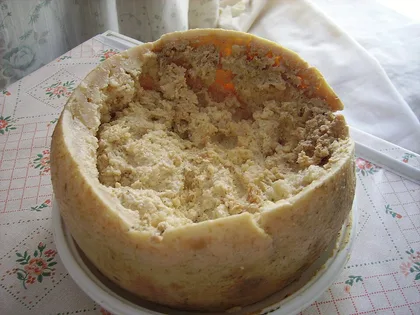 CheeseCasu MarzuCasu marzu is a Sardinian sheep's cheese whose ripening is carried on by the larvae of the cheese fly.
 Fish and seafoodBluefin TunaAtlantic bluefin, Thunnus thynnus, is the fish Sicily and Sardinia built their tonnare around, with a…