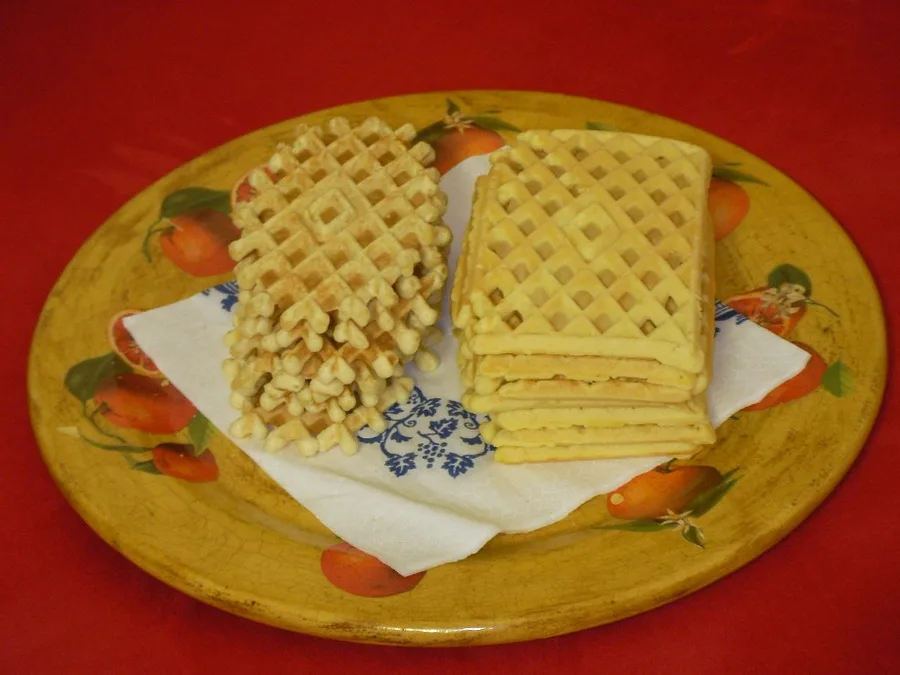
What is Pizzelle?
A pizzella is a disc of sweet batter cooked by compression between two heated, engraved iron plates. The engraving prints the pattern: a honeycomb grid in the most common version, parallel stripes in parts of the L'Aquila province, diamonds elsewhere. Thickness runs from one to five millimetres depending on the iron.
The name changes every few valleys, and none of them is wrong. Ferratelle is the standard Abruzzese word and comes from ferro, iron. Pizzelle is the name that emigrated. Cancelle, neole, nevole and catarrette all belong to specific districts.
There are two families. 'Closed' irons that clamp to a fixed gap produce thick, soft, cake-like cookies. 'Open' tong-style irons let the batter spread and produce very thin, brittle wafers. Same batter, two different cookies.
The defining flavour is anise, from seeds or from anisette liqueur. Lemon zest, vanilla and Aurum, Pescara's orange liqueur, are the accepted alternatives for people who do not like anise, and there are many.
What does it taste like?
Anise first, and unapologetically: a clean liquorice-adjacent perfume that is closer to fennel than to sweets. If you dislike black liquorice you will notice this immediately, which is why the lemon and vanilla versions exist.
Underneath, the flavour is plain and eggy: sugar, egg, butter or oil, and a toasted-wheat note from the hot iron. Not rich, not chocolatey, not remotely fudgy. A thin pizzella has almost no body: it shatters, dissolves, and is gone.
The thick soft version eats more like a small sponge cake with a crisp printed surface. Both are sweet but not very sweet, which is what makes them work with coffee, sweet wine or a spoonful of jam rather than as a standalone dessert.
How to use it
Work from a ratio rather than a recipe: per egg, 60 g sugar, 30-40 g melted butter or mild oil, 100 g flour, and either a teaspoon of anise seed or a tablespoon of anisette. Whisk eggs and sugar pale, stream in the fat, fold in flour and flavouring. The batter should drop from a spoon in a ribbon.
Heat the iron fully and grease it once, at the start only. Greasing between each cookie is the single most common cause of sticking. Spoon batter into the centre of the lower plate, close, press. Thirty to sixty seconds on an electric iron; about ninety seconds a side over a gas flame.
The first one is always a write-off. Accept it.
A finished pizzella stays flexible for roughly ten seconds. That is the entire window for rolling it around a wooden handle into a tube, or shaping it into a cone for ice cream. After that it sets and snaps.
Sandwich two with grape jam (in Abruzzo, scrucchiata, made from Montepulciano grapes) or fill rolled ones with sweetened ricotta. Crush the broken ones into a cheesecake base.
How long it keeps
Everything about keeping pizzelle comes down to moisture. They are a very dry biscuit, so they pull humidity out of the air and lose their snap, going leathery and pliable in a day or two in a damp kitchen. Let them cool completely flat before storing, since a warm one is still soft and will set into a curl, then stack them in an airtight tin with baking paper between the layers. Sealed and at room temperature they stay crisp for two to three weeks, longer in a dry climate. The fridge is the wrong place: it is humid, and they soften there faster than on the counter.
A few minutes in a low oven drives the absorbed moisture back out and returns the snap. Over months the butter in the dough oxidises and the aroma flattens, and the anise scent in particular fades noticeably. They freeze for a few months in a rigid container so they do not shatter, and are best thawed uncovered so condensation does not settle on the surface. Boxed ones carry a producer date on the packet.
Spot the real thing
A pizzella is thin enough that the edge goes translucent when you hold it to the light, and the pressed pattern, usually a snowflake, a grid or an old family crest, should be sharp on both faces rather than blurred. The colour is pale gold, not brown. It snaps cleanly rather than bending. The traditional Abruzzese flavouring is anise, which you smell before you taste; vanilla and lemon versions are mostly Italian-American. The ingredient list stays short: flour, eggs, sugar, butter or oil, flavouring.
The look-alikes are easy to sort out once you know them. Dutch stroopwafels are two thicker discs with caramel between them. Norwegian krumkake and goro come off a similar iron but are rolled into cones or cut into rectangles and are usually flavoured with cardamom. Generic waffle cookies in supermarket biscuit aisles are thicker and softer. In Italy the same thing goes by ferratelle, neole, cancellate or catarrette depending on the valley. Italian bakeries abroad tend to charge $8 to $14 a dozen, against $5 to $7 for a boxed supermarket tin.
How to pronounce Pizzelle
peet-TSEL-leh
Three syllables, stress on the second. The 'zz' is a hard 'ts', held: the same sound as in pizza, doubled. English speakers usually say 'pizza-ELLS' or 'pit-ZELL-ee'; the first drops the ending, the second turns it into a plural of a plural. One of them is a pizzella (peet-TSEL-lah). The Abruzzese name is ferratelle, feh-rah-TEL-leh.
Pizzelle compared
vsWaffles
The same principle, batter cooked between two hot patterned plates, and two entirely different things. A waffle is leavened, poured thick, and eaten hot and soft as a breakfast dish. A pizzella is an unleavened cookie batter pressed thin, cooked in under a minute, and eaten cold and crisp weeks later. The pizzella iron came first by several centuries and is a hand tool, not an appliance.
| This | Waffles | |
|---|---|---|
| What it is | A cookie | A breakfast or dessert cake |
| Batter | Stiff, spoonable, egg-and-sugar heavy | Pourable, leavened with yeast or baking powder |
| Thickness | 1-5 mm | 15-30 mm |
| Cook time | 30-90 seconds | 4-6 minutes |
| Eaten | Cold, crisp, keeps for weeks | Hot, soft, within minutes |
| Flavour | Anise, lemon or vanilla | Plain, served with toppings |
| Pattern | Fine honeycomb or stripes, decorative | Deep square pockets, functional: they hold syrup |
vsKrumkake
The Norwegian cookie that is the pizzella's closest relative anywhere in the world. Nearly identical batter, nearly identical iron, nearly identical technique, and both are traditionally rolled while hot into cones. The differences are flavouring, cardamom instead of anise, and what goes inside: whipped cream in Norway, jam or ricotta in Abruzzo.
| This | Krumkake | |
|---|---|---|
| Origin | Abruzzo, Italy | Norway |
| Flavouring | Anise seed or anisette | Cardamom, sometimes vanilla |
| Fat | Oil, butter or lard | Butter, and usually more of it |
| Pattern | Honeycomb, stripes, family crests | Ornate rosette and floral engravings |
| Shaped hot | Rolled into tubes or cones | Rolled into cones, almost always |
| Filled with | Grape jam, ricotta, chocolate | Whipped cream and berries |
| Irons interchangeable | Yes, in practice | Yes, in practice |
vsBrigidini di Lamporecchio
Italy's other anise wafer, from Tuscany, and the comparison that shows how much the iron matters. Brigidini use the same flavouring but a much smaller, flatter iron and a stiffer dough, so they come out tiny, amber, brittle and slightly curled. They are a fairground food sold hot from a stall; pizzelle are a household food made at home for feast days.
| This | Brigidini di Lamporecchio | |
|---|---|---|
| Region | Abruzzo | Tuscany, around Lamporecchio |
| Diameter | 10-15 cm | 4-6 cm |
| Texture | Crisp or soft, depending on the iron | Glassy, hard, always crisp |
| Colour | Pale gold | Deep amber, almost caramelised |
| Where you meet them | Christmas trays, weddings, home kitchens | Village fairs and market stalls, made on the spot |
| Can be rolled | Yes, while hot | No: they curl on their own and set hard |
Pizzelle substitutes
- A krumkake iron
Functionally interchangeable with a pizzelle iron. The pattern will be Nordic rather than Abruzzese and the plates are sometimes slightly smaller, but the batter, timing and results are the same.
1:1 - Store-bought pizzelle
Widely sold in the US around Christmas and worth having as a base for filling. They are almost always thin, anise-flavoured and made with synthetic anise oil, which reads sweeter and more persistent than seeds. Re-crisp them for five minutes at 150 °C / 300 °F before serving.
- Anise extract instead of anise seed
The most common substitution and the one people get wrong. Extract is far more concentrated than seeds and gives a smoother, less speckled result. Anisette liqueur sits between the two and also adds liquid, so hold back a spoonful of the fat.
1 tsp anise seed = 1/2 tsp anise extract = 1 tbsp anisette - Fennel seed instead of anise
Closer than star anise, which is a different plant with a heavier, medicinal profile. Crush fennel seeds lightly in a mortar first to release the oils.
1:1, lightly crushed - A thin waffle iron, as a last resort
It will work and it will not look right. Use the lowest gap setting, half the batter you think you need, and accept deep square pockets instead of a fine engraved pattern. The cookie will be thicker and softer.
1:1 batter, half the quantity per cookie - Gluten-free and vegan versions
A 1:1 gluten-free flour blend works well because there is no gluten structure to lose: the cookie is held together by egg and sugar. Vegan is harder: replace each egg with 60 g of aquafaba whipped to soft peaks and expect a more fragile wafer that must cool completely on the iron's edge before moving.
1:1 GF flour; 60 g aquafaba per egg
Where to buy it
In the US, pizzelle are easy: Italian grocers, Wegmans, and most supermarkets in the Northeast stock packaged ones from Christmas onward at 5 to 10 dollars a bag, and Italian bakeries in Pennsylvania, Ohio and New Jersey make them fresh. The iron is the real purchase: electric models from CucinaPro, Palmer, VillaWare and Cuisinart run 35 to 90 dollars, and a cast-iron stovetop one costs about the same and lasts forever.
In the UK they are rarer. Italian delicatessens carry imported packs at 4 to 8 pounds, and irons are mostly an online purchase. A Scandinavian krumkake iron is easier to find and does the same job.
In Abruzzo, bakeries sell them by weight year-round at 18 to 28 euros a kilo, usually in 200-300 g bags for 5 to 8 euros.
What to check on a packet: real anise seed rather than 'natural flavouring', and a pale even gold rather than mottled brown. Homemade, fifty pizzelle cost under three euros of ingredients, which is the strongest argument for buying the iron.
Where to eat it in Italy
Inland Abruzzo, where ferratelle are a year-round bakery item rather than a Christmas one: the belt running from Sulmona through Pescocostanzo to Castel di Sangro is the most reliable stretch.
Sulmona is the double bill: ferratelle and confetti, the sugared almonds the town has been making since the fifteenth century and which end up in wedding favours across Italy. The two often share the same box.
Summer village festivals in July and August are where you find them cooked to order on historic hand irons over a flame, eaten thirty seconds off the plate, which is when they are best.
In Rome, where Abruzzese migrants founded a good share of the historic trattorie, ferratelle still turn up on a few dessert lists, a quiet trace of that migration. And in the US, the Italian-American Christmas cookie tray has preserved the tradition better than some Abruzzese households have.
Frequently asked questions
What are pizzelle?
Thin Italian waffle cookies from Abruzzo, cooked between two engraved iron plates and traditionally flavoured with anise. In Abruzzo they are usually called ferratelle, after the iron. They can be thin and brittle or thick and soft, depending entirely on the iron used.
How do you pronounce pizzelle?
peet-TSEL-leh, three syllables with the stress on the second. The 'zz' is the hard 'ts' of pizza, held slightly longer. A single one is a pizzella.
Why do my pizzelle stick to the iron?
Almost always because the iron was not hot enough. Bring it to full temperature before the first cookie and grease it only once, at the start, because greasing between each one leaves excess fat that fries and glues. Expect to sacrifice the first cookie regardless.
Can you make pizzelle in a waffle iron?
You can cook the batter in one, but the result is a thick, soft cookie with deep square pockets rather than a thin engraved wafer. A Norwegian krumkake iron is a genuine substitute; a waffle iron is a compromise.
How long do pizzelle keep?
Thin ones stay crisp for three to four weeks in an airtight tin, provided the room is dry: humidity softens them within hours. If they go soft, five minutes at 150 °C / 300 °F restores them. Thick soft ones keep about a week.
Related foods
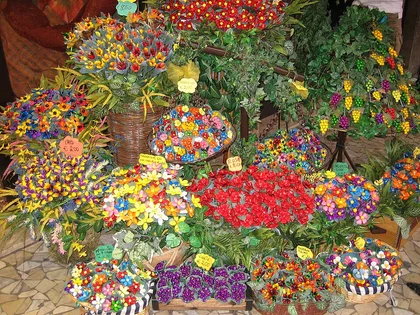 SweetsConfetti di SulmonaA whole Pizzuta d'Avola almond coated in nothing but sugar and water: no starch, no flour, no gelatine.
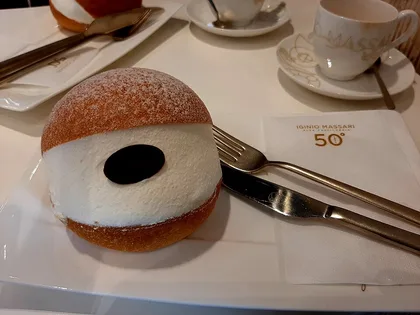 SweetsMaritozzoIn Rome this is breakfast at seven in the morning and nobody finds it odd: a soft, lightly sweet bun split…SweetsParrozzoA dome of ground almonds and semolina under a shell of dark chocolate, invented in Pescara in 1920 by the…
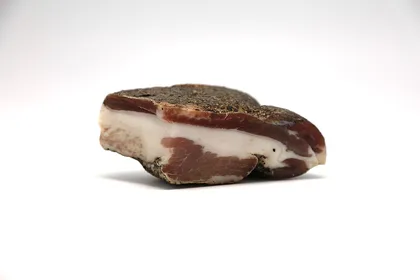 Cured meatsGuancialeGuanciale is cured pork jowl: unsmoked, rubbed with salt and pepper, aged for one to three months.
 CheeseScamorzaScamorza is cow's-milk pasta filata that has been tied off into a pear shape and hung to dry for one to two…
 Oil and preservesSaffronOne kilo takes between 150,000 and 200,000 flowers, and every flower gives up three stigmas that have to be…
 Pasta and breadMaccheroniThe most misunderstood name in Italian pasta. In Naples it means dried semolina pasta in general, in Abruzzo…
 Vegetables and fruitSulmona Red GarlicSulmona red garlic is white on the outside and red underneath: the colour is in the skins wrapping each…