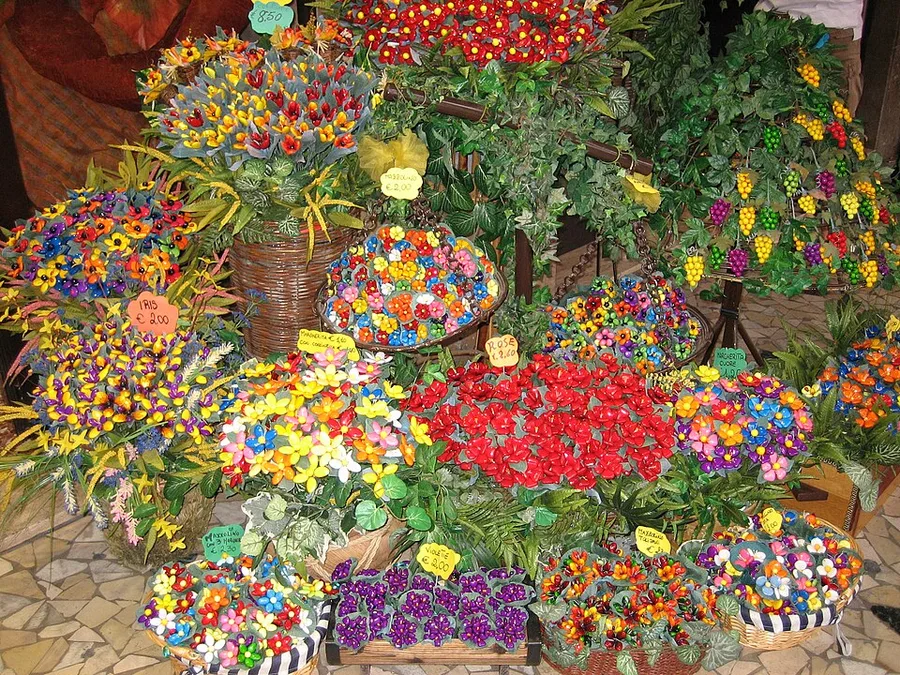
What is Confetti di Sulmona?
A confetto from Sulmona is a whole almond built up under dozens of paper-thin layers of sugar. Two ingredients: almonds and sugar, with water only to dissolve the second.
What defines the Sulmona school is what is left out. Industrial panning uses starch, flour or gelatine to bulk out the shell and cut the working time, which gives you a thick, round, surprisingly light sweet with a small or broken kernel inside. In Sulmona the coating is sugar alone, so it stays thin and clings to the nut.
The consequence is visible without tasting anything, and it is the fastest way to identify the real thing. A Sulmona confetto is oval and tapered, with two faint points: it has the shape of the almond inside it, because the sugar layer is too thin to disguise it. A perfectly spherical sugared almond has either a bulked-out shell or a kernel much smaller than it appears.
The reference almond is the Pizzuta d'Avola from Sicily: pointed, hard-shelled, chosen because it is dense, low in oil and does not go rancid under sugar. In the best confetti the almond is around 60% of the finished weight; in industrial versions it falls below 40%.
What does it taste like?
Much less sweet than it looks. The sugar shell is thin enough that it cracks and dissolves in a couple of seconds, and what fills the mouth afterwards is almond: dense, faintly bitter, toasted. The balance is the point: an industrial sugared almond is a mouthful of sugar with a nut somewhere in the middle, while a Sulmona confetto is a nut with a coating.
The texture goes in two stages. A clean, brittle snap, then the firm resistance of a whole almond that takes several bites to finish. If the shell crumbles rather than cracks, or if you reach two almond halves instead of one nut, the panning was rushed.
The plain white ones are the benchmark. Flavoured and chocolate-centred versions exist and are made well in Sulmona, but the white almond confetto is what the city is judged on.
How to use it
These are given more than they are cooked. The rule that matters is the number: five per wedding favour, an odd and indivisible count, one for each of the five wishes (health, wealth, happiness, fertility and long life). Three is used for some christenings, seven and nine for the most formal occasions.
The colours are a code and Sulmona takes it seriously. White for weddings, red for graduation, blue and pink for births, green for engagements, silver for a twenty-fifth anniversary and gold for a fiftieth. Giving the wrong colour for the occasion is a mistake people in Abruzzo notice.
The confetti flowers are the other half of the tradition: daisies, roses, wheat ears and whole bouquets built by binding confetti one by one with covered wire and tulle. You can buy them ready-made or commission them, and in the shops along Corso Ovidio you can watch them assembled by hand.
At the table the honest uses are few. Roughly crushed over a semifreddo or fiordilatte gelato they add crunch and almond, and they are served with coffee at the end of a meal, which is how they get eaten in Sulmona when no ceremony is involved.
How long it keeps
Humidity is the enemy here, not time. Sugar is hygroscopic: in a damp room the surface dulls, turns tacky and the confetti start sticking to one another. They belong in a closed container in a cupboard, away from heat and out of direct light. The fridge is the one place to avoid, because the condensation that forms when a cold confetto meets room air is exactly what marks the coating, and freezing does the same thing for the same reason.
Sealed and kept dry they hold twelve to eighteen months, and the limit is set by the almond rather than by the sugar: it loses its crunch and can take on a paint-like note as the oil in it oxidises. Chocolate-coated confetti run shorter at six to eight months, and above roughly 25 °C the cocoa butter migrates to the surface and shows as a pale film. Bomboniere already tied in tulle keep the same way, but the fabric lets damp through, so favours waiting months for a ceremony do better inside a closed box.
Spot the real thing
Shape is the first test and the most reliable. A confetto di Sulmona is oval and tapered with only the faintest points, so you can see a whole almond sitting inside. Perfectly spherical means the shell was bulked out with starch or flour. Weight is the second: at the same size a real one is heavier, because the almond is denser than its coating, and a handful that feels light is a handful of sugar. The third is the bite, where the sugar should break thin and clean onto a whole almond rather than two halves put back together.
Read the ingredients: almonds and sugar. Starch, flour, gelatine, gum arabic in quantity and added flavourings all point to a fast process, and in the chocolate versions the only legitimate addition is chocolate. Wedding white here is ivory, not optical white, so a brilliant even white with a plastic shine is a finish the Sulmona houses do not use. In English these are sold generically as Jordan almonds, which is a category rather than this.
How to pronounce Confetti di Sulmona
kon-FET-tee dee sool-MOH-nah
Stress on the second syllable of confetti and the second of Sulmona. The double 't' is held slightly. One of them is a confetto, kon-FET-toh, and the singular is a real word you will hear. Note that in Italian the paper thrown at weddings is coriandoli, never confetti.
Confetti di Sulmona compared
vsIndustrial sugared almonds
The comparison the whole product rests on. Sulmona coats with sugar and water only, over three to five days in a rotating copper pan, which leaves a thin shell that follows the shape of the nut. Industrial panning adds starch, flour or gelatine so the shell builds in hours instead of days: rounder, thicker, lighter, and usually wrapped around a smaller or split kernel. Pick one of each up and the weight tells you everything.
| This | Industrial sugared almonds | |
|---|---|---|
| Coating | Sugar and water only | Sugar plus starch, flour or gelatine |
| Shape | Oval, tapered, follows the almond | Perfectly spherical |
| Kernel | Whole Pizzuta d'Avola, ~60% of weight | Often small or split, under 40% |
| Working time | 3-5 days, up to a week | Hours |
| Bite | Thin shell cracks clean | Thick shell crumbles |
| Price | 18-30 euro a kilo | 8-14 euro a kilo |
vsFrench dragées and Jordan almonds
All three are sugar-panned almonds and share an ancestry in medieval apothecary work, so the family resemblance is real. The differences are in the shell. French dragées are usually glazed to a high shine with gum arabic and wax and often come in deep metallic colours; Jordan almonds, the American and British wedding standard, tend towards a thicker, harder, sweeter shell. Sulmona keeps the coating matte, thin and undyed by default, and lets the almond dominate.
| This | French dragées and Jordan almonds | |
|---|---|---|
| Finish | Matte, ivory white | High-gloss, often metallic |
| Shell thickness | Thin | Thicker, harder |
| Sweetness | Moderate, nut-forward | Higher |
| Almond | Pizzuta d'Avola, whole | Varies, often Californian |
| Occasion code | Colour by event, five per favour | Usually white or pastel |
vsConfetti, the paper kind
A genuine false friend, and it runs in the direction most English speakers do not expect. The Italian word confetti means these sweets and nothing else. What English calls confetti, the paper thrown at weddings and carnivals, is coriandoli in Italian, and the English usage exists because at nineteenth-century Italian carnivals real sugared confetti were thrown from balconies, then replaced by cheap paper imitations that kept the name in English. Ordering confetti in Sulmona will get you almonds.
| This | Confetti, the paper kind | |
|---|---|---|
| Italian meaning | Sugar-coated almonds | Coriandoli |
| English meaning | Rarely used | Paper thrown at celebrations |
| Used for | Eaten, given in wedding favours | Thrown |
| Origin of the confusion | The original thing thrown | The cheap paper substitute |
Confetti di Sulmona substitutes
- Jordan almonds
The standard wedding sugared almond in the US and UK, and the practical stand-in. Expect a thicker, sweeter, harder shell and a rounder shape. If you are assembling favours, they do the ceremonial job; if the point is eating them, the gap is obvious.
1:1 by count, five per favour - French dragées
Closer in quality and widely sold in Europe. The shells are glossier and often heavily coloured, and the sugar-to-nut balance is sweeter. Look for ones labelled with a high almond percentage: 60% or above puts you in Sulmona territory.
1:1, choose 60%+ almond content - Chocolate-centred confetti
Made in Sulmona too, and the right choice for anyone who finds whole almonds hard work. Shorter shelf life, six to eight months, and they bloom above 25°C, so they are a poor choice for a summer wedding in a hot room.
1:1, store below 20°C - Toasted almonds and a bowl of sugar
Not a substitute for the sweet but a fair one for the flavour, if what you actually want is the taste rather than the ceremony. Pizzuta or Avola almonds lightly toasted give you the kernel that the confetto is built around.
60 g almonds per 100 g of confetti replaced - Confetti a riccio
The rough-surfaced Sulmona variant, stopped before the final smoothing so the shell stays granular and irregular. A different texture rather than a lesser product, and it is what locals often buy for themselves.
1:1
Where to buy it
Buy them in Sulmona if you can: the confectioners along Corso Ovidio sell loose by weight at 18 to 30 euro a kilo, and the difference between grades is real and worth asking about. Industrial sugared almonds sit at 8 to 14 euro a kilo.
Outside Italy they are a specialist purchase. Italian grocers and online importers in the US carry them at roughly 14 to 25 dollars a pound; in the UK expect 25 to 40 pounds a kilo from Italian delicatessens. Anything cheaper is a different product wearing the same name.
Check three things before paying. The shape should be oval and tapered rather than round. The ingredient list should read almonds and sugar, with starch, flour and gelatine absent. And the weight in the hand should surprise you: a real confetto is denser than it looks, because the almond is most of it.
Confetti flowers are priced per piece rather than by weight: 2 to 5 euro for a single daisy, 20 to 60 for an assembled bouquet, and considerably more for bespoke ceremony pieces. You are paying for assembly time, not sugar.
Where to eat it in Italy
Sulmona sits in the Valle Peligna, in a bowl of flat land ringed by the mountains of the Majella national park, and it is small enough to cover on foot in half a day. Corso Ovidio runs the length of it, lined with confectioners' windows full of confetti flowers; Piazza Garibaldi holds a medieval arcaded aqueduct and the town market.
The stop that explains the product is the confectionery museum at the Pelino works, in business since 1783, where the copper panning basins, the nineteenth-century machinery and the archives of an unbroken trade are on display.
Two dates are worth planning around. On Easter Sunday, Piazza Garibaldi hosts the Madonna che scappa, in which the statue of the Virgin is run across the square in a procession that lasts a few seconds and is anticipated all year. On the last Sunday of July the Giostra Cavalleresca fills the same square with a historical joust between the town's quarters.
Beyond the town are the hermitages of Celestine V cut into the rock of the Majella, and the hill villages of Pacentro and Introdacqua a few kilometres away.
Frequently asked questions
What makes Sulmona confetti different from other sugared almonds?
The coating is sugar and water only: no starch, flour or gelatine. That keeps the shell thin, so the sweet retains the tapered shape of the whole almond inside it. A perfectly round sugared almond has either a bulked-out shell or a much smaller kernel.
Why is paper called confetti in English?
Because the paper started as an imitation of the sweet. At nineteenth-century Italian carnivals, real sugar confetti were thrown from balconies; cheap paper substitutes replaced them and the English language kept the original name. In Italian the paper is coriandoli, and confetti means only the almonds.
Why are there five confetti in a wedding favour?
Five is odd and indivisible, like the couple, and each one stands for a wish: health, wealth, happiness, fertility and long life. Three is used for some christenings, seven and nine for more formal occasions.
Which almond is used?
The Pizzuta d'Avola from Sicily: pointed, dense and low in oil, so it does not go rancid under the sugar. In good confetti it accounts for around 60% of the finished weight, against under 40% in industrial versions.
How should confetti be stored?
Sealed, in a cupboard, away from humidity, heat and direct light. Never in the fridge: condensation ruins the sugar shell. They keep twelve to eighteen months, or six to eight if the centre is chocolate.
Related foods
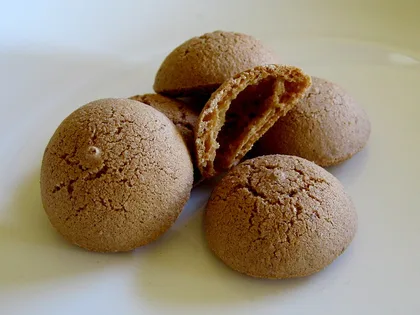 SweetsAmarettiAmaretti are flourless almond cookies whose bitter edge comes from apricot kernels, not almonds.
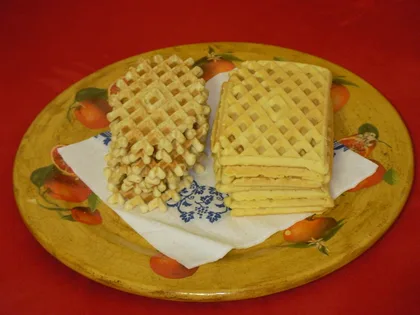 SweetsPizzellePizzelle are thin anise-scented Italian waffle cookies pressed between two engraved iron plates.SweetsParrozzoA dome of ground almonds and semolina under a shell of dark chocolate, invented in Pescara in 1920 by the…
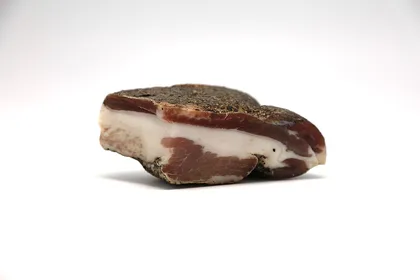 Cured meatsGuancialeGuanciale is cured pork jowl: unsmoked, rubbed with salt and pepper, aged for one to three months.
 CheeseScamorzaScamorza is cow's-milk pasta filata that has been tied off into a pear shape and hung to dry for one to two…
 Oil and preservesSaffronOne kilo takes between 150,000 and 200,000 flowers, and every flower gives up three stigmas that have to be…
 Pasta and breadMaccheroniThe most misunderstood name in Italian pasta. In Naples it means dried semolina pasta in general, in Abruzzo…