What is Testa in Cassetta?
Testa in cassetta works on a single piece of kitchen physics: a pig's head is full of collagen, and collagen simmered long enough turns into gelatine. Cool it under a weight and that gelatine does the job a casing does in every other cured meat.
The raw material is the muscular parts of the head (cheek, snout, tongue, ears, rind) with heart or shoulder meat added in some recipes to raise the lean content. Everything is boiled, boned while still too hot to handle comfortably, cut into coarse pieces, seasoned and packed into the box.
The box is the point, and the name. Cassetta means a rectangular wooden crate, lined, into which the warm mixture is pressed under a lid and a weight. That gives the finished block its brick shape, which is the fastest way to tell the Piedmontese and Ligurian version apart from the cylindrical head products of central and southern Italy, which are stuffed into casings.
It is peasant food in the literal sense. It uses the part of the animal nobody wanted and which, without a preserving technique, would have been lost within a day or two: the head is the most perishable part of the pig, which is why it was always the first thing dealt with after slaughter.
What does it taste like?
Rich, gelatinous and heavily spiced, with a texture unlike any other cold cut. The meat pieces are soft and yielding, the rind is faintly springy, and the gelatine between them melts at mouth temperature rather than staying rubbery.
The flavour is pork at its most concentrated, nothing like ham and closer to the meat you pull off a slow-roasted shoulder, pushed forward by nutmeg, black pepper, cinnamon and clove. Ligurian versions add coriander, allspice and citrus zest, which lifts the whole thing considerably and stops the fat feeling heavy.
Where pistachios are included they add a sweet, resinous crunch and the green-on-pink contrast that makes these slices recognisable across a counter. Eaten cold with something acidic (pickles, mustard, salsa verde) it is one of the best-value things on any Italian deli counter. Eaten alone, straight from the fridge, it can feel unrelieved.
How to use it
Slice it thick: three to five millimetres. Cut paper-thin it falls apart, because the gelatine cannot hold a fine slice together. Take it out of the fridge twenty minutes before serving: cold gelatine is rubbery and mutes everything.
In Piedmont it is a fixture of the merenda sinoira, the late-afternoon cold spread that replaces dinner in the Langhe, alongside cooked salami, tongue and cheese. It is served with salsa verde (parsley, anchovy, garlic, breadcrumb and vinegar) or with the red bagnetto, plus pickled vegetables or giardiniera. The bread is plain, and should be.
In Liguria it turns up with focaccia and preserved vegetables, and in Genoa's old fry-shops it sits next to the chickpea farinata. A roll with testa in cassetta, mustard and gherkins is one of the best cheap sandwiches in northern Italy.
It also takes heat well, which surprises people. A minute a side in a dry non-stick pan gives you crisp edges and a molten centre: serve it over polenta or in a warm roll. Unorthodox, but common enough in Langhe osterie.
How long it keeps
Testa in cassetta is a cooked product rather than a dried or cured one, and its life is measured in days, not months. Keep the piece at 0 to 4 C wrapped in greaseproof paper inside a box, and follow the date the butcher or the pack gives, since that is the maker's figure. A whole block holds better than slices: cut faces dry, the surface darkens and takes on a matte grey cast where the jelly retreats, and the mosaic begins to loosen at the edges. Ask for it sliced on the day you want it rather than in advance.
The jelly is what makes it temperature-sensitive. It is firm at fridge temperature and softens as soon as it warms, so the block cuts cleanly straight from the cold and a slice left on a warm board goes glossy and starts to weep within twenty minutes. That argues for slicing to order and bringing it out at the last moment. Freezing works against it in the same way: the gelatine breaks on thawing, water separates into the wrapper, and the block no longer holds together under a knife.
Spot the real thing
The English word for the family is head cheese, and saying it to a butcher will get you closer than the Italian will. What marks this one out is the mould: cassetta means crate, so the finished piece is a rectangular block and the slices come out square, not round. Look at the cut face. It should be a coarse mosaic of irregular pale and pink pieces, cheek, snout, tongue and rind, set in a translucent amber jelly, with visible flecks of pepper and warm spice, and in some versions pistachios or pine nuts. The jelly is the pig's own, not added gelatine.
Two things get muddled with it abroad. German Presskopf and Sulze, Austrian brawn and American souse belong to the same family, though souse is soured with vinegar and tastes quite different. The other confusion is with coppa: coppa di testa is this, while Coppa Piacentina and the coppa on a deli slicer are a cured neck muscle, uniform and dark red. Mortadella is a smooth pink emulsion, not a mosaic. This is a butcher's product sold by weight and it is inexpensive.
How to pronounce Testa in Cassetta
TEH-stah een kah-SET-tah
Five syllables. Testa is 'TEH-stah' with a short open 'e'; cassetta is 'kah-SET-tah' with the double 's' hissed and the double 't' held. The whole phrase means 'head in a box'. In Piedmontese dialect you may also see 'testa in cassëtta'.
Testa in Cassetta compared
vsCoppa di testa and soprassata toscana
The same animal part treated by different regions. Central and southern Italy stuff the seasoned head meat into a casing or a net, so the result is cylindrical and slices into rounds. Tuscany's version, called soprassata or capofreddo, is heavy on lemon and orange zest and often includes more tongue. Testa in cassetta is pressed into a rectangular box, sliced into squares, and seasoned more soberly in Piedmont and more aromatically in Liguria.
| This | Coppa di testa and soprassata toscana | |
|---|---|---|
| Shaping | Pressed in a rectangular wooden box | Stuffed into a casing or net |
| Slice shape | Square or rectangular | Round |
| Region | Piedmont, Liguria, the Bormida valley | Tuscany, Lazio, Campania, Calabria |
| Seasoning | Pepper, nutmeg, cinnamon, clove; citrus in Liguria | Heavy lemon and orange zest, garlic, chilli in the south |
| Pistachios | Common in Ligurian versions | Occasional |
| Texture | Firm, densely pressed | Softer, more gelatinous |
vsHead cheese and brawn
Same product, different country, and the English names cause confusion twice over. There is no cheese in head cheese: the word describes the pressed, sliceable shape. British brawn is the closest relative of all: boiled pig's head set in its own jelly, traditionally pressed in a basin or a mould. The Italian version is more densely packed, more heavily spiced and contains proportionally less free jelly, so it holds together better on a slicer.
| This | Head cheese and brawn | |
|---|---|---|
| Base | Pig's head, tongue, rind | Pig's head, sometimes trotters added |
| Jelly | Minimal, purely a binder | Often abundant and visible |
| Spicing | Nutmeg, clove, cinnamon, pepper, citrus | Sage, mace, allspice, vinegar |
| Acidity | None in the mix; served with pickles | Vinegar often added to the jelly |
| Served | Sliced thick, cold, on a board | Sliced or spooned, with toast and mustard |
| Density | Pressed hard, holds a clean slice | Softer, can be spreadable |
vsFromage de tête, presskopf and Sülze
France, Alsace and Germany all make the same thing with regional accents. Fromage de tête is usually looser and often studded with parsley and shallot; Alsatian presskopf and German Sülze lean on vinegar and are frequently set in a clear, sharp aspic that makes them almost a salad. Testa in cassetta contains no vinegar in the mix at all: the acidity is expected to come from what you serve alongside it.
| This | Fromage de tête, presskopf and Sülze | |
|---|---|---|
| Vinegar in the mix | None | Common, sometimes prominent |
| Aspic | Natural gelatine only, tightly bound | Often added clear aspic, visible |
| Herbs | Rarely: spices instead | Parsley, shallot, tarragon |
| Shape | Rectangular block from a wooden box | Terrine mould, loaf tin, or casing |
| Served with | Salsa verde, giardiniera, mustard | Vinaigrette, cornichons, rye bread |
Testa in Cassetta substitutes
- Coppa di testa or soprassata toscana
The direct Italian equivalent and easy to find in any Italian deli. Expect round slices, a softer set and a much stronger citrus note if it is the Tuscan version. Serve it exactly the same way.
1:1 - Brawn or head cheese from a good butcher
Structurally identical and widely available in the UK, in American charcuterie shops and across central Europe. It usually carries more jelly and less spice, so serve it with something sharper, mustard or pickled onions, to compensate.
1:1 - Fromage de tête
The French version, sold in every charcuterie and most supermarkets. Looser and herbier, often with parsley through it. Slice it a little thicker than the Italian original because it holds together less well.
1:1 - Presskopf or Sülze
Alsatian and German pressed head, generally set in a vinegar-sharpened aspic. That built-in acidity means you should drop the pickles from the plate or the whole thing turns sour. Excellent in a sandwich with rye bread and mustard.
1:1 - Pork-free: veal or beef head brawn
Head brawn made from veal or beef exists across the Mediterranean and the Middle East, and halal butchers in most cities make a version. It is leaner and milder, sets less firmly, and benefits from a heavier hand with the nutmeg and clove.
1:1 - Vegetarian: mushroom and root vegetable terrine
For the cold-cut role rather than the flavour. Set roasted mushrooms, celeriac and carrot in a vegetable stock stiffened with agar, press overnight, slice thick and serve with salsa verde and pickles. It gives you the mosaic look and the same sharp accompaniments.
Where to buy it
In Italy, butchers and delis across the province of Cuneo and the Savona hinterland make their own, and it is on almost every deli counter in Piedmont and Liguria at 12 to 20 euro per kilo. Artisan versions with pistachios and a complex spice mix run 18 to 26.
Outside Italy it is almost absent from commercial channels: it is cooked, perishable and has a short shelf life, which makes exporting it uneconomic. When you do find it, expect 9 to 15 dollars per pound in the US and 16 to 26 pounds per kilo in the UK: prices that reflect shipping far more than the value of the product.
The realistic route abroad is a local charcutier or butcher who makes brawn or head cheese, and there are more of them than there were ten years ago. Ask for it pressed firmly and lightly jellied; if the slice wobbles, it has been stretched with stock.
Where to eat it in Italy
Southern Piedmont: Ceva, Mondovì, the villages of the Bormida valley and the Alta Langa, where butchers still make it in-house and osterie put it into the merenda sinoira. The weekly markets at Mondovì and Ceva are the most direct place to buy it freshly pressed.
In Liguria, the Savona hinterland (Calizzano, Sassello, Bardineto) and Genoa itself, where historic delicatessens and the old sciamadde fry-shops carry it year round. Along the coast, bakeries sell it folded into focaccia.
Go in winter. November to February is the traditional pig-butchering season, and testa in cassetta made in those months and eaten within days of pressing is a noticeably better product than the same thing in midsummer. Village festivals across both valleys serve it then.
Further reading
Frequently asked questions
What is testa in cassetta?
A cooked Italian cold cut from Piedmont and Liguria made from pig's head. The head is simmered for hours, boned while hot, cut into coarse pieces, seasoned with pepper, nutmeg, cinnamon and clove, then pressed into a rectangular wooden box where its own gelatine sets it into a sliceable block.
Is it the same as head cheese?
Essentially yes, with regional differences. Head cheese and British brawn use the same base and the same setting principle. The Italian version is pressed harder so it holds a cleaner slice, contains proportionally less free jelly, is more heavily spiced, and never has vinegar in the mixture: the acidity comes from the pickles served alongside.
Does testa in cassetta contain brains?
No. It is made from the muscular parts of the head (cheek, snout, tongue, ears and rind) plus, in some recipes, heart or shoulder meat. Brains are not part of the preparation.
How do you eat it?
Cold, sliced three to five millimetres thick, twenty minutes out of the fridge, with something acidic beside it: salsa verde, mustard, gherkins, pickled onions or giardiniera. It also crisps well for a minute a side in a dry pan and is very good in a warm sandwich.
How do you pronounce testa in cassetta?
TEH-stah een kah-SET-tah. It means 'head in a box', which is a literal description of how it is made: the mixture is pressed into a wooden crate to set.
Related foods
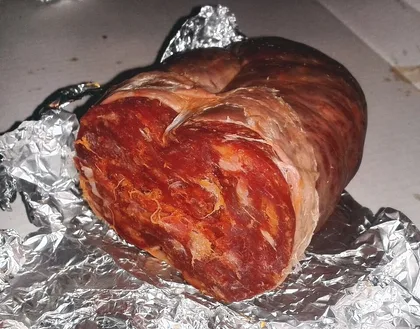 Cured meatsSoppressataSoppressata is a coarse-ground dry salami from southern Italy, pressed flat between boards while it dries…Cured meatsSalame MilanoSalame Milano is the salami most of the world pictures when it hears the word: large diameter, mild, evenly…
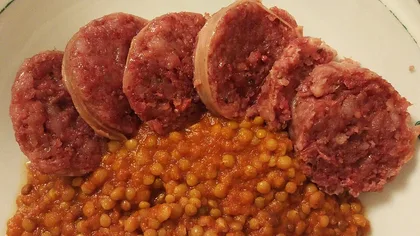 Cured meatsCotechinoCotechino is a large fresh pork sausage from Emilia-Romagna, made with pork meat, fat and rind, and always…Cured meatsPiedmontese Fattened OxBue grasso is a castrated Piedmontese ox, fattened slowly for three or four years to well over a thousand…
 Cured meatsSalsiccia di BraSalsiccia di Bra is the only Italian sausage made from veal instead of pork.Pasta and breadFocacciaTwo centimetres tall, dimpled with the fingertips, flooded with a brine of water, salt and olive oil before…
 Oil and preservesGiardinieraGiardiniera means two very different jars. In Italy it is a mild mix of vegetables pickled in wine vinegar…
 CheeseGorgonzolaThe green veining is the product, not a flaw anyone tolerates: it grows from a mould added to the milk and…