What is Piedmontese Fattened Ox?
Bue grasso is not a breed but a condition: a male of the Piedmontese breed, castrated young, raised very slowly and brought to a liveweight of nine hundred to thirteen hundred kilos. The minimum age at slaughter is three years and many fair animals are four.
Castration is what makes the product. Without testosterone the animal grows more slowly, builds less dry muscle and lays down fat: under the skin, around the organs and, crucially for cooking, inside the muscle. It is the only way to get fatty meat out of a breed famous for having none.
The Piedmontese breed is known for the opposite. The myostatin mutation that gives it double muscling (the fassona hindquarter) produces young animals with extremely lean, fine-grained meat, which is why Piedmont eats it raw, hand-chopped with a knife. Bue grasso is the same genetics used the other way round: time, castration, feed.
There is no DOP or IGP. Bue grasso di Carru is a Slow Food Presidium, and the December fairs act as the grading and pricing system. Everything else rests on the farmer's word.
What does it taste like?
Old beef, in the best sense. The flavour is deep, sweet and slightly nutty, with the concentration that only a mature animal develops and none of the sourness that badly handled old cattle can have.
The fat is the difference. Piedmontese beef normally has almost none; the bue grasso has creamy white fat inside and around the muscle that melts during long cooking, and it is what turns boiled beef from a dull dish into a great one.
Boiled, the seven traditional cuts each taste different: the shoulder is dense and beefy, the brisket sweet and gelatinous, the shin sticky, the cheek and the tongue soft and mild. Eaten together with a sharp parsley and anchovy sauce, the point of the dish becomes obvious.
Grilled, the loin has a marbling and a mineral depth that no young Piedmontese animal can produce. It is closer in character to old Galician ox than to any Italian steak.
How to use it
Bollito misto is the dish this beef exists for, and it has one counterintuitive rule: the meat goes into water that is already boiling, not cold. Cold-start extraction makes good broth and dull meat; here the broth is the by-product.
Cook each cut in its own pot with carrot, celery and onion, because the timings differ: brisket and shoulder take two to three hours, tongue longer, cotechino separately, calf's head separately again. Keep everything hot in its own liquid until the moment it is served.
The sauces are half the dish, not a garnish. Bagnet verd, a pounded sauce of parsley, anchovy, garlic, breadcrumb and vinegar; bagnet ross, a cooked tomato and pepper sauce; cugna, a thick preserve of grape must and autumn fruit; grated horseradish; mostarda; and a honey and mustard sauce. Put all of them on the table.
Beyond boiling, this is the beef for brasato al Barolo (use cappello del prete, the shoulder cut, never a lean one) and its loin is the only Piedmontese steak with real marbling.
Leftovers have their own dish: bollito rifatto, the boiled beef fried again with onions, which many Piedmontese quietly prefer to the original.
How long it keeps
This is fresh meat and it follows fresh meat rules, with the date from the butcher or the pack as the reference. A whole piece keeps three to five days in the coldest part of the fridge, on a rack over a plate so nothing sits in its own liquid, loosely covered rather than sealed. Vacuum packed cuts carry a longer date, often two to three weeks, and stay sealed until you cook. Cut steaks and diced meat have more exposed surface and last a day or two.
The visible changes are surface ones. Exposed meat darkens from red towards brown as the pigment oxidises, and a piece in a vacuum bag looks purple until air reaches it and it blooms red again within minutes; both are colour chemistry, not age. The surface dries and forms a tacky film, and the thick outer fat slowly turns from ivory towards yellow. Freezing works well on a beef this size: portion it, wrap tight to keep air off, and count six to nine months for large pieces, three to four for steaks, thawing slowly in the fridge.
Spot the real thing
Outside Piedmont this is not a product you find on a shelf; it is a specific animal, a castrated Piedmontese ox fattened to four years or more, and the meat reaches the counter mainly through the fairs at Carrù, Moncalvo and Nizza Monferrato in December. What identifies it on the block is age: deep, almost brick red meat rather than the bright pink of a young steer, a coarser and denser grain, and a thick, firm cover of fat that is white to ivory, with real marbling through the loin.
The confusion abroad is with Piedmontese breed beef generally. American ranches raise the breed and sell it as lean, low fat beef, which is the opposite proposition: those are young animals, and the breed is naturally double muscled and almost fatless. Bue grasso is the deliberate exception. So the questions at the counter are age, sex and how long it was fattened, not the breed name on the label. In Italy it carries a Slow Food Presidio tag and sells at 30 to 60 euro a kilo for the prized cuts, several times ordinary beef.
How to pronounce Piedmontese Fattened Ox
BOO-eh GRAHS-soh pyeh-mon-TEH-zeh
'Bue' is two syllables, BOO-eh, and means ox. 'Grasso' has a doubled s held slightly longer than in English: GRAHS-soh. 'Piemontese' is four syllables with a voiced s: pyeh-mon-TEH-zeh. Together, roughly 'the fat Piedmontese ox'.
Piedmontese Fattened Ox compared
vsOrdinary beef
Commodity beef comes from young cattle, fifteen to twenty months old, bred and fed to reach weight fast and graded on muscle. Bue grasso is three or four years old, castrated, hand-fed one animal at a time, and produces meat with the fat and connective structure that long cooking needs. On a grill the difference is real but arguable; in a pot it is not. Boiled beef made from young commodity meat is thin and stringy, and that is why most people think they dislike bollito misto.
| This | Ordinary beef | |
|---|---|---|
| Age | 3-4 years | 15-20 months |
| Sex | Castrated male | Steer, heifer or young bull |
| Liveweight | 900-1,300 kg | 550-700 kg |
| Fat | Abundant, creamy, intramuscular | Variable, usually low in Europe |
| Meat colour | Deep dark red | Bright red to pink |
| Best use | Boiling, braising, long cooking | Everyday roasting and grilling |
| Price in Italy | EUR 18-30 per kg | EUR 8-14 per kg |
vsFassona, the young Piedmontese for raw beef
Same breed, opposite product, and the comparison Piedmont itself makes. Fassona is a young double-muscled animal, usually a heifer or a young steer, with almost no fat, very fine fibre and pale rosy meat: the raw material for carne cruda all'albese, hand-chopped with a knife and dressed with nothing but oil, salt, lemon and sometimes a shaving of white truffle. It is prized for being lean. Bue grasso is prized for being fat. If you order beef in Piedmont, these two are the poles you are choosing between.
| This | Fassona, the young Piedmontese for raw beef | |
|---|---|---|
| Age at slaughter | 3-4 years | 14-20 months |
| Castrated | Yes, young | No: heifers and young steers |
| Fat | High, marbled | Extremely low |
| Fibre | Coarser, structured | Very fine, tender raw |
| Signature dish | Bollito misto, brasato al Barolo | Carne cruda all'albese, tartare |
| Season | November to February | All year, best in truffle season |
vsGalician ox (buey gallego, Rubia Gallega)
The closest thing anywhere to the same idea, and far better known to English-speaking steak enthusiasts. Northern Spain also fattens old castrated oxen for years and sells the loin as some of the most expensive beef in Europe, dry-aged for months and cooked as txuleton over embers. The philosophy is identical (age, castration, deep yellow fat, concentrated flavour) but the Spanish version is sold as a steak product while the Piedmontese one exists to be boiled. Piedmont turns its ox into a communal winter dish; Galicia turns it into a chop.
| This | Galician ox (buey gallego, Rubia Gallega) | |
|---|---|---|
| Animal | Castrated Piedmontese ox, 3-4 years | Castrated Rubia Gallega ox, 5-18 years |
| Fat colour | White to cream | Deep yellow, carotene-rich |
| Ageing | 10-30 days | Often 30-120 days |
| Classic dish | Bollito misto, seven cuts | Txuleton over embers |
| Raising | Barn-fed, individually managed | Pasture for most of life |
| Export | Essentially none | Widely exported at high prices |
Piedmontese Fattened Ox substitutes
- Beef from a mature cow or ox, any breed
The substitution that matters. Ask a butcher for meat from an older animal rather than a specific breed: the age and the fat are what the dish needs. Increasingly sold in the UK as 'retired dairy cow' or 'mature beef' and it is excellent value.
1:1 - Brisket, shin, cheek and oxtail together
For bollito misto the mix of cuts does most of the work. Combining brisket, shin, cheek, tongue and tail from ordinary beef, each in its own pot, gets you a convincing version even without a fattened ox.
About 200 g of mixed cuts per person - Galician or Basque aged ox beef
For a grilled loin rather than a boiled dinner. Same concept, widely exported, and available from specialist butchers in the US and UK. Expensive and worth it once.
1:1 - Well-marbled short rib and chuck
If the target is a brasato al Barolo rather than a bollito, chuck and short rib carry the fat and collagen the dish needs and are available everywhere.
1:1 - Veal breast and tongue, for the delicate cuts
Bollito misto includes calf's head and tongue, which are hard to source outside Italy. Veal breast and a whole ox tongue from a good butcher are the practical stand-ins.
1:1
Where to buy it
There is no export chain. A few hundred animals a year, sold locally through two December fairs and a network of butchers who know the farmers, does not support one. Nothing sold abroad as bue grasso is likely to be it.
In Italy, buy it in Piedmont between November and February, from butchers in Carru, Bene Vagienna, Fossano, Mondovi, Moncalvo, Nizza Monferrato and Asti. Ask for the seven bollito cuts by name (tenerone, scaramella, fiocco di punta, muscolo, cappello del prete, culatta, testina) and a butcher who separates them properly knows what he is selling. Expect 18 to 30 euros a kilo, more for the loin.
Abroad, aim at the concept rather than the name: mature cow or ox beef from a butcher who works with older animals. In the UK this is increasingly sold openly and costs 15 to 30 pounds per kilo; in the US, ask for meat from a mature animal rather than anything on a supermarket shelf.
Be careful with the word 'bue' on Italian labels. Used loosely it just means beef from an adult animal, which is not the same product.
Where to eat it in Italy
Carru, in the province of Cuneo, on the Thursday before Christmas. The Fiera del Bue Grasso opens at dawn with the oxen on show, and the town serves bollito from six in the morning, in the square and in every trattoria. It is the most concentrated eating day of the Piedmontese winter and needs booking weeks ahead.
Moncalvo, in the Asti hills, holds its Fiera Nazionale del Bue Grasso in mid-December, with the same structure and the Monferrato countryside around it.
Outside the fairs, bollito is on menus from November to February across the Cuneese and the Monferrato: Bene Vagienna, Fossano, Mondovi, Nizza Monferrato, Asti. Many places require a day's notice, because seven cuts are not cooked for one table.
Turin keeps the trolley service alive in a handful of historic trattorie, but this is a provincial dish and the city strips it of context.
In summer it effectively does not exist. Seasonality here is still real.
Further reading
Frequently asked questions
What is bue grasso?
A castrated male of the Piedmontese cattle breed, fattened slowly for three or four years to over a thousand kilos. Castration lets a famously lean breed lay down fat, and the resulting meat is dark, marbled and made for long cooking. It is the traditional beef of bollito misto.
How is it different from fassona?
They are opposite uses of the same breed. Fassona is a young double-muscled animal with almost no fat, eaten raw as carne cruda all'albese. Bue grasso is an old castrated ox, fat and marbled, eaten boiled or braised.
When are the ox fairs?
December. Moncalvo in the province of Asti holds the national fair in mid-month; Carru in the province of Cuneo holds its own on the Thursday before Christmas, with bollito served in the town from dawn.
What are the seven cuts of bollito misto?
Tenerone, scaramella, fiocco di punta, shin, cappello del prete, culatta and calf's head, joined by tongue, tail, trotter, a boiling hen and cotechino sausage. Each is cooked separately because the timings differ, and all are served with the sauces.
Is bue grasso pasture-raised?
Generally not. These are barn animals, managed individually at very low density, and in the most traditional farms still kept in tie-stalls through the fattening period. The care given to each animal is genuine, but this is not an extensive grazing system and it should not be sold as one.
Related foods
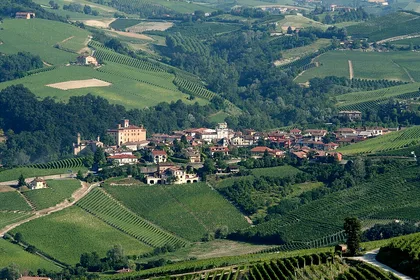 WineBaroloBarolo is one hundred per cent Nebbiolo from eleven villages in the Langhe hills of Piedmont, aged at least…
 Pasta and breadTajarinTajarin are the Piedmontese answer to tagliolini: hand-cut egg noodles barely a millimetre and a half wide…
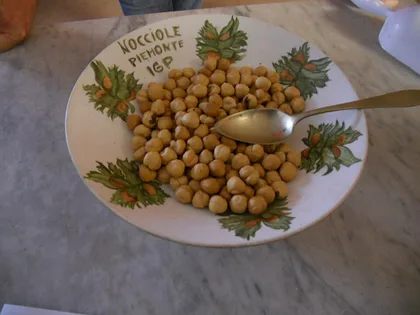 Vegetables and fruitPiedmont HazelnutNocciola Piemonte IGP is a single cultivar, the Tonda Gentile Trilobata of the Langhe hills: round, yielding…Cured meatsTesta in CassettaTesta in cassetta is pig's head simmered until tender, boned while hot, seasoned with spices and pressed into…
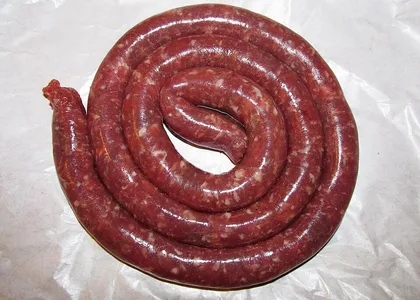 Cured meatsSalsiccia di BraSalsiccia di Bra is the only Italian sausage made from veal instead of pork.
 Oil and preservesGiardinieraGiardiniera means two very different jars. In Italy it is a mild mix of vegetables pickled in wine vinegar…
 CheeseGorgonzolaThe green veining is the product, not a flaw anyone tolerates: it grows from a mould added to the milk and…