What is Lambrusco?
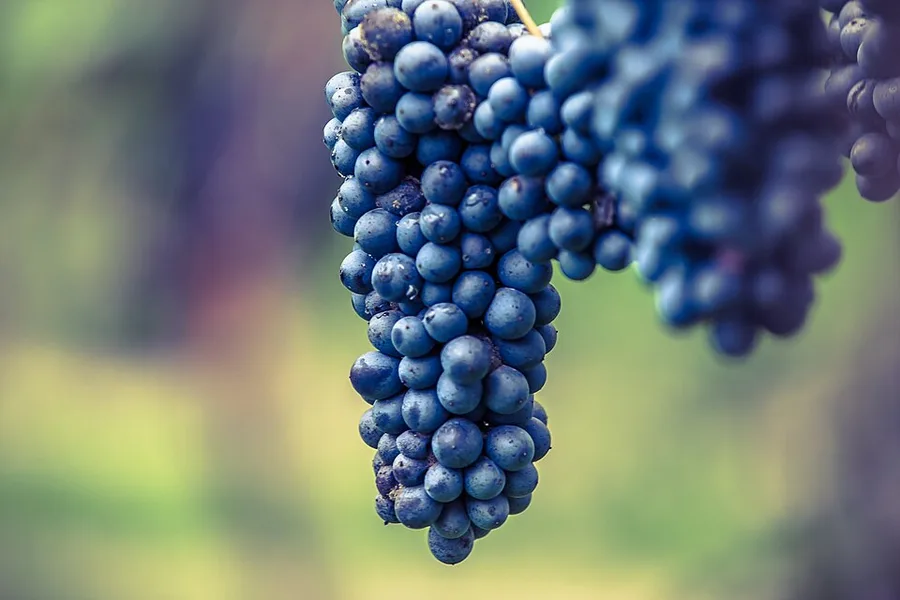
Lambrusco is the name of a group of grape varieties rather than a single wine. It covers Lambrusco di Sorbara, Grasparossa, Salamino, Maestri, Marani, Montericco and several more, and they produce genuinely different wines in colour, acidity and tannin.
Four denominations matter. Lambrusco di Sorbara DOC comes from the sandy plain north of Modena around Sorbara, Bomporto and Bastiglia. Grasparossa di Castelvetro DOC comes from the clay hills south of the city. Salamino di Santa Croce DOC sits in the plain around Carpi and takes its name from the bunch shape, small and cylindrical like a little salami. Reggiano Lambrusco DOC covers the province of Reggio Emilia and supplied most of the export boom.
There are also Modena DOC, which permits blends across the province, Colli di Scandiano e Canossa, and Lambrusco Mantovano DOC, the only one outside Emilia, in the Mantua lowlands of Lombardy.
Nearly all Lambrusco is frizzante (lightly sparkling, 1 to 2.5 bar) at 10.5 to 12 per cent alcohol. Fully sparkling versions exist but are a minority. The colour runs from the pale pink of Sorbara to the near-black purple of Grasparossa, and the foam is pink or violet depending on the grape.
What does it taste like?
It depends entirely on which one you open, which is the whole point of the category.
Sorbara is pale cherry-pink, almost a rosé, with pink foam, violet and wild strawberry aromas, high acidity and a short dry finish. Grasparossa is deep purple with violet foam that clings to the rim, blackberry and plum on the nose, and real tannin that grips the gums, unusual in a fizzy wine. Salamino sits between them: full colour, red fruit, less acid bite than Sorbara.
Across all of them, a dry Lambrusco is tart rather than fruity-sweet, low in alcohol, and built to be swallowed rather than contemplated. If a bottle tastes jammy, stewed or sugary with coarse foam, it is either an amabile, a very cheap wine, or an old one.
How to use it
Serve it cold, but not identically. Sorbara wants 8-10°C, Salamino 10-12, Grasparossa 12-14. Too cold and the tannin in Grasparossa turns rough; too warm and Sorbara goes flat and dull. No decanting, ever.
The traditional glass in Emilian osterie is a thick tumbler, and it still works. A medium white-wine glass shows the aromatics far better, and for a bottle-refermented Lambrusco it is the right choice. With those bottles, either stand them up for a few hours and pour in one go for a clear glass, or roll the bottle before opening to put the lees back into suspension, which is how it is drunk in the cellar.
At the table, its job is mechanical: acidity and bubbles strip fat and salt off the palate. That means gnocco fritto, tigelle, prosciutto di Parma, culatello, mortadella, salame di Felino, ciccioli and Parmigiano Reggiano at 24 months, then the heavy local dishes: baked pasta, erbazzone, bollito misto, zampone and cotechino with lentils. Outside Emilia it handles pizza, fried food, burgers and barbecued pork, which is why it came back into fashion in the United States.
In the kitchen it deglazes a risotto al Lambrusco, finished with Parmigiano, and poaches pears with sugar, cinnamon and clove, for which an amabile is the better bottle. A dry one fails with dessert, chocolate and blue cheese.
How long it keeps
Lambrusco is not a keeper and does not gain anything by waiting. It is made to be drunk within one or two years of the harvest, and the vintage is on the label. Kept cool and dark it holds that window; standing or lying makes no difference with a crown cap. Left somewhere warm and bright, the fresh red fruit turns cooked and jammy and the bubble goes coarse and short-lived.
Once open, a pressure stopper in the fridge buys a day or two before the fizz flattens: the colour outlasts the bubble by some margin. Serving temperature varies by type. Sorbara wants 8 to 10°C (46 to 50°F), Salamino 10 to 12°C (50 to 54°F), Grasparossa 12 to 14°C (54 to 57°F). Too cold and the Grasparossa tannin turns rough; too warm and Sorbara loses its foam and reads flat. With bottle-refermented versions, stand the bottle upright for a few hours and pour in one movement for a clear glass, or roll it gently first to lift the sediment.
Spot the real thing
The denomination on the label does most of the work. Lambrusco di Sorbara, Grasparossa di Castelvetro and Salamino di Santa Croce each name a dominant grape and a tight zone; Reggiano and Modena allow blending across much wider areas. A bottle carrying no DOC, only the word Lambrusco with a geographical indication, is volume wine.
The second word to look for is the sweetness level: secco, semisecco, amabile or dolce. Secco sits under 15 grams of sugar per litre, amabile between 30 and 50, dolce above that. In Emilia the bottle on the table is secco. The sweet screwcap Lambrusco that built the name in America and Britain in the 1970s is a genuine category with its own audience, but it is not the wine Modenese drinkers mean, and it sells for a third of the price.
In the glass, Sorbara is pale cherry pink and nearly see-through, with pink foam, violet and wild strawberry. Grasparossa is dark purple, its violet foam clings to the rim, and it carries tannin you feel on the gums. Salamino sits between the two.
How to pronounce Lambrusco
lam-BROO-skoh
Stress on the second syllable, rolled r, short final o. Sorbara is sor-BAH-rah; Grasparossa is grahs-pah-ROHS-sah with a long double s; Castelvetro is kah-stel-VEH-troh; Salamino is sah-lah-MEE-noh; Reggiano is reh-JAH-noh. Frizzante (the word for lightly sparkling) is free-DZAHN-teh.
Lambrusco compared
vsSorbara vs Grasparossa di Castelvetro
The comparison that decides which bottle to buy. Sorbara grows on river sand north of Modena, macerates on the skins for a few hours and comes out pale, floral and sharp; Grasparossa grows on clay hills to the south, macerates for days and comes out dark, fuller and tannic. Twenty kilometres apart, and two wines that do not resemble each other.
| This | Sorbara vs Grasparossa di Castelvetro | |
|---|---|---|
| Colour | Pale cherry-pink, pink foam | Deep purple, violet foam |
| Aroma | Violet, wild strawberry, citrus | Blackberry, plum |
| Structure | High acid, almost no tannin | Lower acid, noticeable tannin |
| Serve at | 8-10°C | 12-14°C |
| Best with | Prosciutto, culatello, fried fish | Zampone, bollito, aged Parmigiano |
vsProsecco and other frizzanti
Same tank method, opposite job. Prosecco is white, aromatic and made to drink before the meal; Lambrusco is red, tart and made to be drunk during it, against fat and salt. Prosecco carries 12 to 17 grams of sugar in its most common style, dry Lambrusco under 15 and usually far less. If you want fizz with charcuterie or pizza, the red one is the better tool.
| This | Prosecco and other frizzanti | |
|---|---|---|
| Colour | Red or pink | White or rosé |
| Pressure | 1-2.5 bar, frizzante | Over 3 bar, spumante |
| Tannin | Present in Grasparossa | None |
| Role | With the food | Before the food |
| Price | USD 12-22 | USD 12-30 |
vsSecco vs amabile
The split that explains the wine's reputation. Dry Lambrusco is what Emilia drinks with salumi; amabile and dolce are what shipped abroad by the container load in the 1970s and 1980s. Both are legitimate categories with a genuine local following, but they are not interchangeable, and the label always says which one you are holding.
| This | Secco vs amabile | |
|---|---|---|
| Secco | Under 15 g/l sugar | The everyday wine in Modena |
| Amabile | 30-50 g/l | Soft, fruity, the export style |
| Dolce | Over 50 g/l | Drunk locally with plain cakes |
Lambrusco substitutes
- Bonarda dell'Oltrepò Pavese
Dry fizzy red from Lombardy, made from Croatina. Darker and earthier than Sorbara, close to Grasparossa in weight, and does exactly the same job with salami. USD 12-20, GBP 10-16.
- Gragnano della Penisola Sorrentina
Campania's fizzy red, drunk cold with pizza in Naples. Lighter and more floral, with a sour-cherry bite. The best substitute if you liked Sorbara. USD 15-22, GBP 12-18.
- Brachetto d'Acqui
If what you liked was the sweet version: a genuinely good sweet fizzy red from Piedmont, low in alcohol, made for fruit and plain cakes rather than for a meal. USD 15-25, GBP 12-20.
- Chilled Beaujolais or other Gamay
Not sparkling, but the same idea: light red, high acid, served cold, built for charcuterie. Choose it when you want the function without the fizz. USD 15-25, GBP 12-20.
- Prosecco
The obvious swap if the fizz matters more than the colour, though it belongs before the meal rather than during it and cannot handle cured meat as well. USD 12-25, GBP 9-18.
Where to buy it
Lambrusco is easy to find and easy to get wrong, because the cheap sweet version still occupies most shelf space in the US and the UK. Two things on the label settle it.
First the denomination. Lambrusco di Sorbara, Grasparossa di Castelvetro and Salamino di Santa Croce name a grape and a defined zone; Reggiano and Modena allow blends across a much wider area. A bottle labelled simply Lambrusco with a regional indication is volume wine.
Second the sweetness word: secco is dry, under 15 grams of sugar per litre; semisecco off-dry; amabile 30 to 50 grams; dolce above that. For the classic pairing with cured meat you want secco.
Expect USD 12 to 22 for a good bottle, USD 20 to 30 for an artisan bottle-refermented one; GBP 9 to 16 and GBP 16 to 25. Producers worth knowing include Cleto Chiarli, Cavicchioli, Paltrinieri, Fattoria Moretto, Lini 910, Medici Ermete, and among the refermented bottles Camillo Donati and Vittorio Graziano. Vintage barely matters: always take the most recent one on the shelf, because this is a wine that gets worse with age, not better.
Where to eat it in Italy
Castelvetro di Modena is where to start for Grasparossa: a hill town half an hour from the city, with a black-and-white chequerboard main square, the Torre delle Prigioni and vineyards on every slope around it. In September it holds the Sagra dell'Uva e del Lambrusco Grasparossa, a village festival rather than a wine event.
For Sorbara you go the other way, into the flat farmland between Bomporto and Sorbara, where the cellars sit along the road. Carpi, further north, is Salamino country and has one of the largest squares in Italy, Piazza dei Martiri, lined with fifty-two arcades.
Modena is the base: the Mercato Albinelli for salumi and Parmigiano, the traditional balsamic acetaie, and at Spilamberto the Consorteria dell'Aceto Balsamico Tradizionale with its museum. Reggio Emilia, forty minutes west, is the centre of the Reggiano zone.
Go in September, during harvest and the village festivals, or in November and December, when the osterie serve zampone, cotechino and bollito misto and the wine goes back to work.
Recipes with it
Further reading
Frequently asked questions
Is Lambrusco sweet?
Usually not, if you buy the right bottle. Secco means under 15 grams of sugar per litre and is what Emilia drinks with cured meat; amabile is 30 to 50 grams and dolce is above that. The label always tells you. The sweet versions are real wines with a local following, but they are not the default.
Sorbara or Grasparossa: which should I buy?
Sorbara if you want something pale, sharp and floral, close to a sparkling rosé, and you are eating prosciutto, culatello or fried fish. Grasparossa if you want something dark, fuller and tannic, and you are eating zampone, bollito or aged Parmigiano. Salamino is the middle option and the safest with mixed food.
Why does Lambrusco have such a bad reputation abroad?
Because of the export operation of the 1970s and 1980s, when cooperative cellars in Reggio Emilia shipped millions of cases of sweet, low-alcohol, screwcapped Lambrusco to the United States and reached the top of the imported wine charts. It worked commercially and erased, for thirty years, the idea that Lambrusco could be dry.
Should Lambrusco be aged, and how cold should it be served?
Never aged: drink it within one or two years of harvest, while the foam is alive. Serve Sorbara at 8-10°C, Salamino at 10-12 and Grasparossa at 12-14. An open bottle with a sparkling stopper in the fridge holds its fizz for a day or two.
Sources
Where to check what you just read.
- 1
Da qui si scaricano i disciplinari ufficiali delle singole DOC del Lambrusco, con base ampelografica e rese di ciascuna denominazione.
- 2
Un esempio di come è scritta una DOC del Lambrusco: minimo 85% di Salamino, rese massime per ettaro e gradazioni minime distinte fra spumante e frizzante.
- 3Consortium · interested partyConsorzio Tutela Lambrusco
Il consorzio unico nato nel 2020 dalla fusione di tre enti: raccoglie le denominazioni fra Modena e Reggio Emilia e i numeri della produzione.
Related foods
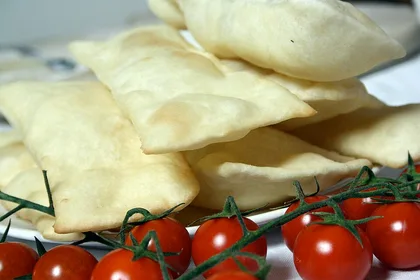 Pasta and breadGnocco FrittoEat it within a minute of the pan, because once it deflates it is over: a diamond of leavened dough fried in…
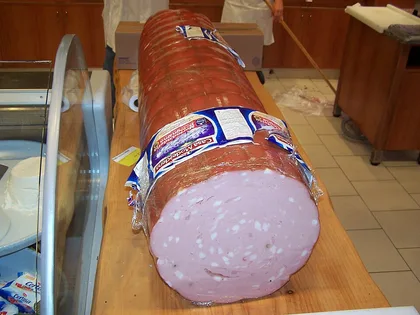 Cured meatsMortadellaThe white cubes are not just any fat: they are jowl, the firmest part of the pig, and they stay whole…Cured meatsPancettaPancetta is Italian cured pork belly: salt, pepper and warm spices, dried for months, never smoked.
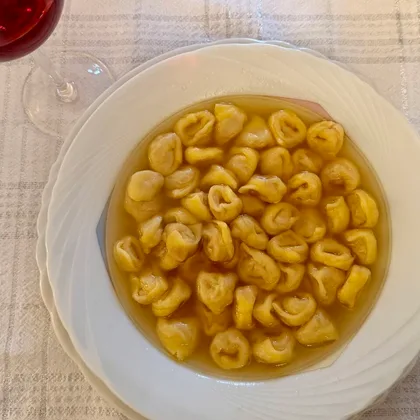 Pasta and breadTortelliniTortellini are tiny ring-shaped egg pasta parcels filled with pork, prosciutto, mortadella and Parmigiano…
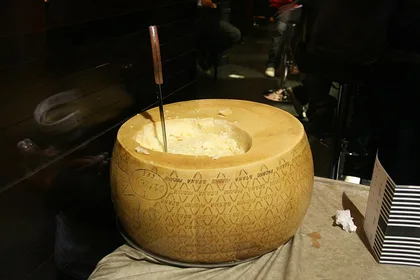 CheeseGrana PadanoNine months is the floor the specification sets before a wheel may carry the name.
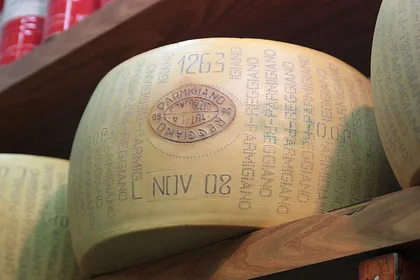 CheeseParmigiano ReggianoThree ingredients and no additives of any kind are permitted: raw cow's milk, salt and calf rennet, from five…
 Oil and preservesBalsamic VinegarTwo different products share the name. Traditional Balsamic Vinegar DOP is cooked grape must aged at least…
 Cured meatsProsciutto di ParmaProsciutto di Parma DOP is Italian ham made from three things only: pork, sea salt and at least 400 days.