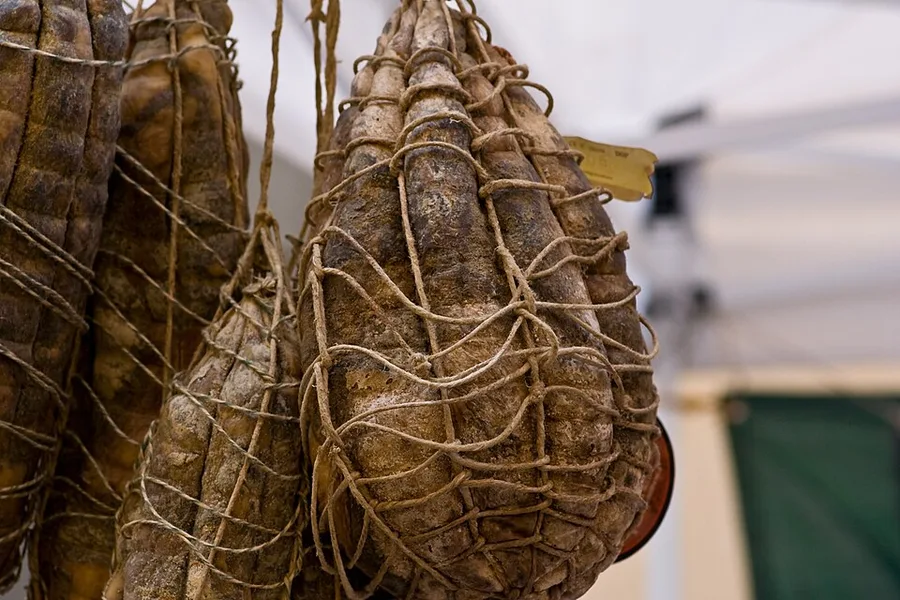
What is Culatello di Zibello?
Culatello is made from the inner muscle of the pig's hind leg, the part that sits protected inside the bone and rind of a prosciutto. The butcher bones the leg out by hand, strips away skin and outer fat and is left with a pear-shaped piece of three to five kilos. The rest of the leg becomes a separate, cheaper cut called fiocco.
That piece is salted, massaged with pepper, garlic and white wine, stuffed into a pig's bladder and tied by hand into a tight string cage. Then it hangs in an unheated, unconditioned cellar for a minimum of ten months under the protected designation, though the pieces worth the money have had eighteen to thirty-six.
The protected name is Culatello di Zibello DOP, granted in 1996 and restricted to eight small towns on the Po. Anything labelled just 'culatello' comes from outside that zone or outside those rules. It can be good; it should not cost the same.
What does it taste like?
Sweeter and softer than any prosciutto you have had. The salt is present but restrained, and what dominates is a delicate, almost floral sweetness: producers describe it as violets, and once you have been told that, it is hard to taste anything else.
The texture is the real surprise. Because it ages inside a bladder in a humid cellar rather than in dry air, it stays moist and yielding, closer to a very fine ham that has never been allowed to dry out. A slice folds and clings rather than snapping.
Under it all is a note of cellar and damp stone, the same character you find in a wine that has been kept underground. That is not romance: the humidity of the Po fog is a functional part of how it is made.
How to use it
Do not cook it. Culatello is sliced and eaten, and the only preparation that matters is temperature: take it out of the fridge half an hour before serving, because cold flattens the aroma completely.
Slice it thin but not transparent. Paper-thin slices dry out within a minute and lose the moist texture that is the whole point. In the Po valley it is still cut by hand with a knife, which gives slightly thicker, irregular slices; a slicer is fine, but slice to order rather than in advance.
Serve it with plain bread and good unsalted butter. That combination is the local orthodoxy, and it works: the butter softens the salt and stretches out the sweetness. Fried dough (torta fritta or gnocco fritto) is the other classic partner. Melon and figs, which suit prosciutto, overwhelm culatello.
If it must go into a dish, add it raw at the very end: draped over a finished risotto or a plate of tortelli.
How long it keeps
A whole piece hangs in a cool, humid room between 12 and 16 °C. A domestic fridge is dry and pulls water out of the meat, so without a cellar the sensible purchase is half a piece or a portion sliced to order. Once you cut into it, cover the cut face with a cotton cloth soaked in dry white wine and renew the cloth every two or three days, or brush the surface with a thin film of butter or lard. Treated that way an open piece holds a couple of months, drying slowly and tasting more concentrated.
Vacuum packs keep to the date printed on them and are convenient, but they need opening at least an hour before serving: straight out of the bag the meat smells shut in and flat, and after thirty minutes in the air it comes back. Slices cut at a counter are for the same day, because at that thickness the edges darken and dry within hours. Freezing is not advised: the thawed slice comes out watery and loses its softness.
Spot the real thing
On a whole piece the bladder should be tight to the meat, the tying visibly done by hand with irregular knots rather than an industrial net, and the Consorzio brand burned in with the words Culatello di Zibello. The film of mould on the outside belongs there and says the piece was aged in a damp cellar. Cut, the slice is ruby red with veins of white fat, never yellow, and it should be soft, almost slack, and faintly moist; a dry or tight culatello was aged somewhere too dry. The smell is sweet and cellar like, with a floral note the producers call violet.
Two close relatives are often sold as the same thing. Culaccia is a culatello left with its rind and aged without the bladder; fiocco is the complementary cut from the same leg. Both are good and both cost far less. Outside Italy the word also appears on pieces made nowhere near Zibello, so the consortium mark is what to look for. Price is the blunt test: real DOP runs roughly $80 to $130 a pound or £15 to £22 for 100 g.
How to pronounce Culatello di Zibello
koo-lah-TEL-loh
Four syllables, stress on the third. Double 'l' is held slightly longer than an English one. Zibello is 'dzee-BEL-loh', where the Italian 'z' is a 'dz' sound, not a 'z' as in 'zoo'. Say the final 'o' clearly; 'koo-lah-TELL' is wrong.
Culatello di Zibello compared
vsProsciutto di Parma
They come from the same animal, sometimes the same leg. Prosciutto is the whole leg cured on the bone in dry hill air; culatello is the inner muscle only, boned, cased in a bladder and aged in humid lowland cellars. Culatello is softer, sweeter and three to four times the price.
| This | Prosciutto di Parma | |
|---|---|---|
| Cut | Inner muscle of the hind leg only | The entire hind leg |
| Bone and rind | Both removed | Both left on |
| Casing | Pig's bladder, hand-tied | None: open air, lard-sealed face |
| Where it ages | Damp Po valley cellars | Dry, breezy Parma hills |
| Minimum ageing | 10 months | 12 months (24 for many labels) |
| Texture | Moist, soft, clinging | Drier, firmer, cleaner slice |
| Price | €60–120 per kg | €20–35 per kg |
vsFiocco (and culaccia)
The other half of the same leg, and the same meat with the rind left on. Both are made in the same towns by the same producers, and both cost roughly half. If culatello is out of budget, fiocco is the honest answer, not a lesser imitation.
| This | Fiocco (and culaccia) | |
|---|---|---|
| Cut | Inner muscle of the hind leg | Fiocco: the front portion, leaner |
| Casing | Boned, skinned, cased in bladder | Culaccia: same muscle, rind left on, no bladder |
| Ageing | 10–36 months | Fiocco 6–12 months; culaccia 8–14 |
| Protected status | DOP | Neither is DOP |
| Price | €60–120 per kg | €25–45 per kg |
vsJamón ibérico de bellota
The two great cured hams of southern Europe, arrived at from opposite directions. Ibérico gets its character from the pig: acorn-fed, black-hoofed, marbled with nutty fat. Culatello gets its character from the cellar. Ibérico is fattier and more savoury; culatello is leaner, moister and sweeter.
| This | Jamón ibérico de bellota | |
|---|---|---|
| Source of flavour | Ageing environment and bladder casing | Breed and acorn diet |
| Fat | Little, mostly trimmed away | Abundant, intramuscular, melting |
| Flavour | Sweet, floral, damp-cellar | Nutty, savoury, long and fatty |
| Ageing | 10–36 months | 36–48 months |
| Served | With bread and butter | Alone, at room temperature |
Culatello di Zibello substitutes
- Fiocco di culatello (or culaccia)
The closest thing there is: same producers, same towns, same technique on the adjacent muscle. Leaner and less perfumed, and roughly half the price.
1:1 - Prosciutto di Parma, 24 months or longer
The default fallback and easy to buy anywhere. Drier and saltier, so serve it with butter as you would culatello, and it closes some of the gap.
1:1 - Prosciutto di San Daniele
Sweeter and softer than Parma, which makes it a marginally better stand-in when the point of the dish is delicacy rather than salt.
1:1 - Jamón ibérico or serrano
A different flavour entirely, nuttier and much fattier, but it plays the same role on a board. Do not pair it with butter; it brings its own.
1:1, sliced thinner - Halal or beef option: bresaola
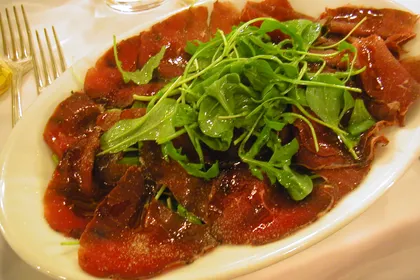
Air-dried beef from Valtellina. Far leaner and more mineral, with none of the sweetness, so dress it with olive oil and lemon rather than serving it plain.
1:1 - Vegetarian: aged Parmigiano Reggiano with butter and bread
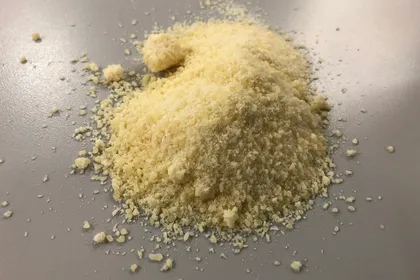
Nothing imitates cured pork, so replace the role rather than the flavour. A 30-month Parmigiano, cold butter and plain bread gives you the same salt-fat-sweet structure the Emilian board is built on.
Where to buy it
Culatello di Zibello DOP is not widely exported, and in the United States the genuine DOP article has historically been hard to import, so most 'culatello' on US shelves is a domestic or non-DOP interpretation. Italian specialists such as Eataly and dedicated salumi importers are the realistic route; expect $90–160 per pound for anything credible.
In the UK, Italian delicatessens and online grocers including Sous Chef and Valvona & Crolla in Edinburgh carry it, usually pre-sliced in 80–100 g packs at £12–20, or vacuum-packed half pieces. Buying it in Italy remains far cheaper: €60–90 per kilo whole.
Check for the Consorzio brand mark reading Culatello di Zibello and for hand-tied string with irregular knots. If a whole piece is cheap, it is fiocco, culaccia or out-of-zone culatello: all legitimate products, none of them the DOP.
Where to eat it in Italy
The eight DOP towns sit on the left bank of the Po west of Parma: Busseto, Polesine Zibello, Soragna, Roccabianca, San Secondo Parmense, Sissa and Colorno. Antica Corte Pallavicina at Polesine Zibello, run by the Spigaroli brothers, opens its riverbank cellars to visitors: rows of hanging culatelli tagged with the names of people who reserved them years earlier.
Go in November, when four consecutive weekends of pork festivals run across the plain under the collective name November Porc, rotating between Sissa Trecasali, Polesine Zibello, Roccabianca and Fontanellato. Fog is likely, which is exactly the point.
The same short drive takes in Verdi's birthplace at Le Roncole, the Rocca at Soragna and the ducal palace at Colorno.
Recipes with it
Further reading
Frequently asked questions
What is culatello in English?
There is no real English name. It is a cured ham made from the inner muscle of the pig's hind leg, boned, cased in a pig's bladder and aged in humid cellars, and sometimes described as 'the heart of the prosciutto', which is accurate enough.
How is culatello different from prosciutto?
Prosciutto is the whole leg, cured on the bone in dry air. Culatello is only the inner muscle of that leg, boned out and aged inside a bladder in a damp cellar. The result is softer, moister and sweeter, and costs three to four times as much because one leg yields only one culatello.
How do you pronounce culatello?
koo-lah-TEL-loh, stress on the third syllable. Zibello is dzee-BEL-loh, with a 'dz' at the front rather than a 'z'.
Why is culatello so expensive?
Each pig yields two, each loses about a third of its weight in the cellar, the tying is done by hand, and the producer waits one to three years before selling anything. Low yield plus manual work plus locked-up time equals €60–120 per kilo.
Can you buy real Culatello di Zibello DOP outside Italy?
In the UK and much of Europe, yes, through Italian delicatessens. In the United States, genuine DOP culatello has long been difficult to import, and most products sold under the name are made domestically or outside the DOP zone. Check the label for the Consorzio mark before paying DOP prices.
Sources
Where to check what you just read.
- 1
L'atto europeo che iscrive «Culatello di Zibello» fra le DOP: la tutela vale per quel nome, non per il culatello venduto senza indicazione di zona.
- 2InstitutionMASAF — Culatello di Zibello DOP
La scheda ministeriale con razze suine ammesse, giorni di salagione, insaccatura in vescica e i dieci mesi minimi di stagionatura in cantine umide.
- 3
Il PDF del disciplinare vigente, aggiornato con la modifica sui parametri chimico-fisici e microbiologici dell'articolo 6.
- 4Consortium · interested partyConsorzio per la tutela del Culatello di Zibello
Gli otto comuni della Bassa parmense ammessi e l'elenco dei produttori consorziati: il modo più rapido per verificare se un culatello è dentro la DOP.
Related foods
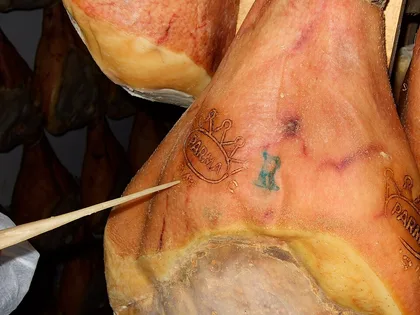 Cured meatsProsciutto di ParmaProsciutto di Parma DOP is Italian ham made from three things only: pork, sea salt and at least 400 days.
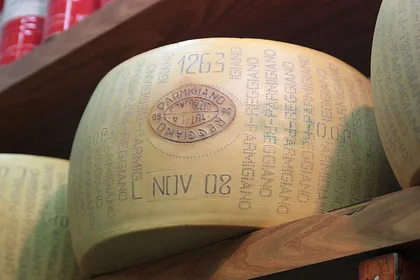 CheeseParmigiano ReggianoThree ingredients and no additives of any kind are permitted: raw cow's milk, salt and calf rennet, from five…
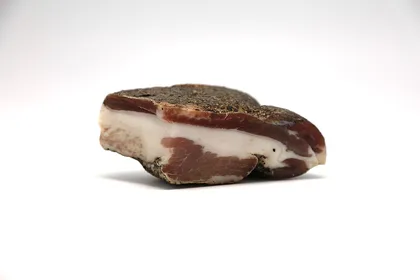 Cured meatsGuancialeGuanciale is cured pork jowl: unsmoked, rubbed with salt and pepper, aged for one to three months.
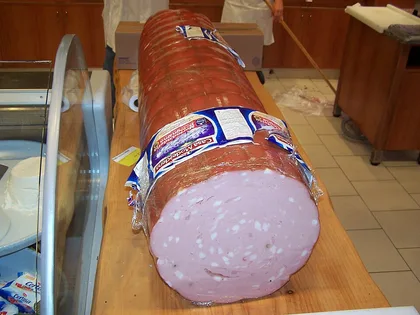 Cured meatsMortadellaThe white cubes are not just any fat: they are jowl, the firmest part of the pig, and they stay whole…Cured meatsPancettaPancetta is Italian cured pork belly: salt, pepper and warm spices, dried for months, never smoked.
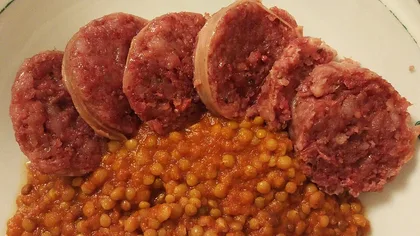 Cured meatsCotechinoCotechino is a large fresh pork sausage from Emilia-Romagna, made with pork meat, fat and rind, and always…
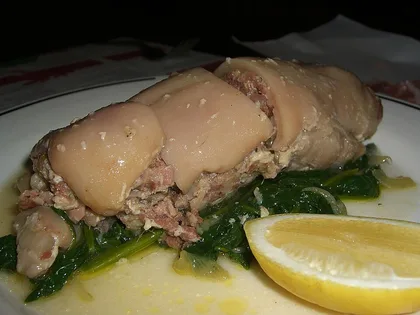 Cured meatsZamponeZampone Modena IGP is spiced pork and rind forcemeat stuffed into a boned pig's trotter: same filling as…
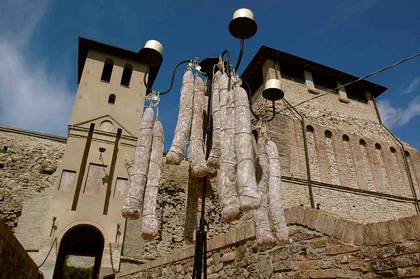 Cured meatsSalame FelinoSalame Felino IGP comes from a village of four thousand people in the hills above Parma.