What is Supplì?
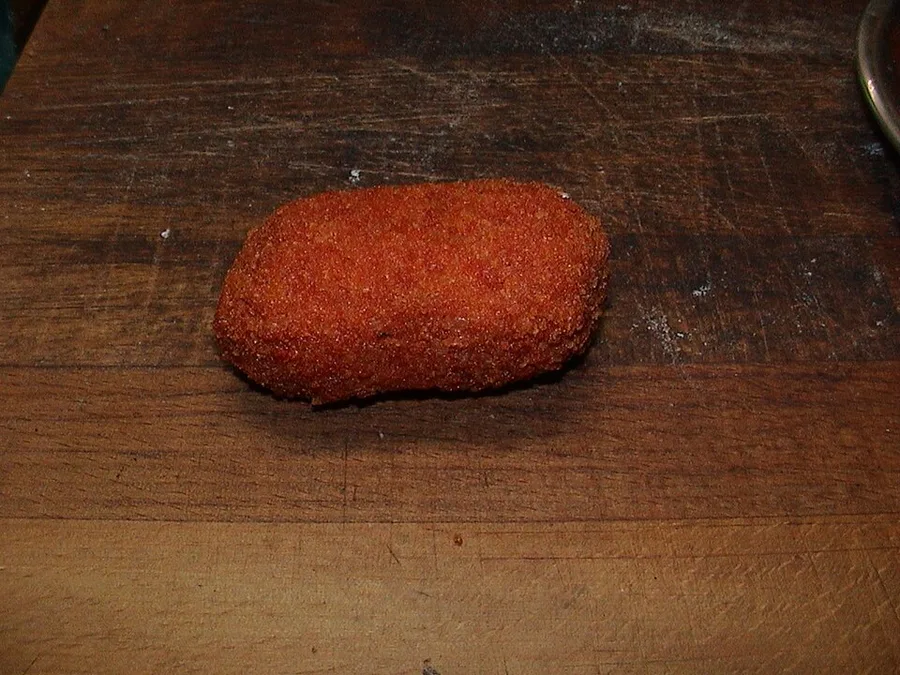
A supplì is an oval of rice, 80 to 110 grams, cooked in tomato sauce, cooled, shaped by hand around a piece of mozzarella, dipped in beaten egg and breadcrumbs, and deep-fried.
It is counter food. You buy one in a Roman pizza-by-the-slice shop or a friggitoria, alongside salt cod fillets and fried courgette flowers, and eat it standing up while the pizza is being weighed. In the Roman order of things it is a snack or a starter, never a meal, which is the practical difference from a Sicilian arancino, a thing that weighs two or three times as much.
The traditional recipe cooks the rice in a tomato sauce made with finely chopped chicken giblets. That version survives in the older friggitorie; most counters today use plain tomato, sometimes with a little minced beef.
The nickname 'al telefono' is also a quality test. Break one in half: if the mozzarella does not pull into a string, the supplì has failed.
What does it taste like?
Tomato and cheese, in that order. The rice is savoury and slightly acidic, with a background of onion and a salty edge from pecorino, and it eats denser and wetter than the inside of an arancino: closer to a chilled tomato risotto, which is essentially what it is.
The crust is thin and fine-crumbed rather than sandy, and it should give way immediately rather than crunch. Then the middle: molten fior di latte, mild and milky, which is why the tomato needs to be assertive.
The old-fashioned version with chicken giblets adds a mineral, offal-ish depth that most people cannot identify but immediately notice is missing from the plain-tomato ones. The gourmet versions (carbonara, cacio e pepe, amatriciana) taste exactly like the pasta dishes they are named after, wrapped in rice.
How to use it
Cook the rice in the sauce, never separately. Soften onion in oil, add finely chopped chicken giblets if you are doing it the old way, then passata; add the rice and cook it risotto-style with stock, keeping it drier than a risotto. Finish off the heat with pecorino, spread it on a tray and chill it completely, ideally overnight.
Warm rice is the main reason supplì burst in the fryer. It must be cold and firm enough to slice.
Drain the mozzarella. Batons of fior di latte, thirty minutes in a sieve, no exceptions. Shape each supplì with wet hands around the cheese, into an oval rather than a ball.
Egg, then fine breadcrumbs, twice if they are large. Fry at 175-180 °C / 345-355 °F for three to four minutes, a few at a time so the oil holds temperature. Drain on paper and eat within five minutes: the string is at its best in the first two.
Freeze them raw and breaded rather than cooked: straight into the fryer from frozen at 165 °C / 330 °F for six or seven minutes. No sauce on the side; the tomato is already inside.
How long it keeps
Shaped and breaded but not yet fried, they sit on a covered tray in the fridge for about a day, and the rice actually firms up there as the starch sets, so they hold their shape better in the oil. In that raw state they freeze well: spread apart on a tray until solid, then bagged, they keep a month or two and go into the fryer straight from frozen at a slightly lower temperature so the centre catches up with the crust.
Once fried the clock is short. The crust stays crisp for half an hour or so, then steam from the rice works outward and softens it, while the mozzarella cools and sets so the thread stops pulling. In a container in the fridge they hold a day or two, the coating going soft and the rice drying and hardening. Ten minutes in a 180 to 200°C oven or an air fryer dries the crust out again and loosens the centre; a microwave leaves both soft. Never seal them while hot, because the trapped steam saturates the breadcrumbs.
Spot the real thing
A supplì is an oval, roughly seven to nine centimetres long and weighing 80 to 120 grams, breadcrumbed and deep fried to an even light brown. Break one open and the rice inside is orange rather than yellow, because it is cooked risotto style with tomato or a long ragù, and there is a core of mozzarella that pulls into a long thread as the two halves separate. That thread is the whole point of the Roman nickname supplì al telefono.
The thing it is constantly confused with abroad is the Sicilian arancino, which is round or cone shaped, considerably bigger at 150 to 250 grams, often built on saffron rice that reads yellow, and filled with ragù and peas under a heavier coating. Potato crocchè are the other neighbour on the same fryer counter and contain no rice at all. In Rome you find supplì in pizza al taglio shops and friggitorie at 1.50 to 2.50 euro each; abroad the same thing lands at 3 to 5 euro or 4 to 7 dollars in an Italian bakery or aperitivo bar.
How to pronounce Supplì
soop-PLEE
Two syllables, stress firmly on the second: the written accent on the final ì is doing that work. English speakers usually front-load it as 'SUP-lee' or rhyme it with 'supply': both wrong. The plural is also supplì, unchanged: 'supplis' does not exist. In Rome you hear the shortened dialect form 'supplì al telefono' said as one word, at speed.
Supplì compared
vsArancini
The Rome-versus-Sicily question, and the differences are real rather than regional pride. Supplì use rice cooked in tomato, so the inside is red-orange, and are filled with a plug of mozzarella that stretches when you break them: hence 'al telefono'. Arancini use saffron rice, so the inside is yellow, and are filled with a cooked filling of meat ragù and peas or béchamel and ham. Supplì are oval and snack-sized; arancini are round or cone-shaped and big enough to be lunch.
| This | Arancini | |
|---|---|---|
| City | Rome | Palermo, Catania, all of Sicily |
| Rice | Cooked in tomato sauce, red-orange | Cooked with saffron, yellow |
| Filling | Fior di latte mozzarella, which must string | Meat ragù with peas, or béchamel and ham |
| Weight | 80-110 g | 100-250 g |
| Shape | Oval, hand-moulded | Sphere in the west, cone in the east |
| Coating | Egg then fine breadcrumb | Flour-and-water batter then breadcrumb |
| Role | Snack or starter | A meal in itself |
| Price | €1.50-2.50 | €2-3.50 |
vsCrocchette di patate
The item sitting next to the supplì in every Roman fryer, and the one tourists mistake for it. Roman potato croquettes are made from riced potato bound with egg and parmesan, shaped into a cylinder, and often filled with mozzarella too, which is where the confusion starts. The tell is the shape and the colour of the interior: cylinder and pale means potato, oval and red means rice.
| This | Crocchette di patate | |
|---|---|---|
| Base | Rice cooked in tomato | Boiled and riced potato |
| Interior colour | Red-orange | Pale yellow or white |
| Shape | Oval, tapering at the ends | Straight cylinder |
| Texture | Grainy: you feel the individual grains | Smooth and fluffy |
| Cheese inside | Always | Sometimes |
| Roman name | Supplì | Crocchetta, or 'crocché' in dialect |
vsNeapolitan palle di riso
Naples has its own fried rice ball, sold in the friggitorie of the historic centre, and it sits between the Roman and the Sicilian versions. The rice is bound with egg and cheese rather than cooked in tomato, the filling is ragù with peas and small cubes of provolone or mozzarella, and the shape is a rough sphere. Softer and denser than a supplì, smaller and less structured than an arancino.
| This | Neapolitan palle di riso | |
|---|---|---|
| City | Rome | Naples |
| Rice binder | Tomato sauce and pecorino | Egg and grated cheese |
| Filling | Mozzarella only | Ragù, peas, provolone or mozzarella |
| Shape | Oval | Sphere, hand-rolled |
| Sold with | Salt cod fillets, courgette flowers | Zeppole, panzarotti, frittatine di pasta |
Supplì substitutes
- Arancini
Far easier to find outside Italy, frozen or fresh. Expect saffron rice and a cooked filling rather than a molten cheese centre, and a much larger portion. Not the same dish, but it satisfies the same craving.
1 arancino ≈ 2 supplì by weight - Homemade, from leftover risotto
The honest origin of the dish. Any leftover risotto works if it is cold and firm enough to slice; a plain tomato risotto is closest. Chill it overnight, shape around mozzarella, egg-and-breadcrumb, fry at 175-180 °C for three to four minutes.
500 g cooked rice makes about 8 supplì - Fior di latte instead of buffalo mozzarella
Not optional. Buffalo mozzarella carries far too much whey and floods the coating from inside. Use cow's-milk fior di latte or low-moisture mozzarella, cut into batons and drained in a sieve for thirty minutes first.
20-25 g of cheese per supplì - Carnaroli or Arborio instead of Originario
The traditional rice is Originario, cheap and round. Carnaroli holds its shape better and is easier to find; Arborio works and is stickier. Avoid long-grain and parboiled entirely: they will not bind.
1:1 - Vegetarian and vegan versions
The plain-tomato supplì is already vegetarian apart from the cheeses: pecorino romano is made with lamb rennet and mozzarella usually with calf rennet, so use microbial-rennet versions if that matters. Vegan works better than expected: a plant-based mozzarella that melts, and nutritional yeast plus a little miso in the rice for the savoury depth pecorino was providing.
- Potato croquettes
If you are building a Roman fried platter and cannot make both, crocchette are simpler and share the counter. They give you the mozzarella pull without the risotto step.
1:1 by count
Where to buy it
Supplì barely exist as a retail product outside Italy, which makes this one of the dishes most worth making at home. In the US, Roman-style pizza al taglio shops in New York, Los Angeles, Chicago and Washington DC often have them at the counter for 3 to 5 dollars, and a few Italian delis sell them frozen and raw.
In the UK, London's Roman-style pizza counters (the pizza al taglio wave of the last decade) carry them at 3 to 4.50 pounds. Otherwise, Italian delicatessens will point you at arancini instead.
In Rome itself, 1.50 to 2.50 euros at a pizzeria al taglio, 3 to 4.50 for the gourmet versions, and over 5 at stations and airports where they will have been reheated rather than fried to order.
The things to buy for making them: round Italian rice such as Originario or Carnaroli, fior di latte rather than buffalo mozzarella, fine dry breadcrumbs, and a thermometer. The oil temperature is the whole game.
Where to eat it in Italy
Rome, and the test is not the neighbourhood but the frequency of frying: good counters fry in waves through the day, mediocre ones fry once in the morning and reheat.
Supplizio, on Via dei Banchi Vecchi, is the shop that put the supplì back at the centre of the conversation, serving the old giblet version alongside experimental ones. In Trastevere, the long-standing counter on Via San Francesco a Ripa has been feeding the neighbourhood for decades and takes the locals before the tourists.
Pizzarium in Prati and the wave of pizza al taglio shops that followed it turned the supplì into a test piece for pizzaioli, rethinking the rice and the crumb.
Outside the centre, the friggitorie of Testaccio, Pigneto and Torpignattara are where a supplì still costs under two euros and still tastes of a fryer that has been running since lunch. Order one with a salt cod fillet: that is the historic pairing, and it is a meal.
Recipes with it
Frequently asked questions
How do you pronounce supplì?
soop-PLEE, two syllables with the stress on the second: the written accent on the final ì marks it. Not 'SUP-lee' and not rhyming with 'supply'. The plural is also supplì.
What is the difference between supplì and arancini?
Supplì are Roman, oval, 80-110 g, made with rice cooked in tomato sauce and filled with mozzarella that stretches into a string. Arancini are Sicilian, round or cone-shaped, 100-250 g, made with saffron rice and filled with cooked meat ragù or béchamel. One is a snack, the other is lunch.
Why are they called supplì al telefono?
Because breaking one in half draws the melted mozzarella into a long thread, like the coiled cord of an old wall telephone. It doubles as a test of whether the supplì was made properly.
Why do supplì fall apart when fried?
Usually because the rice was still warm when they were shaped, or because the mozzarella was not drained and released whey inside. The third cause is a gap in the coating: for larger supplì, egg and breadcrumb them twice.
Can you bake supplì or cook them in an air fryer?
You can cook them that way but they will not be supplì: the coating stays dry and never forms a crust. An air fryer is excellent for reheating already-fried ones, eight minutes at 180 °C / 355 °F.
Related foods
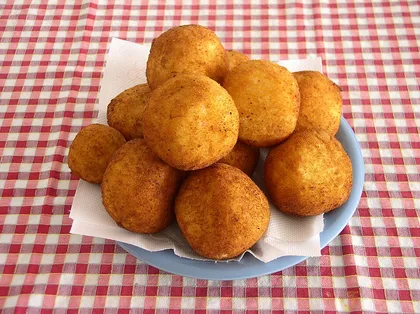 Pasta and breadAranciniArancini are deep-fried Sicilian rice balls: saffron rice moulded around a filling of meat ragù and peas, or…
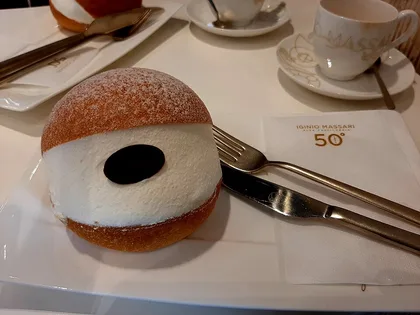 SweetsMaritozzoIn Rome this is breakfast at seven in the morning and nobody finds it odd: a soft, lightly sweet bun split…
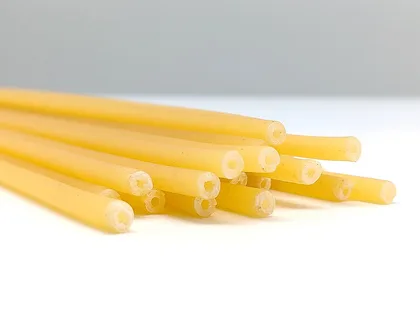 Pasta and breadBucatiniBucatini are thick spaghetti with a hole running through the middle.
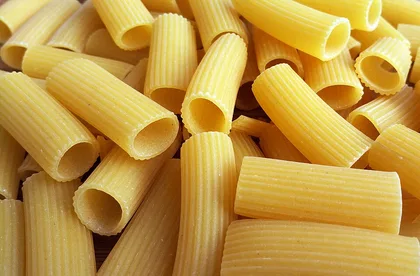 Pasta and breadRigatoniWide ridged tubes of durum semolina, cut straight across. The ridges and the square cut are engineering, not…
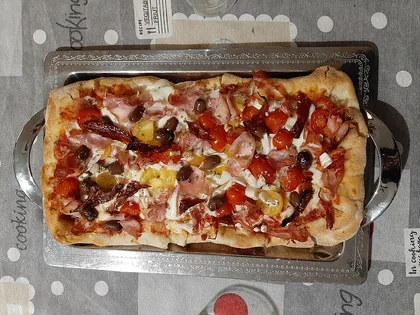 Pasta and breadPinsa RomanaIt is not pizza, and the difference starts with the flour: wheat, rice and soy blended together, hydration…
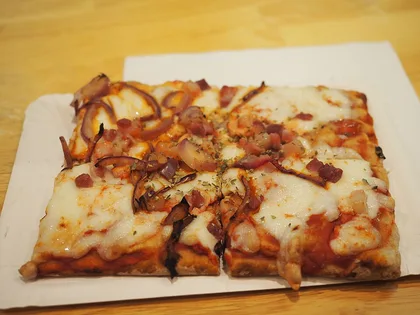 Pasta and breadPizza al TaglioPizza al taglio is Roman pizza by the slab: a very wet dough baked in an oiled rectangular pan, sold by…
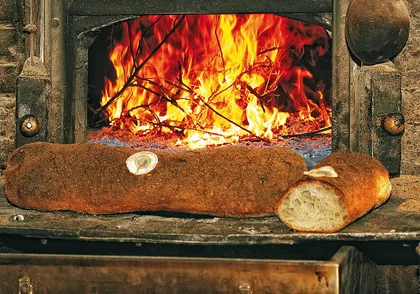 Pasta and breadPane di Genzano (Genzano Bread)Pane di Genzano is a sourdough loaf from the Alban Hills south of Rome, baked in a wood oven on a bed of bran…
 Cured meatsGuancialeGuanciale is cured pork jowl: unsmoked, rubbed with salt and pepper, aged for one to three months.