Italian wine and wine country
Italy has more native grape varieties than any other country (over five hundred still in use) and almost every appellation grew up to go with the food around it.
Italian wine reads better from the table than from the textbook. Barolo grew up next to Piedmontese braises and aged cheeses; Sangiovese next to Tuscan grilled meat; Verdicchio next to Adriatic fish. When a regional pairing seems obvious, it is usually because the two grew up together over centuries.
The acronyms nest like this: PDO is the European category, and in Italy it splits into DOC and DOCG, sub-categories with progressively stricter rules; IGT corresponds to PGI. A DOCG is not automatically better than a DOC: it is a wine with a tighter rulebook and one more layer of checking.
The same warning applies as with cheese: a rulebook says what may be done, not how well the producer does it. Two bottles carrying the same appellation can be worlds apart.
Italian wine: what the name on the list actually tells you
An Italian wine list gives you place names where other countries give you grapes. California says cabernet, Australia says shiraz, Italy says Barolo, Chianti, Soave, Etna. Every one of those is a location, and none of them names the grape unless you already know it.
The letters after the name are the second obstacle, and almost everyone reads them as a ladder: IGT at the bottom, DOCG at the top. They are not a ladder of quality. They describe how tightly the wine was regulated and where the fruit had to grow, which is a question about paperwork, not about what is in the glass.
What follows is what to expect from the names you keep meeting, what an Italian label is legally required to tell you, roughly what each style should cost, and the point on a wine list where more money stops buying flavour and starts buying scarcity.
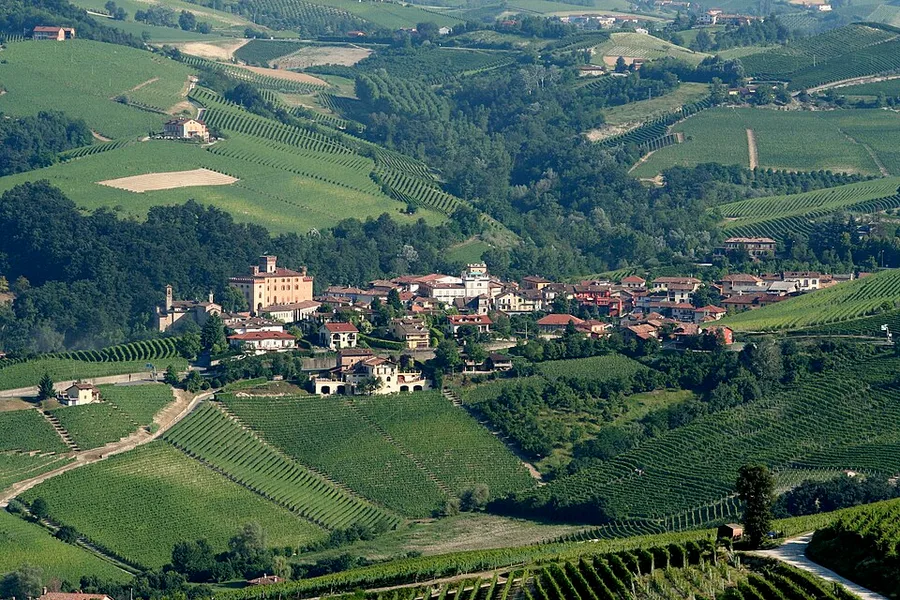
DOCG, DOC, IGT: origin, not quality
DOCG, DOC and IGT are not three grades of quality. They are three widths of rulebook, setting where the fruit was grown, which grapes are allowed and in what proportion, the maximum yield per hectare, the minimum alcohol and the minimum months in the cellar before release. A rulebook draws a fence. Inside that fence sit meticulous producers and lazy ones, and the letters do not separate them.
The EU has two categories, PDO and PGI, and the Italian letters live inside them: DOCG and DOC are traditional terms that count as PDO, IGT counts as PGI. Regulation (EU) 2024/1143 folded wine, spirits and food geographical indications into a single text in 2024 without abolishing the national terms, which is why an Italian bottle still reads denominazione di origine controllata e garantita rather than PDO, while an Italian cheese carries the European abbreviation.
The G, for garantita, buys traceability rather than flavour. Under the Testo unico del vino (law 238 of 2016) a DOC must hold that status for at least ten years before it can apply to move up, and a DOCG then carries two obligations a DOC does not: bottling inside the production zone, and a chemical and sensory examination of every batch, with a numbered state seal across the capsule of each bottle. Italy has seventy-seven DOCGs, more than three hundred DOCs and around a hundred and twenty IGTs: over five hundred appellations, far more than any other country.
An IGT can cost, and be worth, considerably more than a DOCG. The mechanism is mechanical rather than mysterious: a producer who wants a grape the rulebook forbids, a different blend, or a release date outside the required window steps out of the appellation and into IGT. The label drops a rung; the wine does not. The reverse matters more on a wine list: a famous DOCG name on its own guarantees nothing about the bottle in front of you, since a wine made at the maximum permitted yield is entirely legal.
The wines that taught Italy this were the Supertuscans. In the 1970s Tuscan estates put cabernet into bottles the Chianti rulebook did not allow, and those wines were classified as vino da tavola, table wine, the lowest tier that existed. They promptly sold for more than any Tuscan DOCG. Tignanello appeared in 1971; Sassicaia had been on sale since 1968. The IGT category was created in 1992 partly to give them a home, and in 1994 Sassicaia was granted something unique in Italy, a DOC covering a single estate. When you see IGT beside a three-figure price on a list, that is the history behind it.
Reading an Italian label
The vintage is the harvest year, not the bottling year, and EU rules require at least 85 per cent of the fruit to come from the year stated. It matters enormously on wines built to last and hardly at all on a Prosecco or a young red, where it only tells you how long the bottle has been standing. On a crisp white, a three-year-old vintage still on a restaurant list is usually a bottle nobody has been ordering.
Alcohol is given as a percentage by volume, with a legal tolerance of half a point either way, so 13.5 means somewhere between 13 and 14. After the vintage it is the most useful number on the label, because it predicts weight in the mouth. Southern reds at 15 per cent and above are warm and tiring across a long meal; northern reds at 12.5 or 13 are not weak, they are built to be drunk with food rather than admired alone.
Imbottigliato all'origine (bottled at source), imbottigliato dal viticoltore (bottled by the grower) and imbottigliato nell'azienda agricola all mean the person who made the wine also bottled it. Imbottigliato da followed by a name, often with a code where an address should be, means the wine was bought in bulk and bottled by somebody else: perfectly legal, very common in supermarkets, but the chain back to a specific vineyard ends there. On DOCG wines, bottling inside the zone is compulsory anyway, so that phrase tells you even less.
The lot number, prefixed with an L when it is not otherwise obvious, identifies the bottling run: it is what a recall works from, and the only number tying the bottle to one day's work. DOCG bottles add the fascetta, a state seal printed by the Istituto Poligrafico e Zecca dello Stato carrying an alphanumeric code for the appellation and a serial number, issued to a named bottler for a named lot and policed by the ICQRF, the Italian agriculture ministry's anti-fraud inspectorate. Some consortia now run approved electronic tracking instead, but the logic holds: that code exists so the bottle can exist only once.
Riserva is a legally required minimum ageing time, not a compliment, and the months change with every appellation. Chianti Classico Riserva means twenty-four months including at least three in bottle; Barolo is released after thirty-eight months and Barolo Riserva after sixty-two; Brunello di Montalcino cannot be sold before 1 January of the fifth year after the harvest, and its Riserva a year later; Amarone asks two years, its Riserva four. Classico is geography: the historic core of the zone, the land the name came from before the boundaries widened, which is why Chianti Classico is a smaller and older place than Chianti. Superiore usually means half a degree more alcohol and a lower yield, sometimes a few extra months of ageing. Three words, three unrelated meanings, and not one of them means better on its own.
The grapes behind the place names
Eight grapes account for most of what turns up on an Italian wine list. Learn them and you can order a name you have never seen and still know roughly what will arrive in the glass, which is the whole trick.
Sangiovese is the country's most planted variety and sits inside Chianti, Chianti Classico, Brunello di Montalcino, Vino Nobile di Montepulciano, Morellino di Scansano and Rosso Conero. Expect medium colour, high acidity, dry grippy tannin, sour cherry and a savoury green note people describe as tomato leaf: a wine that can seem angular on its own and falls into place next to grilled meat. Nebbiolo defies the eye: pale, sometimes almost see-through, with the tannin and acidity of something twice as dark, and aromas of rose, tar and dried cherry. It makes Barolo, Barbaresco, Roero, Gattinara and Ghemme, and in Valtellina it goes by chiavennasca.
Glera makes Prosecco, and this is where the biggest misunderstanding lives. Until 2009 the grape itself was called prosecco, like the wine and like a hamlet outside Trieste. The name was then reserved for the territory: the variety was officially renamed glera and Prosecco became a geographical indication, with a DOC covering nine provinces across Veneto and Friuli plus two hillside DOCGs, Conegliano Valdobbiadene and Asolo. The reason was defensive: while prosecco was a grape name, anyone anywhere could plant it and print the word on a label.
Primitivo comes from Puglia, around Gioia del Colle and Manduria, and DNA work identified it as the same variety as Californian zinfandel and Croatian tribidrag: early ripening, sugar-rich, dark and high in alcohol. Aglianico does the opposite, picked in late October and sometimes November, with severe tannin, high acidity and volcanic soils; it becomes Taurasi in Campania and Aglianico del Vulture in Basilicata. Nerello mascalese grows on Etna between six hundred and a thousand metres and tastes closer to Burgundy or Barolo than to anyone's idea of a Sicilian red: pale, taut, faintly salty.
Corvina is the backbone of Valpolicella alongside corvinone and rondinella, with thick skins and loose bunches, which is exactly what a grape needs to spend months drying on racks without rotting. That drying, appassimento, is what produces Amarone and Recioto. Verdicchio belongs to the Marche, in the Castelli di Jesi and at Matelica, and is one of very few Italian whites that genuinely improves over five or six years: the faintly bitter almond finish is its signature, not a flaw in the bottle.
What you are paying for
The first driver is yield per hectare, and it is written into the rulebook. Barolo stops at 8 tonnes of grapes per hectare, Chianti Classico at 7.5, Brunello at 8; Prosecco DOC is allowed 18 and the hillside DOCGs 13.5. With the same fixed costs, a hectare producing eighteen thousand kilos spreads them across more than twice as many bottles. Before any question of skill, price starts as a division sum.
The second is time. Barolo cannot be sold until thirty-eight months after the harvest and Brunello not until the fifth year: three or four vintages sitting in a warehouse, capital frozen, bottles taking up space and earning nothing. Langhe Nebbiolo, often the same grapes off younger vines and the same hands, is released the following year. It is not a worse wine in the abstract; it is a wine that was never asked to wait, and that is why it costs a third as much.
The third is oak. A new 225-litre barrique costs roughly six hundred to nine hundred euros and yields about three hundred bottles: two to three euros a bottle in wood alone on its first use, before anything else. A large cask costs far more but lasts decades and spreads across vastly more wine. When a back label boasts about new barriques, it is quoting a line from the accounts, not describing a flavour you necessarily want.
In an eight-euro supermarket bottle, the wine itself is worth a little over a euro. The rest is glass, closure, capsule and label (fifty cents to a euro), freight, distributor margin, retailer margin and 22 per cent Italian VAT, though still wine carries zero excise duty in Italy, which is not the case in the UK, Ireland or Scandinavia. In a twenty-five-euro bottle the industrial costs barely move: what grows, and grows steeply, is the share reaching the liquid. That is why the jump from eight to fifteen euros is dramatic and the jump from fifty to a hundred is nearly invisible to anyone who does not taste for a living.
On a restaurant list, expect two and a half to three times the shop price, which puts a decent Chianti Classico around thirty-five to fifty euros, a Barolo rarely under seventy, a Brunello higher again, and a Prosecco in the twenties. The rule that saves the most money: in a famous appellation, the entry wine of a serious grower beats the flagship of a mediocre one almost every time. Look for the junior name beside the famous one, Langhe Nebbiolo next to Barolo, Rosso di Montalcino next to Brunello, Valpolicella Superiore next to Amarone. Same hands, often the same vineyards, half the price.
Serving and keeping it
The real temperatures sit in a narrow band: sparkling 6-8 °C (43-46 °F), whites 10-12 °C (50-54 °F), or 12-14 °C if they are full-bodied or oaked, light young reds 14-16 °C (57-61 °F), structured reds 16-18 °C (61-64 °F). Above 18 °C alcohol takes over and the wine tastes flat and hot at once; below 6 °C almost nothing comes through, which is precisely why mediocre sparkling wine is served ice cold.
Red wine at room temperature is a correct instruction that survived its own context. The phrase translates the French chambré and describes nineteenth-century houses with no central heating, where a dining room sat at 16-18 °C, exactly the right window. A modern living room at 22 °C (72 °F) is far too warm, and the fix costs nothing: twenty minutes in the fridge before opening, or ten with the bottle already on the table. Whites need the opposite correction, since a fridge runs at 4 °C and the wine wants ten minutes out of it before pouring.
An open bottle is oxidation in progress. Sparkling wine holds one or two days under a proper sprung stopper (a teaspoon in the neck does nothing at all), whites two or three days, reds three to five, dessert wines like Vin Santo several weeks. The rule that surprises people: put opened reds in the fridge too, corked, because cold slows oxidation, then take the bottle out half an hour before drinking. Decanting the leftovers into a small bottle filled to the brim beats any vacuum pump on the market.
Without a cellar, the variable that matters is not the ideal temperature but its steadiness: a constant 12 °C or a constant 18 °C both beat 15 °C that swings every day. Above 25 °C wine ages fast and badly, and the damage does not reverse. It needs darkness, because light causes the fault known as lightstrike, especially in clear bottles of white and sparkling; it needs no vibration, so not on top of the fridge or next to the washing machine; and it wants humidity near 70 per cent so corks do not dry out. Cork-sealed bottles lie down, screwcaps can stand upright.
In practice, a wardrobe in a north-facing room beats any kitchen cupboard, and the original closed carton insulates better than an open rack. If you need somewhere for twenty bottles and have nothing else, find the lowest, most interior spot in the house. One last piece of perspective: current estimates put well over ninety per cent of the world's wine in the category meant to be drunk within a year or two. That special bottle you are saving is, in most cases, not improving. It is waiting.
How to choose
- 1Read the place, then work out the grape: Barolo is nebbiolo, Chianti is sangiovese, Prosecco is glera. The list will not tell you.
- 2Use the alcohol figure to predict weight: 12.5 to 13.5 for reds that sit well through a meal, 15 and above for something warm and tiring by the second course.
- 3Order the junior wine of a good grower over the flagship of a name you recognise: Rosso di Montalcino from a serious estate beats a supermarket Brunello.
- 4Check the vintage against the style: a crisp white or a Prosecco more than two or three years old has been standing there for a reason.
- 5Treat Riserva as months, not merit. Ask how many the appellation requires: it runs from twenty-four to sixty-two, and you pay for every one of them.
- 6Ignore heavy glass and elaborate bottle shapes. They cost the producer money, they tell you nothing about the wine, and you are the one paying for the weight.
What almost everyone gets wrong
DOCG on the label means a better wine than DOC or IGT.
It means a tighter rulebook, compulsory bottling inside the zone and a batch-by-batch examination with a numbered state seal. That is traceability, not quality. The Supertuscans were sold as plain table wine and outpriced every DOCG in Tuscany.
The more expensive the bottle, the better the wine.
Price tracks yield, ageing time, oak and scarcity, not pleasure. Below about eight euros the liquid itself is worth barely a euro, so the step up to fifteen is dramatic; from fifty to a hundred you are mostly buying rarity and a name.
Red wine should be served at room temperature.
The room in that phrase was an unheated nineteenth-century dining room at 16-18 °C. A modern living room at 22 °C (72 °F) makes the same wine taste of alcohol and little else. Twenty minutes in the fridge puts it back where it belongs.
A screwcap means a cheap wine.
It is an engineering choice: a consistent seal and no risk of cork taint, which affects a small but steady share of cork-sealed bottles. For any white, or any red meant to be drunk within three years, it is the more reliable closure, and serious producers in Austria and New Zealand use it by default.
Prosecco is a grape variety.
Since 2009 the grape is officially called glera and Prosecco is a place: a DOC across nine provinces of Veneto and Friuli, plus the Conegliano Valdobbiadene and Asolo DOCGs. The rename existed precisely to stop prosecco being grown and labelled anywhere else.
Where to start
The pages worth opening first.
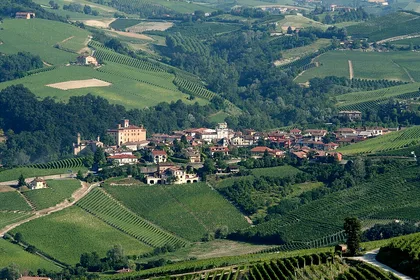 DOPBaroloNebbiolo: pale, fiercely tannic, released thirty-eight months after harvest. Rarely under seventy euros on a list, and worth knowing before you order it.
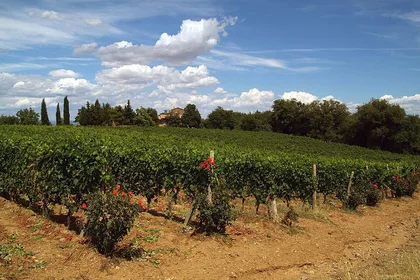 DOPBrunello di MontalcinoSangiovese held back until the fifth year after the vintage. If the price stings, the same estates make Rosso di Montalcino for a third of it.
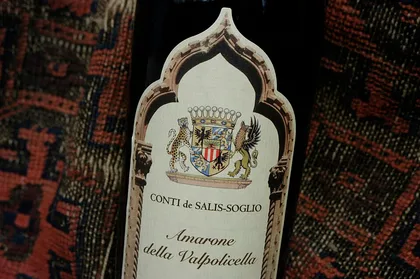 DOPAmarone della ValpolicellaFrom grapes dried for months on racks: 15 to 16 per cent alcohol and a faintly sweet edge. A wine for the end of dinner, not for all of it.
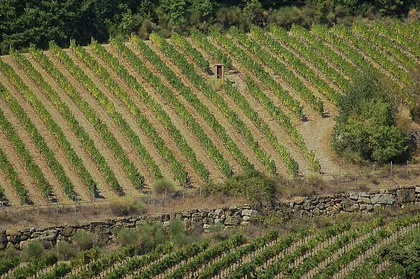 DOPChianti ClassicoThe black rooster marks the historic core, a smaller and older zone than plain Chianti. High acidity, which is why it works with tomato and grilled meat.
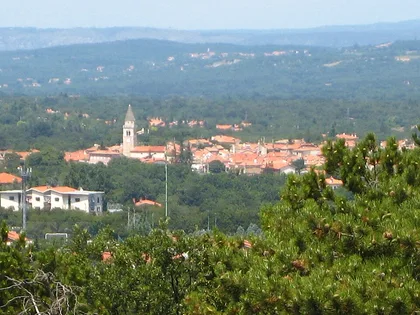 DOPProseccoGlera from Veneto and Friuli. Check whether it says DOC or Conegliano Valdobbiadene DOCG: hillside fruit, lower yield, a few euros more.
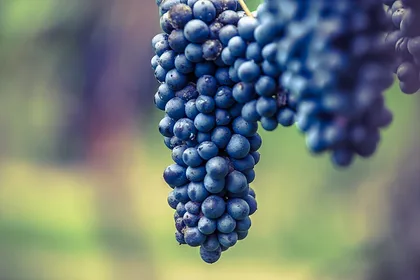 DOPLambruscoFizzy red, usually dry despite the sweet reputation it got abroad in the 1970s. Serve it cool, around 12-14 °C, with fatty cured meats.DOPVino Nobile di MontepulcianoSangiovese from the Tuscan town of Montepulciano. Not the same thing as Montepulciano d'Abruzzo, which is a different grape in a different region.
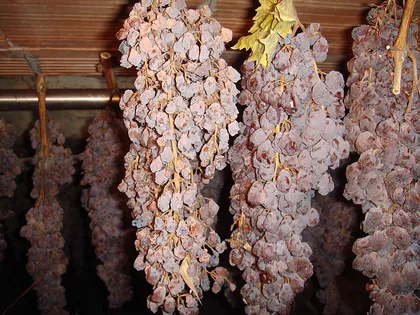 DOPVin SantoDried-grape dessert wine aged at least three years in small barrels, drunk with cantucci. An open bottle keeps for weeks, not days.
Frequently asked
Is a DOCG wine better than a DOC or an IGT?
No. DOCG means a stricter rulebook, bottling inside the zone and a laboratory and tasting check on every batch, sealed with a numbered state strip. It tells you the wine is what it claims to be, not that you will enjoy it. Plenty of IGT bottles cost several times a DOCG.
What exactly is a Supertuscan?
A Tuscan red made outside the local rulebook, usually with cabernet or merlot alongside or instead of sangiovese. From the 1970s these were legally table wine and commercially the most expensive wines in the region. Most now sit in the Toscana IGT category or in Bolgheri DOC.
How much should I spend on a bottle of Italian wine?
In a shop, twelve to twenty euros is where price and pleasure meet across most appellations. On a restaurant list expect two and a half to three times that. Below eight euros the wine itself is worth a little over a euro, and the rest is glass, freight, margin and tax.
What is the difference between Prosecco and Champagne?
Grape, place and method. Prosecco is glera from north-east Italy, made sparkling in a pressurised tank over a few weeks, which preserves pear and white-flower aromas. Champagne is chardonnay and pinot from northern France, refermented in the bottle with long contact with the yeast, which is where the bread and pastry notes come from.
How long does an open bottle last?
Sparkling one or two days under a sprung stopper, whites two or three days, reds three to five, Vin Santo several weeks. Keep all of it in the fridge, reds included, and take the bottle out half an hour before serving.
Can I bring wine home from Italy?
Within the EU there is no duty barrier for personal quantities. Into the UK the personal allowance is 18 litres of still wine, about two cases, with duty due above it; into the US it is roughly a litre duty free per adult, more on payment of duty, and individual states add their own rules. Check current customs guidance before buying a case.
Every wine page
8DOPProseccoProsecco is made from Glera grapes by the Martinotti tank method, not the traditional bottle method…DOPChianti ClassicoChianti Classico is the Black Rooster wine: at least 80 per cent Sangiovese from nine communes…DOPBaroloBarolo is one hundred per cent Nebbiolo from eleven villages in the Langhe hills of Piedmont, aged…DOPBrunello di MontalcinoBrunello di Montalcino is pure Sangiovese aged five years, at least two of them in oak, made only…DOPAmarone della ValpolicellaAmarone is made from Corvina, Corvinone and Rondinella dried on racks for 100 to 120 days until…DOPLambruscoLambrusco is not one wine but a family of Emilian grape varieties.DOPVino Nobile di MontepulcianoVino Nobile di Montepulciano is a Tuscan red made from at least 70 per cent Sangiovese, known…DOPVin SantoVin Santo is Tuscany's dried-grape wine: Trebbiano and Malvasia laid on reed mats or hung from the…