Fish, seafood and bottarga
Italy has five thousand miles of coast, but traditional seafood cooking is built more on preserved fish than on fresh: before ice, fresh fish stayed on the coast.
Fresh fish did not travel. That is why inland tradition runs on baccalà and stoccafisso (Atlantic cod, salted or air-dried) which arrived from northern Europe and kept for months. The paradox is that some of Italy's most famous fish dishes, like baccalà alla vicentina, belong to cities with no sea at all.
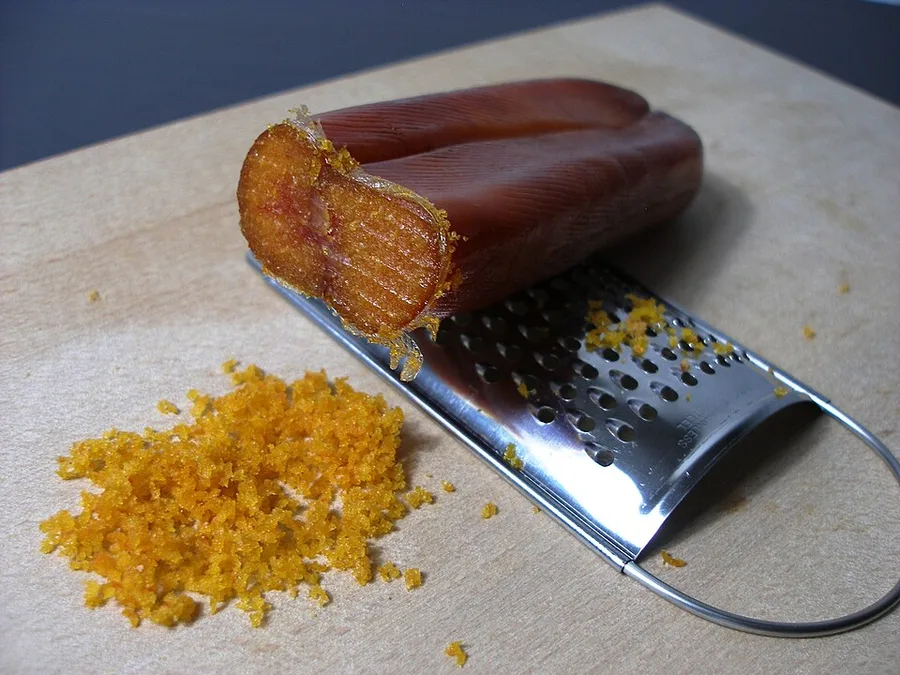
On the coast, preservation produced other things: anchovies under salt, colatura, mullet and tuna bottarga, marinated anchovies. The bottarga of Cabras in Sardinia is grey mullet roe, salted and sun-dried. You grate it like cheese, and it costs about what a long-aged cheese costs.
Where fresh fish leads (Sicily, Puglia, Liguria) recipes are short and lightly dressed, because good fish does not need much. Bluefin from Favignana, red prawns from Mazara, cuttlefish from the Venetian lagoon.
Italian fish and seafood: what you are actually buying
The Italian seafood shelf abroad is the least self-explanatory aisle in the shop. A small bottle of amber liquid called colatura, a rock-hard plank of dried cod, a vacuum brick of grey roe sold by the gram, tins of anchovies at four different prices: none of it tells you what it is or how much to use.
Two things clear up most of the confusion. First, in Italy and across the European Union a fish label is legally obliged to carry four specific pieces of information, and they say far more than the price does. Second, no fish is safe to eat raw because it is fresh: raw, marinated and lightly cured fish must be frozen first, and that is a food safety rule, not a chef's preference.
The third thing is harder to accept. Italy has about 8,000 kilometres of coast, and its sea cooking is built on preserved fish rather than fresh. Salted anchovies, colatura, bottarga, salt cod, stockfish: these are the seafood products Italy actually exports, and they are the tradition, not a substitute for it. Fresh fish stayed on the coast until ice and railways arrived, which in food terms was yesterday.
What an Italian fish label has to tell you
If you are shopping in Italy, or anywhere in the European Union, EU Regulation 1379/2013 forces every fish counter to display four things for each fishery and aquaculture product sold at retail. The first is the commercial name plus the scientific name. That second name matters more than it sounds: an Italian counter selling merluzzo is almost always selling European hake (Merluccius merluccius), not the cod (Gadus morhua) an English speaker expects. Same word on the ticket, different ocean, different fish, different price.
The second item is the production method, and only three phrasings are allowed: caught at sea, caught in fresh water, farmed. There is no fourth box for vagueness. The third is where it came from, and it is the most informative line on the ticket. Sea catches are labelled by FAO area, and for two of them the rules require going one level deeper and writing it in terms a shopper can understand. Area 37 is the Mediterranean and Black Sea, split into 37.1 western, 37.2 central (which contains 37.2.1 Adriatic and 37.2.2 Ionian), 37.3 eastern and 37.4 Black Sea. Area 27 is the Northeast Atlantic, running from the Barents Sea to the Bay of Biscay: cod, herring, mackerel and Cantabrian anchovies come from there. Other numbers tell their own story, such as 34 for the Eastern Central Atlantic (Moroccan and Mauritanian octopus and cuttlefish) or 41 for the Southwest Atlantic (Argentine squid). For farmed fish the label must name the country where the animal gained more than half its final weight, not the country of the last processing step.
The fourth item is the fishing gear category, listed in Annex III: seines, trawls, gillnets and similar nets, surrounding nets and lift nets, hooks and lines, dredges, pots and traps. This is not a detail for enthusiasts. A fish taken on a hook or out of a pot comes aboard intact; one that spent hours crushed inside a trawl arrives with damaged flesh and lost scales. Same species, two different products, and the ticket separates them at no cost to you.
Outside the EU you get less. The United Kingdom retained the same labelling requirements after leaving the Union, so a British counter should show you the identical four items. In the United States, country of origin labelling covers unprocessed fish at retail and requires the country and whether it was wild-caught or farmed, but not the FAO area, not the gear and not the scientific name. If you are used to that shorter version, an Italian ticket will look overloaded. It is not: it is the same information, finally written down.
One trap survives all of this. On a tin or a jar, “Product of Italy” refers to where the processing happened, not where the fish swam. Anchovies packed in Italy are frequently caught elsewhere, and tuna canned in Italy is routinely caught in the Indian or Pacific Ocean. Turn the tin over and look for the species name and the catch area, which serious brands print. If neither appears, you are buying a factory address.
Fresh, thawed, blast-frozen
Three words, three different states, and only one is what most shoppers picture. Fresh means never frozen, held close to the temperature of melting ice, between 0 and 2 degrees Celsius. Thawed means sold defrosted, and in the EU the label has to say so; that fish must not be refrozen at home, because a second freeze-thaw cycle wrecks the fibres and multiplies bacterial load. Blast-frozen, sold in Italy as surgelato, is a legally defined term: Italian decree 110/1992 requires the product to reach minus 18 degrees Celsius throughout, quickly, and to stay in an unbroken cold chain until sale. Slow freezing produces large ice crystals that puncture the cells and leave washed-out flesh, which is why the speed, not just the temperature, is written into the law.
This is where the usual prejudice collapses. Red prawns from Mazara del Vallo are fished between 400 and 800 metres deep, on trips that last weeks, and are frozen aboard within minutes of hauling. That product beats the same prawn sold fresh after three days of transport. The same is true of squid, cuttlefish and most tuna destined for raw preparations. The useful question is never “is it fresh?” but “how long between the net and the cold?”.
Now the part that is safety rather than taste. EU Regulation 853/2004, Annex III, Section VIII, Chapter III, point D requires a freezing treatment for all fishery products to be eaten raw or almost raw, and for products that are marinated, salted or otherwise treated in a way that does not kill parasite larvae. The treatment is an either/or: at least 24 hours at minus 20 degrees Celsius or colder in every part of the product, or at least 15 hours at minus 35. United States rules land in the same place by a different route: the FDA Food Code asks for minus 20 degrees Celsius for seven days, or minus 35 until solid and then held at minus 35 for 15 hours, or minus 35 until solid then minus 20 for 24 hours. Either way, freezing is the control, and freshness is not.
The parasite behind all of this is Anisakis. The larvae live in the guts and migrate into the muscle after the fish dies, which is why gutting quickly at sea reduces the risk without removing it. Vinegar, lemon juice and salt do not kill them, so marinated anchovies made without prior freezing are the classic vehicle for infection in Italy. Heat does work, from 60 degrees Celsius held for a minute in the thickest part, so properly cooked fish is not a concern. The limited exemptions cover farmed fish raised on controlled feed and specific cases where epidemiological data rule out the hazard.
Two practical consequences. First, “sushi-grade” and “sashimi-grade” are marketing terms with no legal definition anywhere: ask instead whether the fish was frozen to a parasite-destruction schedule, and if the seller cannot answer, cook it. Second, a domestic freezer usually sits around minus 18, not minus 20, which is why home advice runs longer and more cautiously: at least 96 hours for gutted fish in thin portions. And one hazard has nothing to do with parasites. Tuna, mackerel and anchovies are rich in histidine, which turns into histamine whenever the cold chain breaks. That is scombroid poisoning, it survives cooking completely, and no amount of inspecting the fish will show it to you.
Preserved fish is the real Italian tradition
Before industrial ice, fresh fish did not clear the first range of hills. Anyone living twenty kilometres inland ate fish that had been salted, air-dried or packed under oil, and that is why nearly every famous Italian seafood preparation is a preserve. The techniques are four and they all do the same job, taking free water away from bacteria: salt, air-drying, oil as a barrier against oxygen, and brine. For a shopper abroad this is good news, because preserves are precisely the products that survive a journey.
Anchovies come to you in two forms and the choice matters. Salt-packed anchovies arrive whole in a tin or jar of coarse salt: you rinse them, run a thumb along the spine under cold water, and lift two clean fillets. They keep for about a year unopened, taste cleaner and less oily, and are what Italian cooks reach for. Oil-packed fillets are the same fish already boned, and their quality depends on how long they were cured and what oil they sit in, olive rather than sunflower. In Cetara on the Amalfi coast and Marina di Pisciotta in Cilento, the fish are gutted with a single movement of the hand, then layered in a chestnut barrel called a terzigno, one layer of anchovy and one of sea salt, under a wooden disc weighted with stones for months.
Colatura is the liquid those weights press out, collected, poured back over the top, filtered through the layers and bottled. Southeast Asian fish sauce is its closest relative and the comparison is fair but not exact: colatura is made from anchovy alone, aged longer, less pungent on the nose and saltier drop for drop, so use about half of what a Thai or Vietnamese recipe calls for. Never cook it. The canonical dish is spaghetti dressed off the heat with garlic, olive oil, parsley and colatura, with no salt in the pasta water. It is the only fermented fish sauce still made in Europe and the acknowledged descendant of Roman garum.
Bottarga is the same principle applied to roe. The whole ovarian sac is salted, pressed between boards and air-dried. Grey mullet bottarga, mostly Sardinian, is amber and gently bitter; tuna bottarga, from Sicily and Calabria, is dark, dense and much stronger. You grate it like a hard cheese, at the very last moment and never into a hot pan, because heat turns it bitter. It is not caviar and does not resemble it: caviar is loose sturgeon eggs, unpressed and undried, while bottarga is a solid block.
This preserving economy drew the map of Italian taste. Salted anchovies travelled the old salt roads inland to Piedmont, where they became bagna caoda and the sauce on vitello tonnato. Salt cod and stockfish turned fish into an inland food and a Friday food, which is why the most famous seafood dish in the Veneto belongs to a city with no sea. Preservation was never a fallback: it was how the sea reached everybody.
Salt cod and stockfish are not the same thing
They are the same animal, Atlantic cod (Gadus morhua), handled in two ways that share nothing. Stockfish is air-dried without a grain of salt, on wooden racks in the Lofoten and Vesterålen islands between February and May when the cold is dry and the wind steady. It loses roughly four fifths of its weight and ends up as hard and resonant as a plank. Salt cod is cured in salt, dry-stacked or in brine, and stays pale, pliable and dusted with white crystals.
The vocabulary is where English speakers get lost, because every fishing nation named it separately. Italian baccalà, Portuguese bacalhau, Spanish bacalao and Caribbean or West African saltfish all mean the salted version. Norwegian keeps the two apart precisely: tørrfisk is the dried one, klippfisk the salted and dried one. If you are shopping outside Italy, a Portuguese, Caribbean or West African grocer usually stocks better salt cod, and at a better price, than an Italian delicatessen.
Then comes the reversal that confuses everyone, including Italians from other regions. In the Veneto, bacalà with a single c means stockfish. Bacalà alla vicentina and bacalà mantecato are made with the air-dried fish, not the salted one, and anyone who substitutes salt cod gets a softer, saltier dish that is simply something else. The story starts with Pietro Querini, a Venetian merchant shipwrecked on the island of Røst in the winter of 1432, who went home with the dried fish and the method.
Judging them takes two looks. Good stockfish is pale and thick, free of yellow patches and of any ammonia smell, and the premium grades are paid for by size and by the thickness of the back. Salt cod is judged on the flesh, which should be white and firm rather than yellowish, since yellowing is fat oxidation; the surface salt should be dry rather than tacky, and the piece even in thickness. The prime cut is the dorsal loin, sold in Naples as mussillo, which separates into wide flakes and holds up to frying.
Soaking is the only step that can ruin either, and it is measured in hours or days. Salt cod wants 24 to 72 hours in cold water in the refrigerator, water changed every six to eight hours, skin side up so the salt coming out falls away. Stockfish is beaten first to open the fibres, then held in cold water for two to four days with the water changed at least twice daily until the flesh yields to a finger; it roughly triples in weight. Pre-soaked product sold ready to cook saves the time but delivers water: it weighs more, tastes of less and keeps only a few days.
Sustainability without the sermon
Bluefin tuna is the case that runs against the usual narrative. Eastern Atlantic and Mediterranean Thunnus thynnus really was in trouble in the mid-2000s. The ICCAT recovery plan, in force from 2007 and tightened afterwards, imposed national quotas, a minimum size, short fishing seasons and an electronic catch document that follows each fish from net to plate. The stock recovered, and in 2021 the IUCN reclassified Atlantic bluefin from endangered to least concern. Buying bluefin today is not a sin; buying untraceable bluefin is, because the illegal market thrives exactly where a quota has value. The Bay of Biscay anchovy tells a similar story: the fishery was closed from 2005 and reopened in 2010 with a stock in far better shape.
The species genuinely under pressure get less airtime. European eel (Anguilla anguilla) is critically endangered and listed on CITES Appendix II, with the European Union banning trade in and out of the Union since 2010: eating it is a decision that should be made knowingly and only from managed fisheries. Mediterranean hake and red mullet have been taken above sustainable levels for years, as have langoustine and prawns in several areas, and Mediterranean swordfish sits under an ICCAT recovery plan of its own.
Oily fish is the sensible answer, and for biology rather than virtue. Anchovy, sardine, mackerel, horse mackerel, garfish and bonito live only a few years, breed quickly and sit low in the food chain, so they accumulate very little methylmercury. European maximum levels for mercury are set higher for large predators precisely because accumulation there is unavoidable, which is the regulation quietly telling you where the risk lives. These fish are cheap for reasons of fashion, not quality: they carry the most omega-3 in the Mediterranean and suit the shortest cooking.
Size is the one check anybody can make unaided. EU Regulation 1967/2006, Annex III, sets minimum landing sizes in the Mediterranean: 9 centimetres for anchovy, 11 for sardine, 11 for red mullet, 20 for hake, 20 for gilthead bream, 25 for sea bass. Below those lengths the fish has not yet spawned, and its presence on a counter is not a bargain but an offence.
Seasonality is real, it is simply never written down. The trawl closure runs thirty to forty-five days and is staggered by area between summer and autumn, the Adriatic first and the Tyrrhenian later, so in those weeks the fish on display has come from somewhere else. Anchovies and sardines are at their fattest from spring to the end of summer, mackerel between autumn and winter, cuttlefish in the lagoons in late winter and spring, wild Portonovo mussels from spring to early autumn. None of this is available to you abroad, which is the practical argument for the preserved products: they are not the compromise version of Italian seafood, they are the tradition itself, and they travel.
How to choose
- 1In the EU, read the ticket before you look at the fish: scientific name, production method, FAO area and gear category are all mandatory. Outside the EU, ask those same four questions out loud.
- 2On a tin or a jar, ignore “Product of Italy” and look for the species and the catch area. That phrase describes a factory, not a sea.
- 3For anything you plan to eat raw, ask whether the fish was frozen to a parasite-destruction schedule. “Sushi-grade” is a slogan, not an answer.
- 4Choose salt-packed anchovies over oil-packed when you can: they keep about a year unopened, they take a minute to fillet under cold water, and they taste cleaner.
- 5Buy salt cod from whoever sells the most of it. Portuguese, Caribbean and West African grocers turn it over faster than Italian delicatessens, so the fish is younger and whiter.
- 6Buy bottarga as a whole pressed piece in its wax or vacuum wrap rather than pre-grated: once grated it loses its aroma within days.
What almost everyone gets wrong
Fresh fish always beats frozen.
What matters is the time between the net and the cold. A prawn blast-frozen aboard minutes after hauling, to the minus 18 degrees Celsius throughout that Italian law requires, beats the same prawn sold fresh after three days in transit. Most red prawns, squid and raw-grade tuna are frozen at sea by design.
Fish is safe to eat raw as long as it is very fresh.
This is false and it is dangerous. EU Regulation 853/2004 requires raw and marinated fishery products to be frozen for at least 24 hours at minus 20 degrees Celsius throughout, or 15 hours at minus 35; the FDA Food Code sets equivalent schedules. Vinegar, lemon and salt do not kill Anisakis larvae, and freshness has never been the control.
Baccalà and stoccafisso are two words for the same product.
Same fish, Atlantic cod, opposite methods. Baccalà is salt-cured and stays soft; stoccafisso is air-dried in Norway with no salt and loses about four fifths of its weight. Confusingly, in the Veneto bacalà with one c means the dried one, which is what bacalà alla vicentina is made from.
Bottarga is Italian caviar.
It is not caviar in any respect. Bottarga is the entire ovarian sac of grey mullet or tuna, salted, pressed and air-dried into a solid block you grate like hard cheese. Caviar is loose sturgeon eggs, neither pressed nor dried, eaten by the spoonful rather than by the pinch.
Clear, bulging eyes are enough to judge freshness.
Eyes cloud from transport on ice alone, and on some species they stay convex long after the fish has aged. Judge gills, firmness of the flesh, scale adhesion and an intact belly cavity together. On tuna, mackerel and anchovies the real hazard is histamine, which is invisible and survives cooking.
Where to start
The pages worth opening first.
 PATBottargaPressed, air-dried grey mullet roe. Grate it over pasta off the heat: a whole piece keeps for months in the fridge, wrapped.
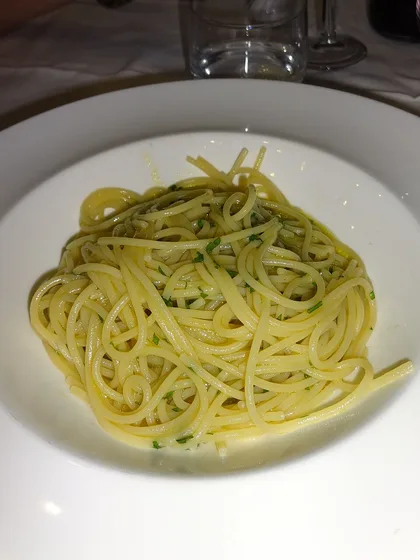 DOPColatura di Alici (Italian Anchovy Sauce)Europe's only surviving fermented fish sauce. Use about half what a Southeast Asian recipe asks for, and never let it hit the pan.
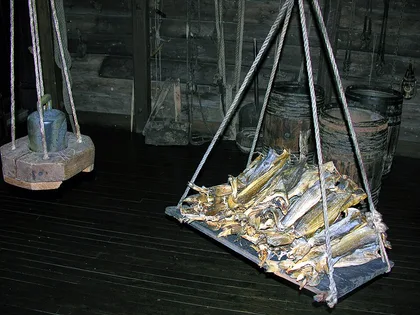 Read the pageStoccafissoNorwegian air-dried cod, no salt. Beat it, soak it two to four days, and it triples in weight into long fibres that hold a slow braise.
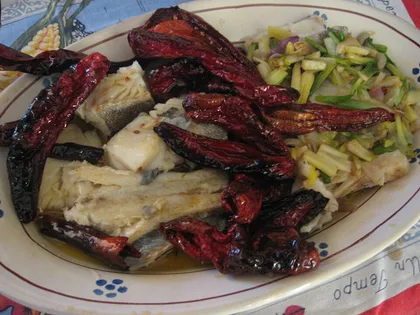 Read the pageBaccalàThe salted version of the same cod. 24 to 72 hours in cold water in the fridge, changed every six to eight hours, skin side up.Presidio Slow FoodMenaica AnchoviesCaught in a wide-mesh net that keeps only the large anchovies, then salted the same night. The firmest salt-packed fillet you can buy.Read the pageCantabrian AnchoviesFAO area 27, Bay of Biscay: bigger and fattier than Mediterranean anchovies, cured for months and hand-filleted.
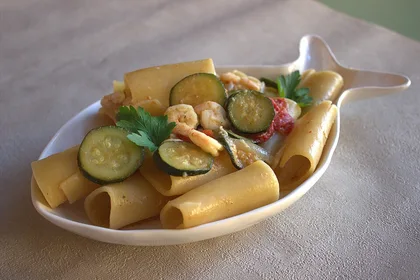 Read the pageMazara Red PrawnsProof that frozen beats fresh: fished 400 to 800 metres down, weeks from port, and frozen aboard within minutes.Presidio Slow FoodPortonovo Wild MusselsWild mussels prised off the rocks of the Conero by hand, never farmed. A short season and almost no export, so eat them there.
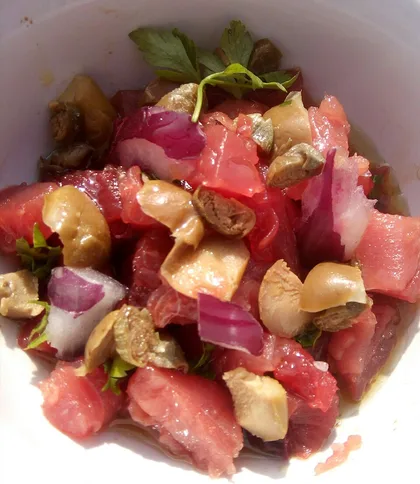 Read the pageBluefin TunaThe fish that came back: ICCAT quotas, a minimum size and an electronic catch document. Ask for the paperwork, not just the colour.
Frequently asked
What is colatura di alici, and can I use fish sauce instead?
It is the liquid drawn off anchovies salted in chestnut barrels, filtered and bottled, and the direct descendant of Roman garum. Thai or Vietnamese fish sauce is a relative but not a swap: colatura is anchovy only, less pungent and saltier per drop, so start with half the quantity and add no other salt.
What does bottarga taste like and how much do I use?
Salty, faintly bitter and deeply of the sea, closer to a very aged cheese than to fish. Grate it over hot pasta after the pan leaves the heat, roughly a teaspoon per person, since cooking it turns it bitter. Grey mullet bottarga is the gentler one, tuna bottarga much stronger.
Do I have to freeze fish before eating it raw at home?
Yes. EU rules require 24 hours at minus 20 degrees Celsius throughout, or 15 hours at minus 35; the FDA Food Code accepts seven days at minus 20 as the equivalent domestic schedule. Most home freezers sit near minus 18, so the safer route is to buy fish that has already been frozen to specification.
Is “sushi-grade” fish a real category?
No. Neither “sushi-grade” nor “sashimi-grade” has a legal definition in the EU, the UK or the United States. The question that means something is whether the fish went through a parasite-destruction freezing schedule, and a seller who cannot answer it is selling you fish to cook.
Where do I buy salt cod, and how do I know it is good?
Portuguese, Spanish, Caribbean and West African grocers usually have the best turnover. Look for white rather than yellowish flesh, since yellowing is fat oxidation, dry rather than tacky surface salt, and an even thickness. The dorsal loin is the prime cut and the one worth paying for.
Is it acceptable to buy bluefin tuna?
Eastern Atlantic and Mediterranean bluefin recovered under the ICCAT plan and was reclassified by the IUCN in 2021 from endangered to least concern. The problem is no longer the species but the paperwork: quota fish carries an electronic catch document, and a seller who cannot show where it came from is the part worth refusing.
Every fish and seafood page
12PATBottargaFifteen grams a head is enough, and that is not meanness: bottarga is the salted, pressed…VenetoBaccalàBaccalà is North Atlantic cod preserved in salt. It is not the same thing as stoccafisso, which is…SicilySardinesSardines are not small anchovies. They are a different species with a different snout, a different…SicilyBluefin TunaAtlantic bluefin, Thunnus thynnus, is the fish Sicily and Sardinia built their tonnare around, with…LiguriaCantabrian AnchoviesCantabrian anchovies are caught in the Bay of Biscay in spring, cured under salt for six to…DOPColatura di Alici (Italian Anchovy Sauce)Colatura di alici is the amber liquid that drains from anchovies packed in salt in chestnut barrels…VenetoStoccafissoStoccafisso is cod air-dried on wooden racks in the Norwegian Lofoten Islands, with no salt at all…SicilyMazara Red PrawnsMazara red prawns are trawled between 400 and 700 metres down in the Strait of Sicily, where the…Presidio Slow FoodComacchio EelIn the lagoons of Comacchio, eels have been caught for centuries with lavorieri, chevron-shaped…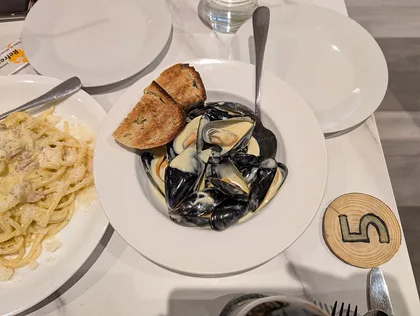 PATTaranto MusselsTaranto mussels are farmed in the Mar Piccolo, a near-enclosed lagoon where freshwater springs…Presidio Slow FoodMenaica AnchoviesMenaica anchovies are ordinary Mediterranean anchovies caught in an extraordinary way: in a…Presidio Slow FoodPortonovo Wild MusselsMoscioli are wild mussels that settle on the rocks of the Conero headland, south of Ancona, and…