Olive oil, vinegar and preserves
Extra virgin olive oil is the cooking fat of half of Italy (the other half uses butter or lard) and the line between them explains most of what regional cooking does.
Where the olive grows, you fry and dress with oil. Where it does not, you use butter or lard. The line runs roughly along the Apennines and bends north along the coasts and the lakes, where a mild climate carries olives almost to the Alps. Two different Italies of flavour follow from that line.
Good extra virgin oil carries a harvest date, not just an expiry date, and tastes of grass, artichoke or green tomato. Bitterness and a peppery catch in the throat are not faults, they are polyphenols. Oil that does not sting is old or badly made.
Preserves solve the same problem as the pig: making summer last. Peeled tomatoes, vegetables under oil, giardiniera, colatura di alici. The colatura of Cetara is the most interesting case: a direct descendant of Roman garum, and the only fermented fish sauce still made in Europe.
Italian olive oil and preserves: what you are actually buying
Abroad, "Italian extra virgin olive oil" is a price tag more than a description. Some of those bottles earn it; many hold oil that never grew in Italy. Italy is at once one of the world's largest producers and one of its largest importers of bulk oil, and buying tankers from Spain, Greece or Tunisia, then blending, bottling and shipping from an Italian address, is entirely legal.
Extra virgin is a legal grade with numbers attached, and the gap between the best and the worst oil sold under that name is wider than in almost any other food. In the EU those numbers are tested and the sensory grade is enforced by law. In the United States the federal standard is voluntary, which is why the same three words carry less weight on an American shelf than on an Italian one.
Everything worth checking fits on the back label: an origin line with fixed legal wording, a harvest date, a cultivar, a container that keeps the light out.
The second half is about preserves, where the subject stops being flavour and becomes food safety. Oil preserves nothing. There is a number, pH 4.6, below which the organism cannot germinate, and a stricter one, pH 4, that a home cook should actually aim for, because 4.6 cannot be hit reliably in a domestic kitchen. Both are worth more than any tasting note.
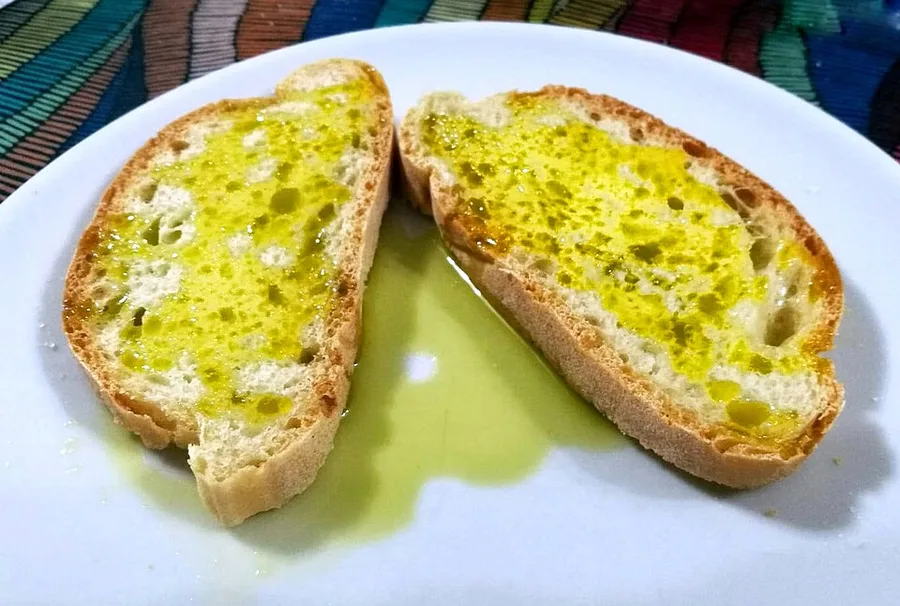
Extra virgin is a chemical grade, not a compliment
Under EU law, extra virgin is a box with hard walls, and each wall measures something different.
Free acidity, no more than 0.8 g per 100 g expressed as oleic acid, counts the triglycerides that have already broken apart. You cannot taste it. It reports only whether the olives were bruised, diseased or fermenting before they reached the mill.
Peroxide value, no more than 20.0 milliequivalents of active oxygen per kilo, measures the first stage of oxidation. It climbs with time, light and heat, so it describes storage rather than fruit.
The spectrophotometric indices K232 and K270 read ultraviolet absorbance. The first, no more than 2.50, tracks early oxidation; the second, no more than 0.22, rises with advanced oxidation products and above all with refined oil, which makes it the standard detector for extra virgin cut with something cheaper.
Fatty acid ethyl esters, below 35 mg/kg, form when sugars in the olives ferment and the resulting alcohol binds to free fatty acids. This is the parameter that exposes soft deodorisation: gentle stripping removes the smell of a defect but leaves the chemical trace of the fermentation behind.
Then comes the panel test, which is an analytical method and not an opinion. Eight to twelve screened and trained tasters, run by a panel leader, score the oil independently from blue glasses warmed to about 28 °C. The median of the dominant defect and the median of fruitiness are then calculated: for extra virgin the first must be zero, not merely low, and the second above zero.
What sits below is not bad extra virgin, it is a different product. Virgin oil allows acidity up to 2% and a mild defect median. Lampante is not edible as it stands and goes to a refinery. "Pure" or "light" olive oil is refined lampante with a little virgin blended back for colour and taste, so light describes flavour and never calories. Olive pomace oil is solvent-extracted from the spent paste and refined in turn.
The label: origin, harvest date, and words that mean nothing
Bottled in Italy is not grown in Italy, and the front label is where that confusion is manufactured. Only the regulated origin line counts, and its wording is fixed, not free: "Italy" if the olives were both harvested and milled there; otherwise "blend of olive oils of European Union origin", "blend of olive oils not of European Union origin", "blend of olive oils of European Union and non-European Union origin", the name of a single non-EU country where everything took place, or the split formula "(extra) virgin olive oil obtained in [country] from olives harvested in [country]" when the two places differ. A PDO or PGI name stands in place of all of these. Anything else on the label, an Italian family name, a village, an address, a flag, is decoration.
Harvest date beats best-before. The bottler sets the best-before, typically 18 to 24 months from bottling, and bottling can happen a year after milling because bulk oil keeps in steel tanks. A harvest date is voluntary and may legally be printed only when the entire contents come from that campaign, which is why its absence on an expensive bottle is itself information.
Mind the hemispheres. The northern harvest runs October to December, the southern one April to June, so during a northern summer a fresh Australian or Chilean oil will beat a tired Italian one on every measure that matters.
The cultivar, when named, predicts the taste. Coratina from Puglia is the most phenolic: bitter, fiercely peppery, long-lived. Frantoio from Tuscany is the balanced reference, grass and artichoke. Leccino is softer and almondy, and in blends it exists to tame Coratina and Moraiolo. Ligurian Taggiasca is delicate and sweet, with pine nut. Sicilian Nocellara del Belice runs to green tomato and fresh almond. Ogliarola, across Puglia and Basilicata, is the light everyday one.
Italy has roughly fifty protected olive oil names. A PDO ties the whole cycle, olives included, to a narrow area with permitted cultivars written into a production code; a PGI covers whole regions, such as Toscano PGI or Sicilia PGI. Both guarantee provenance and traceability, not excellence.
The price, in the end, is a yield problem. A hundred kilos of olives give nine to thirteen kilos of oil depending on cultivar and ripeness, and early harvesting sits at the bottom of that range: more polyphenols, fewer litres. Since a litre weighs about 916 grams, that is seven to ten kilos of fruit per litre, picked, moved and milled within hours. Buy dark glass or tin, never clear bottles standing under store lighting.
Bitter and peppery are the point
Bitterness and pepper are the polyphenols making themselves felt. The bitterness comes from oleuropein aglycone and, to a lesser extent, from oleacein; the throat-catch that can make you cough is oleocanthal, which inhibits COX enzymes by the same mechanism as ibuprofen, a finding published in Nature in 2005. These same phenols are the oil's own preservative: they oxidise in place of the fats, which is exactly why they disappear first. Peppery means young, and "mild" usually means old, or never phenolic to begin with.
One official marker exists and it is rare on labels: EU rules let a bottle claim that olive oil polyphenols help protect blood lipids from oxidative stress, but only if it carries at least 5 mg of hydroxytyrosol and its derivatives per 20 g of oil, and states that the effect requires 20 g a day.
Ripeness at picking sets the profile. At veraison, when green olives turn purple, phenols peak and yield bottoms out: a green, grassy, bitter, peppery oil that will hold two years. Wait for full ripeness and you gain litres and lose phenols: sweet, ripe-fruit oil that is pleasant immediately and fragile within months.
Here is how tasting is actually done. Use a small glass, ideally blue or covered with your hand, because colour tells you nothing and seeing it biases you. Warm it in your palm to around 28 °C to release the volatiles. Smell first: cut grass, artichoke, green tomato, almond, leaf. Take a small sip, then do the strippaggio, drawing air in through your teeth with your lips slightly parted, to atomise the oil across the whole palate. Bitterness appears mid-tongue. Then swallow, and it is the swallowing that carries the pepper into the throat a few seconds later.
Real defects taste of other things and none of them is bitter: rancid is stale walnuts, winey is fermented fruit turning to vinegar, fusty is olives piled up too long before milling, musty is mould. An oil that tastes of nothing at all is oxidised or refined.
Storing it, and cooking with it
Three enemies: light, heat, oxygen. Light works fastest, because the chlorophyll in extra virgin acts as a photosensitiser, absorbing light and triggering a far quicker oxidation route than the ordinary one. A clear bottle on a windowsill spoils in days, not months. So a closed cupboard at 14-18 °C (57-64 °F), never the shelf above the stove.
Olive oil does not age, it decays. Sealed and dark it holds 12 to 18 months from harvest. Open is a different story, and the problem has a precise name: the half-empty bottle. Every pour replaces oil with air, so a half-finished litre leaves 500 cc of air in permanent contact with the surface, roughly 105 cc of it oxygen at 21%, and peroxides climb quickly from there. Buy a size you will finish in two or three months, and cap it immediately. Refrigeration does nothing useful, and cloudiness in the cold proves nothing: waxes and saturated triglycerides crystallise in unfiltered olive oil and in seed oils alike.
You can fry with it. A fresh, low-acidity extra virgin smokes at roughly 190-210 °C (375-410 °F), above the 170-180 °C of real deep frying; butter smokes near 150 °C, while refined olive and peanut oil run past 220 °C. But smoke point is the wrong criterion. It marks the moment an oil visibly starts to break down, not how it survives an hour in a pan. What governs that is composition: monounsaturated oleic acid is far more stable than the polyunsaturates in seed oils, and the phenol reserve, which is consumed oxidising in place of the fat. The measure that tracks real degradation is total polar compounds: in Italy a professional frying oil must be discarded once they pass 25%, a limit set by a Ministry of Health circular of 11 January 1991, and a phenol-rich extra virgin reaches that point later than most alternatives.
Raw is still where it pays, because heat destroys the volatile aromatics first. Cheap oil for the pan, the good bottle for the plate and the last minute of cooking.
Preserves: oil, vinegar, and the botulism rule
There are four preserving levers and oil is not one of them. Acid drops the pH; salt and sugar tie up the free water microbes need; heat kills; alcohol denatures. Oil does exactly one thing, which is exclude oxygen, and that is the wrong move against the main hazard.
Clostridium botulinum is an anaerobe: it grows where there is no oxygen, and its spores survive boiling water. They stay harmless until every condition lines up at once: no oxygen, pH above 4.6, little salt or sugar, room temperature. A jar of raw or lightly blanched vegetables under oil is precisely that environment, and Italy is among the highest notifiers of foodborne botulism in Europe, with roughly 20 to 30 confirmed cases a year, nearly all from home preserves.
Understand what 4.6 is, and what it is not. It is the germination threshold, not a target: below that pH the organism cannot germinate or produce toxin, which is why 21 CFR 114 defines acidified foods by an equilibrium pH of 4.6 or lower. But that holds for a uniform product at equilibrium. Where the pH is not uniform, as in dense or oily preparations, or where surface mould pushes it back up in one spot, the jar's average protects nothing. Italy's Istituto Superiore di Sanità therefore warns that 4.6 cannot be pinned down at home without a pH meter, and tells home cooks to stay below 4, and below 4 even when reading indicator strips, the ones covering 3.8 to 5.4. In a jar under oil the reading is taken on the separated water phase, never on the oil: submerge a small bag of boiled demineralised water, let it equilibrate, and measure that.
In practice: vinegar pickles are not safe by construction, and believing they are is exactly what removes the reason to measure. Wine vinegar carries at least 6% acidity, but diluted into the working solution it falls to around 3%, the vegetables themselves buffer the pH upward, and pasteurisation is still needed. Salt-packed foods work by a different route, since 10% salt (100 g per litre of water) halts growth by removing available water: that figure is the equilibrium concentration in the water phase, and the opening days, before the salt has penetrated the vegetable, are precisely the risky ones. Sweet-and-sour preserves work both levers at once.
Vegetables in oil are safe by none of them, and the Italian procedure has steps that cannot be skipped: blanch a few minutes in equal parts water and wine vinegar of at least 6% acidity (an ordinary 5% non-wine vinegar goes in undiluted instead), then drain, dry thoroughly, fill with no trapped air, add the spacer that keeps everything submerged, seal and pasteurise, targeting a final pH below 4. If the oil settles and you top the jar up, pasteurise it again. This is why commercial chopped garlic in oil must be acidified, after an American outbreak was traced to a bottled version that was not.
Home sterilising does not sterilise. A pot of boiling water reaches 100 °C (212 °F): that pasteurises, killing moulds, yeasts and vegetative bacteria, but botulinum spores need roughly 121 °C (250 °F) held for minutes, which on a domestic scale means a pressure canner and nothing less. So a water bath is adequate for acid preserves (jams, pickles, acidified tomatoes) and inadequate for plain vegetables, mushrooms, beans, meat sauces and fish. Those belong in a pressure canner, which is the USDA position and the one this English text follows. Italian guidance is stricter and diverges deliberately: the Istituto Superiore di Sanità holds that plain vegetables, meat and fish cannot be produced safely at home at all, because sterilisation is achievable only industrially, and that sauces and pesto should be frozen rather than jarred.
The toxin, unlike the spores, is destroyed by heat, and two things here get confused constantly. First: a suspect jar is never tasted, under any circumstances, not even after boiling. Boil it for about 30 minutes to decontaminate the contents, then discard it, jar and all. Second, and only for low-acid home-canned food that looks entirely normal and is going to be eaten: ten minutes at a rolling boil, equivalent to 85 °C (185 °F) for 5 minutes, destroys the toxin before serving, with one extra minute for every 300 metres (1,000 feet) of altitude. It is a last net under food that appears sound, not a way to rescue food that is not.
Warning signs: a domed lid, a hiss or spurt on opening, a lid that never clicked down, cloudy or bubbling liquid, mould, an odd smell. Never taste it: boil the jar for half an hour to decontaminate it, then throw it out. The real point runs the other way, though: botulinum toxin changes nothing about smell, taste or appearance, so a perfect-looking jar proves nothing at all. On a commercial jar, look instead for an acidifier in the ingredients, a declared heat treatment, and the drained weight. Pesto and garlic in oil stay what they are: refrigerator, and days.
How to choose
- 1Find the regulated origin line: "Italy" or a PDO/PGI name says where the olives grew, "bottled in Italy" does not.
- 2Look for a harvest date before the best-before. On a premium bottle, the absence of one is itself information.
- 3Refuse clear glass that has stood under store lighting, and buy a volume you will finish in three months.
- 4Do the arithmetic: 7-10 kg of olives make one litre, so below roughly $12-15 a litre something was cheap.
- 5Taste before you commit: grass and artichoke, real bitterness, a peppery finish. Reject anything that tastes of nothing.
- 6With no fresh Italian bottle available, buy a fresh Californian, Australian or Greek oil over a stale one.
What almost everyone gets wrong
It says Italy on the front, so the olives are Italian.
Italy imports huge volumes of bulk oil from Spain, Greece and Tunisia, then blends and bottles it legally. Only the regulated origin statement counts: "Italy", the EU / non-EU blend wording, or a PDO/PGI name.
This oil is bitter and burns my throat, so it must be rancid.
That burn is oleocanthal and the bitterness is oleuropein: phenolic compounds that mark a young, well-made oil. Rancid oil tastes of stale nuts and crayons, and it is never bitter.
Light olive oil is the lighter, healthier option.
"Light" and "pure" describe refined oil with colour and flavour stripped out. Every olive oil is about 120 calories a tablespoon; what light oil lacks are polyphenols.
It says cold pressed, so the quality is guaranteed.
"First cold pressing" and "cold extracted" are legal terms meaning only that the oil was worked below 27 °C. Almost every modern mill qualifies, and the phrase says nothing about origin or freshness.
Vegetables under oil are preserved, so the jar keeps in the cupboard.
Oil preserves nothing: it removes oxygen, which is exactly what Clostridium botulinum needs to produce toxin. Vegetables must be acidified first, to a final pH below 4 measured in the water phase, and only then covered with oil and pasteurised. None of the risk is visible or tastable.
Where to start
The pages worth opening first.
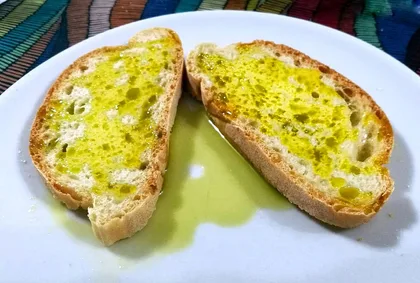 Read the pageExtra Virgin Olive OilWhat the grade legally requires, how to taste one, and why a litre cannot be cheap.
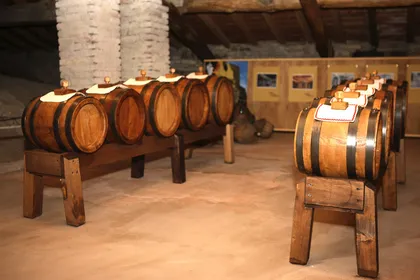 DOPBalsamic VinegarThe clearest lesson in Italian names: twelve-year cooked grape must versus wine vinegar and concentrate.
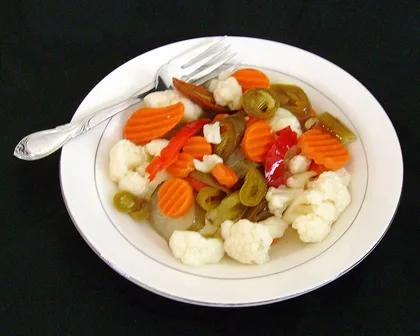 Read the pageGiardinieraThe acidification rule made visible: crisp because vinegar worked before any oil.
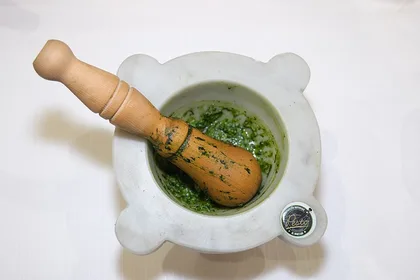 Read the pagePesto GenoveseWhere oil is only a carrier: uncooked, perishable, a refrigerator product.
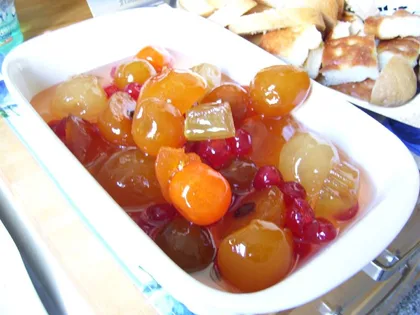 Read the pageMostarda di CremonaSugar plus mustard essential oil: candied fruit that bites back, for boiled meats.
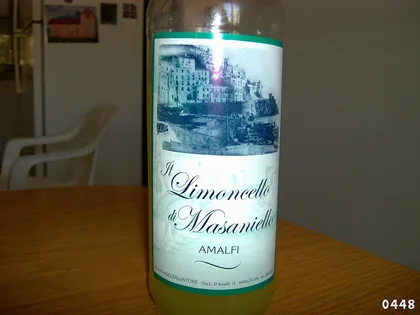 Read the pageLimoncelloThe fourth preservative, alcohol: lemon peel steeped in spirit, nothing cooked.
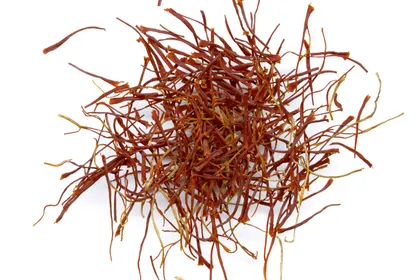 Read the pageSaffronLight destroys crocin faster than it damages oil, and ground saffron is heavily adulterated.Read the pageStrawberry Tree HoneySardinia's bitter honey: proof that bitterness can be what you are paying for.Read the pageCastelbuono MannaAsh-tree sap that hardens in the air on the Madonie, harvested by scoring bark.
Frequently asked
Why does Italian extra virgin cost so much abroad?
Part of it is real: early hand harvesting, a yield of 7-10 kg of olives per litre, milling within hours, certification and freight. Part of it is the word Italy. The back label tells you which.
Is there an American equivalent of the EU extra virgin standard?
Nothing federally enforced. The USDA grade standards issued in 2010 are voluntary and only a few states adopted mandatory rules. California's standard and the Australian one are stricter.
How long does it keep, and does it improve with age?
It never improves, because olive oil is a fruit juice that oxidises. Sealed, cool and dark it holds 12 to 18 months from harvest; opened, two to three months. Saving a special bottle is the surest way to ruin one.
Does oil going cloudy in the fridge prove it is real?
No. Chilling crystallises waxes and saturated fats: it happens to unfiltered olive oil, it happens to seed oils, and a well-filtered genuine oil may stay clear. There is no kitchen test for authenticity.
Can I make vegetables in oil at home?
Only if you acidify first, and the 6% belongs to the vinegar before dilution, not to the pan. Blanch them a few minutes in equal parts water and wine vinegar of at least 6% acidity, drain and dry thoroughly, pack with no air pockets, cover completely with oil, then seal and pasteurise, aiming for a final pH below 4. Done properly, the jar keeps up to eighteen months in the cupboard and two months in the fridge once opened. Never leave raw vegetables, garlic or herbs in oil in a cupboard.
Is a bulging jar always dangerous?
Treat it as if it were. A domed lid, a hiss on opening, cloudy or bubbling liquid all mean you never taste it: boil the jar about 30 minutes to decontaminate it, then throw it away. Botulinum toxin gives no warning through smell, taste or appearance. And honey should never be given to an infant under twelve months old.
Sources
Where to check what you just read.
- 1InstitutionWHO — botulism fact sheet
Why spores survive hours of boiling while the toxin does not, and the inactivation figure this page relies on: above 85 °C for five minutes or more.
- 2InstitutionNCHFP — USDA Complete Guide to Home Canning
Tested process times by food and jar size, and the reason low-acid vegetables, meat and seafood need a pressure canner rather than a boiling-water bath.
- 3InstitutionNCHFP — canning safety basics
The short version of what actually kills Clostridium botulinum, and the standing advice to discard rather than taste anything suspect.
- 4InstitutionISS — Italian guidelines on home preserves
The Italian position that diverges from the USDA one: which preserves the health institute says should not be made at home at all, and the oil-preserve procedure.
- 5
Where the 4.6 threshold comes from in US law: an acidified food is defined by a finished equilibrium pH at or below 4.6 with water activity above 0.85.
- 6
Annex I, where extra virgin is defined by numbers rather than adjectives (free acidity, peroxide value, K232, K270, ethyl esters), plus the origin wording rules.
- 7
The standard most non-EU markets defer to, and the sensory method behind the panel test: useful where a bottle was not bottled under EU rules.
Every oil and preserves page
10LombardyGiardinieraGiardiniera means two very different jars. In Italy it is a mild mix of vegetables pickled in wine…DOPBalsamic VinegarTwo different products share the name. Traditional Balsamic Vinegar DOP is cooked grape must aged…CampaniaLimoncelloLimoncello is made from lemon peel steeped in alcohol, never from the juice.AbruzzoSaffronOne kilo takes between 150,000 and 200,000 flowers, and every flower gives up three stigmas that…LiguriaPesto GenoveseHeat never touches this sauce, and by the rule neither does a blender: basil pounded in a marble…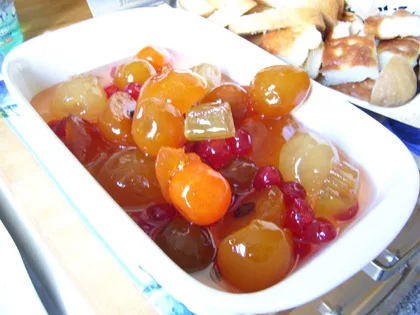 LombardyMostardaMostarda is candied fruit suspended in sugar syrup and spiked with mustard essence.TuscanyExtra Virgin Olive OilTwo exams have to be passed, and one of them is carried out by people.LombardyMostarda di CremonaWhole candied fruit suspended in clear syrup and charged with mustard essence.SicilyCastelbuono MannaManna is the sap of the manna ash, drawn out through cuts made in the trunk in high summer and left…SardiniaStrawberry Tree HoneyStrawberry tree honey is bitter, and the bitterness is the product rather than a fault: it is one…