Vegetables, pulses and fruit
Many protected Italian vegetables are local varieties that survived by accident: a bean that did well in one valley, a pepper that dried without rotting.
Italy's agricultural biodiversity is high for an unromantic reason: farming stayed fragmented for a long time, and every valley kept sowing its own variety while elsewhere everything standardised. That is how the zolfino bean of Pratomagno, the lentils of Castelluccio, the chickpeas of Cicerale and the crusco pepper of Senise are still here.
Some vegetables are defined by handling rather than variety. Puntarelle are the inner shoots of catalogna chicory, cut into strips and dropped in cold water so they curl. Crusco peppers are sun-dried in strings and then fried for a few seconds: they turn as crisp as a chip, and they are not hot.
The tomato deserves its own chapter, because it arrived late, in the sixteenth century, and rewrote southern cooking within two hundred years. San Marzano PDO from the Agro Sarnese-Nocerino is also the most counterfeited Italian product in the world: "San Marzano style" on an American can means nothing at all.
Italian vegetables, pulses and fruit: what those menu words mean
Puntarelle, cicerchia, crusco, cedro, fiolaro. Italian menus and recipes throw vegetable names at you that have no English equivalent, because the thing itself never travelled: it is a local landrace, or a cut, or a technique, rather than a species you can look up.
Most of them decode quickly once you know which of three things the name is describing. Some are varieties (San Marzano, Tonda Gentile hazelnut). Some are places doing something to an ordinary plant (Treviso radicchio forced in spring water). Some are a part of a plant nobody else eats, prepared a particular way, which is exactly what puntarelle are.
What follows is the practical version: when each thing is genuinely in season, why some of them cost what they cost, what you can substitute when you cannot find them, and the storage rules that most home kitchens outside Italy get wrong. Pronunciation as we go, since half the difficulty is being understood at the counter.
When these things are actually in season
Italy is in the northern hemisphere, so the calendar maps onto a British or North American one, with everything running roughly four to six weeks earlier in the south than in the north. What does not map is the length of the windows. Several of the names you will meet on a menu exist for a few weeks a year, and the restaurant that serves them in August is serving something else.
The short windows, in order. Puntarelle (poon-tah-REL-leh), the inner shoots of catalogna chicory, run November to February and are a Roman winter dish, not a summer salad. Roman artichokes, the round spineless carciofo romanesco, run roughly February to May, which is why a spring trip to Rome and a plate of carciofi alla giudia belong together. White asparagus from Bassano is cut by hand over a few weeks between April and mid-June. Broccolo fiolaro from the Vicenza hills is only picked after a hard frost, which converts part of its starch into sugar as antifreeze: before the first frost it is a different, blander vegetable. White truffle runs autumn into early winter.
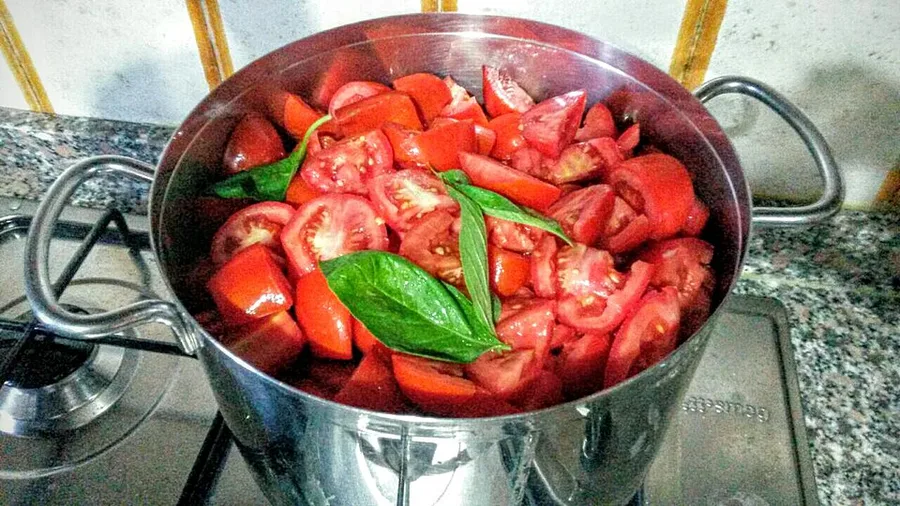
The tomato explains why the calendar still matters even where supermarkets have abolished it. Sugar arrives in the fruit from the leaves and only while the fruit is attached to the plant. Picked green, a tomato will still turn red and soften, because ethylene handles colour and texture, but its sugar content is frozen at the moment of picking. A vine-ripened summer tomato typically sits around 4.5 to 6 degrees Brix; a winter one picked green stays thinner, sharper and more watery, and no warehouse gives that back.
Cold finishes the job. Below about 12-13 °C, roughly 54 °F, a tomato shuts down production of the volatile compounds that make it smell of tomato, and warming it up again recovers only part of them. This is measurable, not folklore, and it is why a January tomato can look perfect and taste of nothing.
The practical upshot for a traveller or a cook: check what is in season before you plan the meal around a dish. In peak season a vegetable is cheap and everywhere at once, which is the easiest signal to read in any Italian market without speaking a word of the language.
Why a vegetable gets a PDO
On cured meat a protected name usually guards a process. On a vegetable it has to rest on at least one of three things, and usually two: the variety (often a local landrace never registered as a commercial seed), the soil and climate, or the growing technique. It is worth knowing which one is doing the work, because that tells you what you actually lose by substituting.
San Marzano is the soil case. The Agro Sarnese-Nocerino, inland from Naples, is a plain of volcanic deposits from Vesuvius: deep, loose, potassium-rich ground that holds water without drowning roots, which suits a long thin-skinned tomato with few seeds. Note what the PDO covers: the rulebook requires hand picking in successive passes and certifies the processed product, peeled whole or in fillets, in the can. A genuine can carries the PDO mark plus the consortium's serial numbering, and the certified growing area is small, which is the arithmetic behind how rarely the real thing appears abroad.
Radicchio Rosso di Treviso Tardivo is the technique case, and the most extreme one in the Italian vegetable canon. Heads are lifted after the frosts and forced in the dark with their roots standing in spring water, which surfaces at a near constant 11-13 °C. Over two or three weeks the plant pushes out new leaves without light: white ribs, deep red blades, crunchy and bitter instead of leathery. Then each head is trimmed by hand under running water. What goes into the tank and what comes out are not the same vegetable, which is why it costs several times what a supermarket chicory costs.
Tropea onion is the soil-and-climate case. Coastal Tyrrhenian sand is free-draining and poor, the climate mild: the bulbs build sugar and stay low in the sulphur compounds that make a northern onion sharp and make you cry. Three different products sit under the one PGI, depending on when they are lifted: spring onion, fresh onion and storage onion. Only the last keeps.
One caution before you pay a premium. PDO and PGI guarantee origin and method, not the quality of the particular crate. And two other marks travel alongside them: PAT, a ministry list of traditional products with over five thousand entries, which records that something has been made a certain way for at least twenty-five years and nothing more, and Slow Food Presidia, which are a private association's projects rather than an EU designation.
Farro, lentils and the grass pea problem
Farro (FAR-roh) is the word that causes most confusion in English, because it is not one grain. It covers three hulled wheats: einkorn, called farro piccolo; emmer, farro medio, which is what Farro della Garfagnana PGI is and what an Italian recipe almost always means; and spelt, farro grande. English menus translate all three as spelt, which is wrong two times out of three. Buying it, the label that matters is not the species but the processing: pearled (perlato) has lost its outer bran and cooks in about twenty minutes with no soaking, semi-pearled and hulled (decorticato) keep it and want hours of soaking. And to settle the recurring question: all farro contains gluten and none of it is suitable for coeliacs.
The same caution applies to grani antichi, the ancient grains marketing. Senatore Cappelli, the one you see most, is a 1915 selection rather than a medieval survivor, and its reputation comes from a weaker gluten network that industrial bakeries find hard to work with. Weaker is not absent.
With dried pulses, harvest year beats brand. Pulses from the current crop cook in half the time and hold their shape; three-year-old ones never soften properly, whatever you do to them. Small thin-skinned lentils such as Castelluccio di Norcia PGI, grown on plains at 1,300-1,500 m, need no soaking at all and stay whole, which is why they end up in the New Year's Eve lentils-and-cotechino. Larger lentils and all beans do need it. Two technical points that save dinners: acid toughens skins, so tomato, wine and vinegar go in late, while salt in the soaking water softens rather than toughens, contrary to the usual kitchen lore.
Dried beans need a genuine boil. Raw or undercooked, they contain phytohaemagglutinin, a lectin that causes sharp gastrointestinal illness and is destroyed only by at least ten minutes at a full boil. That is the reason dried beans should never go straight into a slow cooker on low without being boiled hard in a pan first.
Cicerchia (chee-CHER-kyah) is the grass pea, Lathyrus sativus, and it deserves an accurate paragraph rather than either silence or alarm. It contains ODAP (beta-ODAP), a non-protein amino acid that is neurotoxic. Neurolathyrism, an irreversible spastic weakness of the legs, is documented where grass pea was a dietary staple for months during famine, with little else to eat. ODAP is water-soluble, and the handling follows from that: soak 12 to 24 hours in plenty of water, change it two or three times, throw every change away, then cook in fresh water which is also discarded. Italian landraces are low in ODAP and here it is an occasional dish, so the practical risk is remote. The procedure is still the procedure, and the soaking water is never used for cooking.
Nuts and citrus, and the fault that matters
Italian nuts are expensive for reasons that are arithmetic rather than romantic. Nocciola Piemonte PGI is the Tonda Gentile Trilobata hazelnut, the one behind gianduja and Piedmontese cake: in shell it yields roughly 40-45 per cent kernel, and half its value to a pastry kitchen is that the skin slips off cleanly when roasted. Pistacchio Verde di Bronte PDO grows on lava terraces on the flanks of Etna, is picked by hand, and is harvested only in alternate years, the odd-numbered ones, because in the resting year the flower buds are stripped so the tree recovers. Half a crop every two years is the whole explanation for the price of a jar of pistachio cream.
The fault to check for is rancidity, not size. Unsaturated fats oxidise with oxygen, light and heat, and the result reads as cardboard, paint or old oil, on the nose before the palate. The shell is the best packaging ever devised because it is an oxygen barrier: in shell, think months; shelled and loose from an open bin, weeks; ground into flour, days. Keep shelled nuts sealed in the fridge or freezer. Taste one before buying a kilo. What you never taste is anything with dark blotches or visible mould, since that is the picture associated with mycotoxins: discard it rather than trimming it.
Chestnuts split into two commercial classes that English blurs. A marrone gives one to three nuts per burr, mostly without an internal division, with a skin that peels away, which is why it becomes marron glacé; an ordinary castagna gives three smaller, often divided nuts. To test a bag, drop them in water and throw away the floaters, which are either dried out or occupied by a larva. Sicilian dessert almonds, from Pizzuta d'Avola to Romana, are prized for high oil and intense aroma, which is the same richness that makes them go rancid fastest.
Italian citrus makes sense once you understand albedo, the white spongy layer between the coloured skin (the flavedo, where the essential oils sit) and the segments. A cedro, the citron, is nearly all albedo with very little flesh, and the albedo is the part you eat: sliced raw into salad in Calabria, or candied into the peel in panettone. Bergamot sits at the other extreme: it is grown along the Reggio Calabria coast for the essential oil in its skin, the smell of Earl Grey tea, while the flesh is too sour and bitter to be worth eating.
Sorrento lemons, PGI, are the opposite of a juicing lemon: thick skin loaded with essential oil, which is why they carry limoncello and the lemon desserts of the Amalfi coast. If a recipe wants zest, ask for fruit that has not been waxed or treated after harvest, since post-harvest coatings live exactly where you are about to grate. Otherwise buy citrus by weight in the hand: heavy for its size means juice, light means weeks in storage and flesh that has shrunk away from the peel.
Storing them without ruining them
A fridge was designed to slow bacteria, not to please plants, and on several of these it does real harm. Tomatoes below about 12-13 °C (54 °F) stop making their aroma compounds and go mealy: keep them on the counter, stem side down, out of the sun, and refrigerate only once cut. Basil blackens below roughly 10 °C and belongs in a glass of water at room temperature, treated like cut flowers. Potatoes below about 4-6 °C convert starch into reducing sugars, which tastes oddly sweet and, when you then fry them hot, feeds the Maillard reaction and raises acrylamide: they want darkness, air and about 6-10 °C. Onions and garlic want dry and ventilated, never a sealed bag, and never next to potatoes, which give off moisture. Citrus takes chilling injury in a cold fridge: pitted skin, flattened aroma, and it dries out anyway.
Then there is ethylene, the ripening hormone, which is the reason a tidy fruit bowl can rot faster than a messy one. Strong emitters: apple, pear, ripe banana, peach, apricot, plum, fig, persimmon, melon, avocado, ripe kiwi and the tomato itself. Sensitive to it: broccoli and cabbage, which yellow; lettuce, which develops russet spotting; carrots, which turn bitter; then cucumber, asparagus, green beans, and potatoes, which sprout. The rule is simply to keep the two groups apart, in separate drawers or separate bags.
The same hormone is a tool when you want it. A rock-hard avocado or an unripe kiwi, shut in a paper bag with a ripe apple, will be ready in a couple of days: paper holds the gas in while letting excess moisture out, which is exactly what plastic fails to do.
The sealed plastic bag is the commonest mistake in a home fridge. Harvested vegetables go on respiring and transpiring: water condenses on the plastic, runs back onto the surface, and a wet surface is where rot starts. Use perforated bags, a cloth, or a bag with a sheet of paper inside to absorb condensation. Mushrooms go in paper, never plastic. Nothing gets washed before storage, only before use.
Finally the truffle, because the myth is widespread and expensive. Do not store a truffle in rice. Rice is hygroscopic: within a day it draws out moisture, and the truffle loses weight and aroma while the rice gains a vague perfume you did not pay for. Keep it in a closed glass jar in the fridge, wrapped in kitchen paper changed daily, and eat a white truffle within three to five days. One consolation about frozen vegetables: industrial freezing happens within hours of harvest, while fresh produce may have a week of travel behind it, and on vitamin C the comparison rarely goes the way people assume.
How to choose
- 1Check the cut end rather than the leaves: a pale, damp stem base means days since harvest, a dark dry one means weeks.
- 2Buy citrus, fennel and cabbage by weight in the hand: heavy for its size means juice and flesh, light means storage.
- 3Ask for the variety and the town, not just « Italian »: on a vegetable the landrace explains the flavour more than the region does.
- 4On dried pulses ask for the harvest year. Current-crop beans and lentils cook in half the time and hold their shape.
- 5Buy nuts in the shell when you can, and taste one first: rancidity is instantly obvious and cannot be roasted out.
- 6If it is cheap and piled high in an Italian market, it is in season. That is the fastest seasonality check available without the language.
What almost everyone gets wrong
Tomatoes belong in the fridge.
Below 12-13 °C (about 54 °F) a tomato stops producing its volatile aroma compounds and the flesh turns mealy, and warming it back up recovers only part of that. Keep them on the counter out of direct sun; refrigerate only once cut.
Citrus keeps better in the fridge.
Cold storage below about 5 °C causes chilling injury: pitted skin, dulled aroma, and dehydration anyway. A cool, ventilated spot is better for a week's worth. If the fridge is unavoidable, use the least cold drawer and bring fruit back to room temperature before eating.
Bigger means better.
Usually the reverse. Water and nitrogen fertiliser inflate size and dilute sugars and aroma. An oversized artichoke is more fibrous, a fast-grown tomato has less dry matter. Where a rulebook sets a size, it is standardising the crate, not rewarding bulk.
Dried pulses can be cooked without soaking.
True for small thin-skinned lentils. Beans need the soak plus at least ten minutes at a full boil to destroy phytohaemagglutinin. For cicerchia, the grass pea, soaking is not optional at all: it is what removes the water-soluble ODAP, 12 to 24 hours with the water changed and always thrown away.
Store truffles buried in rice.
Rice is hygroscopic and dries the truffle within a day, costing you weight and aroma. Use a closed glass jar in the fridge with kitchen paper changed daily, and eat a white truffle within three to five days.
Where to start
The pages worth opening first.
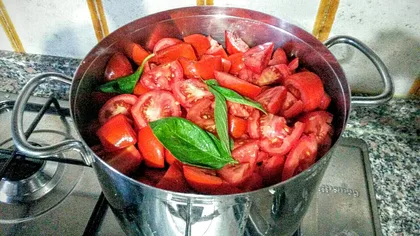 DOPSan Marzano TomatoesVolcanic soil plus a rulebook that certifies the can, not the fresh crate: know what the mark on the tin is actually promising.
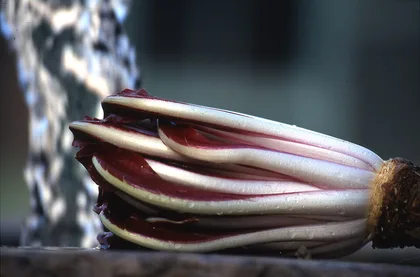 IGPTreviso RadicchioForced in the dark with its roots in spring water. The bitterness and crunch are made by the technique, not the seed.
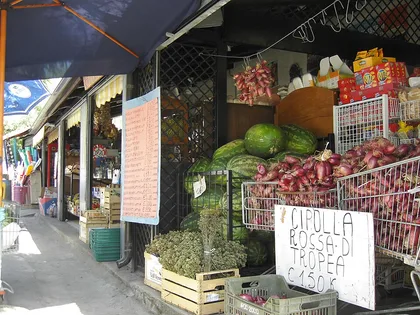 IGPTropea Red OnionCoastal sand and a mild climate: sweet, low in the sulphur compounds that make onions sharp. Often eaten raw.
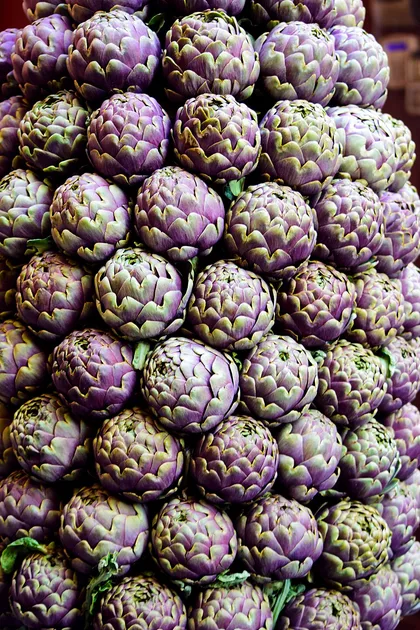 IGPRomanesco ArtichokeThe round spineless artichoke behind carciofi alla giudia and alla romana, on Roman menus from February to May.
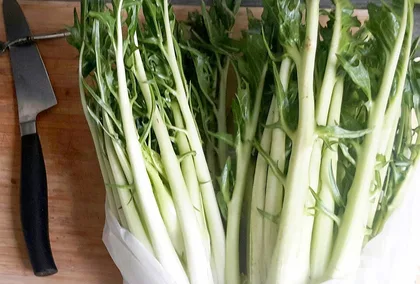 Read the pagePuntarelleNot a species: the inner shoots of catalogna chicory, cut into strips and curled in iced water. Rome, November to February.Read the pagePeperone CruscoSun-dried in strings, then fried for seconds until it shatters like a crisp. It is not hot, which surprises everyone.
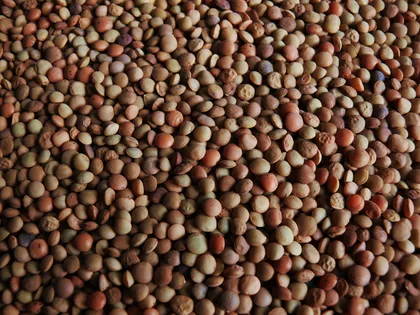 IGPCastelluccio LentilsSmall, thin-skinned, no soaking, holds its shape: the lentil in the New Year's Eve dish with cotechino.
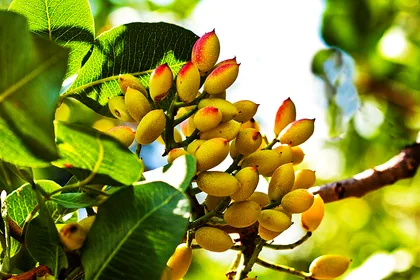 DOPBronte PistachioLava terraces on Etna and a harvest only in odd-numbered years. That is why the pesto and the cannoli cost what they cost.
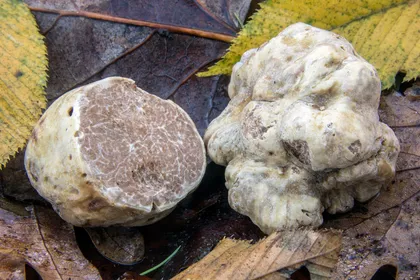 Read the pageWhite truffleAutumn into early winter, never cooked, shaved raw at the table. Store it in a jar, never in rice.
Frequently asked
What is farro, exactly?
Three different hulled wheats: einkorn, emmer and spelt. An Italian recipe almost always means emmer. Pearled farro cooks in about twenty minutes with no soaking; hulled farro needs hours. All of it contains gluten.
Can I substitute ordinary canned tomatoes for San Marzano?
For most sauces, yes: buy whole peeled plum tomatoes in juice rather than purée, and drain some liquid if the sauce is thin. What you lose is a lower seed-to-flesh ratio and a slightly lower acidity, not a magic ingredient.
Can I find puntarelle outside Italy?
Rarely, and only in winter from Italian greengrocers. The nearest substitute is Belgian endive or the pale inner ribs of a chicory head, sliced fine and soaked in iced water, with the same anchovy, garlic and vinegar dressing.
Is cicerchia, the grass pea, safe to eat?
Yes when it is prepared properly and eaten occasionally. It contains ODAP, a water-soluble neurotoxic amino acid linked to neurolathyrism where grass pea was a famine staple for months. Soak 12 to 24 hours, changing and discarding the water two or three times, then cook in fresh water and discard that too.
When is white truffle season?
Autumn into early winter, with the Piedmontese peak from October to December and a parallel season in Umbria and the Marche. Anything sold as fresh white truffle in spring should be questioned, and truffle oil is usually a synthetic aroma rather than truffle.
Is peperone crusco spicy?
No. It is a sweet pepper from Senise in Basilicata, sun-dried in strings and flash-fried for a few seconds until brittle. It is crumbled over pasta, beans or cod as a crunchy, faintly smoky garnish.
Every vegetables and fruit page
33DOPSan Marzano TomatoesSan Marzano is a long, thin-skinned plum tomato grown in the volcanic plain between Naples and…DOPBergamotBergamot is the most geographically concentrated citrus on earth: around 90 per cent of world…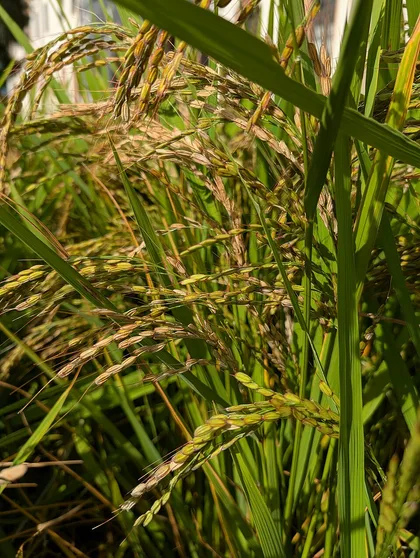 LombardyCarnaroli RiceCarnaroli is the risotto rice with the highest amylose content: it sheds enough starch to build a…TuscanyChestnutsFor a thousand years the Apennines made bread from them rather than dessert: Castanea sativa was…PiedmontWhite truffleThe Italian white truffle, Tuber magnatum Pico, is the most expensive of Italy's truffles: in 2025…DOPBronte PistachioBronte pistachios grow on the lava fields of Etna, are picked by hand in odd-numbered years only…IGPSicilian Blood OrangeSicilian blood oranges are three cultivars, Tarocco, Moro and Sanguinello, plus one piece of…LazioPuntarelleInside a head of jagged-leaf Catalonian chicory sits the part Rome actually pays for: the hollow…IGPTreviso RadicchioTreviso radicchio comes in two forms that are effectively different vegetables.
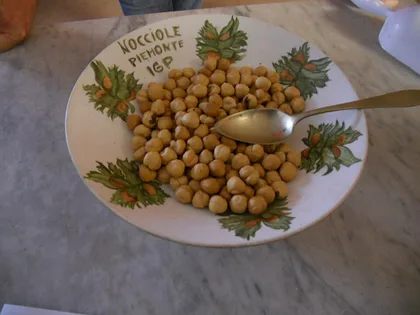 IGPPiedmont HazelnutNocciola Piemonte IGP is a single cultivar, the Tonda Gentile Trilobata of the Langhe hills: round…IGPTropea Red OnionTropea red onions are grown on a narrow strip of sand along Calabria's Tyrrhenian coast, and they…
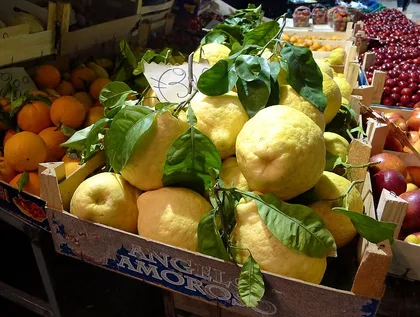 IGPSorrento LemonThe Sorrento lemon is a rifiorente femminello grown under chestnut-pole pergolas on the cliffs…CampaniaFriarielliAround Naples this turnip never reaches the root stage, because what matters grows above it.IGPCastelluccio LentilsCastelluccio lentils grow at 1,400 metres on the Pian Grande, a treeless karst plateau inside the…IGPRomanesco ArtichokeThe Romanesco is Rome's artichoke: round, large and completely spineless.
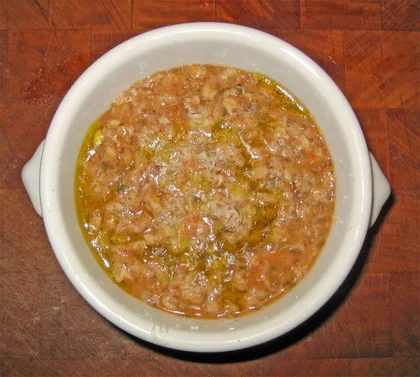 IGPGarfagnana FarroFarro della Garfagnana IGP is emmer wheat, Triticum dicoccum: the grain the Romans called far…BasilicataPeperone CruscoPeperone crusco is a sweet Basilicata pepper, sun-dried on strings and then flash-fried for two or…DOPPiennolo TomatoPiennolo tomatoes grow on the volcanic ash of Vesuvius with no irrigation at all, are cut in whole…
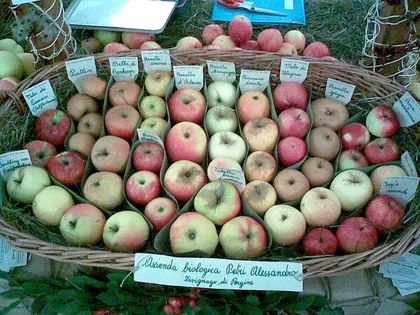 DOPVal di Non AppleVal di Non apples are three varieties (Golden Delicious, Renetta Canada and Red Delicious) grown…
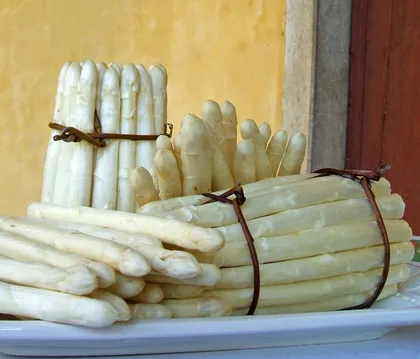 DOPBassano White AsparagusBassano white asparagus is white because it never sees daylight: the spear grows inside a ridge of…
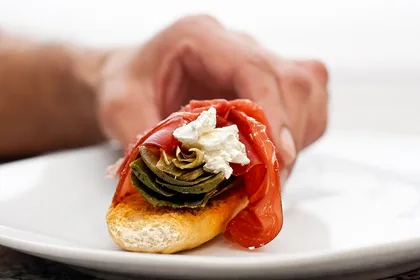 IGPPaestum ArtichokeThe Paestum artichoke is round, tightly closed, completely spineless and dimpled at the tip: it…UmbriaCicerchia (Grass Pea)The grass pea is the oldest and most awkward legume in Italy.
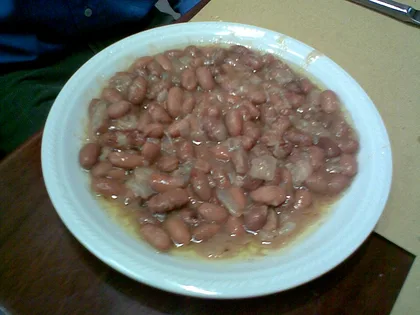 IGPLamon BeansLamon beans are mountain-grown borlotti with a skin so thin it disappears in the mouth and flesh…
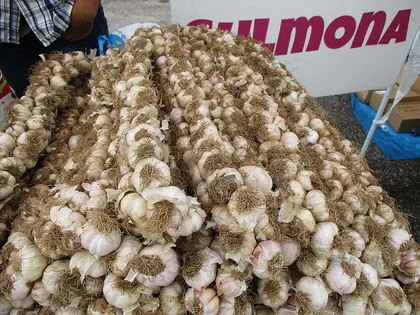 AbruzzoSulmona Red GarlicSulmona red garlic is white on the outside and red underneath: the colour is in the skins wrapping…CalabriaCitron of Santa Maria del CedroYou do not eat the flesh of a citron: there is barely any and it is fiercely sour.TuscanyZolfino BeanThe zolfino is a small, round, sulphur-yellow bean with a skin so thin it dissolves as it cooks.
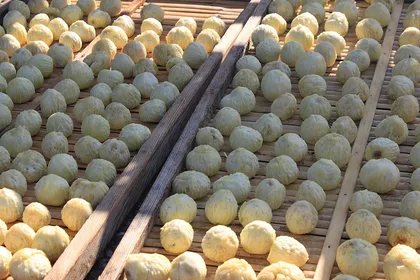 DOPCilento White FigThe Cilento white fig is a Dottato fig dried in the sun on cane racks in the hills south of Salerno.
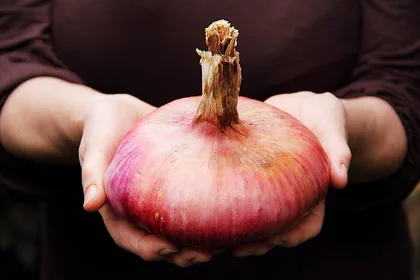 ApuliaAcquaviva Red OnionThe Acquaviva red onion is wide, flat as a discus and sweet enough to eat raw in thick slices with…IGPSila PotatoSila potatoes are grown above 1,000 metres on the granite plateau in the middle of Calabria.IGPCanicattì Table GrapeCanicattì grapes are Italia grapes: big oval berries, thick skin, crunch, and a clear muscat…
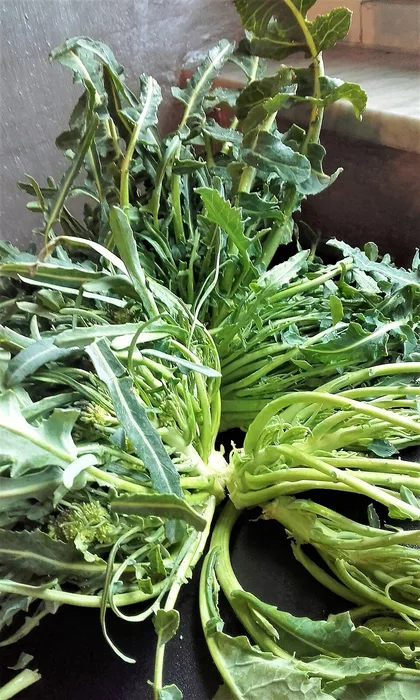 VenetoFiolaro BroccoliFiolaro broccoli is not grown for its head but for the fioi, the side shoots that sprout along the…
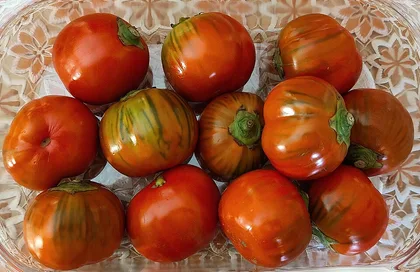 DOPRotonda Red EggplantThe Rotonda red eggplant looks exactly like a ribbed tomato and is not the eggplant you know: it is…UmbriaTrevi Black CeleryTrevi black celery is not black: it is a dark, almost blue-green.